Home / Custom / Optical Components / Optical Filter / Pixel Level (Stepped) Hyperspectral Filter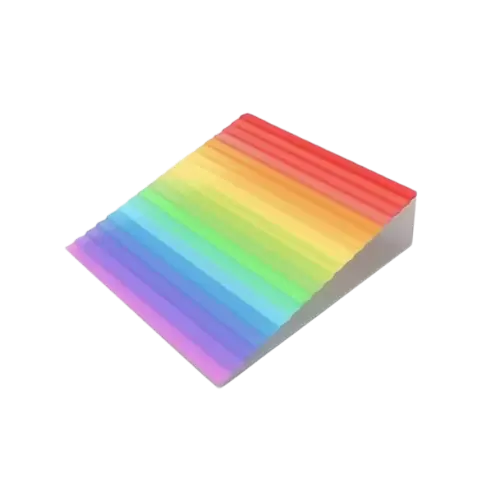
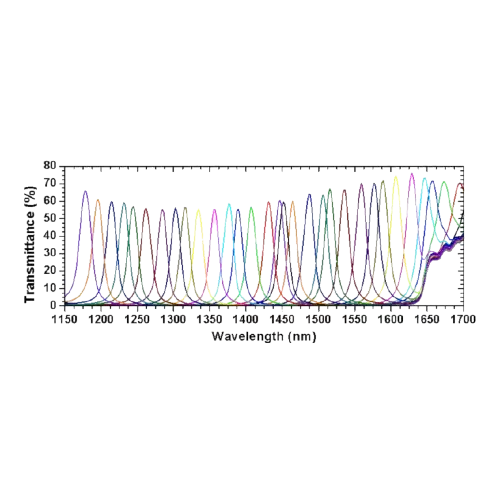
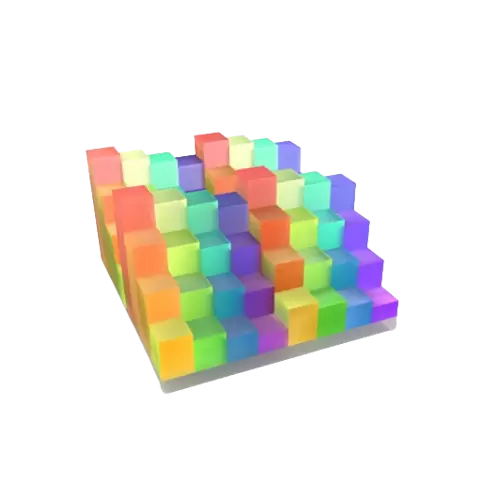
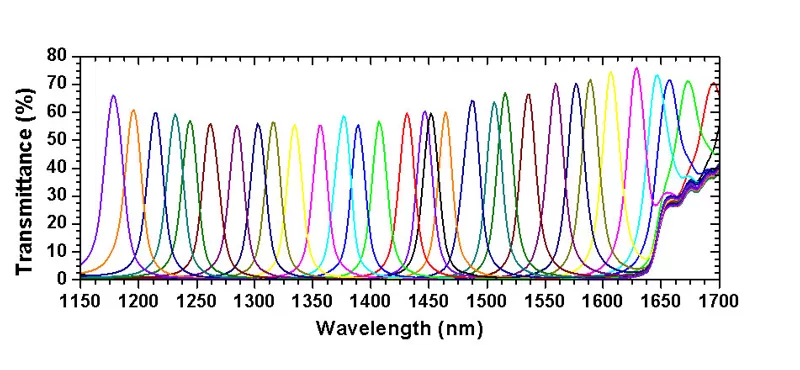
The physical size of the spectral channel of the pixel level (step) filter is an integer multiple of the pixel size of the detector in the column direction and is consistent with the imaging surface size of the detector in the row direction, so as to ensure the spectral response of the same row pixel is completely consistent after integration. In the actual production, the spectrum range, the number of channels and the layout can be designed according to customer needs.

Optical glass such as K9, fused silica, sapphire, MgF2, silicon (Si), ZnSe, ZnS, etc. These materials possess high transmittance, low absorption, low scattering, uniform refractive index, and specific dispersion characteristics.

Precisely hemispherical. The machining precision of the center and radius of curvature of the sphere is extremely high.

The surface is precision polished to an optical grade of 10-5 to ensure image quality and reduce scattering and aberrations.

An AR coating is typically applied to the concave surface to maximize the transmittance of specific wavelengths of light (e.g. visible light) and reduce reflection loss.
Working wavelength | From Visible to infrared |
|---|---|
Size of Single channel | 10-100μm |
Quantity of spectral channels | >100 |
Pass band half peak width | 5-20nm |
Peak transmittance | 50-90% |
Out-of-band cutoff | <0.5% |




 en
en
 English