

 en
en
 English
 繁体中文
繁体中文 Japanese
 Korean
 Russian
 German
News
Deepen Optoelectronic Resources, Lead Technological Breakthroughs


Deepen Optoelectronic Resources, Lead Technological Breakthroughs
Cylindrical lenses stand as indispensable components in modern optical systems, powering critical applications ranging from laser beam shaping and anamorphic imaging to light-sheet microscopy and laser radar systems. Unlike spherical lenses, which feature rotational symmetry and focus light uniformly in all directions, cylindrical lenses possess curvature in only one axis—converging or diverging light into a precise line while remaining flat in the orthogonal axis. This unique asymmetric geometry delivers unparalleled value in applications requiring one-dimensional light control, but it also introduces significant challenges in manufacturing and metrology. Notably, standard spherical interferometry, the long-standing gold standard for testing spherical optics, often falls short when applied to cylindrical lenses, leading to inaccurate measurements, compromised quality control, and costly inefficiencies in production. As a leading precision optical component manufacturer, ECOPTIK has long been engaged in the R&D, manufacturing and testing of cylindrical lenses, and its practice has vividly verified the limitations of standard spherical interferometry while providing effective solutions for the industry.
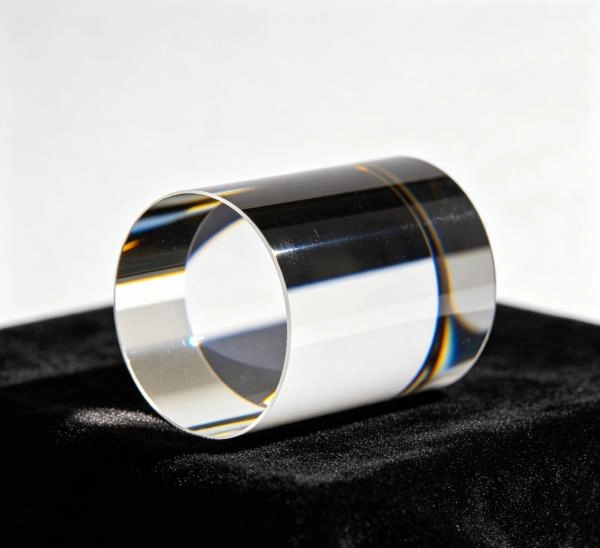
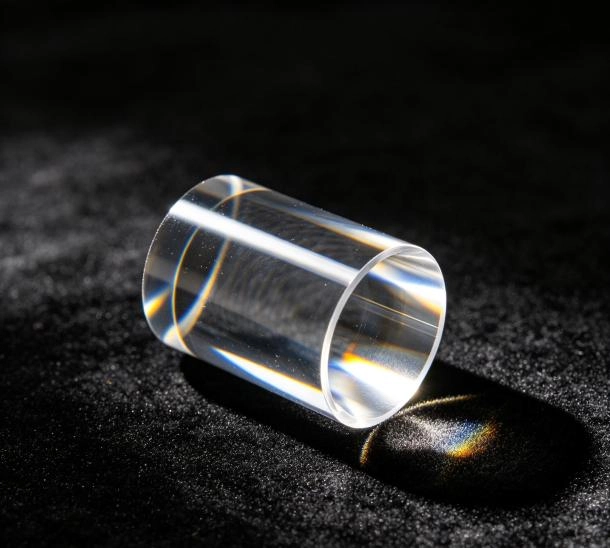
The core issue lies in a fundamental mismatch between the rotational symmetry of spherical interferometry and the asymmetric nature of cylindrical lenses. Spherical interferometers operate by projecting a spherical reference wavefront that perfectly matches the 360° curvature of spherical lenses, enabling full-aperture, high-precision wavefront analysis. When this same technology is applied to cylindrical lenses, the spherical reference wavefront only intersects a narrow line profile of the cylindrical surface, rather than illuminating the entire aperture. This partial sampling fails to capture critical surface deviations across the full length and width of the cylinder, such as mid-spatial frequency waviness, edge roll-off, or axial twist—defects that directly impact the lens’s ability to focus light into a sharp, uniform line. For ECOPTIK, which focuses on high-end customized cylindrical lenses for semiconductor inspection, high-end laser processing and biomedical imaging, this limitation once restricted the improvement of product precision. In the early stage of production, the company found that using standard spherical interferometry to test cylindrical lenses often led to deviations in key indicators such as one-axis power and surface figure, resulting in unnecessary scrap and rework costs.
Beyond geometry mismatch, standard spherical interferometry introduces inherent aberrations and fringe artifacts that obscure true surface errors. When testing non-spherical surfaces like cylinders, the technique generates cylindrical spherical aberration (CSA), which distorts interference fringes into irregular, non-uniform patterns. These distorted fringes make it nearly impossible to distinguish between genuine manufacturing defects and test-induced artifacts, leading to misjudgments that either reject qualified components (increasing scrap rates) or approve faulty ones (compromising end-system performance). Additionally, oblique incidence of the interferometer’s beam on the cylindrical surface alters the scale factor—the conversion between fringe patterns and actual wavefront errors—introducing quantitative inaccuracies that worsen as the lens’s f-number decreases (i.e., in faster, more compact optical systems). ECOPTIK, which has a complete industrial chain covering optical design, precision cold processing, coating, testing and assembly, has deeply realized this problem in the production of cylindrical lenses for laser radar systems. The company’s technical team found that the CSA generated by standard spherical interferometry often led to misjudgment of surface waviness, making it difficult to meet the strict precision requirements of autonomous vehicle laser radar components.
Alignment complexity further exacerbates the limitations of standard spherical interferometry for cylindrical lens testing. Unlike spherical lenses, which require minimal alignment due to their rotational symmetry, cylindrical lenses demand precise alignment of their curved axis with the interferometer’s detector array—a critical step known as “clocking”. Even a misalignment of a few arcminutes can tilt the fringe pattern, corrupting measurements of key specifications such as one-axis power, wedge, and centration. Spherical interferometers lack automated tools to optimize this alignment, forcing manual adjustments that introduce human error and reduce measurement repeatability. For high-volume manufacturing, this inefficiency directly impacts throughput and quality consistency, as each lens requires time-consuming, operator-dependent alignment.
Compounding these issues is the fact that standard spherical interferometers are ill-equipped to measure the unique specifications of cylindrical lenses. Unlike spherical lenses, which are evaluated based on spherical power and total wavefront error, cylindrical lenses require precise measurement of anisotropic parameters: one-axis power (curvature in the active direction), surface figure (deviation from the ideal cylinder in the flat direction), and axial twist (rotation of the cylindrical axis relative to the lens edges). These parameters are critical for ensuring performance in applications like laser beam circularization, light-sheet generation, and high-energy laser systems, yet spherical interferometers cannot reliably quantify them. This gap leaves manufacturers unable to validate whether a lens will perform as intended in its target application, increasing the risk of field failures and costly rework.
To address these limitations, ECOPTIK continuously develops solutions tailored. ECOPTIK has introduced an advanced measurement system that not only resolves the local sampling issue in standard spherical interferometry but also enables precise measurement of anisotropic parameters in cylindrical lenses, ensuring products meet high-precision requirements in fields such as semiconductor inspection and high-energy laser systems.Finally, leveraging its profound expertise in precision machining technology, ECOPTIK has established a closed-loop system for cylindrical lens manufacturing, encompassing production, measurement, and optimization.The company is equipped with internationally advanced facilities including CNC machining centers, precision polishing machines, and interferometers, while strictly adhering to the ISO9001 quality management system. By integrating specialized measurement solutions with its precision manufacturing capabilities, ECOPTIK has not only reduced the defect rate of cylindrical lenses but also achieved industry-leading performance in key metrics such as surface accuracy, low surface roughness, and high damage tolerance thresholds, all while enhancing production efficiency.
In conclusion, standard spherical interferometry is ill-suited for the measurement and manufacturing of cylindrical lenses, hampered by geometry mismatch, inherent aberrations, alignment challenges, and limited specification coverage. As a leader in the domestic precision optical industry, ECOPTIKs’ practice has proved that only by abandoning the dependence on standard spherical interferometry and adopting specialized metrology solutions tailored to the characteristics of cylindrical lenses can manufacturers break through the technical bottleneck. With the growing demand for high-performance cylindrical lenses in emerging technologies—from autonomous vehicle laser radar to AR/VR optics and high-energy laser systems—investing in specialized metrology tools is no longer an option but a necessity. ECOPTIK will continue to deepen its research in the field of cylindrical lens manufacturing and measurement, relying on its full industrial chain advantages and rich customization experience to provide global customers with more high-precision, high-reliability cylindrical lens products and one-stop optical solutions, and work with global partners to promote the development of the optical industry.
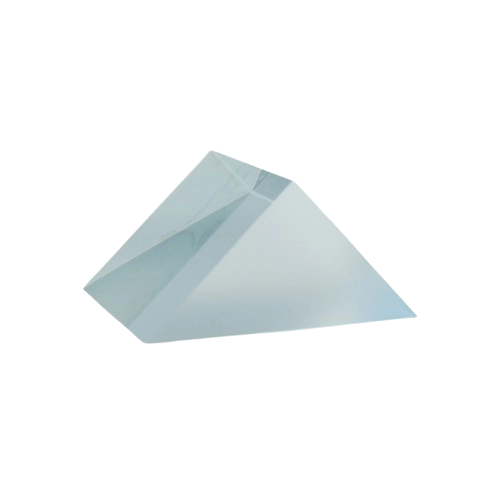
In modern optical engineering systems, especially in laser instrumentation, medical imaging, and industrial vision inspection, the role of a prism is no longer limited to simple beam deviation. For optical system designers and integrators working with precision optical prism lenses, the real challenge lies in maintaining sub-micron optical path stability, angular deviation accuracy, and multi-wavelength transmission consistency under complex system conditions.
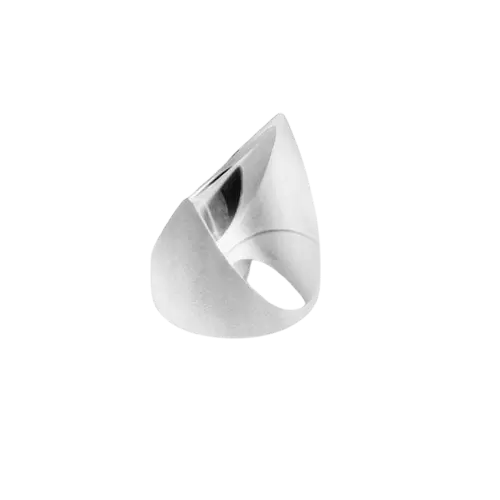
Laser systems used in industrial automation, precision measurement, semiconductor manufacturing, machine vision, and optical alignment increasingly require more than simply generating a laser beam.
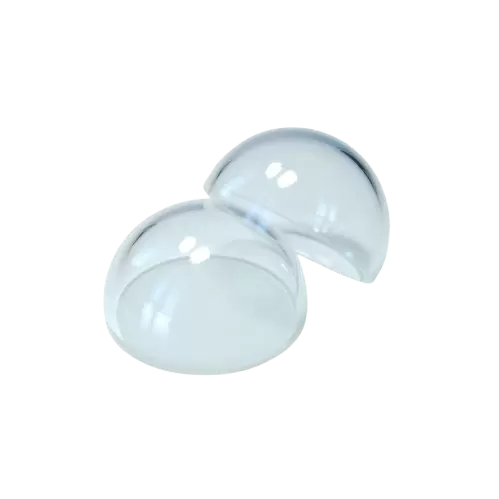
In modern large-scale architectural and industrial infrastructure projects, the evaluation of a super hemisphere dome is no longer driven by geometric appearance or architectural aesthetics.