

 en
en
 English
 繁体中文
繁体中文 Japanese
 Korean
 Russian
 German
News
Deepen Optoelectronic Resources, Lead Technological Breakthroughs

Deepen Optoelectronic Resources, Lead Technological Breakthroughs
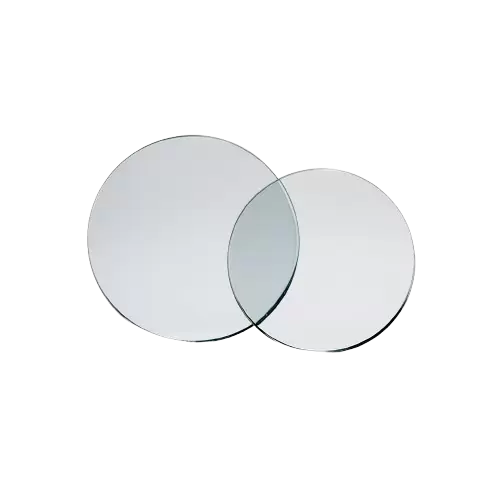
In modern photonic engineering, the concept of Precision optical window price cannot be understood purely as a unit cost of a transparent optical component. For optical system integrators, laser equipment manufacturers, industrial inspection system developers, and aerospace optical laboratories, an optical window is not a passive element—it is a wavefront-preserving interface component embedded directly into the optical path.
When a beam passes through an optical window, even the smallest deviation in surface flatness, material homogeneity, or coating uniformity can propagate into:
wavefront distortion
beam steering error
imaging contrast degradation
energy loss in laser systems
Therefore, the real question is not:
“How much does the optical window cost?”
but rather:
“What is the system-level performance cost introduced by this optical window?”
This shift in perspective defines the difference between commodity procurement and precision optical engineering.
A precision optical window is a flat optical element designed to:
transmit optical radiation with minimal distortion
maintain wavefront integrity
protect internal optical systems from environment
operate under high-energy or harsh conditions
Unlike lenses, optical windows do not intentionally focus light. However, they must ensure zero unintended optical transformation.
This means:
no wavefront curvature addition
no beam deviation
no energy redistribution
Even slight imperfections violate system-level performance.
Key specifications include:
λ/4 @ 632.8 nm (industrial precision grade)
λ/10 @ 632.8 nm (high-end optical systems)
Surface flatness directly determines:
transmitted wavefront distortion
imaging resolution limits
beam coherence preservation
Even nanometer-scale deviations become significant in high-resolution optical systems.
Parallelism error leads to:
beam angular deviation
optical axis drift
cumulative alignment errors in multi-element systems
In high-end optical assemblies, arcsecond-level control is often required.
Material selection determines spectral performance and environmental durability.
wide transmission range (UV–IR)
extremely low thermal expansion
high laser damage threshold
ideal for high-power laser systems
cost-efficient visible spectrum material
widely used in imaging systems
moderate thermal stability
extreme hardness and mechanical durability
excellent performance in harsh environments
suitable for high-pressure or abrasive conditions
optimized for CO₂ laser wavelengths
high IR transmission
used in thermal imaging and laser processing
Coating design significantly affects both performance and cost.
reduces surface reflection loss
improves transmission efficiency
minimizes ghost reflections
supports multiple wavelength bands
used in imaging + spectroscopy systems
Critical for high-power laser systems:
prevents coating burn damage
maintains long-term stability
reduces thermal absorption
Coating quality often defines the upper limit of system power handling.
Surface micro-roughness introduces scattering effects.
Typical specifications:
20–10 (ultra-high precision optics)
40–20 (industrial laser systems)
60–40 (general optical applications)
Higher roughness leads to:
reduced image contrast
stray light interference
energy dispersion in beam systems
Optical windows often operate in extreme environments:
high-power laser irradiation
vacuum chambers
high-pressure systems
corrosive chemical environments
Even transparent materials absorb minimal energy, causing:
localized heating
refractive index variation
beam distortion over time
Failure modes include:
coating delamination
substrate micro-cracking
localized absorption heating
In real optical systems, optical windows introduce:
phase delay
optical path length shift
slight beam displacement
These effects must be compensated during system design.
Impacts include:
MTF reduction
resolution degradation
contrast loss
Impacts include:
beam profile distortion
energy distribution imbalance
divergence changes
Impacts include:
mechanical stress deformation
birefringence effects
alignment sensitivity increase
The real Optical window price is composed of multiple engineering cost layers.
BK7: lowest
fused silica: medium-high
sapphire: high
ZnSe: specialized IR cost
Higher precision dramatically increases cost:
λ/4 polishing → standard cost
λ/10 polishing → exponential cost increase
Reason:
longer polishing time
higher rejection rate
interferometric validation required
Cost increases with coating complexity:
single AR → low cost
BBAR → medium cost
high-LIDT coating → high cost
custom spectral coatings → premium
ECOPTIK employs:
ZYGO laser interferometers (wavefront testing)
ZEISS CMM Spectrum (dimensional accuracy)
Agilent Cary 7000 UMS (transmission measurement)
These ensure optical-grade consistency but increase production cost.
Tighter tolerances reduce yield:
more rejection
higher unit cost
stricter batch control requirements
ECOPTIK has over 15 years of optical manufacturing expertise, specializing in:
precision optical windows
cylindrical optics
spherical lenses
filters and prisms
micro optical components
Material ecosystem includes:
Schott / CDGM / Corning / Sapphire / CaF₂ / MgF₂ / ZnSe / ZnS / Si
Each optical window undergoes:
wavefront interferometry testing
transmission spectrum analysis
surface defect inspection
dimensional verification
When selecting optical windows, engineers should evaluate:
wavefront distortion contribution
material spectral compatibility
thermal stability under operating conditions
coating durability and LIDT rating
long-term production consistency
A precision optical window is not a passive transparent plate—it is a wavefront-preserving interface component that directly influences system-level optical performance.
The true engineering value is defined by:
wavefront integrity preservation
energy transmission efficiency
environmental and thermal stability
system-level optical consistency
Therefore, Precision optical window price must always be evaluated as part of the entire optical system performance cost, not as an isolated component price.
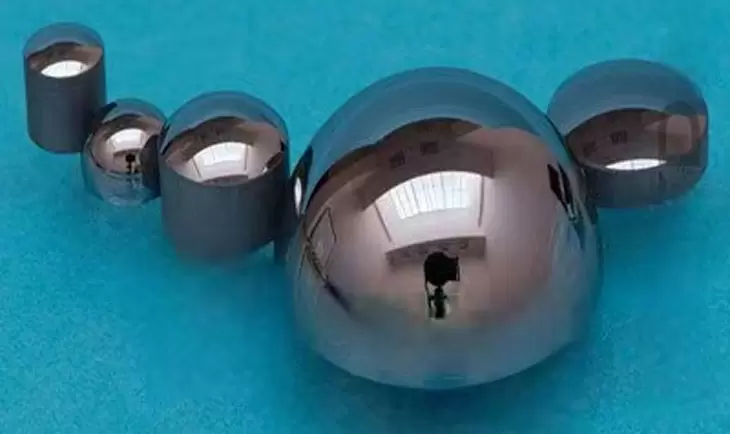
Terahertz waves refer to electromagnetic waves with frequencies ranging from 0.1 to 10 THz (wavelength 30 μ m-3 mm), between microwave and infrared, and were once known as the "THz Gap" due to technological limitations.

The objective lens is the most important optical component of a microscope, which uses light to image the object for the first time. Therefore, it directly affects the quality of imaging and various optical technical parameters, and is the primary standard for measuring the quality of a microscope.
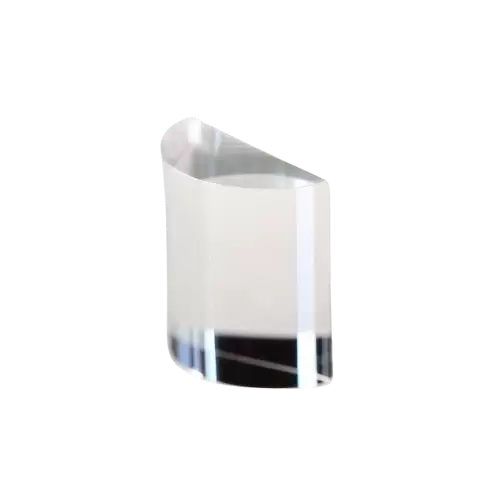
In modern photonics systems, selecting a plano convex cylindrical lens is no longer a simple component-level purchasing decision.