

 en
en
 English
 繁体中文
繁体中文 Japanese
 Korean
 Russian
 German
News
Deepen Optoelectronic Resources, Lead Technological Breakthroughs


Deepen Optoelectronic Resources, Lead Technological Breakthroughs
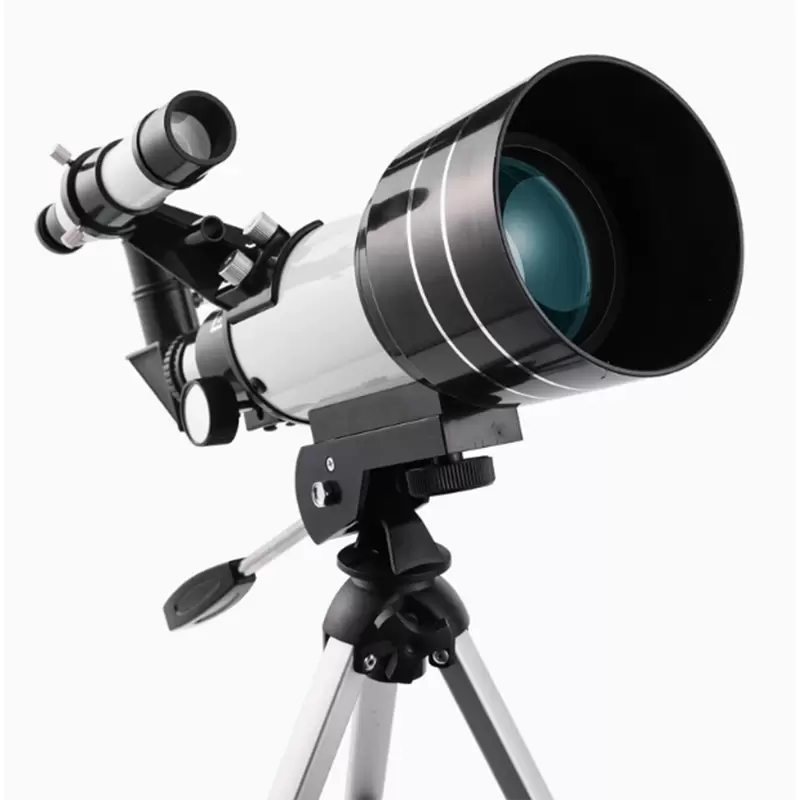
A reflective telescope is a telescope that uses the principle of reflection to image, and its imaging principle and optical path are different from those of a refracting telescope. Reflective telescopes use convex lens to reflect light, and then project an image through a small lens placed at the focal point, thereby achieving the function of magnifying distant objects.
Reflective telescopes have significant advantages, mainly manifested in the following aspects.
1. Optical system
Reflective telescopes use the principle of reflection, using convex lens to reflect light and avoid problems such as refraction loss, which is their biggest advantage. Convex lens are commonly used in various forms such as arches, spheres, and paraboloids. Parabolic lens are the best performing type, with relatively low optical distortion and ideal solutions to dispersion problems.
2. High imaging clarity
Reflective telescopes have only one lens on the optical path, so with the same objective aperture, they can magnify objects with a larger optical focal length, thereby improving the clarity of imaging. The clarity of simultaneous imaging is less affected by the optical error of metal concave lens, and reflective telescopes perform well in some high-precision observations.
3. High reliability
The optical path of a reflective telescope has only one lens, which largely avoids the separation of signals between the lens barrel and the glasses caused by different center lines or planes of the lens. Meanwhile, reflective telescopes with larger openings have smaller glasses volume, higher strength, and are easier to manufacture compared to refractive telescopes of the same caliber, resulting in relatively higher reliability.
The principle of a reflective telescope is to use the architectural and optical properties of a metal convex lens to image distant objects through reflection. The optical route of a reflective telescope is "main lens+auxiliary lens". The main lens is the largest and most critical part of the configuration of a reflective telescope, and its shape includes three commonly used forms: arch, sphere, and parabolic. Among them, the parabolic lens is the most widely used. One of the important performance parameters of the main lens is the aperture, which is the diameter of the main lens. The larger the aperture, the stronger the telescope's telescopic ability. Reflective telescopes have a wide range of applications, including space exploration, planetary exploration, astrometry, and Earth observation. And the design and manufacturing of reflective telescopes are gradually maturing, with significantly shortened engineering cycles and lower manufacturing costs compared to earlier stages. This has a great driving force for scientific research and teaching use.
In summary, the advantages of simple optical system, high clarity, and strong reliability of reflective telescopes make them the most widely used type of telescope currently available, with broad prospects for scientific research and educational applications.

In modern optical engineering, every component inserted into a light path influences system performance, alignment tolerance, energy efficiency, and long-term stability.

Endoscope is a medical tool used to examine organs and tissues inside the human body. It consists of a soft long tube with a small light source and camera at one end, which can transmit images to a display for doctors to observe.

A microscope is a precision measuring instrument that allows students to observe extremely small organisms and study their microbial morphology. The main body of the microscope is composed of optical and mechanical parts, among which the optical part is the most important. The optical part of a microscope mainly consists of an objective lens and an eyepiece. By combining the two, a good observation image is formed.