

 en
en
 English
 繁体中文
繁体中文 Japanese
 Korean
 Russian
 German
News
Deepen Optoelectronic Resources, Lead Technological Breakthroughs


Deepen Optoelectronic Resources, Lead Technological Breakthroughs
Structure of Cemented Lens
A cemented lens is composed of two or more lenses with different optical parameters bonded together by optical cement. The most common type is the doublet cemented lens. Typical combinations are:Positive lens: crown glass with low dispersion and high refractive index (e.g., K9/BK7), mostly plano-convex or biconvex;Negative lens: flint glass with high dispersion and low refractive index (e.g., F2/F1), mostly concave;Contact surface: the curvatures of the two lenses are precisely matched, the curvature of the cemented surface is consistent, and there is no air gap at the interface.
Achromatic Principle
The core is to offset chromatic aberration by the dispersion difference of the two kinds of glass, so as to realize chromatic aberration correction in the visible light band.Cause of chromatic aberration: the refractive index of glass changes with wavelength (e.g., the refractive index of blue light > that of red light). A single lens will cause the focal points of red, green and blue light to separate (axial chromatic aberration), resulting in colored edges in the image;Key to correction: select glass pairs with large Abbe number difference (high Abbe number of crown glass = low dispersion, low Abbe number of flint glass = high dispersion), and design the curvature to satisfy that the sum of the product of optical power and Abbe number ≈ 0(f₁V₁ + f₂V₂ ≈ 0), so that the red light (C-light) and blue light (F-light) focus on the same point, and the green light focus is nearly coincident, thus eliminating the primary chromatic aberration;Additional effect: it can also optimize monochromatic aberrations such as spherical aberration and coma, and improve imaging clarity.
Tips
Model selection: standard doublet cemented lenses with a diameter of 6–50 mm and anti-reflection coating in the visible light band are commonly used in foreign trade, suitable for laser, imaging, detection and other scenarios;Technology: the cemented surface needs high-precision polishing and matching, and the glue layer must be uniform without bubbles, otherwise it will cause scattering or transmittance loss.
Applications of Cemented Lenses
Cemented lenses are widely used in laser systems, imaging equipment, industrial testing, medical optics, scientific research, and communication fields.
1. Laser applications: Laser focusing, collimation, marking, ranging, and laser radar.
2. Imaging & projection: Camera lenses, surveillance cameras, projectors, and machine vision lenses.
3. Medical optics: Endoscopes, ophthalmic instruments, and medical imaging devices.
4. Scientific & industrial: Spectrometers, telescopes, optical sights, and precision measurement systems.
5. Optical communication: Optical fiber coupling and signal transmission components.

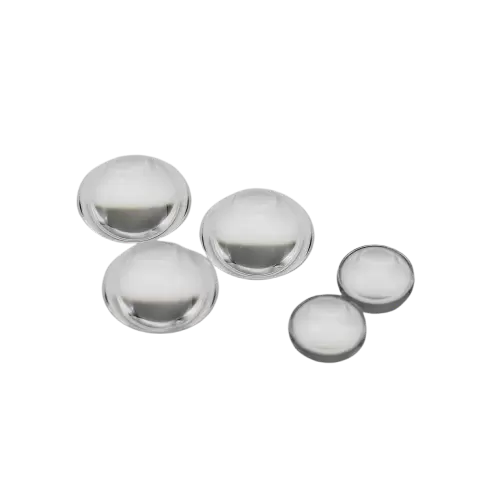
In modern optical engineering systems, performance bottlenecks are no longer defined by sensor resolution or digital processing capability alone, but increasingly by the physical limitations of optical front-end components.
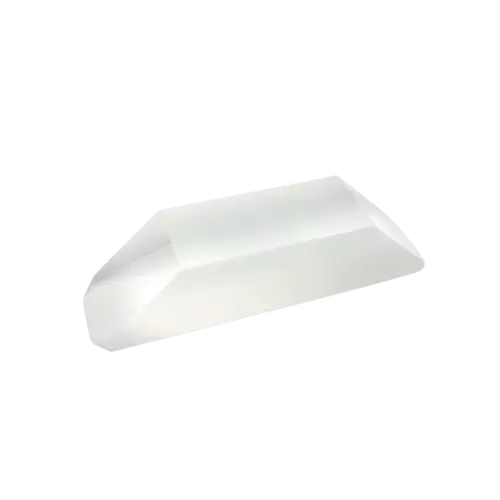
In precision optical engineering, Dove prism uses are defined by a unique capability: controlled image rotation at twice the physical rotation angle of the prism itself, enabling deterministic manipulation of optical orientation within imaging and beam propagation systems.
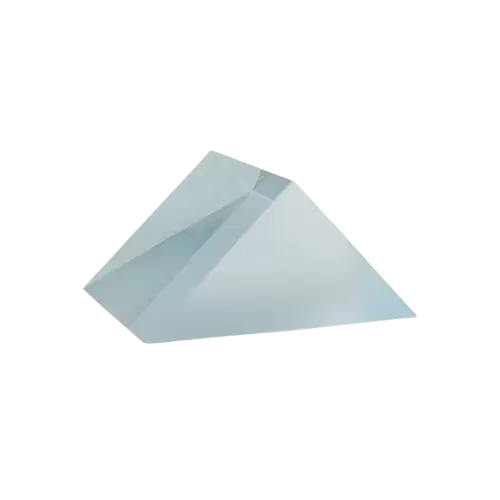
In precision optical systems, beam steering is not simply about “redirecting light.” It is about controlling optical path geometry, preserving wavefront integrity, minimizing phase distortion, and maintaining long-term alignment stability under varying incidence angles and environmental conditions.