

 en
en
 English
 繁体中文
繁体中文 Japanese
 Korean
 Russian
 German
News
Deepen Optoelectronic Resources, Lead Technological Breakthroughs


Deepen Optoelectronic Resources, Lead Technological Breakthroughs
In optical engineering, dome-shaped components are often chosen when a system needs both environmental protection and controlled light transmission. At first glance, many domes may look similar. They are all curved, transparent, and used as outer protective elements. But in real optical applications, the difference between a super hemisphere dome and a standard optical dome can be significant.
For buyers, engineers, and product developers, this difference is not just about shape. It affects transmission quality, system accuracy, environmental resistance, manufacturing complexity, and long-term performance. Choosing the wrong dome can create avoidable problems in imaging, sensing, and inspection systems. Choosing the right one can improve both optical reliability and product life.
This article explains the practical differences between a super hemisphere dome and a standard optical dome, and why that distinction matters in precision optics.
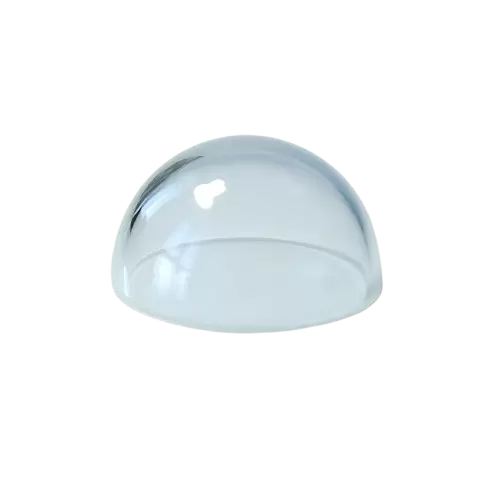
A standard optical dome is a curved transparent protective component designed for optical use. Compared with ordinary industrial glass covers, it is made with optical materials and tighter quality control so that it can protect internal components while still allowing light to pass through.
Standard optical domes are commonly used in systems that need:
These domes are often suitable for many common optical applications, especially where the system design can tolerate moderate optical complexity at the interface.
A super hemisphere dome is a more specialized optical dome geometry designed for higher-performance systems. It is not simply a slightly different curved cover. Its geometry is developed to improve how light interacts with the dome and to better support demanding optical requirements.
In many applications, a super hemisphere dome is selected when designers need tighter control over:
This makes super hemisphere domes more common in advanced imaging, infrared systems, electro-optical assemblies, and other precision optical applications where the dome is not just a shield, but part of the optical design itself.
If you are evaluating actual product options, a Hemisphere Dome can be a useful reference point for understanding how dome geometry, material quality, and manufacturing precision come together in optical applications.
The most obvious difference is shape, but the practical result of that shape is more important than the visual difference.
A standard optical dome is usually based on a more basic dome geometry intended to provide optical access and physical protection. It can perform well in many applications, especially when system demands are not extremely strict.
A super hemisphere dome is designed with a more specialized optical profile. That profile can help improve how incoming and outgoing light behaves across wider angles or more demanding optical paths.
In other words, the extra precision in shape is not for appearance. It is there to support system performance.
A standard optical dome is still an optical component, but the acceptable performance range is often broader depending on the application. In some systems, a standard dome is sufficient because the internal optics can compensate for certain limitations, or because the required imaging precision is not extremely high.
A super hemisphere dome is usually chosen when the performance target is tighter. This may involve stricter expectations for:
When the dome sits directly in front of a high-value sensor or lens group, even a small optical error can affect the full system. That is where super hemisphere designs become more valuable.
A standard optical dome often acts mainly as a protective optical barrier. It matters, but in some applications it is not deeply integrated into the optical correction strategy of the system.
A super hemisphere dome is more likely to be treated as a working optical element. That means its geometry, thickness, material, and surface quality may all be evaluated as part of the total system design.
This is a critical distinction.
When a dome becomes part of the optical performance chain, the supplier must manufacture it not just to mechanical dimensions, but to optical intent. That changes how the part should be specified, inspected, and selected.
Both standard optical domes and super hemisphere domes can be made from optical-grade materials. However, super hemisphere domes are usually more sensitive to material choice because their applications tend to be more demanding.
Material selection may depend on:
For example, in harsh environments or infrared systems, material selection becomes a major design factor. A standard dome may be acceptable in one environment, while a super hemisphere dome made from a more suitable material may be necessary in another.
This is one of the most important practical differences for sourcing teams.
A standard optical dome is already more complex than flat windows or simple covers, but a super hemisphere dome usually demands even tighter manufacturing control. Challenges often include:
These are not trivial manufacturing issues. Small errors in a curved precision optic can lead to measurable optical loss, distortion, or integration problems.
That is why buyers should not assume that every optical dome supplier is equally capable of producing super hemisphere domes at the same quality level.
With standard optical domes, inspection may focus on common criteria such as visible defects, dimensional checks, and general transmission requirements.
With super hemisphere domes, inspection often needs to go further. Depending on the application, buyers may need verification related to:
This is one reason experienced precision optics manufacturers are preferred in more advanced dome projects. Inspection capability is often as important as machining capability.
A standard optical dome may be suitable for:
A super hemisphere dome is more suitable for:
This does not mean a super hemisphere dome is always the better choice. It means the right choice depends on the actual use condition, performance target, and system sensitivity.
If you are comparing a standard optical dome and a super hemisphere dome, asking the right questions early can save time and cost later. A buyer should usually confirm:
These questions help move the discussion from “Which dome looks similar?” to “Which dome actually fits the application?”
In dome optics, the supplier is not just a fabricator. A capable manufacturer should be able to discuss geometry, materials, polishing, coating, inspection, and application fit. This is especially true when the part is custom.
For a standard dome, supplier capability still matters. For a super hemisphere dome, it matters even more. The more critical the optical role of the dome, the more important it becomes to work with a manufacturer that understands precision optical production as a complete process.
That includes material sourcing, fabrication experience, metrology support, and the ability to align the dome specification with the final optical system.
The difference between a super hemisphere dome and a standard optical dome is not just a matter of shape. It is a matter of function, performance expectation, and manufacturing precision.
A standard optical dome can be the right choice for many systems that need protection with stable optical transmission. A super hemisphere dome is better suited to more demanding systems where dome geometry directly influences optical quality and system behavior.
For engineers and sourcing teams, the key is to evaluate the dome based on real application needs rather than appearance alone. When optical performance, environmental durability, and integration quality all matter, the dome should be treated as a serious optical component.
ECOPTIK China focuses on precision optical manufacturing, and that kind of experience is particularly valuable when the difference between a workable part and a reliable part depends on details that are easy to overlook at the sourcing stage.
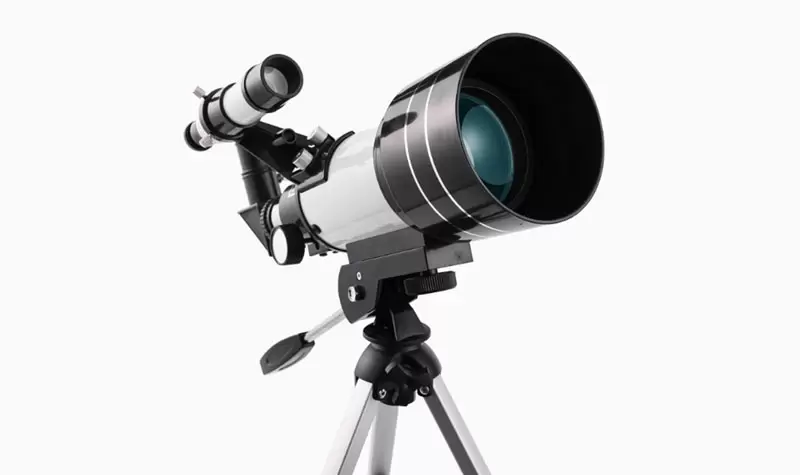
A reflective telescope is a telescope that uses the principle of reflection to image, and its imaging principle and optical path are different from those of a refracting telescope. Reflective telescopes use convex lens to reflect light, and then project an image through a small lens placed at the focal point, thereby achieving the function of magnifying distant objects.

In modern optical engineering systems, especially in laser instrumentation, medical imaging, and industrial vision inspection, the role of a prism is no longer limited to simple beam deviation. For optical system designers and integrators working with precision optical prism lenses, the real challenge lies in maintaining sub-micron optical path stability, angular deviation accuracy, and multi-wavelength transmission consistency under complex system conditions.
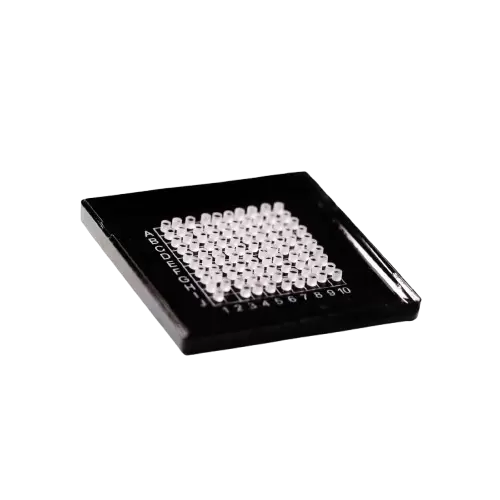
A compact optical system often has to solve a problem that a conventional spherical lens does not handle efficiently: controlling light in one direction while keeping the optical package small. In endoscopes, medical imaging modules, machine vision assemblies, and other precision instruments, a spherical lens may provide general imaging performance but cannot always deliver the required line-focusing behavior within a restricted optical path.