

 en
en
 English
 繁体中文
繁体中文 Japanese
 Korean
 Russian
 German
News
Deepen Optoelectronic Resources, Lead Technological Breakthroughs


Deepen Optoelectronic Resources, Lead Technological Breakthroughs
In precision optics, some components do much more than their simple shape suggests. A super hemisphere dome is a good example. At first glance, it may look like a smooth protective glass cap, but in real optical systems, it is far more than a cover. It is a carefully manufactured optical element that must balance geometry, material quality, transmission performance, surface precision, and environmental durability.
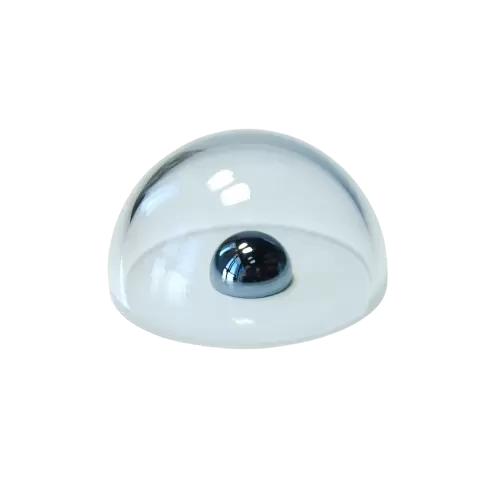
For engineers, buyers, and system designers, understanding what a super hemisphere dome does is important because this component often sits at the boundary between a sensitive optical system and a harsh working environment. When that boundary fails, the whole system can lose accuracy, image quality, or long-term reliability.
A super hemisphere dome is a precisely shaped optical dome with a profile that goes beyond a basic hemisphere. It is designed to protect internal optical assemblies while still allowing light to pass through in a controlled and predictable way.
Unlike ordinary industrial domes or glass covers, a super hemisphere dome is made for optical use. That means it must meet tighter requirements in areas such as:
In many cases, this kind of dome is used in systems where the optical path must remain stable even when the outer surface is exposed to wind, moisture, dust, pressure, heat, or mechanical wear.
If you are comparing product options, a Super Hemisphere Dome is typically selected not just for physical protection, but because its geometry can help optimize optical performance in demanding applications.
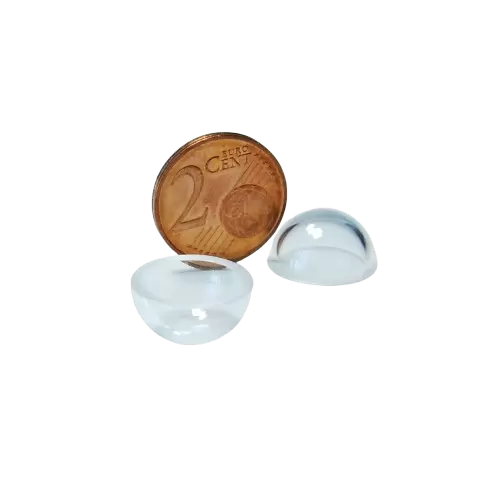
In a normal enclosure, a cover mainly keeps the internal parts safe. In precision optics, the outer dome must do that without introducing excessive optical distortion.
That is where the super hemisphere design becomes important. Because of its shape, it can offer better control over the way light enters and exits the system. In well-designed applications, this helps reduce unwanted optical effects and supports more stable performance.
A super hemisphere dome is often chosen when the system designer needs several things at once:
This combination makes it useful in advanced systems where both protection and optical integrity matter equally.
This is one of the most common misunderstandings among non-specialist buyers. A standard glass dome may look similar, but the performance difference can be significant.
An ordinary dome is usually made with general forming goals in mind. It may be suitable for basic covering or display purposes, but it is not necessarily optimized for optical transmission or imaging quality.
A super hemisphere dome, by contrast, is built with optical performance as part of the design target. That usually means:
Optical domes are often made from materials chosen for transmission, thermal stability, hardness, or wavelength compatibility. Depending on the application, this may include optical glass, fused silica, sapphire, or infrared materials.
The surface profile must be controlled far more tightly than in ordinary domes. Small surface errors can cause wavefront issues, image degradation, or alignment problems.
Scratches, digs, inclusions, and edge issues matter much more in optical systems. A protective dome for precision optics cannot be treated like standard formed glass.
In many systems, anti-reflection or other functional coatings are needed. The dome must support coating processes without degrading performance.
Optical domes are usually checked using advanced metrology and inspection methods to verify transmission, geometry, and optical consistency.
Super hemisphere domes are used in systems where optics must work reliably in environments that are not friendly to delicate lenses or sensors.
In infrared applications, the dome can act as the external interface between the detector and the outside world. Material choice becomes especially important here, because not every material performs well in infrared bands.
Tracking, monitoring, and sensing systems often use domes to protect internal optics while preserving a broad viewing range.
These applications often require strong environmental resistance as well as consistent optical performance under demanding conditions.
Moisture, wind, sand, and temperature variation can quickly damage exposed optics. A dome helps shield the system, but only an optical-grade dome can do so without hurting performance too much.
Some industrial imaging or test platforms also use dome structures where a protected optical path is required.
When evaluating a super hemisphere dome, it is not enough to look only at the outer dimensions. In practice, buyers should ask about the following points.
The right material depends on wavelength, environment, and mechanical requirements. A visible-light system may prioritize one type of optical glass, while an infrared system may require a completely different substrate.
This affects how well the dome preserves the intended optical path. Poor surface accuracy can introduce distortion or reduce imaging performance.
Visible defects may indicate manufacturing issues that can affect transmission or reliability.
A dome may need anti-reflection coating, protective coating, or other functional treatments depending on the use environment.
The dome must be strong enough for the working condition, but thickness changes can also affect the optical path and total weight.
Tight tolerances are often necessary to match the dome with housing structures, seals, or downstream optical assemblies.
A reliable supplier should be able to provide measurement and inspection support, not just a finished part.
From an SEO or buyer education perspective, this is an important point to explain clearly: super hemisphere domes are not easy parts.
The challenges usually come from the combination of shape and performance. A supplier is not just shaping a curved piece of glass. They are trying to hold precision across a three-dimensional surface while also preserving optical quality.
Some of the main manufacturing challenges include:
That is why experienced optical manufacturers are often preferred for this type of product. Buyers usually want a supplier that understands not only machining and polishing, but also how the dome works in the final optical system.
If your project involves a super hemisphere dome, choosing the right supplier matters almost as much as choosing the right specification.
A capable supplier should be able to discuss:
This is especially important for custom projects. Many dome applications are not standard catalog purchases. They require close communication between the customer and the optical manufacturer to make sure the final part matches the actual system use.
A super hemisphere dome in precision optics is not just a protective shell. It is a functional optical component that helps maintain system performance while shielding sensitive internal elements from the outside environment.
Its value comes from the combination of protection, optical control, material engineering, and manufacturing precision. For buyers, understanding this distinction can help avoid the common mistake of treating a precision optical dome like ordinary curved glass.
When the application involves imaging accuracy, environmental durability, and long-term optical stability, the dome becomes a critical part of the system design. That is why more engineers and sourcing teams look for manufacturers with real precision optics experience rather than generic glass forming capability.
For projects that require controlled optical performance, custom fabrication, and reliable inspection support, working with an experienced supplier such as ECOPTIK China can make the specification process much more practical and much more efficient.
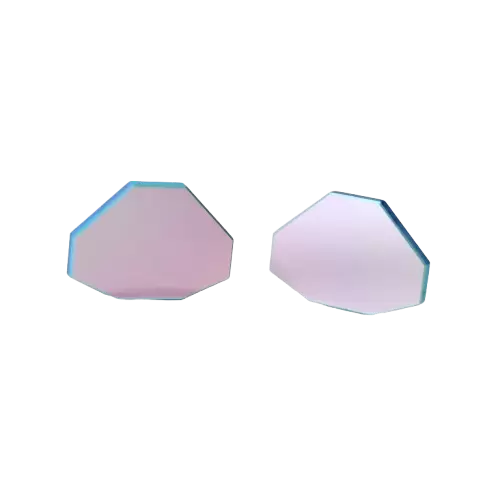
Modern laser processing systems are expected to achieve higher throughput while maintaining consistent positioning accuracy. However, many traditional laser scanning solutions face limitations when operating at high speeds.
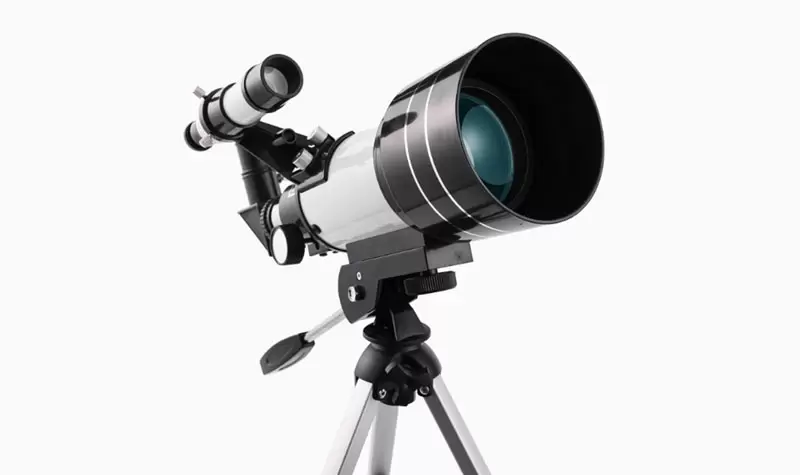
A reflective telescope is a telescope that uses the principle of reflection to image, and its imaging principle and optical path are different from those of a refracting telescope. Reflective telescopes use convex lens to reflect light, and then project an image through a small lens placed at the focal point, thereby achieving the function of magnifying distant objects.
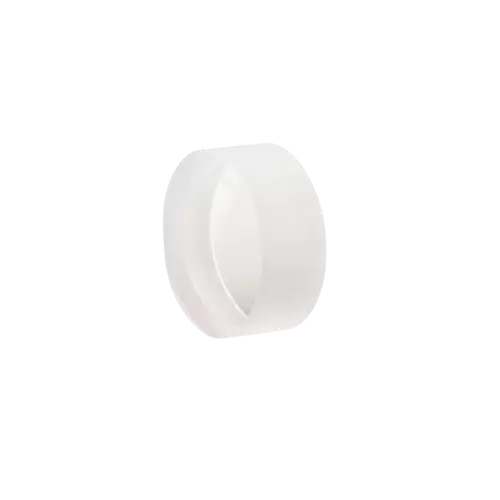
For precision optical systems, choosing a convex lens based only on diameter and focal length is rarely enough. The term “convex lens” covers several optical geometries, including double convex and plano-convex designs, and their performance can differ significantly even when their nominal focal lengths are similar.