

 en
en
 English
 繁体中文
繁体中文 Japanese
 Korean
 Russian
 German
News
Deepen Optoelectronic Resources, Lead Technological Breakthroughs


Deepen Optoelectronic Resources, Lead Technological Breakthroughs
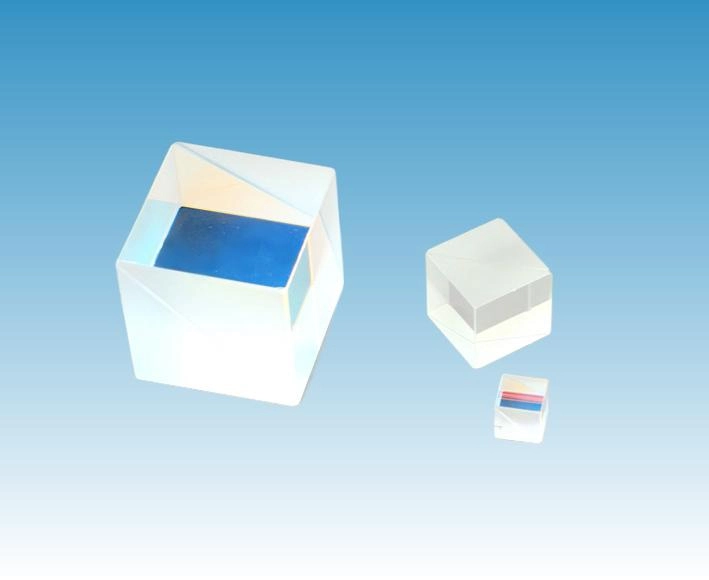
The cubic spectroscopic prism is an optical component with special geometric shape and optical properties, which is usually used for spectral analysis, refraction or changing the direction of light propagation.Its structural design and functions enable it to achieve specific optical effects in optical systems, especially in dispersion or spectroscopic applications. The following is a detailed introduction to the structure of the cube beam splitter:
1. Structural Characteristics
Three optical surfaces: Each surface of the cubic beam-splitting prism can reflect or refract the incident light. In practical applications, the angles between these surfaces are usually designed to be 90 degrees or other specific angles to meet specific optical requirements.Reflection and refraction principles: When the incident light passes through the cubic beam-splitting prism, it undergoes multiple refractions and reflections. Each refraction and reflection alters the direction of the light, causing it to propagate along a specific path.
Dispersion characteristics: In the application of beam splitting, the material of the prism and its surface angle determine the dispersion effect of the light. When light of different wavelengths passes through the prism, their propagation speeds are different, resulting in the separation of the spectrum.
2. Working Principle
The working principle of the cubic beam-splitting prism is based on the refraction and dispersion of light. The incident light passes through the first surface and enters the interior of the prism. After entering the prism, the light is refracted by the material inside the prism, causing it to change direction. As the light passes through multiple surfaces of the prism, its path is repeatedly refracted and reflected, and finally exits the prism from the other side.
3. Spectral Separation
A cubic diffraction grating can be used to decompose white light into different spectral components. Through the dispersion effect, light of different wavelengths will be emitted from the grating at different angles, forming a spectrum. Generally speaking, shorter wavelengths of light (such as purple and blue light) will be refracted more, while longer wavelengths of light (such as red light) will be refracted less.
4. Application
Spectral analysis: Used in spectrometers, it can break down white light into light of different wavelengths, facilitating the analysis and measurement of light of various wavelengths.Optical instruments: In optical instruments, they are used to precisely control the direction of light, split light or adjust the path of the light beam. Laser systems: In laser systems, cubic beam-splitting prisms are used to control the direction of the laser or separate the laser beam. Scientific experiments: In experiments, especially in physics and chemical analysis, prisms are used to analyze different wavelengths of spectra or to conduct optical characteristic tests.
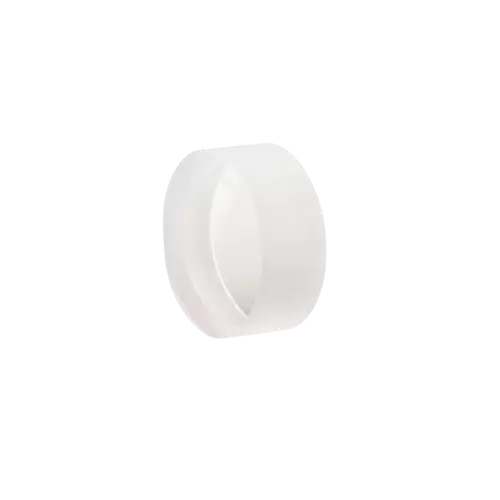
For precision optical systems, choosing a convex lens based only on diameter and focal length is rarely enough. The term “convex lens” covers several optical geometries, including double convex and plano-convex designs, and their performance can differ significantly even when their nominal focal lengths are similar.
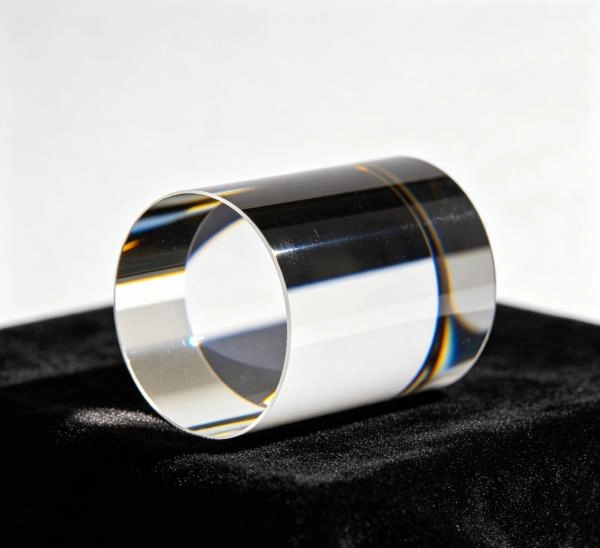
Cylindrical lenses stand as indispensable components in modern optical systems, powering critical applications ranging from laser beam shaping and anamorphic imaging to light-sheet microscopy and laser radar systems.
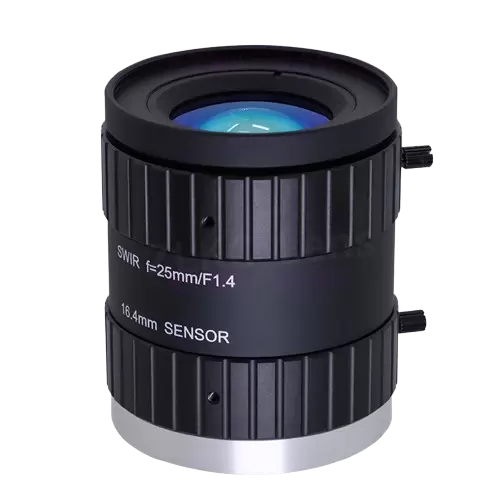
A standard visible-light lens is not automatically suitable for short-wave infrared imaging. As the operating wavelength moves beyond the visible range, optical transmission, dispersion, chromatic focus shift, aberration correction, coating performance, and detector matching all become design considerations.