

 en
en
 English
 繁体中文
繁体中文 Japanese
 Korean
 Russian
 German
News
Deepen Optoelectronic Resources, Lead Technological Breakthroughs


Deepen Optoelectronic Resources, Lead Technological Breakthroughs
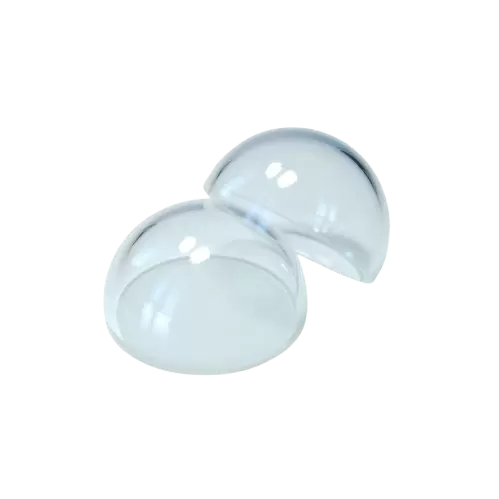
In modern large-scale architectural and industrial infrastructure projects, the evaluation of a super hemisphere dome is no longer driven by geometric appearance or architectural aesthetics. For construction contractors, industrial protection system integrators, and research facility builders, the real engineering focus is on structural load capacity, dimensional precision, environmental resilience, and lifecycle maintenance cost.
When engineers search for Super hemisphere dome replacement or evaluate Super hemisphere dome dimensions, the underlying intent is not simply component substitution. It is a system-level assessment of whether a dome structure can maintain:
Structural integrity under wind and snow load conditions
Dimensional stability during long-term environmental exposure
Installation compatibility with existing building frameworks
Maintenance efficiency across multi-year operation cycles
This shifts the dome from a passive architectural element into a load-bearing environmental protection system.
In traditional architectural thinking, dome replacement is treated as a material upgrade. In industrial and engineering practice, however, Super hemisphere dome replacement is a structural recalibration process.
Every dome structure is part of a larger mechanical load system. When replacing a dome, engineers must evaluate:
Dead load transfer paths into supporting frames
Wind pressure distribution across curved surfaces
Snow accumulation stress zones in cold climates
Thermal expansion mismatch between frame and dome material
Even minor differences in structural stiffness can shift load concentration points, leading to:
Joint fatigue
Seal failure
Frame deformation over time
Replacement compatibility depends heavily on:
Mounting flange geometry
Connection node spacing
Edge curvature radius alignment
Tolerance stack-up across modules
A mismatch in any of these parameters can introduce:
Structural stress concentration
Micro-cracking at connection points
Long-term sealing degradation
Different dome materials and structures respond differently to:
UV exposure
Temperature cycling
Humidity and condensation
Chemical or industrial atmosphere exposure
Thus, replacement must consider environmental load equivalence, not just physical fit.
One of the most frequently searched technical questions is:
How do Super hemisphere dome dimensions affect structural performance and coverage capability?
In engineering terms, dome dimensions directly determine:
As dome diameter increases:
Curvature radius increases
Load distribution becomes more uniform
Edge stress concentration decreases (if properly engineered)
However, if dimensional scaling is not matched with structural reinforcement:
Mid-span deflection increases
Buckling risk rises under high wind load
A critical design parameter is the ratio:
Dome thickness vs span diameter
If too thin:
Risk of deformation under wind load
If too thick:
Excess dead load increases frame stress
Optimized design ensures balanced structural stiffness-to-weight ratio.
Dimensional geometry influences:
Membrane stress paths
Shear stress concentration zones
Edge anchoring force distribution
Poor dimensional design leads to uneven stress propagation across the dome surface.
ECOPTIK, with 15 years of expertise in precision optical and structural component manufacturing, has extended its engineering capability into advanced dome fabrication systems.
The company manufactures:
Dome optical and structural components
Spherical lenses and micro-optical systems
High-precision windows and filters
Sapphire, fused silica, ZnSe, Si, and N-BK7 based structures
Supported by advanced metrology systems including:
ZYGO laser interferometers
ZEISS coordinate measurement systems
Agilent Cary 7000 UMS optical analysis platform
This ensures that dome structures are not only geometrically accurate but also mechanically validated under precision measurement standards.
Unlike monolithic dome construction, the ECOPTIK super hemisphere dome system is based on modular assembly architecture.
Each dome segment is manufactured with:
High dimensional tolerance control (down to ±0.02 mm in precision zones)
Reproducible curvature accuracy across production batches
Interchangeable module compatibility
This ensures that replacement does not require full structural redesign.
Modular systems allow:
Reduced crane operation time
Simplified alignment procedures
Pre-calibrated structural fitment
This directly reduces:
Construction downtime
Labor cost
Installation risk exposure
Connection points are engineered to:
Distribute stress evenly across joints
Minimize shear concentration
Improve fatigue resistance under cyclic loading
This is critical in long-term outdoor installations where wind and thermal cycling are continuous.
A key requirement in modern infrastructure is multi-environment resilience.
Dome structures are aerodynamically efficient, but must still resist:
High wind gust pressure
Vortex shedding effects
Dynamic oscillation under storm conditions
Proper curvature design ensures:
Smooth airflow deflection
Reduced pressure differential zones
In cold environments:
Snow accumulation creates asymmetric loading
Localized stress increases near apex regions
Engineered dome curvature helps:
Naturally shed snow loads
Prevent localized overload failure
For long-term outdoor use:
UV radiation causes polymer degradation or surface embrittlement
Thermal cycling induces micro-expansion fatigue
Material selection (sapphire, fused silica, CDGM glass types) ensures:
Stable refractive and structural properties
Long-term surface integrity
One of the most important procurement questions is:
Why does Super hemisphere dome replacement cost vary so significantly between suppliers?
The answer lies in system-level engineering complexity.
Low-cost replacements often ignore:
Frame compatibility tolerance
Load redistribution modeling
Edge stress recalibration
This leads to higher long-term maintenance costs.
High-performance domes require:
Optical-grade surface control
Interferometric quality inspection
High-precision curvature machining
These processes significantly increase production complexity but reduce failure risk.
Modular precision systems reduce:
Field adjustment requirements
Rework frequency
Structural alignment errors
This directly lowers overall project execution cost.
Used in:
Sensor protection systems
Environmental monitoring enclosures
High-altitude or corrosive environments
Used for:
Optical testing environments
Atmospheric simulation chambers
Controlled environment domes
Applied in:
Exhibition halls
Research campuses
Specialized industrial enclosures
Compatibility is determined by:
Structural frame geometry match
Load distribution equivalence
Connection interface tolerance alignment
Material stiffness compatibility
Dimensions directly control:
Structural span capacity
Wind load distribution efficiency
Stress concentration behavior
Installation feasibility
Through:
Aerodynamic curvature optimization
Load dispersion geometry
Reinforced edge anchoring systems
Yes. Modular architecture allows:
Segment-level replacement
Minimal structural disassembly
Reduced downtime during maintenance
UV exposure → surface aging
Temperature cycling → expansion fatigue
Humidity → sealing degradation
Material selection is critical for long-term stability.
In modern engineering applications, a super hemisphere dome is not simply a geometric shell. It is a structural load management system integrated into environmental and mechanical stress networks.
Successful Super hemisphere dome replacement depends on:
Structural compatibility engineering
Dimensional precision control
Modular installation efficiency
Environmental load adaptability
Similarly, accurate understanding of Super hemisphere dome dimensions is essential for ensuring long-term stability, safe load distribution, and cost-efficient maintenance cycles.
With ECOPTIK’s precision manufacturing capability, advanced metrology systems, and high-performance material portfolio, super hemisphere dome systems are engineered not only for geometric accuracy, but for true industrial-grade structural reliability across demanding environments.
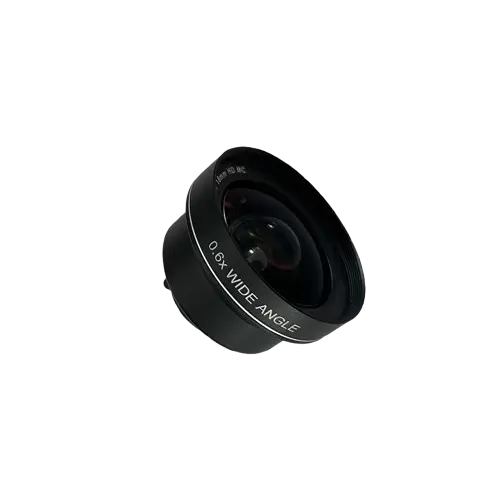
Conventional wide-angle lenses can capture more of a scene than standard lenses, but their field of view can still be insufficient when a vision system needs to cover a large area from a restricted installation position.
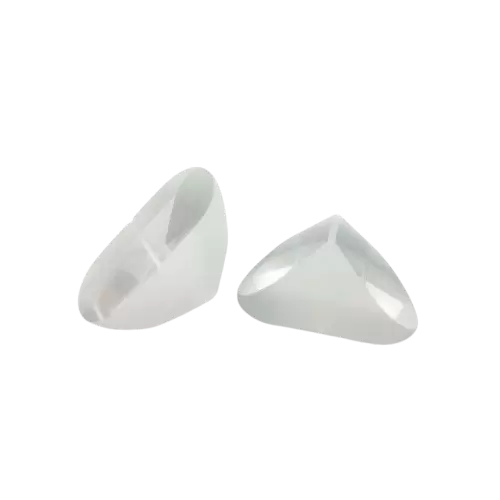
In precision optical measurement systems, the stability of the reflected light path directly affects the accuracy and reliability of measurement results. Traditional flat mirrors are widely used because of their simple structure and high reflection efficiency, but their performance depends heavily on precise installation and alignment.
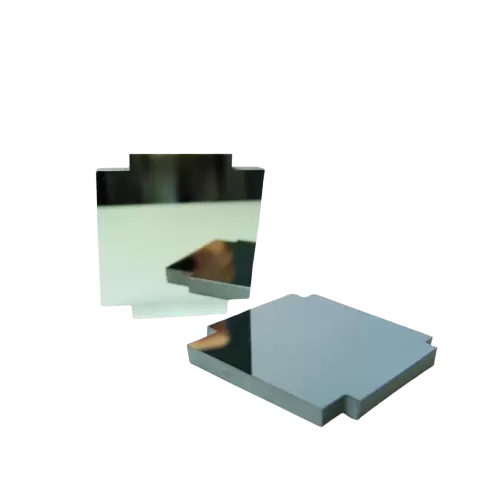
In high-performance optical systems, the mirror is not simply a component that redirects light. Its reflection efficiency, thermal behavior, and wavelength compatibility can directly influence the stability and output performance of the entire system.