

 en
en
 English
 繁体中文
繁体中文 Japanese
 Korean
 Russian
 German
News
Deepen Optoelectronic Resources, Lead Technological Breakthroughs


Deepen Optoelectronic Resources, Lead Technological Breakthroughs
In modern optical engineering systems, especially in laser instrumentation, medical imaging, and industrial vision inspection, the role of a prism is no longer limited to simple beam deviation. For optical system designers and integrators working with precision optical prism lenses, the real challenge lies in maintaining sub-micron optical path stability, angular deviation accuracy, and multi-wavelength transmission consistency under complex system conditions.
Similarly, when engineers evaluate Light Guide Prism solutions, the focus is not just light transmission, but optical homogenization efficiency, internal reflection stability, and wavefront preservation across propagation paths.
In high-end optical systems, even a minor deviation in prism geometry or refractive index uniformity can translate into:
Imaging position drift in precision cameras
Beam misalignment in laser scanning systems
Signal loss in photonic measurement systems
Wavefront distortion in high-resolution imaging pipelines
This makes precision prisms not passive components, but active optical path control elements.
In advanced optical design, a prism is responsible for controlling three key parameters:
Beam direction (angular deviation control)
Optical path length stability
Wavefront integrity preservation
For Precision optical prism lenses, system performance depends on how precisely these parameters are maintained under real-world conditions.
According to Snell’s Law:
Even micro variations in refractive index or surface angle result in angular deviation errors
These errors scale linearly with optical path length
In long optical systems (e.g., laser projection or imaging pipelines), a deviation of:
1 arcminute at prism level
can translate into
millimeter-level positional error at output plane
This is why angular precision is not a specification—it is a system stability requirement.
Prisms introduce potential:
Phase delay variations
Surface-induced wavefront distortion
Internal scattering due to micro-roughness
High-end systems require wavefront error control at:
λ/10 or better
Otherwise, the system suffers from:
Reduced MTF (Modulation Transfer Function)
Loss of edge sharpness in imaging
Reduced beam coherence in laser applications
ECOPTIK, with over 15 years of expertise in optical component fabrication, specializes in high-performance optical systems including:
Precision prisms
Spherical and cylindrical lenses
Optical windows and filters
Micro-optical components and assemblies
The company integrates full-chain optical manufacturing supported by:
ZYGO laser interferometers for wavefront analysis
ZEISS coordinate measuring systems for geometric accuracy validation
Agilent Cary 7000 UMS for optical transmission evaluation
Material systems include:
Schott / CDGM / Corning optical glass
Sapphire, CaF₂, MgF₂
Fused Silica, Si, ZnSe, ZnS
This enables ECOPTIK to achieve tight coupling between optical design simulation and real-world manufacturing stability.
The performance of a precision optical prism lens is fundamentally determined by surface quality.
Typical manufacturing levels include:
Surface accuracy: λ/10 or better
Scratch-dig: 10/5 to 20/10 depending on application
Surface roughness: nanometer-scale polishing control
Even microscopic surface defects lead to:
Light scattering losses
Coherence degradation in laser beams
Increased stray light in imaging systems
In high-precision systems, scattering is not just loss—it is noise injection into the optical signal chain.
The function of a Light Guide Prism is fundamentally different from standard beam deflection optics.
It is designed to achieve:
Total internal reflection (TIR) control
Uniform beam redistribution
Controlled light homogenization
High-efficiency light transport with minimal loss
TIR performance depends on:
Refractive index consistency
Interface angle precision
Surface polish quality
Any deviation leads to:
Partial light leakage
Uneven intensity distribution
Reduced optical efficiency
Light guide prisms are widely used in:
LED optical engines
AR/VR display light engines
Medical illumination systems
Their role is to convert:
Non-uniform point or line sources
into
Uniform planar illumination fields
This requires precise control of internal reflection geometry.
Beam stability depends on:
Angular precision of prism faces
Refractive index uniformity of substrate material
Thermal expansion stability under operation
Even thermal drift of Δn ≈ 10⁻⁶ can affect beam pointing accuracy.
Efficiency improvement comes from:
Minimizing Fresnel losses via AR coatings
Enhancing total internal reflection ratio
Reducing scattering from surface roughness
High-quality systems achieve transmission efficiency >95% under optimized conditions.
Reduction is achieved through:
Sub-wavelength surface polishing
Controlled optical path geometry
Material homogeneity selection
Wavefront distortion is minimized by eliminating internal stress gradients in glass.
Different materials exhibit:
Thermal refractive index drift
Dispersion coefficient variation
Stress-induced birefringence
Examples:
Fused silica → high thermal stability
ZnSe → infrared compatibility
Sapphire → mechanical durability + optical stability
Selection depends on:
Beam path folding requirements
Space constraints in optical housing
Required angular deviation precision
Wavelength operating range
Common geometries include:
Right-angle prisms
Roof prisms
Custom beam steering prisms
ECOPTIK provides advanced coating solutions including:
Anti-reflection (AR) coatings
High-reflectivity coatings
Custom spectral band coatings
These coatings significantly improve:
Transmission efficiency
Wavelength selectivity
System signal-to-noise ratio
Used in:
Industrial laser cutting
LIDAR scanning systems
Precision marking equipment
Requirement:
Sub-arcminute beam deviation stability
Used in:
Endoscopic imaging
Optical tomography systems
Diagnostic light delivery systems
Requirement:
High transmission + low scattering
Used in:
High-speed inspection systems
3D structured light scanning
Semiconductor wafer inspection
Requirement:
High MTF preservation and low distortion
Used in:
Waveguide coupling systems
Display light engines
Requirement:
High uniformity and low wavefront distortion
In procurement decisions, cost differences arise from:
Surface polishing grade (nanometer vs standard optical polish)
Material homogeneity (industrial vs optical-grade glass)
Alignment tolerance during assembly
Coating complexity for multi-band systems
Lower-cost prisms often introduce:
Higher calibration cost
Reduced system accuracy
Increased optical correction requirements
In advanced optical engineering systems, Precision optical prism lenses are not passive components—they are deterministic optical path control modules that define beam direction, wavefront integrity, and system-level imaging precision.
Similarly, Light Guide Prism systems are not simple transmission elements, but engineered light redistribution structures that determine optical uniformity and energy efficiency.
With ECOPTIK’s advanced manufacturing capability, supported by precision metrology systems and high-performance optical materials, prism components are engineered to meet the strictest requirements in:
Laser photonics
Medical imaging
Industrial vision systems
AR/VR optical architectures
Ensuring not just light transmission—but optical system predictability and engineering-grade stability.
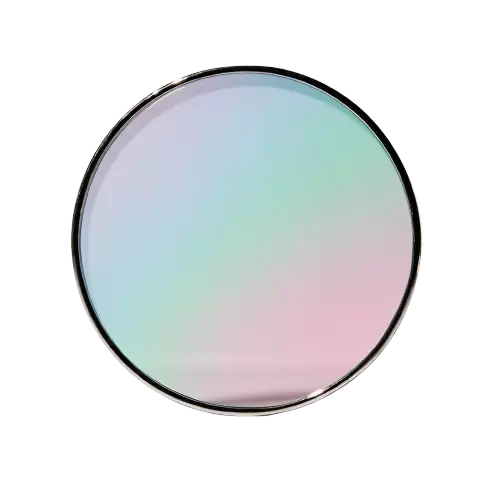
In complex optical environments, selecting useful light from unwanted wavelengths is a critical challenge. Traditional optical filters may fail to provide sufficient blocking outside the target band, accurate cut-on wavelength control, or stable transmission performance over long-term operation.
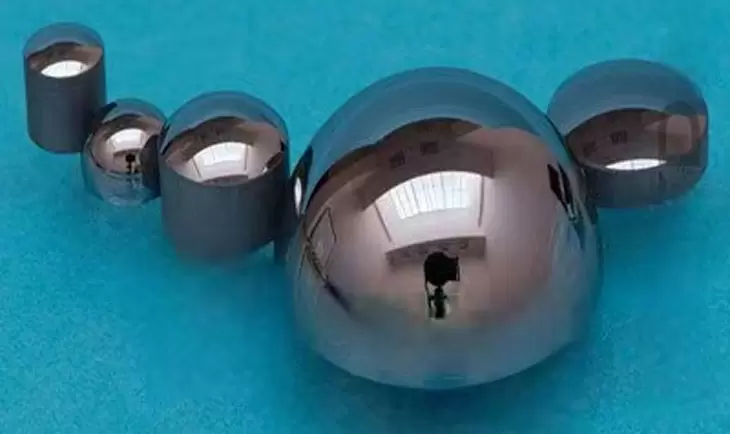
Terahertz waves refer to electromagnetic waves with frequencies ranging from 0.1 to 10 THz (wavelength 30 μ m-3 mm), between microwave and infrared, and were once known as the "THz Gap" due to technological limitations.
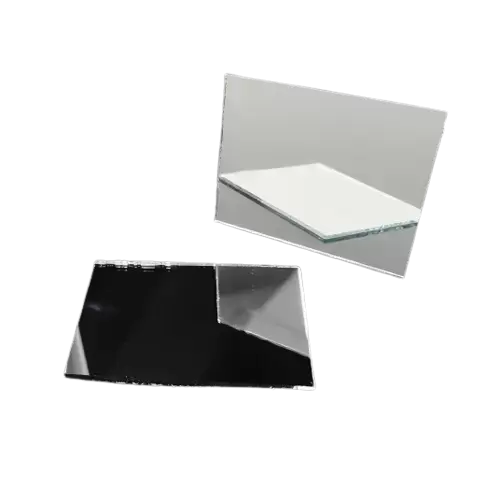
In precision optical systems, mirror selection is often determined by factors that are invisible during normal operation but directly affect system accuracy. A mirror may appear perfectly reflective to the eye, yet its internal structure can introduce optical errors when used in laser alignment, imaging equipment, or scientific instruments.