

 en
en
 English
 繁体中文
繁体中文 Japanese
 Korean
 Russian
 German
News
Deepen Optoelectronic Resources, Lead Technological Breakthroughs


Deepen Optoelectronic Resources, Lead Technological Breakthroughs
In modern infrared imaging systems, performance is no longer defined simply by whether a lens can “see in infrared.” Instead, it is determined by a tightly coupled optical engineering system that controls wavefront precision, thermal drift behavior, aberration correction, and spectral transmission efficiency across MWIR (mid-wave infrared) and LWIR (long-wave infrared) bands.
For engineers, procurement teams, and system integrators searching for Infrared aspherical lens price or evaluating Infrared aspherical lens cost, the real decision is not about individual component pricing. It is about how the entire optical subsystem performs under temperature variation, radiation fluctuation, and long-duration continuous operation.
In high-end applications such as thermal imaging, industrial temperature measurement, security surveillance, autonomous driving perception systems, and precision optical inspection, infrared aspherical lenses are no longer passive components—they are core imaging performance determinants.
This article provides a system-level optical engineering analysis of infrared aspherical lens design, focusing on how surface precision, material selection, coating engineering, and thermal compensation directly influence imaging resolution, distortion control, and long-term stability.
It also introduces ECOPTIK’s proprietary engineering system: the Infrared Aspheric Adaptive Correction & Thermal Drift Compensation System, designed to maintain optical alignment stability and imaging consistency under extreme environmental conditions.
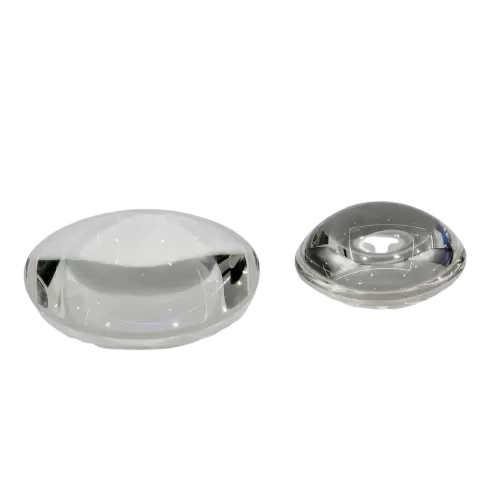
Infrared imaging systems operate in spectral regions where visible-light optical assumptions no longer apply. Unlike visible lenses, IR optical systems must deal with:
Longer wavelengths (3–5 μm MWIR, 8–14 μm LWIR)
Strong thermal sensitivity of refractive indices
Reduced material transparency options
Increased diffraction and wavefront distortion sensitivity
Because of these constraints, spherical lens designs often fail to meet high-performance imaging requirements in infrared systems.
High optical aberration at field edges
Limited resolution in wide field-of-view systems
Increased distortion in off-axis imaging
Reduced MTF (Modulation Transfer Function) performance
As a result, aspherical infrared lens design becomes essential for precision imaging systems.
The core function of an aspherical surface is to correct spherical aberration and improve wavefront uniformity.
In infrared systems, this leads to:
Reduced edge blur in thermal images
Improved spatial resolution consistency
Enhanced imaging uniformity across field-of-view
Unlike spherical lenses, aspherical surfaces allow precise control over how infrared rays converge onto the detector plane.
Infrared optical performance depends heavily on material selection.
Common high-performance IR materials include:
Zinc Selenide (ZnSe)
Germanium (Ge)
Silicon (Si)
Calcium Fluoride (CaF₂)
Sapphire substrates
Each material exhibits unique:
Transmission bandwidth characteristics
Temperature-dependent refractive index changes
Mechanical and thermal stability properties
For example:
Germanium provides excellent LWIR transmission but is highly temperature-sensitive
ZnSe offers balanced transmission with lower thermal drift
Silicon is widely used in cost-sensitive MWIR systems
MTF is one of the most critical indicators of infrared imaging quality.
Aspherical lens systems improve MTF by:
Reducing wavefront distortion
Enhancing edge contrast resolution
Maintaining consistent spatial frequency response
High MTF performance is essential for:
Object recognition in thermal imaging
Target detection in surveillance systems
Measurement accuracy in industrial thermography
Infrared systems operate in environments where temperature variation directly affects optical alignment.
Thermal effects include:
Lens expansion or contraction
Refractive index shift
Optical axis misalignment
Without compensation, these factors cause:
Image shift
Focus drift
Resolution degradation
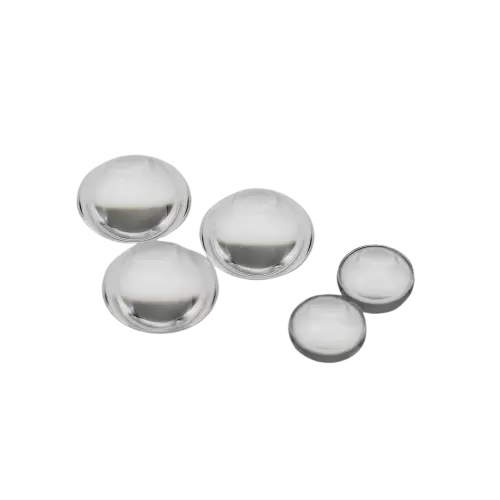
A key innovation in ECOPTIK’s infrared optical engineering is the Infrared Aspheric Adaptive Correction & Thermal Drift Compensation System.
This system addresses one of the most challenging problems in infrared imaging: maintaining optical performance stability under continuous thermal variation and radiation exposure.
The system dynamically optimizes aspheric surface behavior based on operating conditions.
Key functions include:
Wavefront error compensation in real time
Field curvature stabilization
Edge resolution optimization under thermal load
Engineering impact:
Improved image sharpness consistency across full field of view
Reduced distortion under high-temperature operation
Stable imaging in variable thermal environments
Infrared optical systems suffer from material expansion and refractive index variation.
This system mitigates:
Optical axis deviation caused by temperature change
Focus shift under continuous operation
Misalignment in multi-lens assemblies
Engineering impact:
Maintains long-term imaging stability
Reduces recalibration frequency
Improves system reliability in field deployment
Different infrared bands require optimized transmission balancing.
The system improves:
MWIR transmission uniformity
LWIR spectral consistency
Anti-reflection coating efficiency across wavelength ranges
The term Infrared aspherical lens price is not simply a procurement metric—it is a reflection of optical engineering complexity, manufacturing precision, and system-level performance requirements.
Aspherical infrared lenses require:
Ultra-precision CNC grinding
Magnetorheological finishing (MRF)
Sub-micron surface accuracy control
Higher precision directly increases manufacturing cost.
Material selection significantly impacts system cost:
Germanium: high performance, high cost
ZnSe: balanced cost-performance
Silicon: cost-effective MWIR option
Sapphire: high durability, specialized applications
Infrared coatings include:
Multi-layer anti-reflection (AR) coatings
Wide-band IR transmission coatings
Environmental protection coatings (DLC / moisture-resistant layers)
Coating performance directly affects:
Transmission efficiency
Reflection loss reduction
Environmental durability
High-end infrared lens manufacturing requires advanced inspection systems such as:
ZYGO laser interferometers
Surface profile measurement systems
Spectral transmission analysis instruments (e.g., Agilent Cary 7000 UMS)
These ensure:
Surface accuracy validation
Optical performance certification
Batch consistency control
The Infrared aspherical lens cost in real applications is driven by system-level requirements rather than individual component pricing.
Higher resolution systems require:
Tighter surface tolerances
Lower wavefront distortion
Higher MTF performance
Industrial and outdoor systems must maintain:
Stable imaging under temperature fluctuations
Minimal optical drift during long operation cycles
Applications in:
Outdoor surveillance
Industrial furnaces
Automotive perception systems
require lenses with:
High thermal resistance
Stable refractive performance
Low distortion under vibration
ECOPTIK has over 15 years of experience in precision optical component manufacturing.
Core capabilities include:
Infrared aspherical lens manufacturing
Dome, spherical, cylindrical, and micro-optical component production
Filter, prism, and optical window fabrication
Lens assembly system integration
Schott optical glass
CDGM glass
Corning materials
Sapphire
CaF₂, MgF₂
Fused silica
Silicon (Si), ZnSe, ZnS
ZYGO laser interferometers
ZEISS coordinate measuring systems (CMM)
Agilent Cary 7000 UMS spectral analysis
These capabilities ensure high-precision optical performance validation across all production stages.
High-resolution infrared cameras
Industrial temperature mapping systems
Night vision monitoring systems
Long-distance detection platforms
Pedestrian detection in low-light environments
Obstacle recognition in adverse weather
Furnace temperature monitoring
Material defect detection systems
Infrared spectroscopy systems
Precision optical measurement devices
When evaluating Infrared aspherical lens price and Infrared aspherical lens cost, engineers should focus on:
MTF performance
Distortion control
Resolution uniformity
Drift compensation capability
Long-term alignment stability
Infrared transmission efficiency
Temperature sensitivity
Surface accuracy level
Coating quality consistency
Multi-lens assembly compatibility
Optical system alignment tolerance
Infrared aspherical lenses are not simply imaging components—they are precision-engineered optical systems that determine the performance ceiling of modern thermal imaging and infrared detection technologies.
The evaluation of Infrared aspherical lens price and Infrared aspherical lens cost must therefore be understood as a system engineering decision involving optical precision, thermal stability, and material science integration.
Through advanced aspherical surface processing and the Infrared Aspheric Adaptive Correction & Thermal Drift Compensation System, ECOPTIK enables high-performance infrared imaging systems with improved resolution consistency, reduced thermal drift, and enhanced long-term operational stability.
For engineers and procurement teams, the key insight is clear: in infrared optical systems, performance is not defined by the lens alone—but by the stability of the entire imaging architecture.
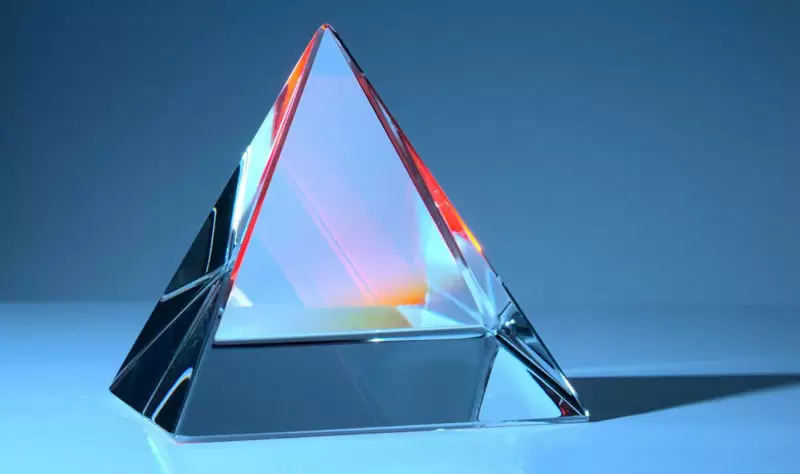
Calcium fluoride (CaF2) crystals play an irreplaceable role in the high-end optical field due to their unique optical properties. Its core advantages lie in its deep ultraviolet transmission capability and optical isotropy (without birefringence), making it the preferred material in multiple key fields.
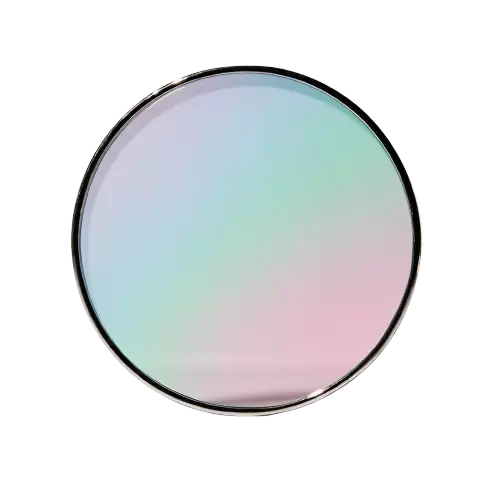
In complex optical environments, selecting useful light from unwanted wavelengths is a critical challenge. Traditional optical filters may fail to provide sufficient blocking outside the target band, accurate cut-on wavelength control, or stable transmission performance over long-term operation.
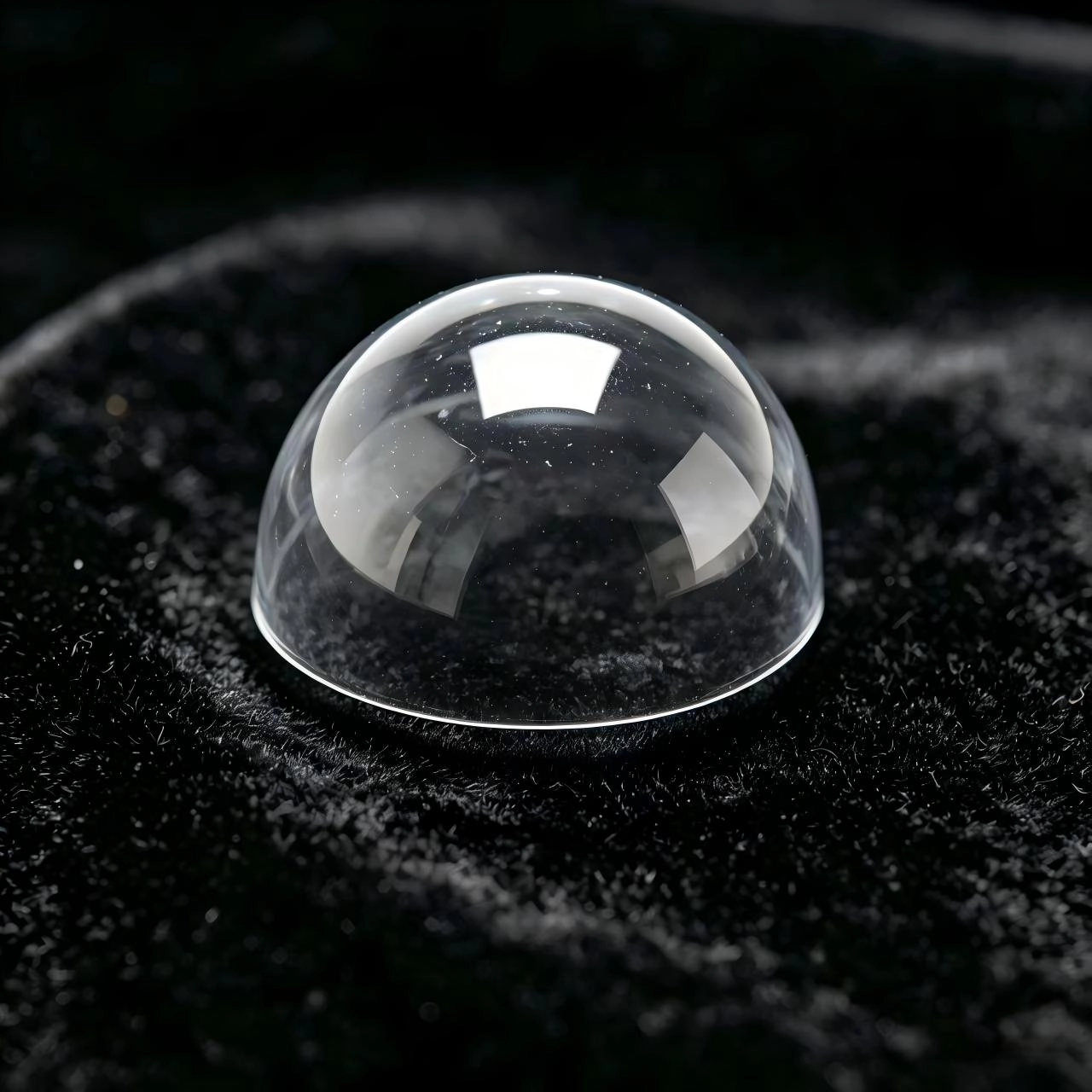
In the vast and demanding underwater world, where light is scarce, pressure is immense, and conditions are unpredictable, the performance of imaging and defense systems depends heavily on the materials used.