Home / Custom / Optical Components / Optical Mirror / Dielectric Mirror
Dielectric Mirror
Dielectric Mirror
Optical Mirror

Dielectric Mirror

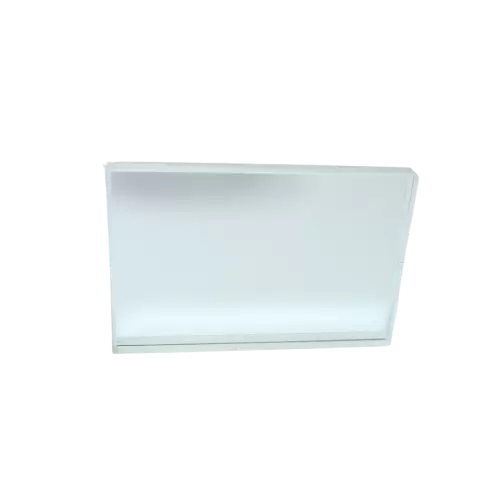
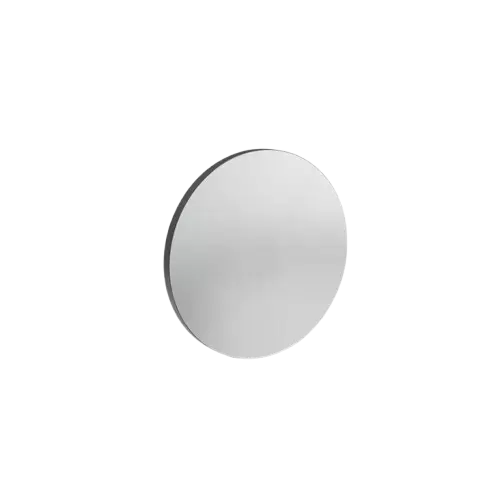
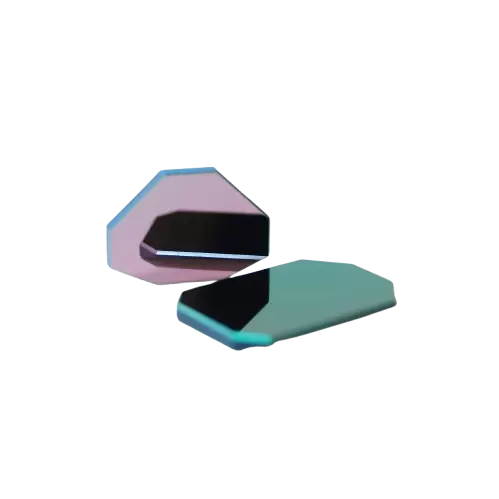
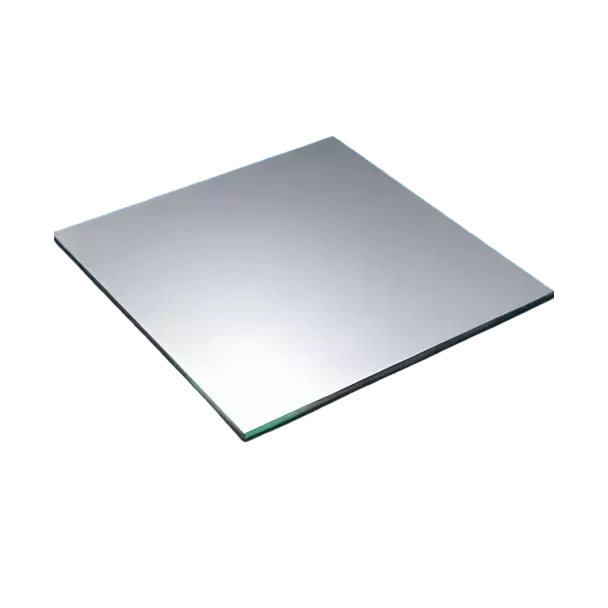
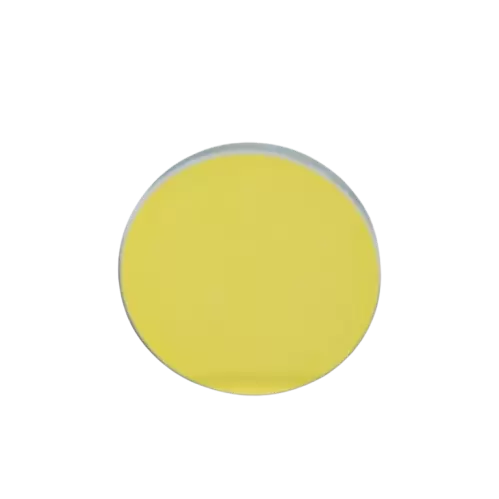
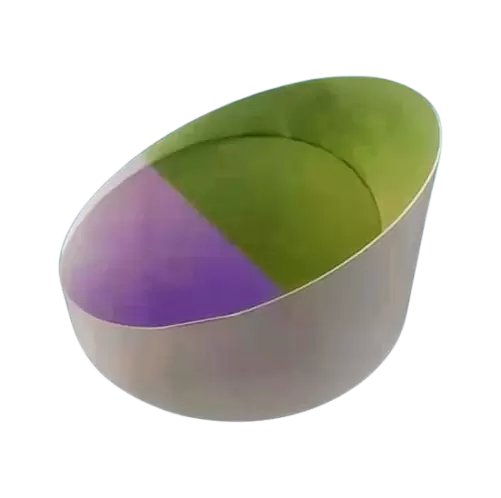
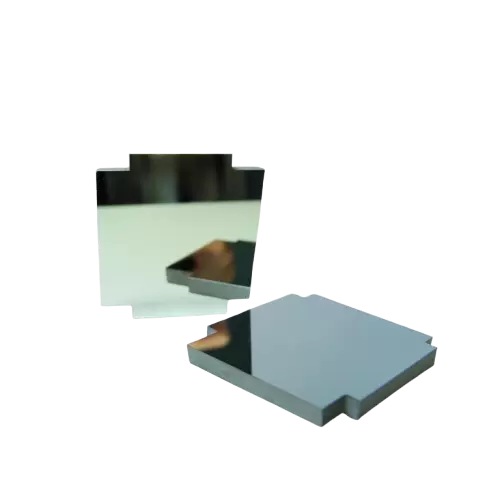
Dielectric mirror, also known as Bragg mirror, is a type of mirror composed of multiple thin layers of dielectric material, typically deposited on a substrate of glass or some other optical material. By careful choice of the type and thickness of the dielectric layers, one can design an optical coating with specified reflectivity at different wavelengths of light.

Key Features
  • High reflectivity and low loss
    High reflectivity and low loss

    These are its core advantages. At specific wavelengths (e.g., 532 nm, 1064 nm, 1550 nm), its reflectivity can easily exceed 99.9%, with absorption loss of less than 0.01%.

  • High laser damage threshold
    High laser damage threshold

    Due to its extremely low absorption, it generates almost no heat, thus capable of withstanding extremely high laser power densities. This makes it a core component for beam steering and focusing in high-power laser cutting, welding, and marking systems.

  • Design flexibility
    Design flexibility

    By adjusting the thickness and material of the coating, dielectric mirrors can be precisely designed to operate for specific wavelengths (narrowband) or specific bands (broadband).

  • Polarization sensitivity
    Polarization sensitivity

    It is sensitive to the polarization state of light, especially under non-normal incidence. The reflectivity of S-rays and P-rays differs, a point that requires special attention in precision optical design.

Specification of Dielectric Mirror
StructureFlat, Sphere, Cylinder, or customized shape
SubstrateFused silica/ Silica/ BK7 Glass
Dimension2mm~100mm
Clear aperture>90% of dimension
Surface quality40/20, 20/10 Scratch-Dig
Surface Irregularityλ/2~λ/10 @632.nm
Thickness1mm~20mm
CoatingUV/ VIS dielectric coating
Typical Application Areas
  • Laser Resonant Cavities
    Laser Resonant Cavities
    Dielectric mirrors serve as high-reflectivity mirrors (end mirrors) and output mirrors in laser resonant cavities. All types of lasers, including helium-neon lasers, solid-state lasers (such as Nd:YAG), fiber lasers, and semiconductor lasers, use dielectric mirrors to create oscillations.
  •  High-Power Laser Processing
    High-Power Laser Processing
    Dielectric mirrors are used for directing, focusing, and expanding high-power laser beams. Their extremely low absorption loss means they generate almost no heat, allowing them to withstand continuous laser power in the kilowatt and even megawatt ranges without thermal lensing or damage.
  • Optical Communication and Fiber Optic Sensing
    Optical Communication and Fiber Optic Sensing
    Optical communication requires the precise separation or combination of signals of different wavelengths (e.g.1550nm). Examples: optical modules in data centers and backbone networks, and auxiliary components of fiber Bragg gratings.
  • Precision Measurement and Scientific Research
    Precision Measurement and Scientific Research
    Constructing precision optical cavities such as Fabry-Perot interferometers, gravitational wave detectors, and optical clocks. These applications require light to reflect back and forth between two highly reflective mirrors tens of thousands of times, demanding reflectivity of 99.999% or even 99.9999% (loss on the order of ppm). Only ultra-low-loss super dielectric mirrors can meet this requirement.
  • AR/VR
    AR/VR
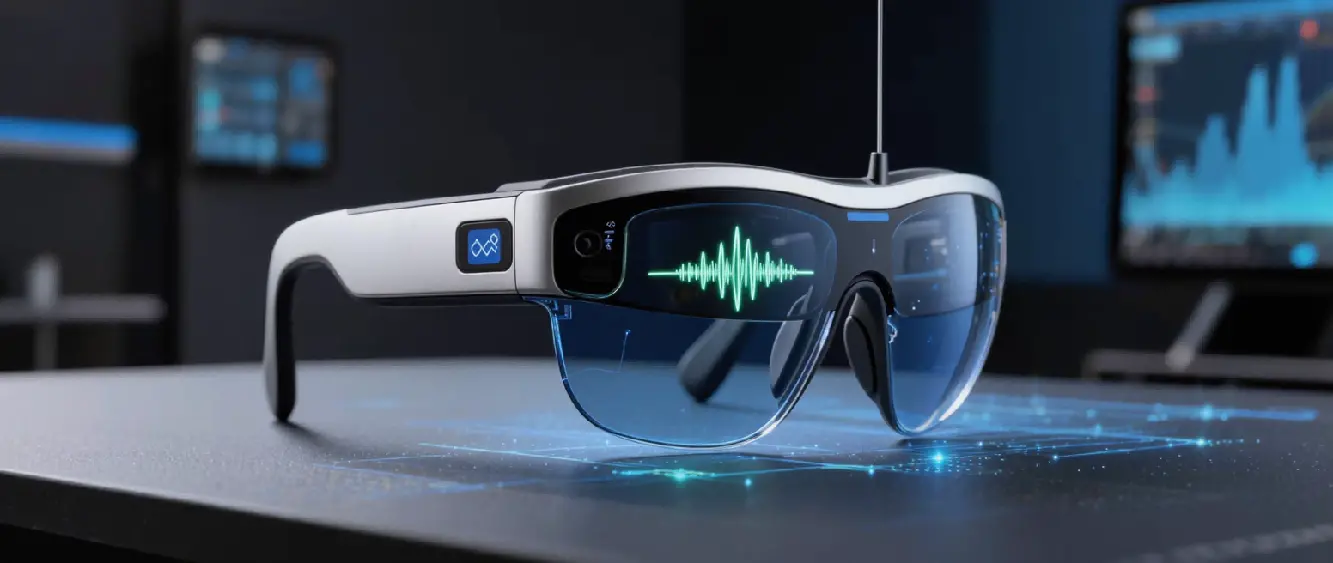
    Augmented Reality/Virtual Reality (AR/VR) headsets, miniature projectors, and 3D scanners.
  • Spectroscopy and Biomedicine
    Spectroscopy and Biomedicine
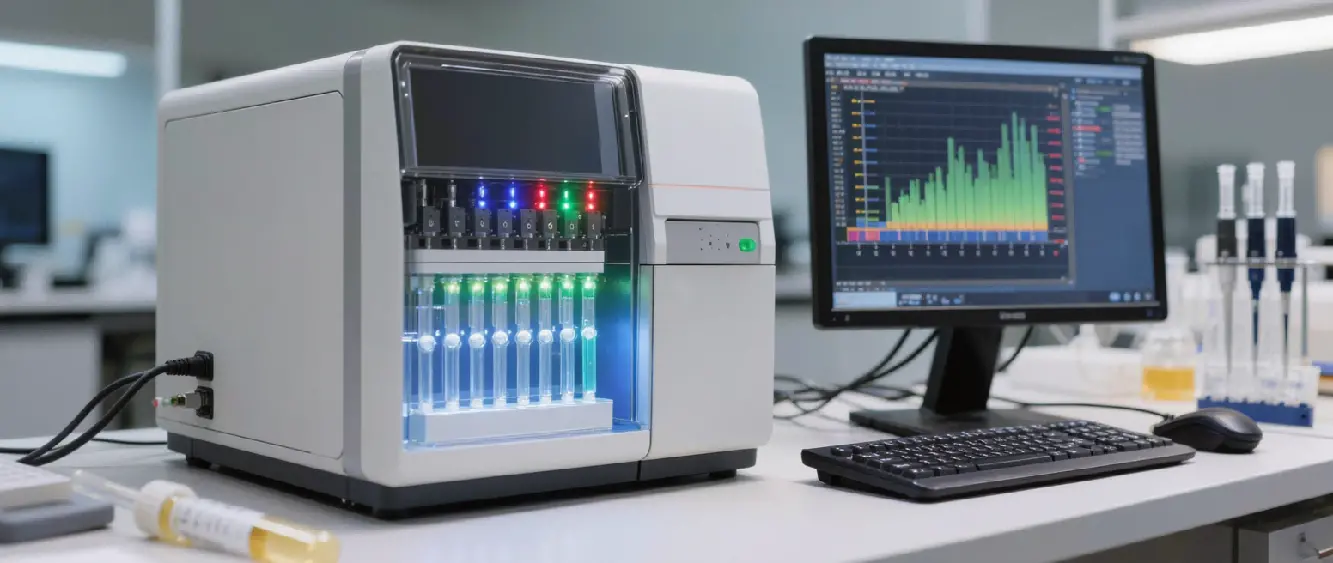
    Core role: Laser filtering and beam manipulation in Raman spectrometers and flow cytometers. Specific examples: Optical systems in confocal microscopes and gene sequencers.
label:


Contact Us & Technical Support

Connect for precision solutions from ECOPTIK team