Home / Custom / Optical Components / Optical Dome / Domes of CNC Special Shape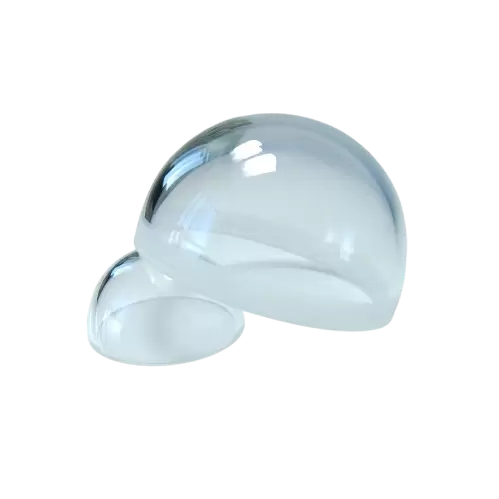
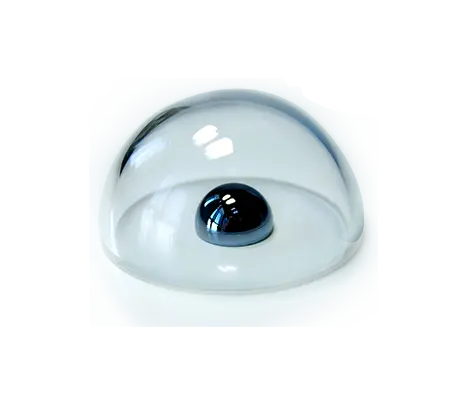
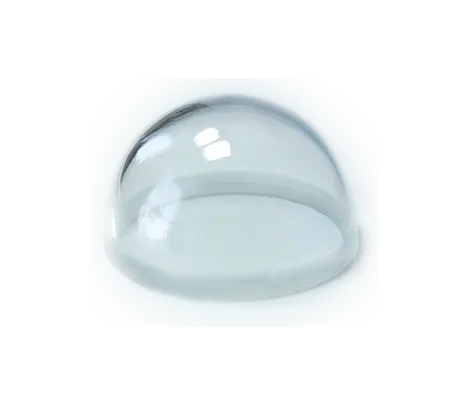
Optical domes with special geometries, precision-machined by CNC, are often referred to as "non-standard domes." They are no longer isolated optical elements, but key components deeply integrated with the mechanical structure, installation method, sealing requirements, and spatial layout of the entire system. ECOPTIK can use CNC machining centers to perform high-precision cold machining of a series of complex shapes on pre-formed glass/crystal blanks.

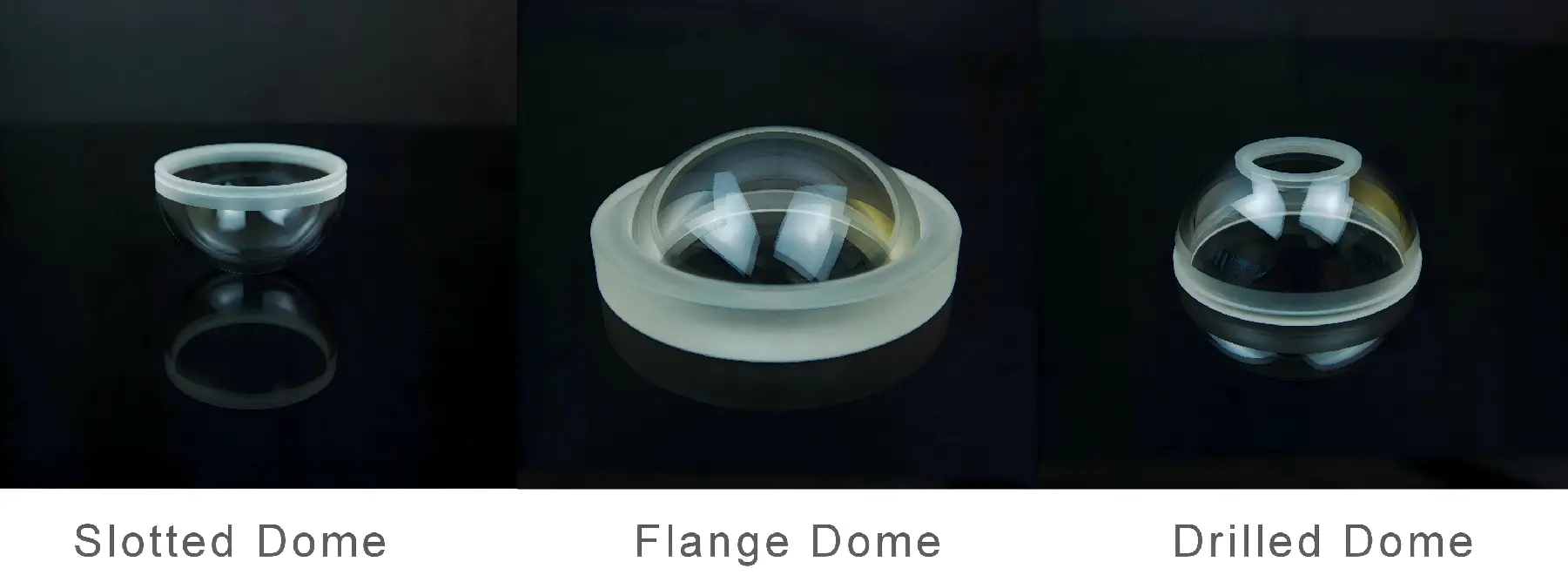
-Appearance and Structure: A flange is added to the edge of a standard hemispherical base. This flange is typically a flat, ring-shaped structure with mounting holes. -Core Functions: Easy Installation and Sealing: Bolt holes on the flange allow the dome to be securely fastened to the equipment housing directly with screws. -Provides a Sealing Surface: The flat surface of the flange mates with the sealing ring on the housing to achieve a reliable pressure seal or environmental seal. Increased Structural Strength: The flange structure enhances the strength of the dome's edge, enabling it to withstand greater installation torque and external pressure.
- Appearance and Structure: Grooves are machined into the surface of the dome (usually near the equator or a specific location). - Core Functions: Mounting and Positioning: Engages with retaining rings or locking rings within the equipment housing for quick installation and precise circumferential positioning. Preventing Rotation: Ensures the dome does not rotate accidentally within the equipment, crucial for directional optical systems.
- Appearance and Structure: Perforations are drilled at specific locations on the dome. - Core Functions: Sensor Integration: Provides a pathway for other non-optical sensors (such as temperature and pressure sensors). Pressure Balancing: In non-hermetic applications, it balances the air pressure inside and outside the dome to prevent fogging or deformation. Wiring Path: Provides a wiring path for internal heating elements or other electronic equipment. Mounting Assistance: Serves as locating pin holes to assist in installation.
- Appearance and Structure: A standard spherical edge is cut to create a non-spherical opening. Common methods include flat cutting (forming part of a cylinder) or beveling. - Core Functions: Space Adaptation: When installation space is limited, beveling allows it to adapt to a more compact equipment layout. Field of View Control: Intentionally cutting away part of the spherical surface limits unnecessary field of view, preventing the view of the equipment's own structure. Reference Surface Formation: The cut-out plane can serve as a mounting reference, facilitating positioning and bonding.
| Substrate material | K9(CDGM), Sapphire, Si, MgF2, N-BK7, N-BK10, Corining 7980, JGS1, Borofloat 33, ZnSe, ZnS, etc. | Surface Quality | 60/40, 40/20, 20/10, 10/5 |
|---|---|---|---|
| Dimension | 6mm-350mm | Surface fringe | 10(5)-3(0.5) |
| Thickness | 0.5mm-30mm | Coating | Anti-reflection (AR) Coating or upon customer's request |
| Thickness | In general ±0.1mm, Best ±0.02mm | ECOPTIK annual production capacity | over 300,000 pcs |





 en
en
 English
 繁体中文
繁体中文 Japanese
 Korean
 Russian
 German