

 en
en
 English
 繁体中文
繁体中文 Japanese
 Korean
 Russian
 German
News
Deepen Optoelectronic Resources, Lead Technological Breakthroughs


Deepen Optoelectronic Resources, Lead Technological Breakthroughs
In precision optical systems, a lens that looks clear to the naked eye may still compromise the performance of the finished equipment. Insufficient transmission reduces the light reaching a sensor, chromatic aberration introduces color fringes around image details, and surface defects can create scattering or unwanted reflections. Even when the glass itself is suitable, incorrect dimensional tolerances or inconsistent optical quality can lead to alignment problems during assembly.
For optical equipment manufacturers, machine vision suppliers, medical instrument companies, and imaging system integrators, selecting the right optical glass lens requires more than comparing product dimensions or unit prices. Refractive index, Abbe number, transmission range, surface quality, coating performance, and manufacturing tolerances must all match the optical design and operating environment.
When evaluating the best optical glass lenses, buyers should focus on measurable performance and application requirements. Understanding these specifications also makes it easier to assess optical glass lenses price, compare suppliers, and avoid paying for precision that the finished system does not actually need.
The refractive index describes how strongly a material bends light. It affects focal length, optical power, lens curvature, and the overall design of an imaging system.
Higher-index glass can help designers achieve a required optical power with different surface curvatures or a more compact optical arrangement. However, a higher refractive index does not automatically mean better imaging performance. Reflection losses, dispersion, material homogeneity, and aberration correction must also be considered.
For compact imaging modules, inspection instruments, and specialized optical assemblies, the appropriate glass should be selected according to the complete optical prescription rather than the refractive index alone.
The Abbe number indicates the relative dispersion of an optical material. In general, a higher Abbe number indicates lower dispersion within the reference wavelengths used for its calculation.
When a lens focuses different wavelengths at different positions, the resulting chromatic aberration can reduce contrast and produce color fringes. This is particularly important in broadband imaging, precision measurement, and optical systems that must distinguish fine edges or small features.
A practical solution is to combine glasses with complementary refractive and dispersion properties in an achromatic or more complex optical design. The correct combination depends on the wavelength range, required image quality, and available design space.
Transmission performance depends on the glass composition, wavelength, material thickness, surface reflections, and any applied coatings. A material that performs well in the visible spectrum may not be suitable for ultraviolet or infrared applications.
Buyers should confirm the required operating wavelength before selecting a glass type. Fused silica, for example, is widely used in UV and broadband optical applications, while other optical glasses may be better suited to particular visible or near-infrared designs. Actual suitability depends on the material grade and the specified wavelength range.
For low-light imaging, fluorescence instruments, and laser systems, insufficient transmission can reduce signal strength or system efficiency. Material transmission data should therefore be evaluated alongside coating specifications and the complete optical path.
Surface quality and surface accuracy describe different aspects of lens performance.
Surface quality: Scratches, digs, pits, and other localized defects that can scatter light or affect image contrast.
Surface accuracy: The deviation of an optical surface from its intended shape, commonly specified using an applicable form or wavefront tolerance.
These properties are especially important in high-resolution imaging, interferometry, laser optics, and precision inspection. Surface defects can introduce stray light, while form errors may contribute to wavefront distortion and aberrations.
Buyers should request clearly defined inspection criteria rather than relying on descriptions such as “high precision” or “premium quality.” Where relevant, specifications can reference scratch-dig criteria, surface figure, transmitted wavefront error, or other agreed optical acceptance standards.
Diameter, center thickness, wedge, centration, and mounting dimensions influence how a lens fits into an optical assembly. Tight tolerances may be necessary for multi-element imaging systems, automated alignment, and equipment with limited adjustment capability.
However, unnecessarily tight tolerances can increase machining time, inspection effort, and rejection risk. The better approach is to identify which dimensions directly affect optical alignment and system performance, then assign tolerances accordingly.
An uncoated glass surface reflects part of the incident light. Anti-reflection coatings use thin-film interference to reduce reflection over a specified wavelength range and angle of incidence.
For imaging systems with multiple optical surfaces, reducing reflection can improve total transmission and help suppress unwanted reflections and ghost images. Coating selection should consider wavelength, incidence angle, polarization where relevant, environmental conditions, and durability requirements.
A broadband coating is not necessarily the best choice for every application. A laser system operating at a specific wavelength may benefit more from a coating designed for that wavelength, while a broadband imaging system may require performance across a wider spectral range. Coating specifications should state the intended wavelength band and applicable performance requirements.
The best optical glass lenses are those that meet the system's optical, mechanical, environmental, and cost requirements together. There is no single glass type or precision grade that is ideal for every application.
Machine vision systems inspect dimensions, detect defects, read codes, and identify components on production lines. Their performance depends on contrast, resolution, distortion control, working distance, and repeatable positioning.
For these systems, buyers should prioritize the required field of view, numerical aperture where applicable, wavelength range, distortion limits, surface quality, and dimensional consistency. Stable manufacturing is particularly important when the same optical assembly must be reproduced across multiple cameras or production stations.
For example, a lens used to detect fine surface defects may require better aberration correction and stray-light control than one used for basic presence detection. The appropriate specification should follow the smallest feature the system must reliably identify.
Medical imaging and analytical instruments may require high contrast, reliable transmission, stable alignment, and compatibility with specific illumination wavelengths. Some designs also involve sterilization, cleaning chemicals, temperature variation, or prolonged operation.
Material selection must account for the actual optical path and operating conditions. Buyers should confirm the required spectral range, material compatibility, coating durability, and inspection documentation. For regulated medical equipment, the lens supplier's documentation may form part of the component qualification process, but optical performance alone does not establish medical-device compliance.
Laser applications place particular demands on coating performance, surface defects, wavefront quality, and resistance to the intended laser operating conditions. The relevant wavelength, beam diameter, incidence angle, and power density must be specified before a suitable lens can be selected.
A lens intended for ordinary imaging should not automatically be used in a high-power laser system. The material and coating must be qualified for the intended operating conditions, including potential thermal effects and laser-induced damage.
Different optical materials offer different combinations of dispersion, transmission, refractive index, thermal properties, and manufacturability.
Optical crown and flint glasses: Commonly used in visible-light imaging and multi-element optical designs. Their refractive and dispersion properties can be combined to correct aberrations.
Fused silica: Often selected for UV transmission, broadband applications, and designs requiring favorable thermal characteristics. Grade and wavelength requirements still matter.
Calcium fluoride (CaF₂): Used in selected UV, visible, and infrared optical systems because of its broad transmission range and low dispersion, subject to application-specific design and handling requirements.
Sapphire: Offers high hardness and useful transmission over selected wavelength ranges. It may be appropriate where mechanical durability is important, although its optical properties and manufacturing requirements differ from those of conventional optical glass.
When comparing materials, buyers should review manufacturer data for the exact grade rather than relying on generic material names. Optical constants, transmission curves, homogeneity, thermal properties, and availability can vary between grades and suppliers.
Before requesting a quotation, prepare a specification that includes the following wherever applicable:
Material type and grade.
Wavelength range and required transmission.
Refractive index and dispersion requirements.
Focal length, radius of curvature, diameter, and center thickness.
Surface quality and surface figure requirements.
Dimensional tolerances, wedge, and centration.
Coating type and wavelength-specific performance.
Environmental operating conditions and expected service requirements.
Inspection methods, acceptance criteria, and documentation.
Required quantity, delivery schedule, and packaging conditions.
A complete specification helps suppliers quote comparable products and reduces the risk of price differences caused by different interpretations of “precision” or “optical quality.”
Optical glass lenses price varies according to the material, geometry, manufacturing difficulty, optical tolerances, coatings, inspection requirements, and order quantity. A useful quotation should connect these cost drivers to the actual requirements of the application.
Specialized materials or tightly controlled grades may cost more than readily available standard optical glass. Material selection also affects processing behavior, yield, lead time, and the level of documentation available.
A higher-cost material is justified when its optical or physical properties solve a real design problem. If a standard glass grade meets the required transmission, dispersion, and stability targets, switching to a more expensive material may provide little practical benefit.
Larger blanks consume more material and may require additional processing. Aspheric surfaces, unusual geometries, small features, and complex optical prescriptions can demand specialized tooling, additional process control, or more extensive metrology.
Consequently, two lenses with similar diameters can have very different prices if their surface geometries and manufacturing requirements differ substantially.
Tighter tolerances typically require more controlled machining, polishing, measurement, and process verification. The effect on price depends on how difficult the requested specification is to achieve consistently.
Buyers should distinguish between essential optical tolerances and dimensions that can remain within standard manufacturing limits. Tightening every tolerance indiscriminately can increase cost without producing a measurable improvement in the finished equipment.
Inspection also matters. A lens requiring detailed interferometric measurements, dimensional reports, traceability, or additional acceptance testing may cost more than a comparable part with routine inspection.
Coating costs depend on the coating design, substrate size, wavelength band, performance targets, and production batch. Specialized coatings or demanding durability requirements may need additional process development and testing.
Custom lenses can also involve optical design review, prototype production, tooling, process qualification, and first-article inspection. These activities create upfront costs that may be spread across a larger order but remain significant for small batches.
Larger, repeat orders can improve manufacturing efficiency by spreading setup and inspection costs across more parts. However, savings depend on the lens design, production capacity, material availability, and quality requirements.
Short lead times may require schedule adjustments or expedited material and production arrangements. Buyers should compare the total commercial offer, including inspection, packaging, delivery, and qualification costs, rather than evaluating unit price in isolation.
Standard lenses are usually a practical option when their dimensions, optical performance, and availability match the application. They can reduce development time and avoid the cost of a custom manufacturing process.
Custom lenses become appropriate when standard products cannot meet the required focal length, geometry, wavelength range, aberration correction, mechanical interface, or coating performance. A custom solution may also reduce total system cost if it simplifies alignment or replaces multiple optical elements, but this must be confirmed through optical design and system-level evaluation.
A reliable purchasing decision starts with defining the minimum performance necessary for the finished system.
First, identify the application-critical parameters. A high-resolution inspection system may require strict surface figure and aberration control, while a less demanding illumination assembly may place greater emphasis on transmission and cost.
Second, request quotations against the same technical specification. Compare material grade, dimensional tolerances, coating performance, inspection methods, acceptance criteria, lead time, and documentation. Without this information, the lowest quotation may simply describe a different product.
Third, assess manufacturing consistency rather than judging a supplier by a single acceptable sample. For repeat orders, ask how the supplier controls incoming materials, process variation, inspection equipment, and batch traceability. Where appropriate, request sample measurements or agreed inspection reports before approving volume production.
Finally, consider the total cost of ownership. A slightly more expensive lens may be more economical if it reduces alignment time, production rejects, calibration effort, or field failures. Conversely, an unnecessarily demanding specification can increase component costs without improving system performance.
ECOPTIK positions itself as an optical customization partner, combining 15 years of research into optical component fabrication technology with manufacturing and inspection capabilities for precision optical components.
Its product range includes domes, spherical lenses, micro-optical components, cylindrical mirrors, filters, prisms, and optical windows. Available material options include glass from Schott, CDGM, and Corning, as well as sapphire, CaF₂, MgF₂, fused silica, silicon, ZnSe, and ZnS. Material suitability depends on the specific optical design, wavelength, and application requirements.
ECOPTIK also offers lens assembly services for customers who need optical components integrated into an assembly. Its inspection equipment includes ZYGO laser interferometers, a ZEISS CMM Spectrum coordinate measuring machine, and an Agilent Cary 7000 UMS for optical measurement. These instruments support different aspects of optical and dimensional evaluation; the appropriate measurement method and report depend on the component specification.
For overseas equipment manufacturers and optical component buyers, the practical starting point is to provide a drawing or optical prescription, the target wavelength range, critical tolerances, coating requirements, order quantity, and expected delivery schedule. This gives the manufacturer a basis for assessing feasibility and preparing a technically comparable quotation.
Start with the wavelength range, required image quality, focal length, working distance, operating environment, and mechanical interface. Then specify the material, surface quality, tolerances, and coating needed to meet those requirements. Compare candidate lenses against the complete system design rather than one specification alone.
There is no universally best optical glass. Crown and flint glasses are widely used in visible imaging, while fused silica, calcium fluoride, sapphire, and other materials serve specific spectral or environmental requirements. The best choice depends on the wavelength range, dispersion, optical prescription, stability, and manufacturing constraints.
Refractive index influences light bending and optical power. Abbe number describes relative dispersion and helps predict chromatic behavior. Both affect lens design, but neither independently determines image quality; aberration correction, surface accuracy, alignment, and coating performance also matter.
Custom lenses may require specialized geometry, tighter tolerances, dedicated tooling, process development, coating optimization, and additional inspection. Their cost is justified when these requirements solve a defined system-level problem. A standard lens remains preferable when it meets the same technical requirements.
Provide a complete and stable specification, distinguish critical from noncritical tolerances, consider standard designs where feasible, and compare quotations using identical acceptance criteria. Forecasting repeat demand and consolidating compatible orders may also improve manufacturing efficiency, depending on the design and supplier's production process.
Selecting the best optical glass lenses is a technical and commercial decision. Refractive index, dispersion, transmission, surface quality, coatings, and dimensional tolerances should be evaluated according to their impact on the finished optical system. The right balance delivers the required image quality and reliability without paying for unnecessary precision.
When evaluating optical glass lenses price, buyers should look beyond the unit quotation to material suitability, process consistency, inspection evidence, customization requirements, and long-term production needs. Working with a manufacturer that can review the optical specification, explain the available material options, and provide appropriate measurement documentation helps make the purchasing decision more predictable and cost-effective.

Cylindrical mirror is a special optical component, and its working principle and application scenarios are significantly different from traditional spherical mirrors.
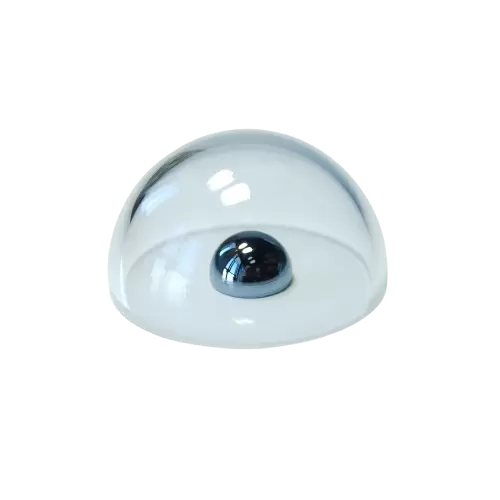
In precision optical engineering, the concept behind Hemisphere dome for sale is not simply a protective enclosure, but a wavefront-preserving optical interface designed to maintain controlled light propagation through curved geometry.
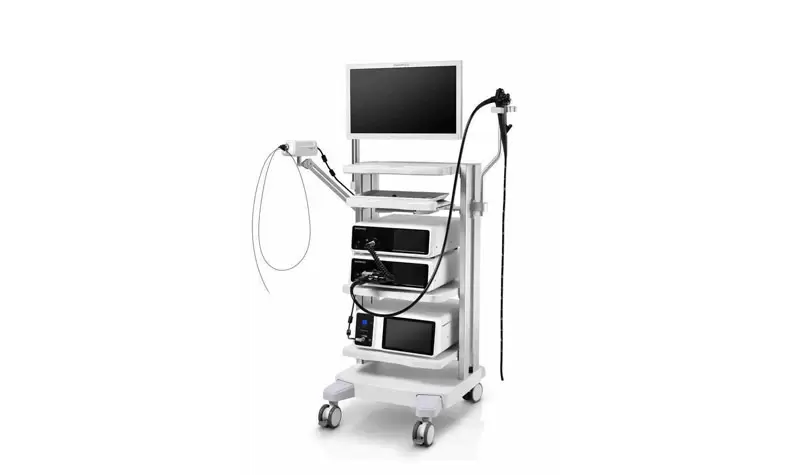
Endoscope is a medical device that can enter the body through natural channels or incisions for examination, treatment, and other procedures. According to different purposes and structures, endoscopes can be classified into various types.