

 en
en
 English
 繁体中文
繁体中文 Japanese
 Korean
 Russian
 German
News
Deepen Optoelectronic Resources, Lead Technological Breakthroughs

Deepen Optoelectronic Resources, Lead Technological Breakthroughs
In precision optical engineering, the concept behind Hemisphere dome for sale is not simply a protective enclosure, but a wavefront-preserving optical interface designed to maintain controlled light propagation through curved geometry. A hemispherical dome introduces a continuously curved refractive surface that directly affects wavefront uniformity, refraction stability, and imaging distortion behavior.
ECOPTIK, with 15 years of optical manufacturing expertise, specializes in high-precision optical components including domes, spherical lenses, prisms, filters, and windows. Utilizing optical-grade materials such as K9, fused silica, sapphire, MgF2, ZnSe, and ZnS sourced from Schott, Corning, and CDGM, ECOPTIK produces hemispherical optical domes engineered for predictable optical transmission behavior under complex imaging and sensing conditions.
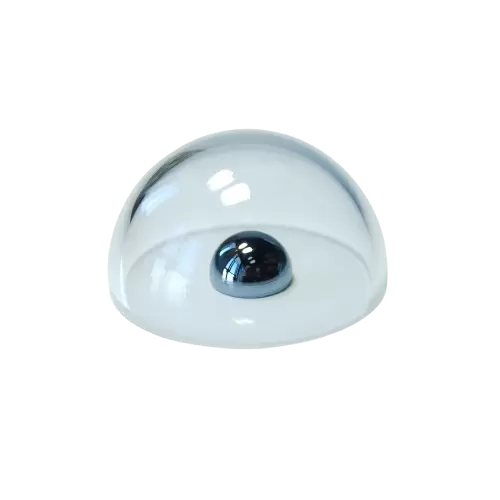
The optical function of a hemispherical dome is defined by its ability to preserve or intentionally modify wavefront propagation across a curved refractive boundary. Unlike flat optical windows, hemispherical geometry introduces continuously varying incidence angles across the surface, which must be carefully controlled to avoid distortion accumulation.
The first mechanism is continuous refraction angle redistribution, where incident light rays experience gradually changing refraction vectors across the curved surface, reducing abrupt phase discontinuities and stabilizing wavefront transition into internal optical systems.
The second mechanism is geometric aberration smoothing, where symmetrical curvature distributes optical path differences more evenly across the aperture, reducing localized distortion peaks that typically appear in flat optical interfaces under wide-angle illumination.
The third mechanism is wavefront stabilization under angular variation, ensuring transmitted wavefronts maintain predictable curvature behavior even when incident angles vary significantly across the dome surface.
Material selection is a decisive factor in defining the performance of any Best hemisphere dome for optical systems, as refractive index stability, dispersion behavior, and transmission uniformity directly affect imaging accuracy.
Fused silica provides extremely low thermal expansion and stable refractive index behavior across UV to IR wavelengths, making it suitable for laser and precision imaging systems requiring long-term wavefront stability.
Sapphire offers high mechanical strength and thermal resistance, maintaining optical integrity in high-energy environments such as aerospace sensing and high-power laser protection systems.
ZnSe and ZnS are commonly used in infrared optical systems where controlled dispersion characteristics are required for thermal imaging and IR transmission stability.
Surface quality in hemispherical domes is a primary determinant of optical system performance, especially in high-resolution imaging and laser sensing systems.
Surface scattering control at optical-grade levels (10/5 to 20/10) ensures that micro-defects do not introduce unwanted diffusion or stray light, which would otherwise degrade contrast and reduce measurement accuracy in sensitive optical environments with strict signal-to-noise requirements.
Sub-wavelength surface accuracy ensures that wavefront distortion remains within diffraction-limited thresholds, which is essential for high-precision imaging systems where phase stability directly affects resolution and measurement repeatability.
Angular alignment precision between geometric center and optical axis is equally important, as even small deviations can introduce beam displacement errors in long-path optical systems such as telescopic imaging or laser tracking platforms.
ECOPTIK applies Zygo interferometry and ZEISS CMM measurement systems to ensure that each hemispherical dome maintains strict curvature and surface conformity requirements.
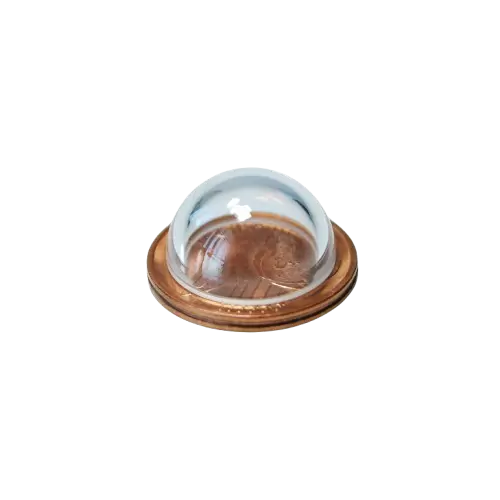
In industrial and scientific systems, Hemisphere dome for sale in optical applications refers to precision hemispherical windows used where both optical transmission and environmental protection are required.
Laser collimation and beam transmission systems rely on hemispherical domes to maintain stable wavefront propagation while minimizing external contamination effects, ensuring that beam geometry remains predictable even under variable incident angles and long operating durations.
Wide-field optical sensor protection systems use hemispherical geometry to preserve large field-of-view imaging without introducing significant angular distortion, which is critical for surveillance, tracking, and measurement applications requiring spatial consistency.
A key engineering challenge in hemispherical optics is controlling distortion introduced by curved refractive surfaces. Unlike flat windows, hemispherical domes introduce continuously varying optical path lengths that must be compensated through geometric and material precision.
Distortion reduction is achieved through high-precision curvature control, ensuring consistent radius across the full surface to prevent localized focal drift or wavefront warping.
Reflection loss is minimized through anti-reflection (AR) coatings applied to one or both surfaces, reducing Fresnel reflections and improving transmission efficiency across designed wavelength ranges.
Material refractive uniformity ensures minimal internal index variation, preventing phase distortion that would otherwise degrade imaging resolution and system stability.
Flat optical windows provide uniform refraction at normal incidence but become highly angle-sensitive under oblique illumination, leading to field-of-view distortion and imaging degradation.
Hemispherical domes distribute incident angles more uniformly across the surface, allowing more stable wide-angle optical performance when properly manufactured with high precision curvature and material uniformity.
However, this advantage only holds when surface accuracy and refractive consistency are tightly controlled, as small deviations can introduce system-level wavefront instability.
The performance of hemispherical optical domes depends heavily on manufacturing precision at both geometric and material levels. ECOPTIK employs high-precision forming, polishing, and metrology processes to ensure curvature accuracy and surface stability.
Low-stress optical grinding eliminates subsurface damage that could affect wavefront stability under laser exposure or long-term mechanical stress. Interferometric inspection ensures each dome conforms precisely to designed spherical geometry with minimal deviation across the full aperture.
Material traceability from Schott, Corning, CDGM, and other optical glass suppliers ensures consistent refractive index behavior and long-term optical stability across production batches.
Thermal stability is maintained through low-expansion materials such as fused silica, which reduces curvature deformation under temperature variation. Mechanical stability is reinforced using high-hardness materials like sapphire, which resist deformation under physical stress and prolonged operation.
Coating durability ensures anti-reflection performance remains stable over long operational cycles, preventing gradual transmission degradation that would otherwise impact system accuracy and imaging reliability.
Selecting the Best hemisphere dome for optical systems requires balancing material, curvature precision, surface quality, and coating performance. Each parameter directly affects wavefront integrity and imaging accuracy in high-end optical systems.
Fused silica is preferred for laser and precision imaging systems due to thermal stability and transmission consistency. ZnSe and ZnS are selected for infrared applications requiring wavelength-specific dispersion control. Sapphire is used in high-stress environments requiring maximum mechanical and thermal resistance.
ECOPTIK integrates these material capabilities with precision curvature control to ensure predictable optical performance in demanding engineering environments.
The engineering value of hemispherical optical domes lies in their ability to maintain controlled wavefront propagation under complex optical conditions. Properly designed hemispherical structures reduce distortion, stabilize refraction, and improve imaging consistency across wide-angle systems.
ECOPTIK, with 15 years of optical manufacturing expertise, produces high-precision hemispherical domes designed for wavefront stability, low scattering loss, and high geometric accuracy. In advanced optical systems, performance is ultimately defined by how consistently light behavior can be controlled under real-world conditions, and hemispherical domes play a critical role in achieving that stability.
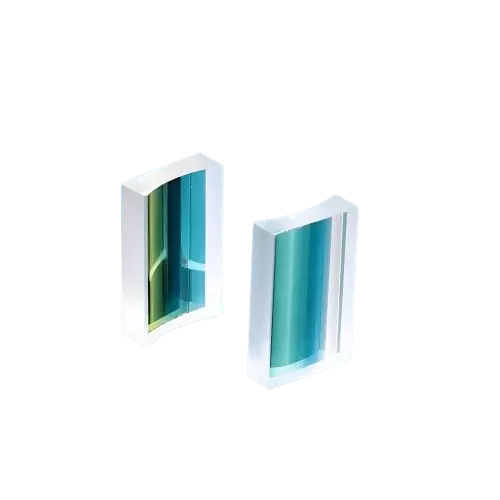
In many optical systems, beam control is required in only one direction. A laser may need to expand horizontally while retaining its original vertical dimension, or an imaging system may need to modify the width of an image without applying the same optical power to its height.
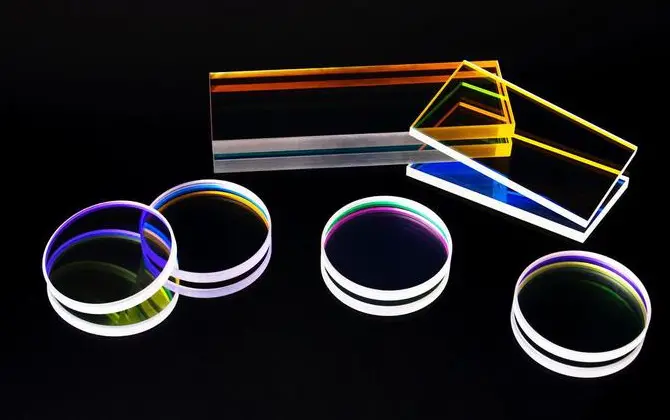
In the world of precision optics, thin-film coatings are what transform a simple piece of glass into a functional optical component—whether it's an anti-reflection coating that maximizes light transmission, a dielectric mirror that reflects specific wavelengths, or a filter that precisely separates spectral bands . The performance of these coatings directly determines whether an optical system succeeds or fails. But how do manufacturers verify coating quality without risking damage to expensive
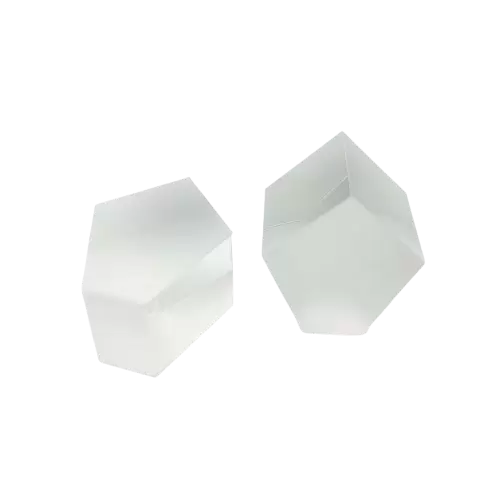
In many optical systems, controlling the direction of light is not simply a matter of reflecting a beam at a desired angle. For precision instruments, laser measurement equipment, and imaging systems, the optical component must maintain a stable beam path over long periods while minimizing alignment errors.