

 en
en
 English
 繁体中文
繁体中文 Japanese
 Korean
 Russian
 German
News
Deepen Optoelectronic Resources, Lead Technological Breakthroughs


Deepen Optoelectronic Resources, Lead Technological Breakthroughs
High-performance optical systems are no longer evaluated solely by focal length or magnification. As industrial inspection, machine vision, microscopy, spectroscopy, and scientific imaging continue to demand higher spatial resolution and greater measurement accuracy, optical designers are placing increasing emphasis on chromatic correction, wavefront quality, imaging consistency, and long-term optical stability.
One of the most widely adopted solutions for reducing chromatic aberration is the Achromatic Cemented Lens. By combining two carefully selected optical glasses with different refractive indices and dispersion characteristics into a cemented structure, this lens effectively compensates for chromatic errors while simultaneously reducing spherical aberration. The result is a sharper image, higher contrast, improved edge definition, and greater consistency across the visible spectrum.
However, many engineers still ask two practical questions during system development:
What is the most suitable achromatic cemented lens use for different optical systems?
When comparing an Achromatic cemented lens vs doublet lens, what engineering factors actually determine performance and selection?
Rather than focusing on simplified product descriptions, this article explains the optical engineering principles behind achromatic cemented lenses, discusses their practical application boundaries, and provides a technical comparison that helps engineers, purchasing specialists, and project managers make informed design decisions.
Every optical glass exhibits wavelength-dependent refractive behavior. Blue light bends more strongly than red light, causing different wavelengths to converge at different focal positions. This phenomenon, known as chromatic aberration, directly reduces image sharpness and measurement accuracy.
As imaging systems continue moving toward higher resolutions and larger sensors, chromatic aberration becomes increasingly visible and difficult to ignore.
Several practical consequences are commonly observed.
Axial chromatic aberration reduces focus consistency across multiple wavelengths, causing images to appear sharp at one color while remaining slightly defocused at another. In machine vision measurement, this introduces dimensional errors that become increasingly significant when sub-pixel detection algorithms are applied or when long working distances amplify focusing sensitivity.
Lateral chromatic aberration generates colored fringes around high-contrast object boundaries, particularly near the edge of the image field. These artifacts reduce edge recognition accuracy during industrial inspection, interfere with contour extraction algorithms, and negatively affect automated defect detection systems operating at high production speeds.
Chromatic dispersion also decreases modulation transfer performance because different wavelengths fail to overlap perfectly on the image sensor. Lower contrast reduces the visibility of fine structures, limiting overall optical resolution even when high-quality sensors and advanced image processing software are employed.
Unlike a singlet lens that relies on a single glass material, an Achromatic Cemented Lens combines two optical elements manufactured from carefully matched crown glass and flint glass.
These materials possess different Abbe numbers and refractive indices, allowing one element to compensate for the chromatic dispersion introduced by the other.
The cemented interface plays a critical role in the overall optical design.
The cemented optical structure minimizes the air gap between lens elements, reducing Fresnel reflections while improving transmission efficiency and maintaining precise optical alignment throughout long-term operation. Because both components behave as an integrated optical unit, alignment stability is significantly better than systems assembled with separated elements.
Material dispersion compensation allows two selected wavelengths within the visible spectrum to converge at nearly the same focal plane. This substantially reduces both longitudinal and transverse chromatic aberration, enabling higher image contrast, improved spatial resolution, and greater consistency across broadband illumination conditions commonly encountered in industrial imaging applications.
The combined optical power of both elements also contributes to spherical aberration correction. Rather than concentrating solely on color compensation, the optimized curvature distribution minimizes wavefront distortion, producing smaller spot sizes than equivalent singlet lenses and supporting higher imaging accuracy over the entire field of view.
Many users focus exclusively on chromatic correction while overlooking another important advantage of cemented optical assemblies—mechanical and optical stability.
Because the two lens elements are permanently bonded, positional accuracy remains highly repeatable throughout the product lifecycle.
This structural advantage becomes particularly valuable in precision instruments.
Mechanical alignment errors caused by vibration, repeated installation, or environmental changes are significantly reduced because both optical elements function as one integrated assembly rather than two independently positioned components. Stable alignment directly contributes to repeatable imaging performance in industrial automation equipment operating continuously for thousands of production hours.
The reduced number of optical interfaces minimizes internal reflections that can otherwise lower image contrast or introduce stray light. Higher transmission efficiency improves signal quality, especially in fluorescence microscopy, spectroscopy, and low-light imaging applications where photon collection efficiency directly influences measurement accuracy.
Different optical applications place different demands on chromatic correction, working distance, numerical aperture, and imaging consistency.
The versatility of the Achromatic Cemented Lens allows it to support a wide variety of precision optical architectures.
Machine vision systems increasingly rely on high-resolution CMOS sensors capable of detecting microscopic manufacturing defects.
An Achromatic Cemented Lens maintains consistent focus across multiple wavelengths emitted by white LEDs, multispectral illumination systems, or broadband lighting sources. This consistency significantly improves edge detection, dimensional measurement, barcode recognition, and automated defect inspection where color-dependent focus shifts could otherwise reduce inspection reliability.
Fluorescence imaging requires efficient transmission and accurate focusing of multiple emission wavelengths.
By reducing chromatic displacement between excitation and emission wavelengths, the achromatic optical structure improves fluorescence signal clarity while preserving fine structural details within biological samples. Researchers benefit from higher contrast, more accurate image registration, and reduced post-processing correction requirements.
Coordinate measurement systems, semiconductor inspection equipment, and optical metrology instruments demand exceptional imaging consistency.
The reduced chromatic error provided by an Achromatic Cemented Lens supports more accurate geometric measurements by minimizing wavelength-dependent positional shifts. Stable image formation enables software algorithms to perform repeatable dimensional analysis with higher confidence across varying lighting environments.
Image relay optics frequently require multiple lenses working together over relatively long optical paths.
Achromatic Cemented Lenses preserve image fidelity by reducing cumulative chromatic errors that would otherwise accumulate throughout successive optical stages. The resulting image exhibits higher contrast and improved sharpness from center to edge, supporting medical imaging, industrial endoscopy, and scientific instrumentation.
Broadband optical analysis depends heavily on accurate wavelength transmission.
Chromatic correction helps maintain optical alignment across different spectral regions, improving signal stability and reducing measurement uncertainty during spectral acquisition. This contributes to higher analytical accuracy in laboratory instrumentation and industrial process monitoring systems.
One of the most common technical discussions concerns Achromatic cemented lens vs doublet lens.
Although these terms are sometimes used interchangeably, understanding the underlying optical architecture is essential.
A doublet lens simply refers to an optical component consisting of two lens elements. Those two elements may be separated by an air gap, mechanically mounted together, or permanently cemented. Therefore, not every doublet lens is an achromatic cemented lens.
An Achromatic Cemented Lens is a specific type of doublet that has been intentionally designed to correct chromatic aberration through carefully matched optical materials and a cemented interface.
The practical engineering differences become clearer when examining real-world optical performance.
A conventional doublet may prioritize focal length, field correction, or packaging flexibility without fully compensating chromatic dispersion. In contrast, an Achromatic Cemented Lens is specifically optimized to bring multiple wavelengths into common focus, producing noticeably sharper broadband images in demanding imaging systems.
Air-spaced doublets provide additional degrees of design freedom that may benefit certain high-performance optical architectures, particularly where advanced aberration balancing is required. However, these systems generally involve greater manufacturing complexity, tighter assembly tolerances, and increased sensitivity to alignment errors compared with cemented configurations.
The cemented optical interface reduces reflection losses while simplifying mechanical integration. For many industrial applications requiring stable long-term operation, the cemented structure offers an excellent balance between optical performance, production efficiency, mechanical robustness, and lifecycle reliability.
An important advantage of ECOPTIK's Achromatic Cemented Lens manufacturing capability is its ability to support highly customized optical solutions rather than standardized catalog products alone.
Typical manufacturing specifications include:
Material options combining optical flint glass and crown glass allow designers to optimize chromatic correction according to system wavelength requirements, optical power, transmission characteristics, and environmental operating conditions.
Lens diameters ranging from 6 mm to 200 mm enable integration into compact imaging modules as well as large-aperture scientific instruments, while precision diameter tolerances maintain assembly compatibility across demanding optical systems.
Focal lengths from 50 mm to 2000 mm provide considerable flexibility for relay optics, machine vision objectives, inspection systems, and laboratory instruments requiring different imaging geometries and working distances.
Surface quality options including 60/40, 40/20, and 20/10, combined with surface accuracy from λ/2 to λ/10, support progressively higher imaging performance depending on application sensitivity, wavefront requirements, and allowable system error budgets.
Customized coatings tailored to customer requirements improve transmission efficiency, suppress unwanted reflections, and optimize optical performance across specific wavelength ranges or environmental operating conditions.
Even an excellent optical design cannot achieve its theoretical performance without equally precise manufacturing and metrology.
High-performance achromatic lenses require strict process control throughout grinding, polishing, centering, cementing, coating, and final inspection.
Several manufacturing factors directly influence imaging quality.
Center deviation must remain tightly controlled because even small decentering errors introduce coma and asymmetric aberrations that degrade edge sharpness, particularly in high-magnification optical systems where alignment tolerances become increasingly critical.
Surface figure accuracy determines wavefront quality and ultimately limits achievable resolution. Precision polishing capable of reaching λ/10 accuracy enables the optical system to approach its theoretical imaging performance while minimizing residual aberrations that reduce contrast and detail reproduction.
Comprehensive optical inspection ensures every manufactured lens satisfies stringent engineering requirements before delivery. Interferometric testing, coordinate measurement verification, and spectrophotometric analysis provide objective performance data supporting quality assurance throughout production.
For precision optical components, manufacturing capability is just as important as optical design.
ECOPTIK has dedicated more than fifteen years to researching and advancing precision optical component fabrication technologies. The company manufactures a broad portfolio that includes dome lenses, spherical lenses, micro-optical components, cylindrical mirrors, filters, prisms, windows, and customized optical assemblies for demanding industrial and scientific applications.
To support advanced optical performance, ECOPTIK processes materials sourced from internationally recognized suppliers including Schott, CDGM, Corning, as well as Sapphire, CaF₂, MgF₂, Fused Silica, Silicon, ZnSe, and ZnS. This extensive material capability allows engineers to optimize optical systems according to wavelength range, transmission efficiency, thermal behavior, and environmental durability.
Quality verification is supported by advanced metrology equipment including ZYGO laser interferometers, ZEISS CMM Spectrum measurement systems, and Agilent Cary 7000 UMS spectroscopic testing instruments. Combined with comprehensive lens assembly services and customized manufacturing capabilities, these resources enable ECOPTIK to deliver precision optical solutions that satisfy the demanding requirements of machine vision, microscopy, spectroscopy, semiconductor inspection, and scientific imaging applications.
Selecting the appropriate achromatic lens requires balancing optical performance, manufacturing tolerance, application requirements, and system cost.
Experienced optical engineers typically evaluate several key factors.
Analyze wavelength range, numerical aperture, sensor resolution, and working distance simultaneously because chromatic correction performance depends on the interaction between the complete optical system rather than any individual lens specification.
Determine acceptable levels of residual chromatic aberration according to actual measurement accuracy requirements. Applications involving micron-level dimensional inspection generally require substantially tighter optical tolerances than conventional imaging systems intended primarily for visualization.
Match surface quality, wavefront accuracy, coating performance, and centering precision to the desired system resolution. Selecting unnecessarily high specifications may increase manufacturing cost without delivering measurable system-level benefits, while insufficient precision can significantly limit final imaging performance.
Choose manufacturers possessing comprehensive fabrication, assembly, and metrology capabilities because consistent production quality often contributes more to long-term system reliability than isolated catalog specifications or theoretical optical designs.
Understanding achromatic cemented lens use begins with recognizing its fundamental engineering purpose—minimizing chromatic aberration while simultaneously improving overall imaging quality, optical stability, and measurement accuracy.
When evaluating Achromatic cemented lens vs doublet lens, the most important distinction lies not simply in the number of lens elements but in the intentional optical design, carefully selected material combinations, precision cemented architecture, and manufacturing quality that together enable superior broadband imaging performance.
For applications including machine vision, fluorescence microscopy, spectroscopy, industrial inspection, and precision metrology, a professionally manufactured Achromatic Cemented Lens provides the chromatic correction, structural stability, and optical consistency required to achieve reliable long-term imaging performance in demanding engineering environments.
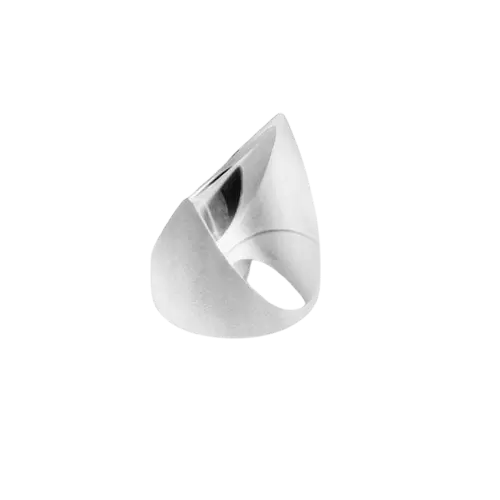
Laser systems used in industrial automation, precision measurement, semiconductor manufacturing, machine vision, and optical alignment increasingly require more than simply generating a laser beam.
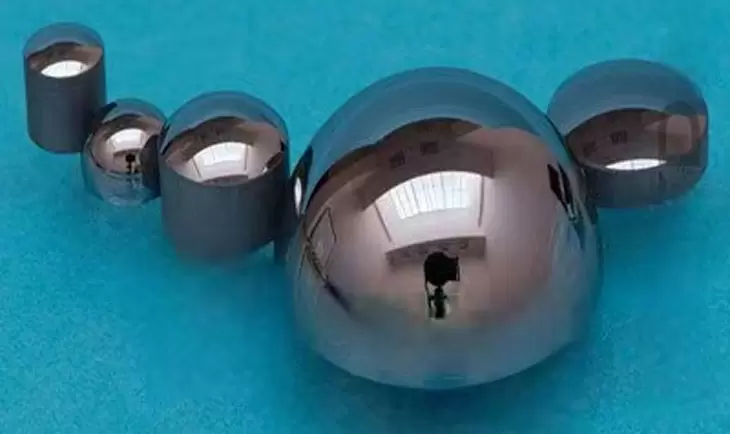
Terahertz waves refer to electromagnetic waves with frequencies ranging from 0.1 to 10 THz (wavelength 30 μ m-3 mm), between microwave and infrared, and were once known as the "THz Gap" due to technological limitations.
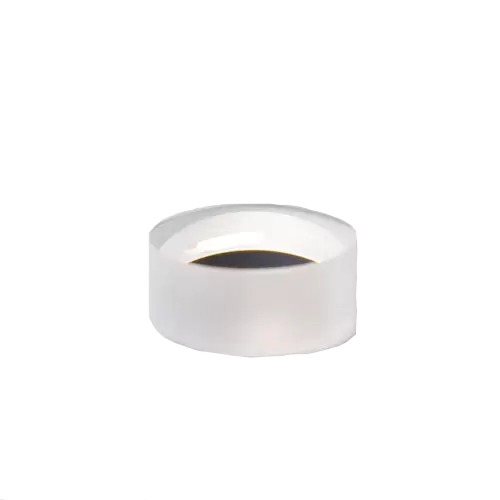
For optical engineers and procurement teams, choosing a plano concave lens is rarely just a matter of selecting a diameter. A lens may need to produce a specific negative focal length, control beam divergence, compensate spherical aberration, or work reliably at a particular wavelength.