

 en
en
 English
 繁体中文
繁体中文 Japanese
 Korean
 Russian
 German
News
Deepen Optoelectronic Resources, Lead Technological Breakthroughs


Deepen Optoelectronic Resources, Lead Technological Breakthroughs
In precision optical engineering, Dove prism uses are defined by a unique capability: controlled image rotation at twice the physical rotation angle of the prism itself, enabling deterministic manipulation of optical orientation within imaging and beam propagation systems. Unlike conventional refractive components that simply redirect light paths, a Dove prism introduces a structured rotational transformation that directly links mechanical rotation to optical output behavior.
For optical engineers, system integrators, and procurement specialists evaluating Dove prism price, the cost structure cannot be understood independently from material selection, angular tolerance control, surface flatness precision, and system-level integration requirements in collimated beam environments.
In high-precision imaging systems such as optical metrology, laser beam shaping, aerospace alignment systems, and advanced imaging instrumentation, Dove prisms are not passive optical elements—they are deterministic angular transformation components embedded within a controlled optical chain.
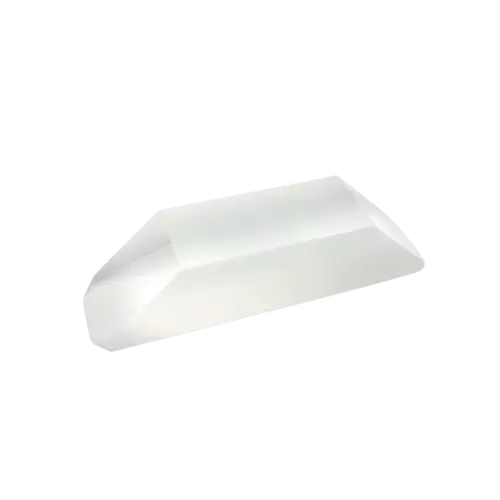
A Dove prism is structurally derived from a right-angle prism with its apex truncated, creating a geometry that supports total internal reflection and phase-preserving image inversion under collimated illumination.
When the prism is rotated around its longitudinal axis, the transmitted image rotates at twice the angular velocity of the physical prism. This 2:1 rotational coupling is a direct result of internal reflection symmetry and beam path inversion properties within the prism geometry.
This mechanism enables:
Precise angular control of image orientation without mechanical gimbal systems
Stable beam rotation in laser alignment and optical scanning systems
Deterministic mapping between mechanical motion and optical output rotation
High repeatability in controlled optical axis transformation systems
However, this behavior is strictly valid under collimated light conditions. Non-parallel incident beams introduce angular dispersion and wavefront distortion, which can degrade image fidelity.
To ensure predictable optical behavior, Dove prisms must maintain strict geometric and surface quality parameters across all operational environments.
Key engineering constraints include:
Central deviation control (< 3 arc minutes)
Surface flatness stability (λ/2 @ 632.8 nm)
Clear aperture optimization (> 85%)
Surface quality consistency (60/40 or 40/20 scratch-dig)
Angular precision alignment during assembly integration
These parameters collectively determine whether the prism maintains stable rotational imaging without introducing wavefront distortion or angular drift in high-precision systems.
The functional role of Dove prisms extends beyond image rotation and into broader optical system design architectures where controlled beam manipulation is required.
In laser-based systems, Dove prisms are used to rotate beam profiles without physically rotating the entire optical assembly. This enables compact mechanical design while maintaining angular control over beam orientation.
Applications include:
Laser scanning and positioning systems
Optical metrology alignment modules
Beam steering in interferometric setups
In imaging systems requiring stable orientation mapping, Dove prisms provide deterministic rotation of optical images, ensuring consistent alignment across optical channels.
This is particularly important in:
Optical sensing and tracking systems
Machine vision alignment calibration
Multi-axis imaging stabilization systems
In systems utilizing coherent or partially coherent light sources, Dove prisms are integrated into optical paths to maintain spatial phase consistency while enabling controlled orientation transformation.
This requires strict collimation conditions to avoid phase distortion and spatial frequency degradation.
High-performance Dove prism systems rely on tightly controlled optical and material engineering processes that directly influence system-level performance stability.
The internal reflection geometry of the Dove prism must be engineered to ensure symmetrical beam propagation across the optical axis. Any deviation in prism angle or surface alignment directly impacts rotational accuracy.
ECOPTIK’s optical design methodology ensures:
Stable 2:1 image rotation ratio under controlled collimation
Minimized angular drift under mechanical rotation
Reduced beam displacement during rotational motion
This is critical in applications where angular precision directly affects system calibration accuracy.
Although Dove prisms are primarily used under collimated light conditions, minor beam divergence can introduce edge distortion and wavefront deformation.
To address this, precision polishing and geometric correction techniques are used to reduce:
Edge image stretching under off-axis conditions
Astigmatic distortion in partially collimated systems
Wavefront curvature deviation across beam aperture
These corrections ensure stable imaging behavior in practical system environments where ideal collimation is not always achievable.
Material dispersion in glass substrates such as N-BK7 or fused silica can introduce wavelength-dependent phase shifts, particularly in broadband optical systems.
ECOPTIK applies controlled optical coatings to minimize:
Chromatic phase separation across spectral bands
Wavelength-dependent angular deviation
Color fringing in high-contrast optical paths
This ensures consistent optical behavior in both monochromatic and broadband illumination systems.
The Dove prism price is determined not by a single material factor but by the cumulative precision requirements of optical fabrication, metrology validation, and coating process control.
Key cost drivers include:
Material selection (N-BK7 vs fused silica optical grade)
Angular tolerance precision (arc-minute level deviation control)
Surface flatness requirements (λ/2 or higher precision grinding)
Coating complexity (anti-reflection and dispersion control layers)
Metrology validation using laser interferometry systems
Higher precision requirements exponentially increase fabrication and inspection complexity, directly impacting production cost structure.
Different engineering environments impose distinct performance requirements on Dove prism integration.
These systems prioritize angular precision and repeatability, requiring extremely stable rotational transformation without beam displacement drift.
In aerospace-grade optical systems, stability under mechanical vibration and thermal variation becomes a critical design constraint.
These applications require deterministic image rotation for calibration-free alignment across multi-axis imaging sensors.
The integration of Dove prisms into modern optical architectures represents a shift from mechanical rotation systems to optically deterministic angular transformation systems.
Instead of relying on external mechanical rotation stages, Dove prisms enable:
Compact optical system design with reduced mechanical complexity
Direct coupling between mechanical rotation and optical output
Improved system stability under vibration-sensitive conditions
Reduced alignment drift in long-duration optical operation
This makes them essential components in precision optical instrumentation where mechanical instability cannot be tolerated.
ECOPTIK has over 15 years of experience in precision optical component fabrication, specializing in prisms, lenses, cylindrical optics, and custom optical assemblies used in high-performance imaging and beam control systems.
With advanced metrology infrastructure including ZYGO laser interferometers, ZEISS coordinate measuring systems, and Agilent spectral analysis equipment, ECOPTIK ensures strict control over angular deviation, surface flatness, and optical transmission performance.
Using high-grade optical materials such as N-BK7 and fused silica, ECOPTIK manufactures Dove prisms designed for stable image rotation behavior, low wavefront distortion, and consistent performance in precision optical systems.
The engineering value of Dove prism uses lies in their ability to convert mechanical rotation into deterministic optical image rotation at a precise 2:1 ratio, enabling controlled beam and image orientation within complex optical systems.
Rather than being simple refractive components, Dove prisms function as structured optical transformation elements whose performance depends on angular precision, surface quality, and collimation conditions.
From optical metrology systems to imaging alignment platforms, their role is defined by predictable rotational behavior and system-level stability rather than aesthetic or general-purpose imaging characteristics.
As optical systems continue to demand higher precision and compact integration, Dove prisms remain critical components in deterministic optical transformation architectures where mechanical and optical domains must be tightly coupled.
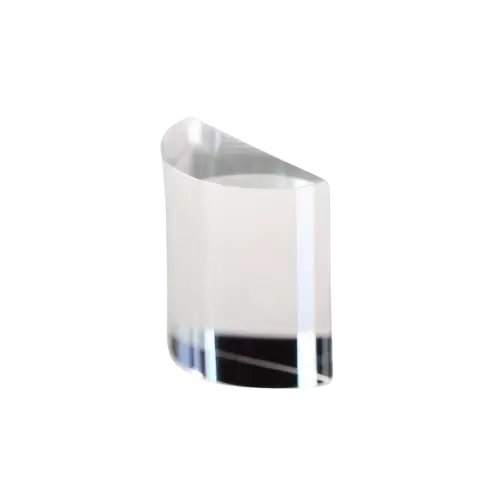
Optical systems do not always need a lens that focuses light in two axes. When the objective is to generate a laser line, illuminate a linear detector, modify beam aspect ratio, or focus a collimated beam in only one direction, a spherical lens can introduce an unwanted optical effect.
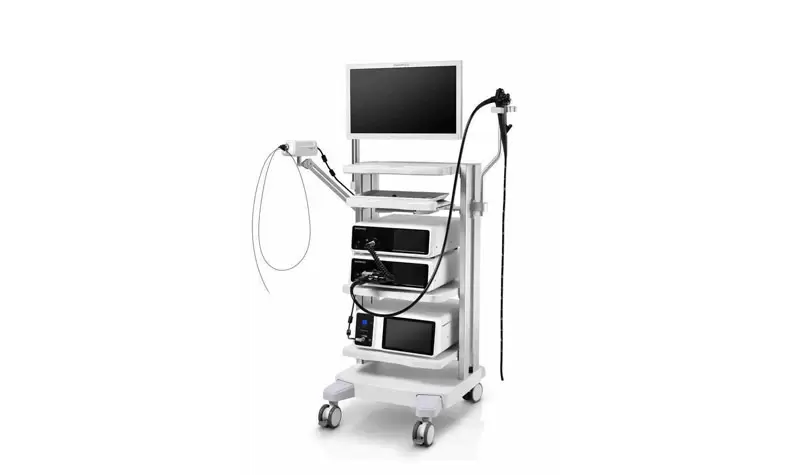
Endoscope is a medical device that can enter the body through natural channels or incisions for examination, treatment, and other procedures. According to different purposes and structures, endoscopes can be classified into various types.
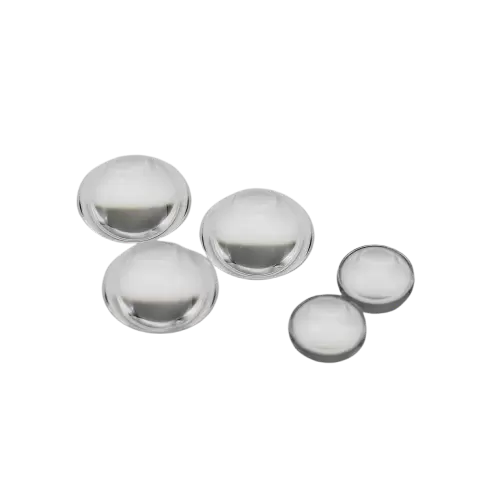
In modern optical engineering systems, performance bottlenecks are no longer defined by sensor resolution or digital processing capability alone, but increasingly by the physical limitations of optical front-end components.