

 en
en
 English
 繁体中文
繁体中文 Japanese
 Korean
 Russian
 German
News
Deepen Optoelectronic Resources, Lead Technological Breakthroughs


Deepen Optoelectronic Resources, Lead Technological Breakthroughs
In professional optical imaging systems, the question of Is 1.55 or 1.33 anamorphic better is not a subjective aesthetic debate but a deterministic optical engineering trade-off governed by squeeze factor design, field coverage efficiency, sensor compatibility, and distortion control behavior across the image plane. In modern cinematic production pipelines, Anamorphic prism lenses are used not merely to achieve widescreen formatting, but to optically manipulate horizontal field compression before digital processing, ensuring maximum sensor utilization and controlled optical character rendering.
For cinematographers, optical engineers, and production equipment buyers evaluating anamorphic systems, the decision between 1.33x and 1.55x squeeze ratios directly affects horizontal field expansion, aspect ratio output, edge sharpness stability, and post-production workflow efficiency.
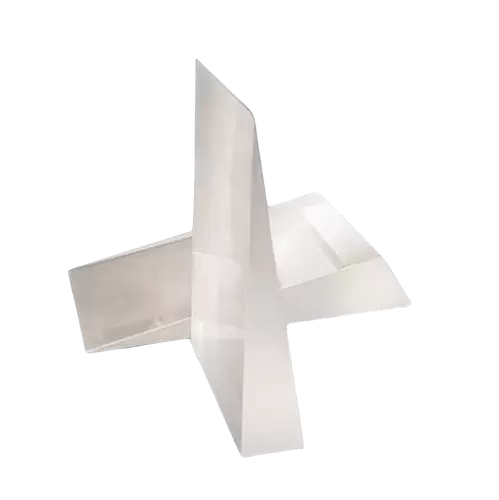
Anamorphic prism systems operate by introducing directional magnification differences across orthogonal axes of the optical path. A prism pair compresses or expands the horizontal field of view while maintaining vertical scale integrity, enabling a controlled transformation of circular or elliptical beam profiles into stretched imaging formats.
In imaging applications, this principle is used to:
Expand horizontal field of view without reducing vertical resolution density
Preserve full sensor utilization by avoiding post-crop cropping losses
Introduce controlled optical distortion characteristics for cinematic rendering
Maintain predictable squeeze uniformity across the image field
Unlike digital cropping, anamorphic prism systems preserve native pixel information, which is critical for high-resolution digital cinema sensors where spatial sampling density directly impacts final image fidelity.
The distinction between 1.33x and 1.55x anamorphic systems is defined by horizontal compression ratio, optical path geometry, and resulting aspect ratio conversion efficiency.
A 1.33x system provides moderate horizontal expansion, typically optimized for sensors that already operate in wider native aspect ratios such as 16:9 or 3:2 formats.
Engineering characteristics include:
Lower horizontal compression stress on edge field rays
Reduced anamorphic distortion gradient toward frame edges
More stable compatibility with S35 sensor formats
Easier integration with minimal post-production de-squeeze correction
This configuration is commonly selected in documentary production, corporate filmmaking, and run-and-gun shooting environments where optical predictability and workflow simplicity are prioritized over extreme aspect ratio expansion.
A 1.55x system introduces stronger horizontal squeeze behavior, resulting in a more aggressive widescreen transformation and higher spatial reallocation efficiency across the sensor plane.
Engineering characteristics include:
Greater horizontal field compression and wider final aspect ratios
Increased optical demand on prism alignment precision
More pronounced anamorphic optical signature (controlled stretching behavior)
Higher sensitivity to edge aberration correction design
This system is typically preferred in narrative cinema, commercial advertising, and high-production-value visual storytelling where controlled optical character and wider cinematic framing are structurally required.
High-performance anamorphic systems rely on precise control of refractive index behavior, dispersion management, and angular beam transformation stability across the optical axis.
At the core of anamorphic performance is prism geometry control using high refractive index materials such as N-SF11. The theta angle precision (29°27' ± 3") directly determines horizontal compression accuracy and field uniformity across the imaging plane.
ECOPTIK’s optical engineering approach ensures that:
Horizontal squeeze factor remains stable across the full field of view
Beam deviation is minimized across off-axis ray paths
Geometric distortion remains predictable during focus shifts
This directly impacts how consistently the final image retains spatial proportions after de-squeeze processing.
One of the key challenges in anamorphic prism systems is wavelength-dependent refraction variation, which leads to color fringing and chromatic separation at high-contrast edges.
To mitigate this, MgF2 single-layer coatings are applied to perpendicular prism surfaces to reduce surface reflection variance and stabilize transmission across visible wavelengths.
This results in:
Reduced edge color separation under high-contrast lighting
Improved spectral uniformity across horizontal stretch regions
More consistent color rendering in wide aperture shooting conditions
Anamorphic systems inherently introduce field-dependent distortion gradients due to directional magnification differences. To control this, non-spherical compensation design principles are applied to maintain resolution uniformity from center to edge.
This engineering layer ensures:
Stable MTF performance across horizontal field expansion
Reduced edge softening under wide squeeze factors
Controlled astigmatism behavior across focus transitions
The choice between 1.33x and 1.55x directly influences not only aspect ratio output but also compositional structure and depth perception behavior in final imagery.
1.33x systems maintain a more restrained widescreen expansion, preserving a balanced frame geometry suitable for dialogue-driven storytelling and documentary realism.
1.55x systems amplify horizontal spatial separation, increasing lateral compositional emphasis and enhancing foreground-background separation dynamics in cinematic framing.
These differences are not stylistic abstractions but direct consequences of optical field compression geometry.
Different production environments impose different constraints on anamorphic system selection.
Advertising systems prioritize controlled visual hierarchy and high edge definition. 1.55x systems are often used to maximize spatial expansion while maintaining strong subject isolation in controlled lighting environments.
Feature film production requires balanced optical character and predictable distortion behavior across varied focal lengths and sensor formats. Both 1.33x and 1.55x systems are used depending on narrative framing requirements.
High visual stylization environments benefit from stronger anamorphic signature expression, where 1.55x systems provide more pronounced horizontal compression and spatial stretching effects.
Modern digital sensors capture extremely high-resolution image data, but native sensor geometry is often rectangular and not optimized for widescreen cinematic composition. Anamorphic prism systems solve this mismatch at the optical stage rather than relying on digital cropping.
This provides key engineering advantages:
Full sensor utilization without vertical resolution loss
Improved spatial sampling efficiency across horizontal axis
Reduced reliance on post-production scaling and interpolation
Higher effective resolution retention in widescreen output
ECOPTIK has specialized in optical component fabrication for over 15 years, producing high-precision optical systems including prisms, cylindrical optics, and lens assemblies used in imaging and beam shaping applications.
With advanced metrology systems such as ZYGO laser interferometers and ZEISS CMM inspection platforms, ECOPTIK ensures strict control over surface flatness, angular precision, and optical transmission characteristics in anamorphic prism lens production.
By combining high refractive index glass materials, precision prism geometry design, and controlled coating technologies, ECOPTIK delivers anamorphic optical systems designed for predictable squeeze behavior and stable imaging performance across professional cinematic workflows.
The question of Is 1.55 or 1.33 anamorphic better cannot be answered in isolation without considering optical geometry, sensor architecture, and intended imaging application. A 1.33x system prioritizes optical stability and workflow compatibility, while a 1.55x system emphasizes stronger widescreen transformation and enhanced spatial compression characteristics.
From an engineering standpoint, anamorphic prism lenses represent a controlled optical transformation system where squeeze ratio, dispersion control, and field correction design collectively determine final image behavior. The selection between different anamorphic ratios is therefore a direct function of imaging system design requirements rather than aesthetic preference alone.
As digital cinematography continues to evolve toward higher resolution and larger sensor formats, precision-engineered anamorphic prism systems remain a critical optical tool for achieving controlled widescreen imaging without compromising sensor-level data integrity.

Cylindrical mirror is a special optical component, and its working principle and application scenarios are significantly different from traditional spherical mirrors.
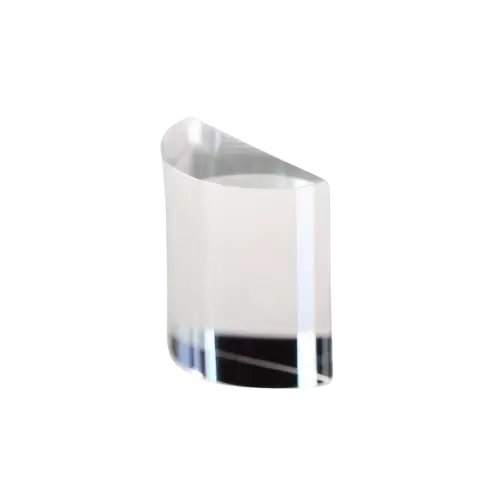
Optical systems do not always need a lens that focuses light in two axes. When the objective is to generate a laser line, illuminate a linear detector, modify beam aspect ratio, or focus a collimated beam in only one direction, a spherical lens can introduce an unwanted optical effect.
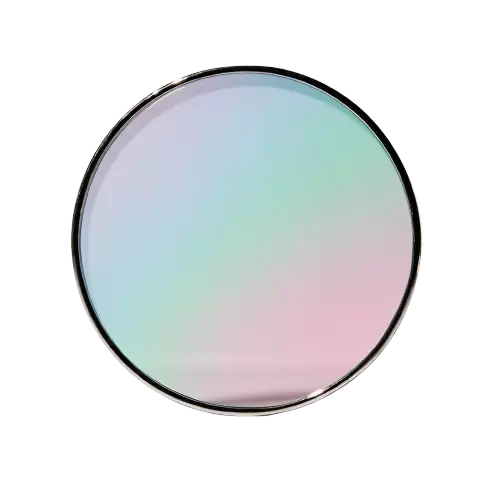
In complex optical environments, selecting useful light from unwanted wavelengths is a critical challenge. Traditional optical filters may fail to provide sufficient blocking outside the target band, accurate cut-on wavelength control, or stable transmission performance over long-term operation.