

 en
en
 English
 繁体中文
繁体中文 Japanese
 Korean
 Russian
 German
News
Deepen Optoelectronic Resources, Lead Technological Breakthroughs


Deepen Optoelectronic Resources, Lead Technological Breakthroughs
In many optical systems, controlling the direction of light is not simply a matter of reflecting a beam at a desired angle. For precision instruments, laser measurement equipment, and imaging systems, the optical component must maintain a stable beam path over long periods while minimizing alignment errors.
Traditional mirror-based beam steering solutions are widely used because of their simple structure and relatively low cost. However, they often depend heavily on mechanical adjustment accuracy. Even a small installation deviation or vibration-induced movement can change the reflected beam direction, affecting system calibration and measurement repeatability.
This limitation becomes more significant in applications such as laser positioning systems, industrial inspection equipment, and scientific optical instruments, where angular errors of only a few arc seconds can influence final performance.
Another challenge is maintaining image orientation while achieving a precise 90° optical path change. Many conventional reflection solutions can redirect light, but they may require additional optical compensation structures to maintain image orientation and system stability.
A Penta Prism provides a different approach. Through its unique geometric structure and internal reflection principle, it can achieve a highly stable 90° beam deviation while keeping the image direction unchanged. Unlike ordinary mirrors that rely on precise mechanical positioning, a penta prism uses its internal optical geometry to maintain a fixed deviation angle.
For engineers designing high-precision optical systems, this makes the penta prism a valuable beam deflection element for applications requiring accuracy, repeatability, and long-term reliability.

A Beam Splitter Penta Prism is a specialized optical component designed not only to redirect light but also to provide controlled beam separation according to system requirements. Its performance depends on the prism geometry, optical material, surface quality, angular accuracy, and coating design.
The core advantage of a penta prism comes from its unique five-sided optical structure. When light enters from the correct surface, the internal geometry causes the beam to undergo controlled reflection inside the prism and exit with a precise 90° deviation.
Unlike a conventional mirror, the output angle of a penta prism is mainly determined by the prism geometry rather than the mounting angle.
The fixed optical structure reduces alignment sensitivity and improves beam direction stability in precision systems.
In practical applications, this means engineers do not need to repeatedly adjust mechanical positions to maintain a consistent optical path. Even when the prism experiences small changes in orientation, the output beam direction remains highly stable as long as the light enters through the designed input surface. This characteristic is particularly important in laser measurement equipment and optical alignment systems where repeatability directly affects measurement accuracy.
Another important feature is image orientation preservation. A penta prism changes the direction of light without introducing image rotation, making it suitable for imaging systems that require a predictable optical path.
The optical material used in a penta prism directly influences transmission efficiency, processing accuracy, and environmental stability.
ECOPTIK uses high-quality optical materials including N-BK7/H-K9L for penta prism manufacturing. These materials are widely applied in precision optics because of their excellent optical uniformity, stable processing characteristics, and reliable transmission performance.
High-quality optical glass materials provide the foundation for accurate beam control and consistent optical performance.
N-BK7 and H-K9L are suitable for visible wavelength applications and precision optical components because they offer good homogeneity and predictable optical properties. Combined with advanced polishing and inspection processes, these materials help ensure that the final prism maintains stable performance in demanding optical environments.
For optical engineers, deviation angle accuracy is one of the most important specifications when selecting a penta prism.
ECOPTIK penta prisms provide:
Standard 90° deviation angle tolerance: <10 arc seconds
High-accuracy version: ≤2 arc seconds
Arc-second level angle control enables penta prisms to meet the requirements of high-precision measurement and imaging applications.
In laser alignment systems and precision optical instruments, small angular deviations can accumulate into significant positioning errors. By controlling the deviation angle within strict tolerances, penta prisms help reduce calibration frequency and improve the repeatability of optical systems during long-term operation.
The surface processing quality of a prism directly affects wavefront performance and image quality.
ECOPTIK provides customized optical quality options, including:
Surface flatness: λ/2 ~ λ/10 @ 632.8nm
Surface quality: 60/40, 40/20, 20/10
Higher surface accuracy improves beam transmission quality by reducing distortion and maintaining optical wavefront integrity.
For advanced imaging systems and laser applications, surface imperfections can introduce scattering, wavefront errors, or reduced contrast. Selecting the appropriate surface quality grade allows engineers to balance performance requirements and system cost according to the specific application.
Coating selection plays an important role in the performance of a Beam Splitter Penta Prism. Different applications require different reflection and transmission characteristics.
ECOPTIK supports multiple coating options:
Aluminum coating
Silver coating
Dielectric coating
Anti-reflection (AR) coating
Customized coatings allow penta prisms to adapt to different wavelengths, optical paths, and system performance requirements.
Reflective coatings on designated surfaces improve beam redirection efficiency, while AR coatings on light-transmitting surfaces reduce unwanted reflection losses. For laser systems, imaging equipment, and scientific instruments, selecting the correct coating solution can significantly improve overall optical efficiency and stability.
The engineering value of a penta prism becomes especially clear in systems where optical accuracy and long-term stability are critical.
Laser measurement equipment requires extremely stable beam positioning because even minor deviations can affect measurement results.
Penta prisms simplify optical alignment by providing a fixed 90° beam path with high repeatability.
In laser distance measurement, alignment systems, and calibration instruments, penta prisms reduce dependence on mechanical adjustment and help maintain consistent beam direction. Their stable angular performance allows engineers to design more reliable optical paths while reducing maintenance requirements.
Modern machine vision and industrial inspection systems depend on precise optical positioning to achieve accurate detection results.
Stable beam deflection improves imaging consistency in automated inspection environments.
Compared with adjustable mirror systems, penta prisms provide a more reliable optical reference point. This helps reduce alignment errors caused by vibration, temperature changes, or repeated equipment operation, making them suitable for industrial environments requiring continuous operation.
Imaging systems often require optical components that can redirect light while maintaining image orientation.
Penta prisms provide predictable optical paths for imaging applications where image direction stability is essential.
Their ability to maintain image orientation while changing beam direction makes them useful in optical viewing systems, imaging instruments, and specialized camera designs.
Research equipment often requires customized optical components with strict performance requirements.
Precision-manufactured penta prisms support complex optical designs through customized dimensions and coating options.
ECOPTIK provides optical customization based on customer drawings, allowing engineers to select suitable materials, dimensions, coatings, and performance specifications for specialized instruments.
When selecting a beam deflection component, engineers often compare Pentaprism vs Pentamirror. Although both can redirect light paths, their structures and long-term performance characteristics are different.
A pentaprism is a solid optical component that uses internal reflection within a precisely manufactured prism structure. A pentamirror, in contrast, uses multiple mirror surfaces assembled together to achieve a similar directional change.
Pentaprism provides higher structural consistency because the optical geometry is integrated into a single solid component.
Since the deviation angle is determined by prism geometry, penta prisms are less dependent on mechanical assembly accuracy. Pentamirror systems may provide advantages in lightweight designs, but their performance can be more affected by assembly tolerances and mechanical stability.
For precision applications, maintaining performance over time is often more important than initial adjustment accuracy.
Penta prisms offer better long-term angular stability for systems requiring repeated operation and minimal recalibration.
In environments involving vibration, temperature variation, or continuous operation, reducing the number of adjustable optical elements helps improve system reliability. This is why penta prisms are commonly selected for precision measurement equipment and scientific optical systems.
Both penta prisms and pentamirrors can use reflective surfaces, but optical performance depends heavily on coating technology.
ECOPTIK supports customized coating solutions including:
Aluminum reflective coatings for broad wavelength applications;
Silver coatings for high reflectivity requirements;
Dielectric coatings for specific wavelength performance;
AR coatings to reduce transmission losses.
Flexible coating options allow penta prisms to meet different optical system requirements without changing the fundamental beam stability advantages of the prism structure.
Engineers can select coatings according to laser wavelength, visible imaging requirements, or specialized optical applications.
High-performance penta prisms require precise optical fabrication processes.
ECOPTIK has been researching optical component fabrication technology for 15 years and manufactures precision optics including domes, spherical lenses, micro-optical components, cylindrical mirrors, filters, prisms, and windows.
The company works with optical materials from suppliers such as Schott, CDGM, Corning, as well as Sapphire, CaF₂, MgF₂, Fused Silica, Si, ZnSe, and ZnS. ECOPTIK also provides lens assembly services and uses advanced testing equipment including ZYGO laser interferometers, ZEISS CMM Spectrum, and Agilent Cary 7000 UMS to verify optical performance and provide product reports.
Advanced manufacturing and inspection capabilities ensure that customized penta prisms maintain accuracy, repeatability, and reliability in demanding optical systems.
From material selection and precision polishing to coating and final inspection, every manufacturing stage influences the final optical performance. This integrated capability allows ECOPTIK to support OEM projects and customized optical requirements based on customer drawings.
For optical engineers and precision equipment manufacturers, selecting a beam deflection component requires careful consideration of accuracy, stability, material properties, and coating performance.
A penta prism is not simply a replacement for a mirror. Its value comes from combining:
Stable 90° beam deviation;
Image orientation preservation;
High angular accuracy;
Custom optical coatings;
Reliable long-term performance.
With precision specifications including ≤10 arc seconds deviation tolerance, high-accuracy options of ≤2 arc seconds, λ/10 surface flatness capability, and customized coating solutions, penta prisms provide a reliable solution for laser systems, imaging equipment, industrial inspection tools, and advanced optical instruments.
As optical systems continue moving toward higher accuracy and greater reliability, precision-engineered penta prisms remain an important component for achieving stable and repeatable beam control.
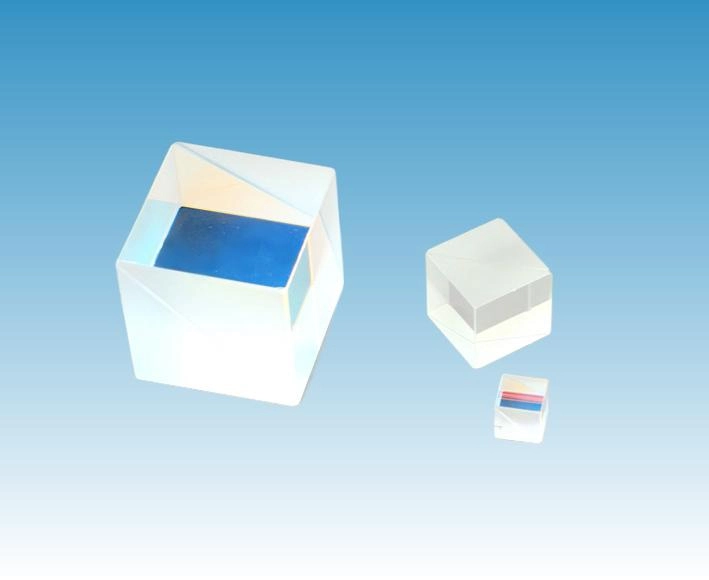
The cubic spectroscopic prism is an optical component with special geometric shape and optical properties, which is usually used for spectral analysis, refraction or changing the direction of light propagation.
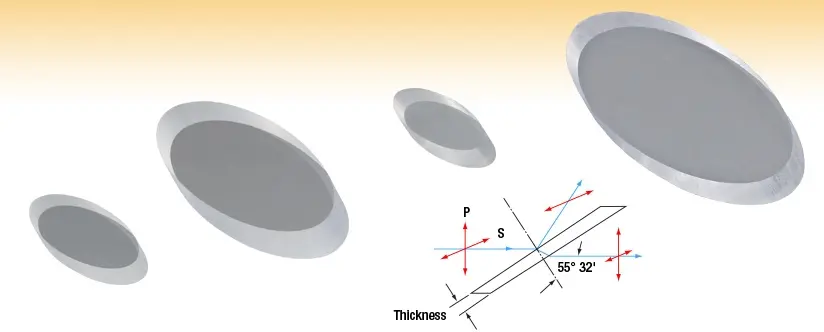
Brewster windows are critical uncoated optical components in high-power laser systems, enabling zero‑reflection-loss transmission for p‑polarized light at Brewster’s angle while suppressing s-polarized light.
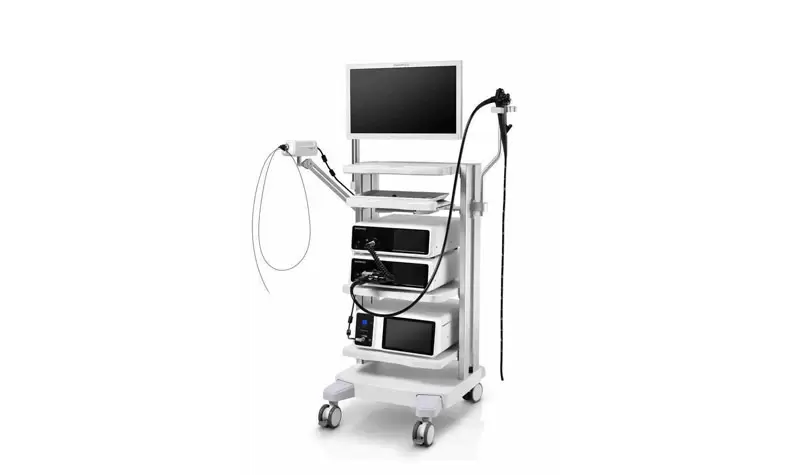
Endoscope is a medical device that can enter the body through natural channels or incisions for examination, treatment, and other procedures. According to different purposes and structures, endoscopes can be classified into various types.