

 en
en
 English
 繁体中文
繁体中文 Japanese
 Korean
 Russian
 German
News
Deepen Optoelectronic Resources, Lead Technological Breakthroughs


Deepen Optoelectronic Resources, Lead Technological Breakthroughs
Traditional prism systems have played an important role in binoculars, telescopes, and observation instruments for decades. Among them, Porro prism designs remain widely used because of their mature structure, reliable optical performance, and relatively simple manufacturing process. However, as optical equipment continues to develop toward lightweight construction, compact dimensions, and higher integration levels, traditional prism structures face increasing limitations.
The main challenge of Porro prism systems is their offset optical path design. Because the objective lens and eyepiece are not aligned on the same optical axis, the overall optical body becomes wider and requires more internal installation space. This structure can deliver excellent image quality, but it is less suitable for modern optical products that require portability, ergonomic design, and compact mechanical integration.
For manufacturers of binoculars, observation devices, and precision imaging systems, modern optical design requires more than basic image magnification. Products must achieve a balance between:
Compact optical structure;
Stable image alignment;
High light transmission efficiency;
Long-term mechanical reliability.
A Roof Prism provides an effective solution to these challenges. Through a special Amici roof structure, the prism can redirect light by 90° while correcting both image inversion and left-right reversal. This allows the objective lens and eyepiece to remain aligned, reducing the overall size of the optical system while maintaining accurate imaging performance.
With improvements in optical glass materials, precision machining, and coating technology, Roof Prism has become a preferred solution for high-performance binoculars, professional observation equipment, and compact optical instruments.
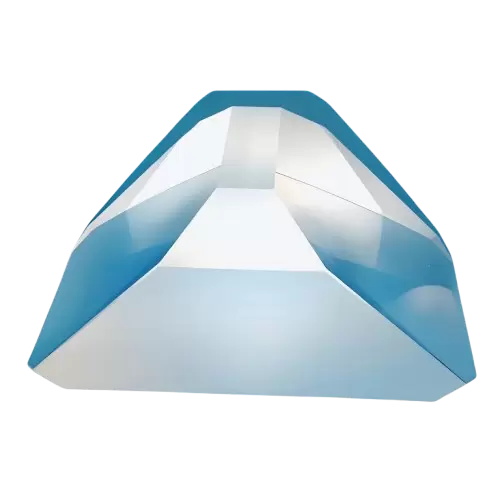
The structure of an Amici Roof Prism can be considered a modified right-angle prism where the traditional beveled edge is replaced by a protruding 90° roof ridge. This unique geometry allows the prism to perform multiple optical functions within a single component.
A Roof Prism can:
Redirect incoming light by 90°;
Correct upside-down images;
Correct left-right image reversal;
Maintain alignment between the objective lens and eyepiece.
This design significantly improves optical system integration compared with traditional Porro prism configurations.
Compact optical layout improves product design flexibility and reduces overall equipment size:
By allowing the objective lens and eyepiece to remain positioned along the same optical axis, Roof Prism eliminates the wider offset structure required by Porro prism systems. This compact arrangement enables manufacturers to design slimmer binocular housings, reduce product weight, and improve user handling comfort without sacrificing optical performance.
Stable image correction improves reliability in precision observation systems:
The roof structure provides controlled optical path correction through precise geometric design rather than relying on additional alignment components. This reduces optical complexity and helps maintain consistent image orientation during long-term operation, making Roof Prism suitable for professional binoculars, imaging systems, and observation instruments.
The choice of optical glass directly affects the transmission efficiency, dimensional stability, and final imaging quality of a Roof Prism. Different applications require different material characteristics depending on environmental conditions, optical wavelength requirements, and precision levels.
ECOPTIK supports Roof Prism manufacturing using:
H-K9L/BK7 optical glass;
Fused silica materials.
H-K9L and BK7 are commonly selected for precision optical components because of their balanced optical properties and reliable manufacturing characteristics.
H-K9L and BK7 provide stable optical performance for mainstream binocular and observation applications:
These materials offer good visible light transmission, consistent refractive properties, and excellent polishing performance. Their stable characteristics make them suitable for precision Roof Prism production where optical clarity, dimensional consistency, and manufacturing efficiency are equally important.
For optical systems operating under demanding environmental conditions, fused silica provides additional advantages.
Fused silica improves thermal stability and maintains optical accuracy under temperature variation:
With a low coefficient of thermal expansion and strong environmental resistance, fused silica helps minimize dimensional changes caused by temperature fluctuations. This makes it suitable for specialized optical instruments and applications where long-term optical alignment is critical.
The optical performance of a Roof Prism depends heavily on manufacturing accuracy. Small deviations in geometry, surface quality, or dimensional control can affect image alignment, resolution, and overall system reliability.
ECOPTIK provides Roof Prism solutions with:
Dimension range: 2mm~80mm;
Dimension tolerance: ±0.1mm, ±0.02mm;
90° deviation tolerance: <3 arc min to 30 arc sec;
Surface flatness: λ/2~λ/10 @633nm;
Surface quality: 60-40, 20-10.
The deviation angle of a Roof Prism directly influences the accuracy of the optical path. In binocular and imaging applications, even small angular errors may create alignment problems between optical channels.
High-precision deviation control ensures stable image matching and improves viewing reliability:
ECOPTIK Roof Prism products can achieve 90° deviation tolerance from <3 arc min to 30 arc sec according to application requirements. This level of control helps reduce image mismatch, optical adjustment requirements, and user fatigue in dual-channel optical systems such as professional binoculars and observation equipment.
The surface accuracy of a Roof Prism determines how effectively it maintains optical wavefront quality during light transmission.
High surface flatness improves image sharpness by reducing wavefront distortion and optical scattering:
ECOPTIK provides surface flatness specifications from λ/2 to λ/10 @633nm. Higher surface accuracy allows the prism to preserve more optical information during transmission, which is particularly important for high-resolution observation systems and precision imaging equipment where detail reproduction and contrast are essential.
Different surface quality grades allow manufacturers to balance performance requirements and production costs:
Surface quality options including 60-40 and 20-10 provide flexibility for different optical applications. Standard observation devices may use general optical quality levels, while high-end imaging systems often require finer surface processing to reduce scattering and improve optical clarity.
The development of high-performance binoculars has increased demand for Roof Prism technology. Modern users require equipment that is not only optically powerful but also lightweight, comfortable, and easy to carry.
Roof Prism enables manufacturers to create compact binocular designs while maintaining professional optical performance:
Because the optical path remains aligned along a straight axis, Roof Prism systems allow binocular manufacturers to reduce housing width and overall weight. This makes them ideal for premium binocular products used in wildlife observation, hunting, outdoor exploration, and professional field applications.
Precision prism manufacturing improves image quality in demanding viewing conditions:
High-end Roof Prism binoculars depend on accurate prism geometry, high-quality optical glass, and optimized coatings to deliver clear images with accurate colors and stable contrast. These factors become especially important in low-light environments where optical efficiency directly affects observation performance.
Professional observation equipment often requires long operating periods in outdoor environments. Product designers must consider not only optical performance but also durability and portability.
Roof Prism provides a compact and reliable optical solution for outdoor observation systems:
The reduced size and weight of Roof Prism-based designs allow users to carry equipment more easily during extended field operations. At the same time, precise manufacturing ensures that the optical path remains stable despite repeated handling and environmental changes.
Applications include:
Wildlife observation binoculars;
Hunting optics;
Marine observation devices;
Portable monitoring systems.
Beyond binocular applications, Roof Prism technology is also used in compact optical systems where space efficiency and accurate light direction are required.
Roof Prism helps engineers optimize optical layouts where traditional prism structures create space limitations:
By providing controlled beam direction within a smaller optical footprint, Roof Prism allows designers to develop more integrated imaging systems while maintaining reliable optical alignment. This makes it valuable for specialized optical instruments, measurement systems, and compact imaging devices.
The comparison of Roof prism vs Porro prism is an important consideration for optical engineers when selecting prism structures.
Although both designs can provide image correction and light path folding, their optical principles and engineering characteristics are different.
Roof Prism and Porro Prism use different approaches to control light movement inside optical systems.
Roof Prism provides a straight and compact optical path that supports lightweight product design:
The aligned optical axis between objective lens and eyepiece reduces housing size and improves mechanical integration. This structure is especially suitable for modern binoculars and portable optical instruments where compactness is a priority.
Porro Prism offers a mature optical structure but requires additional physical space due to its offset light path:
The traditional Porro design creates separation between optical components, resulting in wider equipment dimensions. While it remains effective for many applications, its structure is less flexible when manufacturers need to reduce product size and weight.
The difference in optical layout directly affects the physical design of the final product.
Roof Prism is generally preferred for premium optical products requiring portability and ergonomic handling:
Compact dimensions allow manufacturers to develop lighter binoculars that are easier to carry while maintaining professional optical performance. This is one reason why many high-end binocular products adopt Roof Prism systems.
Porro Prism remains suitable for applications where larger housing size and traditional optical characteristics are acceptable:
Due to its established manufacturing process and optical design history, Porro Prism continues to be used in various observation products where cost efficiency and conventional performance are important factors.
Roof Prism systems often require higher optical processing standards because light passes through multiple reflective surfaces.
Advanced coating technology improves Roof Prism transmission efficiency and image contrast:
Customized coating solutions, including anti-reflection coatings and reflective coatings, help reduce light loss and improve overall optical performance. Proper coating selection is especially important for high-end binoculars and professional observation equipment operating in challenging lighting conditions.
ECOPTIK is an innovative and enterprising optical customization partner specializing in precision optical component manufacturing.
The company has been researching optical component fabrication technology for 15 years. ECOPTIK manufactures precision optics including domes, spherical lenses, micro-optical components, cylindrical mirrors, filters, prisms, and windows.
The company provides optical materials from suppliers including Schott, CDGM, and Corning, as well as Sapphire, CaF₂, MgF₂, Fused Silica, Si, ZnSe, and ZnS. ECOPTIK also provides lens assembly services and uses advanced testing equipment such as ZYGO laser interferometers, ZEISS CMM Spectrum, and Agilent Cary 7000 UMS to perform inspections and provide product reports.
Precision machining capability ensures Roof Prism products meet strict requirements for optical accuracy and long-term reliability:
ECOPTIK controls key manufacturing factors including prism geometry, dimensional tolerance, surface quality, and angular accuracy. These processes help ensure that Roof Prism components deliver stable optical performance in binoculars, observation systems, and precision imaging applications.
Customized materials, dimensions, and coating solutions allow Roof Prism products to match different optical system requirements:
From H-K9L/BK7 and fused silica material selection to customized dimensions from 2mm to 80mm, ECOPTIK supports OEM and optical design projects requiring specific performance characteristics. Coating solutions can also be customized according to customer requirements to improve transmission efficiency and application compatibility.
As optical products continue developing toward smaller dimensions, lighter structures, and higher performance, Roof Prism technology provides manufacturers with a practical solution for compact optical integration.
Compared with traditional Porro Prism systems, Roof Prism offers advantages in:
Optical path optimization;
Compact mechanical design;
Image orientation correction;
Long-term alignment stability.
With precision specifications including 30 arc sec deviation accuracy, λ/10 surface flatness capability, multiple optical material options, and customized coating solutions, Roof Prism provides the performance foundation required for high-quality binoculars, observation equipment, and precision optical systems.
For companies developing advanced optical products, selecting a precision Roof Prism solution is not only a component decision but also an important factor influencing product reliability, imaging quality, and long-term competitiveness.
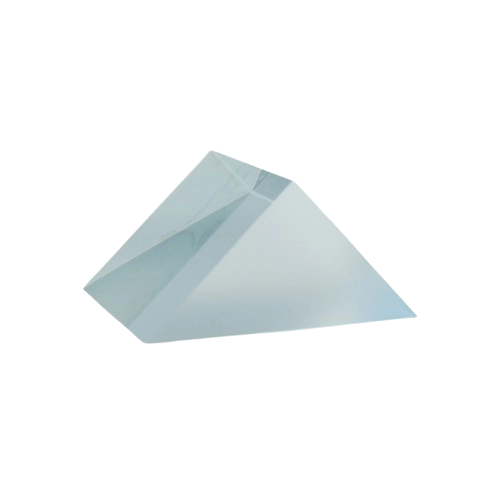
In modern optical engineering systems, especially in laser instrumentation, medical imaging, and industrial vision inspection, the role of a prism is no longer limited to simple beam deviation. For optical system designers and integrators working with precision optical prism lenses, the real challenge lies in maintaining sub-micron optical path stability, angular deviation accuracy, and multi-wavelength transmission consistency under complex system conditions.
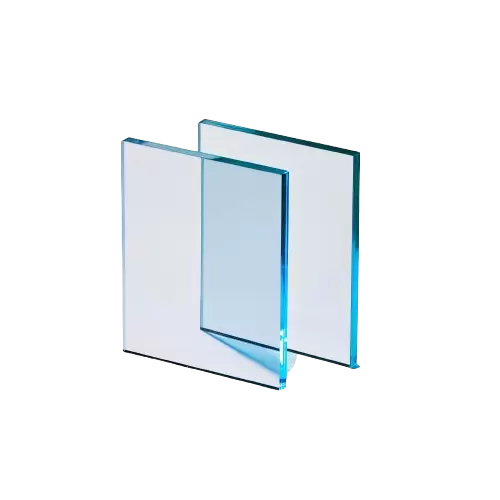
In laser equipment, imaging systems, optical instruments and precision detection equipment, an optical window is not simply a transparent protective plate. It sits directly in the optical path, so its surfaces can influence reflection, beam deviation, wavefront quality and the amount of light reaching the next optical element.
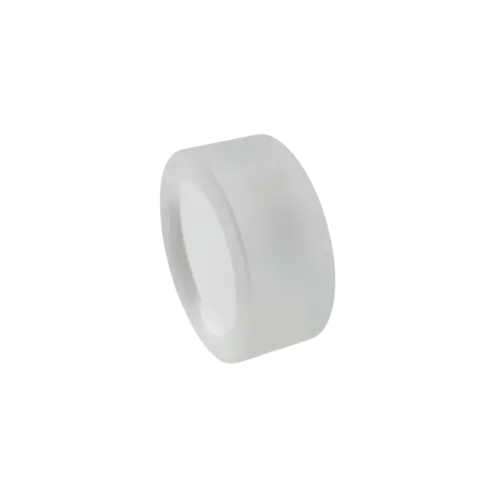
A conventional spherical lens can provide the required optical power, but its simple geometry does not always provide sufficient aberration control in a precision optical system. As aperture increases or the lens is used away from the optical axis, spherical aberration, coma, and degradation toward the edge of the image can become more difficult to manage.