

 en
en
 English
 繁体中文
繁体中文 Japanese
 Korean
 Russian
 German
News
Deepen Optoelectronic Resources, Lead Technological Breakthroughs


Deepen Optoelectronic Resources, Lead Technological Breakthroughs
In precision optical measurement systems, the stability of the reflected light path directly affects the accuracy and reliability of measurement results. Traditional flat mirrors are widely used because of their simple structure and high reflection efficiency, but their performance depends heavily on precise installation and alignment.
When the incident beam angle changes, the reflected beam direction from a flat mirror changes accordingly. Even a small adjustment error during installation can cause the return signal to deviate from the expected optical path, creating measurement errors in applications that require high repeatability.
For laser distance measurement, industrial positioning, and optical calibration systems, this limitation becomes increasingly significant. These systems often operate over long distances or in environments where mechanical vibration, temperature changes, and installation limitations can affect optical alignment.
A high-performance reflector must provide more than simple reflection. It needs to maintain a stable return path even when the incident angle changes.
This is the key advantage of a Corner Cube Retroreflector.
Based on a three-dimensional structure composed of three mutually perpendicular reflective surfaces, a corner cube prism can return incoming light back toward its original direction. Unlike a conventional mirror, its reflection performance depends on the geometric relationship between the three reflective surfaces rather than the precise adjustment of the installation angle.
This unique property makes Corner Cube Retroreflectors essential optical components in laser tracking systems, precision measurement equipment, industrial automation, and scientific research instruments.
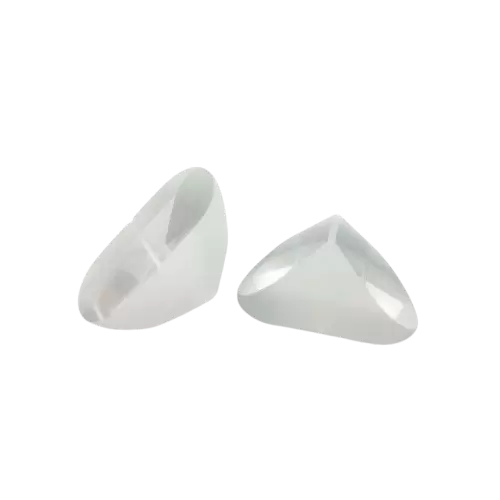
The core design of a Corner Cube Prism is based on three internal surfaces arranged at 90° angles to each other. When a light beam enters the prism and interacts with these three surfaces, it undergoes multiple reflections before exiting.
Because of this geometric configuration, the outgoing beam travels in a direction parallel to the incoming beam but opposite to its original propagation path.
The most important engineering characteristic is that the return direction remains stable even when the reflector orientation changes within a certain range.
The three-dimensional corner structure reduces dependence on precise mechanical alignment and improves measurement system reliability:
In conventional mirror-based systems, engineers must carefully adjust the reflector angle to ensure the reflected beam reaches the detector. A Corner Cube Retroreflector significantly reduces this requirement because the optical geometry automatically compensates for small angular changes, allowing measurement systems to maintain consistent signal return performance.
The retroreflection principle improves repeatability in high-accuracy optical applications:
Since the returning beam follows a predictable path, Corner Cube Retroreflectors help reduce calibration errors caused by installation variations. This makes them particularly valuable in systems where measurement accuracy depends on stable optical feedback, such as laser trackers, interferometers, and precision positioning equipment.
The performance of a Corner Cube Retroreflector depends not only on its geometric structure but also on the optical material, surface quality, and manufacturing precision.
High-quality optical glass ensures efficient light transmission, stable mechanical performance, and consistent optical behavior.
Common material options include:
H-K9L/BK7 optical glass;
Fused silica.
H-K9L and BK7 are widely used optical materials because they provide balanced optical properties, good processing characteristics, and reliable performance in visible wavelength applications.
H-K9L and BK7 materials provide a practical combination of optical clarity, dimensional stability, and manufacturing efficiency:
These materials are suitable for many laser measurement and industrial optical systems where stable transmission performance and precise surface processing are required. Their excellent polishing characteristics also allow manufacturers to achieve high-quality reflective surfaces for accurate beam return.
For applications requiring higher thermal stability and environmental resistance, fused silica provides additional advantages.
Fused silica improves long-term optical stability when equipment operates under temperature fluctuations or demanding conditions:
Due to its low thermal expansion coefficient, fused silica helps maintain geometric accuracy when exposed to temperature changes. This makes it suitable for advanced measurement systems, aerospace optical equipment, and scientific instruments requiring long-term reliability.
The manufacturing accuracy of a Corner Cube Retroreflector directly affects the stability of the returned beam. Small deviations in dimensions or surface processing can influence measurement precision, especially in high-resolution laser systems.
Typical specifications include:
Material: H-K9L/BK7, Fused silica;
Dimension range: 2mm~80mm;
Dimension tolerance: ±0.1mm, ±0.02mm;
90° deviation tolerance: <3 arc min to 30 arc sec;
Surface flatness: λ/2~λ/10 @633nm;
Surface quality: 60-40, 20-10.
The angular accuracy between the three reflective surfaces is one of the most important parameters of a Corner Cube Prism.
Tight angular control ensures that the returned laser beam maintains predictable alignment with the original source:
ECOPTIK-level precision manufacturing requirements can achieve deviation tolerance from <3 arc min to 30 arc sec depending on application needs. Higher angular accuracy reduces optical deviation and improves the reliability of measurement results in precision positioning and tracking systems.
Surface processing quality determines how effectively the prism maintains beam quality during reflection.
High surface flatness reduces wavefront distortion and helps maintain stable laser signal quality:
Surface flatness specifications ranging from λ/2 to λ/10 @633nm allow manufacturers to select suitable accuracy levels according to application requirements. For high-resolution measurement systems, improved surface accuracy helps preserve beam characteristics and reduces measurement uncertainty.
Different surface quality grades provide flexibility for different optical performance requirements:
Surface quality options such as 60-40 and 20-10 allow engineers to balance optical performance and manufacturing cost. Higher-grade surfaces are typically selected for applications requiring minimal scattering, higher signal intensity, and improved measurement accuracy.
Laser tracking systems require extremely stable reflected signals to accurately determine object position and movement.
Traditional reflective components require precise alignment between the laser source and reflector. Any mechanical displacement can affect the return beam and reduce measurement accuracy.
Corner Cube Retroreflectors improve laser tracking reliability by maintaining consistent return signals despite small orientation changes:
In laser trackers and distance measurement equipment, this allows operators to achieve accurate measurements without repeatedly adjusting reflector alignment. The improved optical stability reduces setup time and supports higher measurement efficiency in industrial environments.
Applications include:
Laser trackers;
Distance measurement instruments;
Coordinate measurement systems;
Industrial calibration equipment.
Modern manufacturing systems increasingly rely on optical feedback for precise positioning and motion control.
In automated production lines, machine tools, and robotic systems, measurement components must maintain accuracy despite vibration, movement, and changing installation conditions.
Corner Cube Retroreflectors provide reliable optical references for automated positioning systems:
Their ability to return laser signals along a predictable path allows engineers to design more stable measurement solutions without requiring complex mechanical alignment structures. This improves production efficiency and reduces downtime caused by frequent optical recalibration.
Aerospace and research systems often require optical components capable of maintaining performance over long operating periods.
The high stability of Corner Cube Prism technology makes it suitable for applications where measurement accuracy cannot be compromised:
Scientific instruments, aerospace sensors, and advanced optical platforms benefit from the reflector’s ability to maintain consistent beam return performance under complex operating conditions.
When evaluating Corner cube retroreflector price, buyers often focus on the initial purchase cost. However, the actual value of a high-performance retroreflector depends on multiple technical factors, including material selection, processing accuracy, surface quality, and customization requirements.
The choice of material and product dimensions directly affects manufacturing complexity and final performance.
Larger optical components require more demanding processing control, while specialized materials such as fused silica may increase manufacturing costs due to their advanced processing requirements.
Material selection should be based on application requirements rather than only initial price comparison:
A lower-cost optical component may not provide sufficient thermal stability, surface accuracy, or long-term reliability for demanding measurement systems. Selecting the appropriate material helps avoid future performance issues and replacement costs.
Higher precision requirements increase production difficulty.
Factors affecting price include:
Angular tolerance requirements;
Surface flatness grade;
Surface quality level;
Dimensional tolerance.
High-precision Corner Cube Retroreflectors provide long-term economic value by reducing calibration frequency and improving system uptime:
Although precision optical components may require higher initial investment, their ability to maintain stable measurement performance can reduce maintenance requirements, minimize production interruptions, and extend the service life of the complete optical system.
Different optical applications may require customized coatings to improve reflection efficiency or adapt to specific wavelengths.
Customized coating solutions improve optical compatibility and maximize performance in specialized systems:
Depending on wavelength range, operating environment, and signal requirements, appropriate coating selection can enhance reflection efficiency and reduce optical losses. This makes coating configuration an important factor when evaluating Corner Cube Retroreflector cost.
For professional optical applications, manufacturing capability determines whether a Corner Cube Prism can achieve stable and repeatable performance.
A reliable manufacturer must control multiple processes, including:
Precision three-surface angle processing;
Optical material selection;
Surface polishing;
Angular accuracy inspection;
Customized coating application.
Advanced manufacturing processes ensure Corner Cube Retroreflectors deliver consistent performance in demanding optical systems:
By maintaining strict control over geometric accuracy and optical surface quality, manufacturers can provide components that meet the requirements of laser measurement, precision positioning, and optical detection applications.
Customization capability allows engineers to optimize retroreflectors for different system requirements:
Different projects may require specific dimensions, materials, coatings, or accuracy levels. Flexible customization helps optical system designers achieve the best balance between performance, integration requirements, and cost efficiency.
As optical measurement systems continue to demand higher accuracy and greater stability, traditional reflective components face increasing limitations caused by alignment sensitivity and environmental influences.
A Corner Cube Retroreflector solves these challenges through its unique three-dimensional reflective geometry, allowing incoming light to return accurately toward its original direction while reducing dependence on mechanical adjustment.
With advanced material options such as H-K9L/BK7 and fused silica, precision specifications including 30 arc sec deviation accuracy, λ/10 surface flatness capability, and customized coating solutions, Corner Cube Prism technology provides the reliability required for modern laser measurement and positioning systems.
For engineers and equipment manufacturers, choosing a high-quality Corner Cube Retroreflector is not simply a component selection—it is an investment in measurement accuracy, system stability, and long-term operational performance.
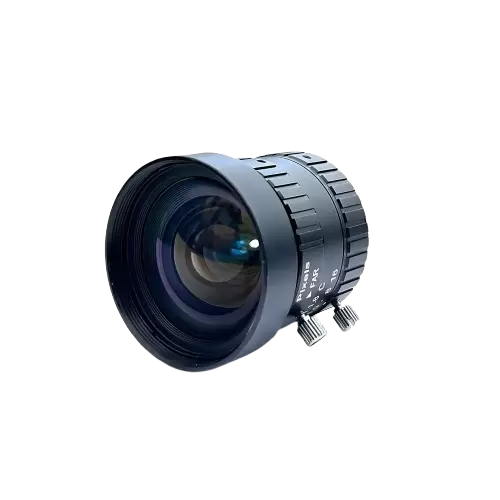
For industrial imaging, a lens designed for visible light cannot automatically deliver the same performance in the ultraviolet range. As wavelength decreases, optical materials that work well in the visible spectrum can introduce stronger absorption, reduced transmission, chromatic errors, and image degradation.
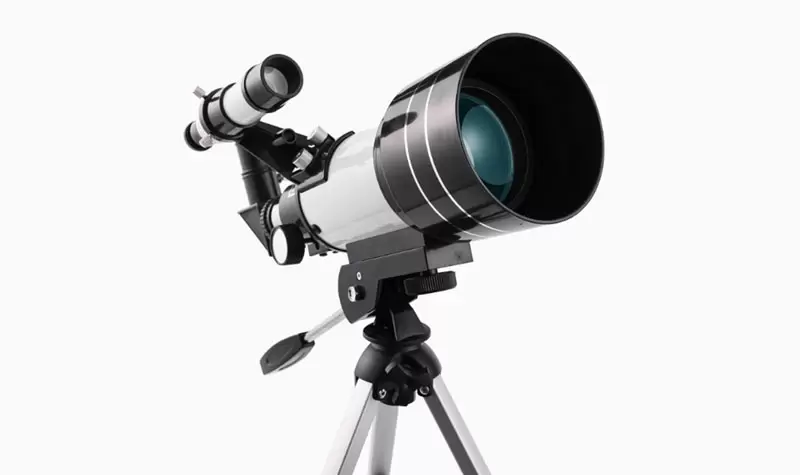
A reflective telescope is a telescope that uses the principle of reflection to image, and its imaging principle and optical path are different from those of a refracting telescope. Reflective telescopes use convex lens to reflect light, and then project an image through a small lens placed at the focal point, thereby achieving the function of magnifying distant objects.
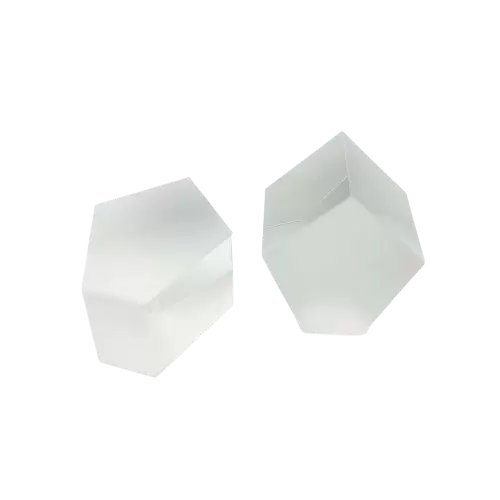
In advanced optical engineering, the search for optical prism construction solutions and high-precision Beam Splitter Penta Prism components is no longer centered on whether a prism can deflect light. That capability is assumed.