

 en
 English
 繁体中文
 Japanese
 Korean
 Russian
 German
News
Deepen Optoelectronic Resources, Lead Technological Breakthroughs


Deepen Optoelectronic Resources, Lead Technological Breakthroughs
In precision optical systems, even small optical losses or dimensional deviations can affect overall system performance. Fiber optic communication equipment, laser modules, and advanced imaging instruments often face challenges such as coupling loss between light sources and optical fibers, limited installation space, beam divergence, and alignment difficulties. Conventional optical components may not always provide the geometry required for compact integration and efficient light collection.
An optical half ball lens offers an alternative for applications requiring localized focusing, short working distances, and flexible mechanical integration. Manufactured by cutting a complete spherical lens along its equatorial plane, this component combines one hemispherical optical surface with a flat mounting surface. Its geometry can support compact optical coupling and beam control when matched correctly to the source, receiving component, and optical system.
For engineers evaluating the best optical half ball lens, material selection, spherical radius, dimensional accuracy, surface quality, and coating specifications are all important. At the same time, understanding these manufacturing requirements helps buyers evaluate Optical Half Ball Lens Price based on actual application needs rather than appearance or nominal dimensions alone.
An optical half ball lens consists of a curved spherical surface and a flat surface formed through the equatorial plane of the original sphere. Unlike a complete ball lens, which has two optical interfaces with spherical geometry, a half ball lens provides a planar reference and mounting surface.
This structure offers practical advantages in compact assemblies. The flat face can facilitate positioning, bonding, or integration with optical substrates and other components, while the curved surface provides the optical interface for collecting, redirecting, or focusing light.
A half ball lens should not be treated as optically identical to a complete ball lens or a plano-convex lens. Their effective focal lengths, back focal distances, aberration characteristics, and mounting requirements depend on their respective geometries and optical configurations. Engineers should evaluate the actual optical design rather than assume interchangeable performance.
One important consideration is the relatively short working distance that can be achieved in suitable hemispherical lens configurations. This can help reduce the optical separation between a light source and a receiving element, supporting compact fiber coupling and laser integration. However, the actual back focal distance depends on refractive index, radius of curvature, wavelength, and the reference surface used in the optical design.
Material selection directly affects transmission, absorption, refractive behavior, dispersion, and thermal stability. The best material depends on the operating wavelength and environmental conditions.
K9 Optical Glass: K9 is commonly used in visible-light optical components because of its established manufacturing characteristics and suitability for general imaging, illumination, and visible optical systems. Its refractive properties make it a practical option for applications that do not require specialized ultraviolet or infrared transmission.
Fused Silica: Fused silica offers low thermal expansion and useful transmission across a broad spectral region, depending on its grade and material quality. It is frequently considered for ultraviolet, visible, and near-infrared applications where thermal stability and optical consistency are important.
Sapphire: Sapphire provides high hardness, mechanical strength, and broad optical usefulness across selected ultraviolet, visible, and infrared wavelengths. Its birefringent nature should also be considered in polarization-sensitive optical designs.
Magnesium Fluoride (MgF2): MgF2 is valued for its low refractive index and transmission characteristics in ultraviolet and other selected spectral regions. It can be useful in specialized optical systems, although its birefringence and material properties must be considered during design.
Silicon (Si): Silicon is particularly relevant to infrared optical systems, especially in mid-infrared applications. Its high refractive index and strong visible-light absorption mean it is generally unsuitable for ordinary visible-light transmission applications without a specialized design.
Material transmission should always be assessed against the actual wavelength range, material grade, thickness, and surface condition. A material's nominal transmission range does not automatically represent the finished lens's total transmission.
The optical performance of a half ball lens depends on more than its nominal diameter.
Diameter and Radius of Curvature: Diameter determines the physical size and available optical aperture, while the spherical radius influences optical power and focusing behavior. These dimensions must be controlled according to the optical design and assembly requirements.
Center Deviation and Hemispherical Accuracy: The relationship between the spherical surface, flat surface, and geometric center is essential. Center deviation or geometric misalignment can introduce positioning errors and affect optical axis alignment, particularly in precision coupling assemblies.
Dimensional Tolerance: Diameter, thickness, flatness, and other specified dimensions should be evaluated according to the component drawing. Tight tolerances generally require more demanding machining and inspection procedures.
Surface Quality and Roughness: Surface quality, commonly expressed using a scratch-dig specification such as 10-5 when that standard is specified, describes visible surface defects. Surface roughness is a separate characteristic related to microscopic surface texture. Neither should be confused with spherical radius accuracy or center deviation. Poor polishing can increase scattering and reduce optical efficiency.
AR Coating: Anti-reflection coatings reduce Fresnel reflection at selected optical interfaces. A suitable coating can improve transmission and reduce unwanted reflected light, but its performance depends on wavelength, incidence angle, polarization, substrate material, and coating design. The flat and curved surfaces may also require different coating considerations.
These parameters should be specified independently rather than combined into a single general statement about optical precision.
One of the important applications of a half ball lens is coupling light from a laser diode or optical source into a fiber. The curved surface can collect diverging light and redirect it toward the receiving optical element.
Its compact geometry and potentially short back focal distance can help reduce the separation between the source and fiber, making it useful in space-constrained optical modules.
However, successful coupling depends on matching the lens to the source divergence angle, fiber core diameter, numerical aperture (NA), operating wavelength, and alignment tolerance. A smaller optical distance alone does not guarantee higher coupling efficiency. The optical design must also account for beam diameter, aberrations, interface reflections, and the position of the fiber end face.
In LED illumination systems, a half ball lens can collect and redistribute light to achieve a required beam distribution. This is particularly relevant to compact illumination modules where the light source and optical components must fit within limited mechanical space.
For intraoral scanners, controlled illumination is important for reducing unwanted reflections from tooth surfaces and supporting reliable 3D image acquisition. The lens geometry, material, and coating should be selected according to the illumination wavelength, field of view, and required light distribution.
A hemispherical optical element can also serve as a solid immersion lens in specialized imaging systems. By placing the appropriate spherical geometry close to the sample or imaging interface, a solid immersion configuration can improve effective numerical aperture and spatial resolution under suitable optical conditions.
The actual resolution improvement depends on refractive index, lens geometry, interface conditions, and the imaging system's optical design. It should not be assumed that every half ball lens automatically provides solid immersion performance.
In terahertz systems, silicon and other wavelength-compatible materials may be considered for hemispherical optical components. A properly designed lens can help collect and direct terahertz radiation toward a detector, improving signal collection under suitable system conditions.
Material absorption, refractive index, surface reflection, and dimensional accuracy are particularly important when optimizing terahertz signal intensity and bandwidth.
Before ordering, engineers should establish several essential parameters:
Operating wavelength: Select a material with appropriate transmission and absorption characteristics at the actual working wavelength.
Light source characteristics: Consider source divergence, beam diameter, and emission distribution.
Receiving component: Match the lens to the fiber core diameter, numerical aperture, detector aperture, or imaging requirements.
Spherical radius and diameter: Determine these dimensions through optical design rather than selecting them solely by availability.
Working distance and installation space: Confirm the required spacing, mounting orientation, and mechanical interfaces.
Surface and coating specifications: Define surface quality, roughness, and AR coating wavelength range according to system requirements.
The flat and curved surfaces must be installed in the orientation intended by the optical design. Accurate optical axis alignment, appropriate mounting pressure, and clean optical surfaces are also necessary to maintain performance. Contamination, fingerprints, and improper cleaning can introduce scattering or reduce transmission.
Optical Half Ball Lens Price varies according to material, geometry, manufacturing difficulty, coating requirements, inspection procedures, and order quantity. Buyers should evaluate these factors together when comparing suppliers.
Different optical materials have different procurement costs, availability, processing characteristics, and transmission properties. Specialized materials such as sapphire, MgF2, and silicon may require different manufacturing processes from conventional optical glass.
Material grade and consistency also matter. A lower-cost material is not necessarily a suitable alternative if its refractive index, absorption, or transmission characteristics do not meet the optical design.
Lens diameter and radius of curvature affect material consumption and machining requirements. Non-standard dimensions, unusual curvature specifications, and more demanding hemispherical geometry can increase manufacturing complexity.
Tighter dimensional tolerances, better-controlled center deviation, higher surface quality, and lower surface roughness require more precise processing and inspection.
However, not every application requires the highest available surface grade. Buyers should identify which parameters directly influence system performance before specifying unnecessarily demanding tolerances.
Custom AR coatings involve additional design, deposition, and verification work. The required wavelength range, coating performance, substrate material, and incidence conditions all influence the process.
Inspection requirements also affect the final cost. Depending on the drawing and project specifications, manufacturers may need to verify spherical geometry, dimensions, surface quality, and coating performance using suitable metrology equipment.
When evaluating a manufacturer, procurement teams should request information covering:
Material grade and traceability.
Diameter, radius, and dimensional tolerances.
Spherical geometry and center deviation.
Surface quality and roughness specifications.
Coating design and wavelength performance.
Available inspection methods and quality reports.
Custom machining and lens assembly capabilities.
A supplier's ability to manufacture a component consistently against an engineering drawing is often more important than offering an attractive nominal price.
ECOPTIK has 15 years of experience researching optical component fabrication technology and manufacturing precision optical components. Its product range includes dome lenses, spherical lenses, micro-optical components, cylindrical mirrors, filters, prisms, and optical windows.
For optical half ball lens projects, material selection and manufacturing precision need to be considered together. ECOPTIK offers optical materials from SCHOTT, CDGM, and Corning, as well as sapphire, CaF2, MgF2, fused silica, silicon, ZnSe, and ZnS. This material range supports different optical design requirements across visible, ultraviolet, and infrared applications.
Manufacturing and inspection capabilities include ZYGO laser interferometers, a ZEISS CMM Spectrum, and an Agilent Cary 7000 UMS. These instruments support precision measurement and optical characterization according to the requirements of individual projects. Relevant inspection methods and product reports can be arranged based on the agreed specifications.
ECOPTIK also offers lens assembly services, helping customers address component integration requirements beyond the manufacture of individual optical elements.
Whether a project requires a standard hemispherical geometry or a customized optical component, specifications should be confirmed through technical drawings, material requirements, coating conditions, and inspection criteria before production.
A ball lens is a complete spherical optical component, while a half ball lens has one spherical surface and one flat surface. The flat face of a half ball lens provides a convenient mounting and integration reference. Their focal properties and coupling behavior differ and must be evaluated using their respective optical geometries.
A suitably designed half ball lens collects diverging light and redirects it toward an optical fiber. Its compact geometry and short working distance can support close integration between a laser source and fiber. Actual coupling efficiency depends on beam characteristics, fiber NA, core diameter, alignment, and optical losses.
Start with the operating wavelength and required transmission range. K9 is commonly considered for visible applications, fused silica for applications requiring broader spectral transmission and thermal stability, sapphire for demanding mechanical and optical conditions, MgF2 for selected ultraviolet applications, and silicon for infrared systems.
Surface defects and roughness can increase scattering, while radius errors can change optical power and focusing behavior. Center deviation and hemispherical geometry errors can also affect alignment. These characteristics should be specified and inspected separately.
The main factors include material grade, diameter, radius of curvature, dimensional tolerances, surface quality, polishing requirements, AR coating, inspection procedures, customization, and order quantity. A reliable quotation should be based on a complete technical specification.
The best optical half ball lens is not simply the component with the highest surface grade or the lowest purchase price. It is the one whose material, spherical geometry, surface finish, coating, and dimensional accuracy match the requirements of the optical system.
For fiber coupling, laser integration, beam shaping, precision imaging, and terahertz detection, these characteristics directly influence how effectively the lens performs within the complete assembly.
By evaluating technical requirements before comparing Optical Half Ball Lens Price, engineers and procurement teams can make more informed sourcing decisions. With its optical material options, fabrication experience, inspection equipment, and lens assembly services, ECOPTIK supports customized precision optical component projects from material selection to manufacturing and quality verification.
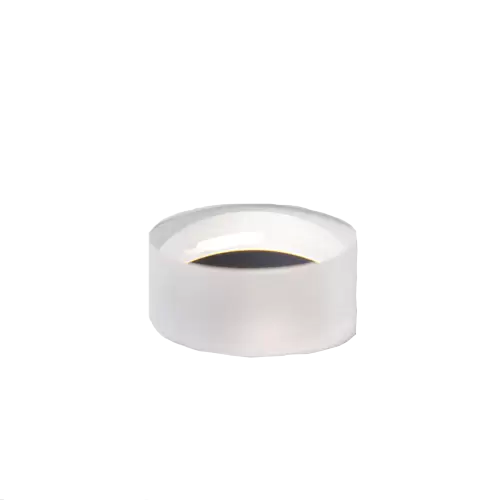
In precision optical engineering, understanding Plano concave lens uses requires moving beyond basic ray divergence concepts into system-level wavefront control.
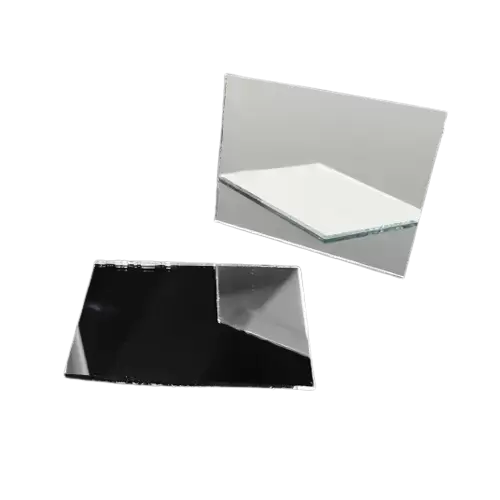
In precision optical systems, mirror selection is often determined by factors that are invisible during normal operation but directly affect system accuracy. A mirror may appear perfectly reflective to the eye, yet its internal structure can introduce optical errors when used in laser alignment, imaging equipment, or scientific instruments.
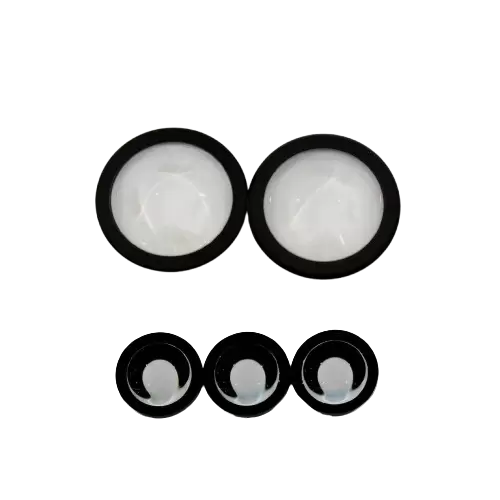
In precision optical systems, a lens that looks clear to the naked eye may still compromise the performance of the finished equipment. Insufficient transmission reduces the light reaching a sensor, chromatic aberration introduces color fringes around image details, and surface defects can create scattering or unwanted reflections.