Home / Custom / Optical Components / Optical Spherical Lens / Half Ball Lens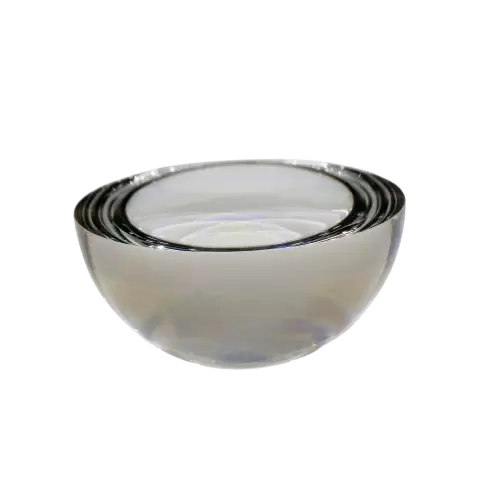
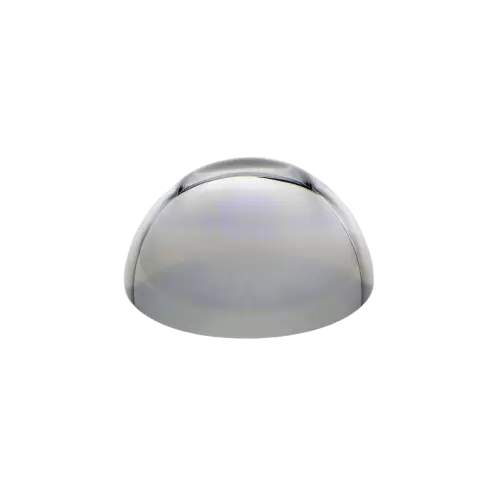
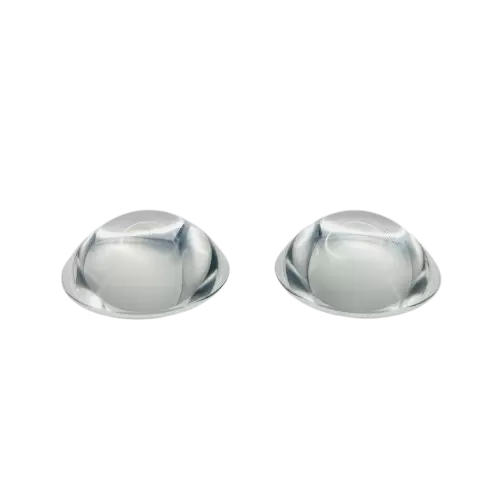
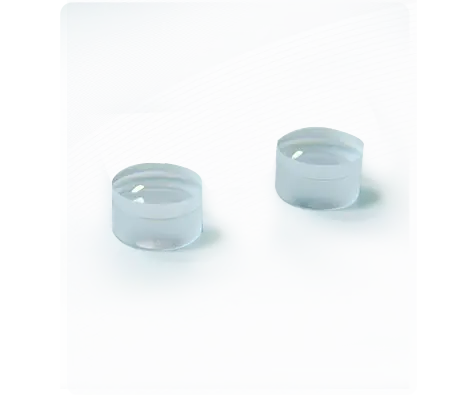
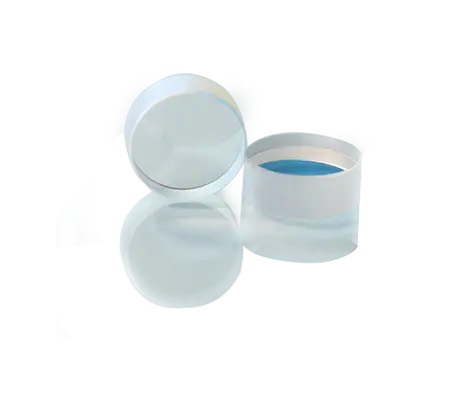
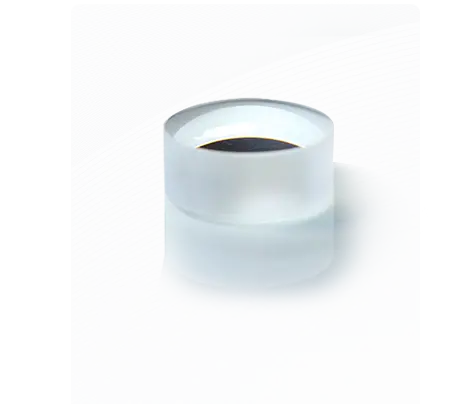
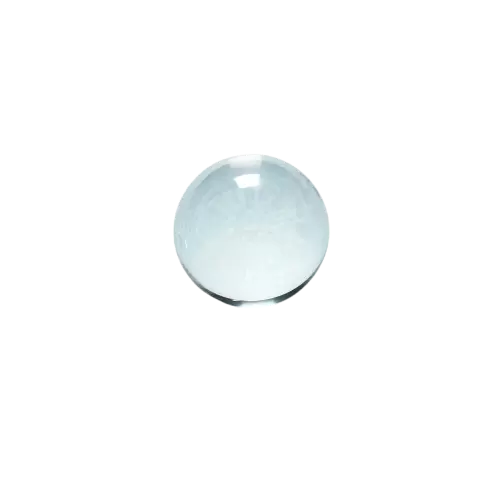
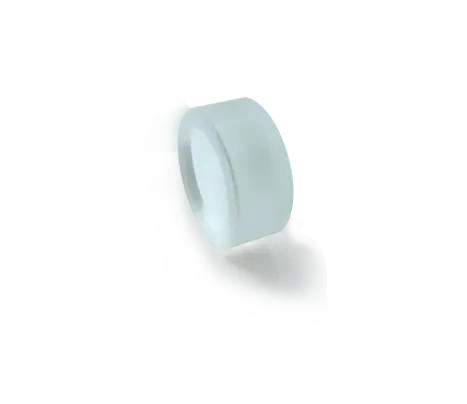
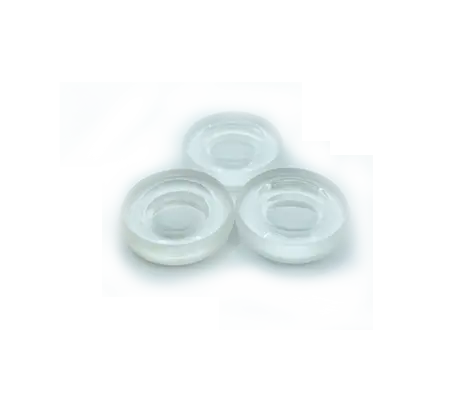
Half ball lens is typically made by cutting a complete spherical lens along the equatorial plane, thus consistiHalf ball lens can be considered "half" of a spherical lens. It combines the focusing characteristics of a spherical lens with the ease of mounting on a planar substrate, playing a vital role in precision optics and optoelectronic systems.

Optical glass such as K9, fused silica, sapphire, MgF2, silicon (Si), etc. These materials possess high transmittance, low absorption, low scattering, uniform refractive index, and specific dispersion characteristics.

Precisely hemispherical. The machining precision of the center and radius of curvature of the sphere is extremely high.

The surface is precision polished to an optical grade of 10-5 to ensure image quality and reduce scattering and aberrations.

An AR coating is typically applied to the concave surface to maximize the transmittance of specific wavelengths of light (e.g. visible light) and reduce reflection loss.
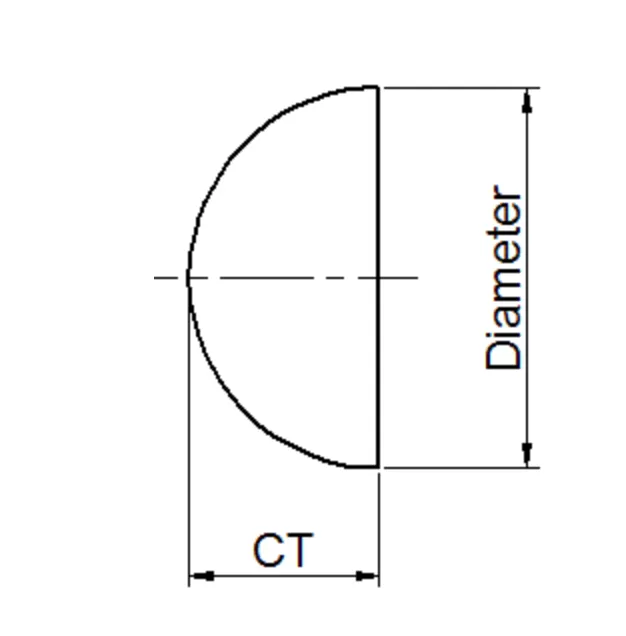
Items | Parameters |
|---|---|
| Material | optical glass (VIS glass, UV fused silica, Silicon, sapphire etc.) |
| Diameter | 0.2mm-100mm |
Diameter Tolerance | +0.0-0.05mm |
Surface Qualty | 60/40, 40/20.20/10 |
Surface Frigure | lambda/2~lambda/8 |
Coating | According to customer requirements. |


 en
en
 English
 繁体中文
繁体中文 Japanese
 Korean
 Russian
 German