

 en
en
 English
 繁体中文
繁体中文 Japanese
 Korean
 Russian
 German
News
Deepen Optoelectronic Resources, Lead Technological Breakthroughs


Deepen Optoelectronic Resources, Lead Technological Breakthroughs
In precision optical engineering, understanding Plano concave lens uses requires moving beyond basic ray divergence concepts into system-level wavefront control. A plano concave lens introduces controlled negative optical power, converting parallel or collimated beams into diverging wavefronts with a predictable divergence angle. This controlled divergence directly affects beam propagation stability, aberration balancing, and imaging system calibration accuracy.
ECOPTIK, with 15 years of optical fabrication expertise, specializes in precision optical components including spherical lenses, cylindrical optics, prisms, filters, and micro-optical systems. Utilizing high-end glass substrates from Schott, Corning, CDGM, as well as CaF₂, fused silica, sapphire, and ZnSe materials, ECOPTIK delivers optical elements engineered for predictable wavefront transformation in high-stability optical environments.
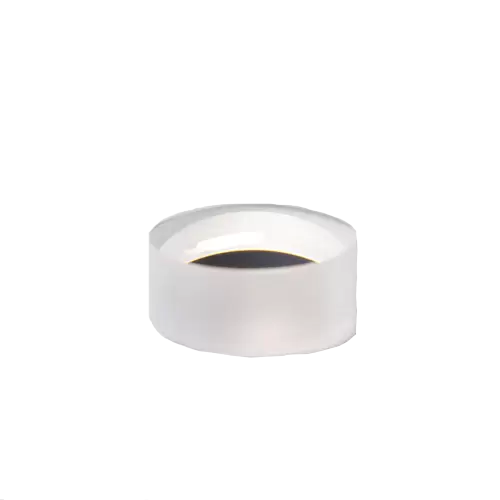
The fundamental role of a plano concave lens is to introduce negative focal length behavior, causing incident parallel rays to diverge as if originating from a virtual focal point. In industrial optical systems, this behavior must be precisely controlled at the wavefront level rather than treated as a simple ray deviation effect.
The first key mechanism is negative focal length wavefront expansion control, where collimated beams are transformed into diverging spherical wavefronts with predictable curvature radius. This enables precise beam expansion design in laser systems without introducing unpredictable phase distortion.
The second mechanism is controlled divergence angle linearization across the aperture, ensuring uniform ray deviation and preventing edge-induced asymmetry that would degrade downstream imaging or laser scanning systems.
The third mechanism is wavefront stability under high optical load conditions, where material homogeneity and surface precision prevent thermal lensing effects that could distort beam propagation during continuous high-intensity operation.
Plano concave lenses are widely used for aberration compensation in multi-element optical systems. Their negative spherical aberration characteristics allow them to balance positive aberrations generated by convex elements.
They are typically used in optical systems where:
they counteract over-convergence effects from convex lens groups, maintaining diffraction-limited imaging performance across extended focal ranges without introducing edge distortion or focus drift, especially in precision imaging systems requiring stable long-distance focus behavior
they redistribute wavefront errors across the aperture to reduce localized phase distortion, improving modulation transfer function (MTF) performance in high-resolution optical imaging systems where contrast stability is critical
they correct beam symmetry in laser shaping modules, ensuring downstream optics receive a stabilized wavefront profile with minimized distortion gradients that would otherwise affect focus precision
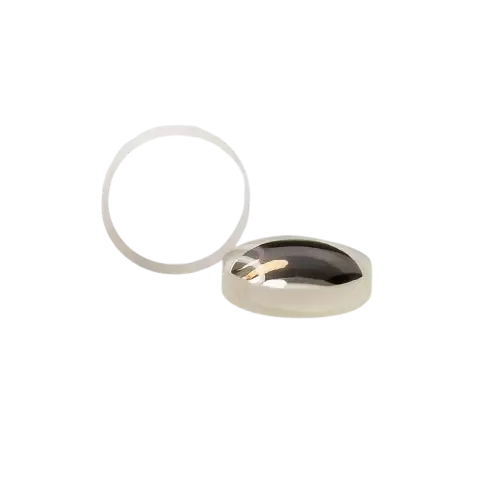
A key engineering distinction exists between spherical plano concave lenses and plano concave cylindrical lens structures. The difference is not only geometric but also functional in beam shaping behavior.
The cylindrical version provides axis-specific divergence control, which is essential in directional beam shaping applications. It allows engineers to transform Gaussian beams into controlled line illumination patterns without affecting the orthogonal axis, which is critical in scanning and machine vision systems.
The spherical version, in contrast, provides uniform divergence in both axes, making it suitable for isotropic beam expansion and general optical system calibration.
Material selection directly determines optical stability, dispersion behavior, and long-term performance in precision systems.
Fused silica is widely used for broadband optical systems due to its low thermal expansion and high transmission stability across UV to IR wavelengths. It ensures minimal wavefront distortion in high-energy laser environments.
Sapphire is selected for high-power laser applications where thermal resistance and mechanical hardness are required to maintain optical surface integrity under extreme energy density conditions.
ZnSe and CaF₂ are commonly used in infrared optical systems, where controlled dispersion characteristics are required for CO₂ laser transmission and thermal imaging applications.
In high-end optical systems, surface quality directly determines wavefront integrity and system-level performance stability.
Surface imperfections at microscopic scale introduce scattering effects that degrade beam coherence. High-precision surfaces in the range of 20/10 to 60/40 quality ensure controlled scattering behavior and improved imaging contrast.
λ/10 surface accuracy levels are critical for maintaining diffraction-limited performance in precision optical systems where wavefront deviation must remain minimal.
Angular centering accuracy within tight tolerances ensures proper beam alignment across long optical paths, preventing propagation errors in telescopic and laser delivery systems.
ECOPTIK ensures this level of precision through Zygo interferometry and ZEISS CMM measurement systems.
Plano concave lens uses in laser systems are primarily focused on controlled beam divergence, optical calibration, and system-level wavefront shaping.
laser beam expansion and pre-conditioning systems, where controlled divergence is used to adjust beam diameter before focusing stages, ensuring uniform energy distribution at the target plane and improving downstream optical efficiency
optical sensor calibration environments, where predictable divergence patterns are used to simulate controlled optical input conditions for alignment and measurement verification in high-precision detection systems
imaging system correction modules, where plano concave lenses are integrated into multi-element assemblies to balance optical path curvature and reduce system-level distortion across the full field of view
The stability of plano concave optical components depends on manufacturing consistency at both material and surface levels.
ECOPTIK applies precision polishing and low-stress grinding processes to eliminate subsurface damage that could affect wavefront stability under laser exposure. Interferometric inspection ensures curvature accuracy and surface conformity across production batches. Material sourcing from Schott, Corning, CDGM, and specialty crystal suppliers ensures refractive index consistency for wavelength-sensitive applications.
In precision optical engineering, the value of plano concave lenses lies in their ability to provide mathematically predictable wavefront transformation under real operating conditions. Any deviation in refractive behavior directly impacts imaging accuracy, beam focus stability, and measurement repeatability.
These components are therefore not standalone optical elements but integrated parts of system-level optical design, where every surface contributes to overall wavefront control and system performance stability.
The engineering value of plano concave lens uses and plano concave cylindrical lens systems lies in controlled beam divergence, aberration balancing, and stable wavefront shaping in precision optical systems. Their role spans laser beam control, imaging correction, and scientific measurement applications where predictable optical behavior is essential.
ECOPTIK’s 15 years of optical manufacturing expertise ensures high-precision plano concave optical components with stable refractive performance, low wavefront distortion, and high repeatability. In modern optical systems, performance is defined not by optical power alone, but by the stability and predictability of wavefront control across complex operating conditions.
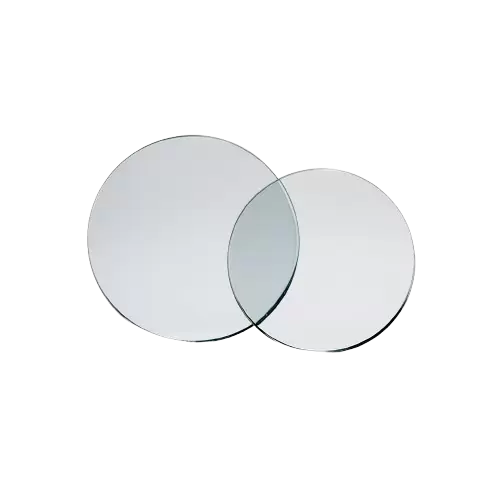
In modern photonic engineering, the concept of Precision optical window price cannot be understood purely as a unit cost of a transparent optical component.
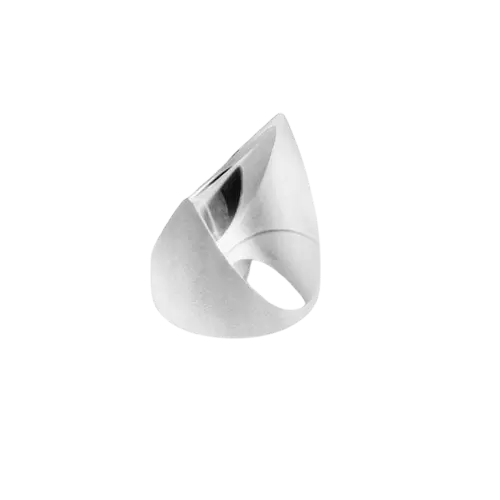
When engineers evaluate beam-shaping components for machine vision, laser measurement, industrial alignment, or optical inspection systems, the discussion quickly moves beyond simple beam expansion.

A microscope is a precision measuring instrument that allows students to observe extremely small organisms and study their microbial morphology. The main body of the microscope is composed of optical and mechanical parts, among which the optical part is the most important. The optical part of a microscope mainly consists of an objective lens and an eyepiece. By combining the two, a good observation image is formed.