

 en
en
 English
 繁体中文
繁体中文 Japanese
 Korean
 Russian
 German
News
Deepen Optoelectronic Resources, Lead Technological Breakthroughs


Deepen Optoelectronic Resources, Lead Technological Breakthroughs
In industrial laser metrology systems, laser line generation is not a visual aid but a geometric measurement reference that directly defines system-level accuracy boundaries. Any instability in intensity distribution, spatial uniformity, or beam shaping behavior propagates into measurable errors in edge detection, triangulation reconstruction, and centroid extraction algorithms.
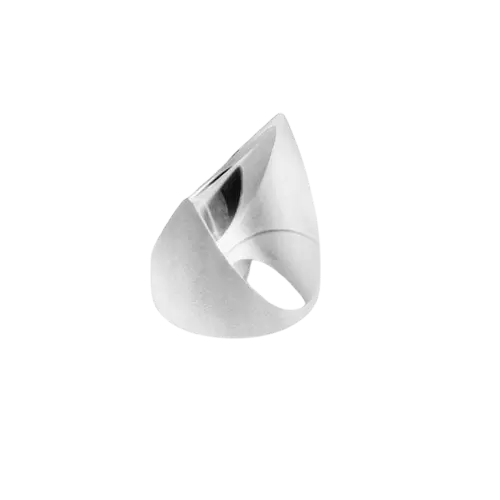
Powell prism lenses are engineered optical components designed to convert Gaussian beam profiles into controlled flat-top line distributions through a precision aspheric refractive surface. Unlike cylindrical optics that simply expand beam geometry, Powell prisms actively redistribute optical energy to correct inherent Gaussian non-uniformity.
From an engineering perspective, system design decisions are typically driven by two core dimensions: optical performance behavior of Powell prism lenses, and manufacturing-driven cost logic reflected in Powell prism price.

Laser line uniformity directly determines whether a machine vision system can maintain stable measurement performance across varying materials, distances, and environmental conditions.
Non-uniform Gaussian intensity profiles cause centroid extraction algorithms to overweight high-intensity regions, producing systematic positional bias that shifts measured edges toward optical energy peaks rather than true geometric boundaries, especially in high-contrast industrial inspection scenarios.
Central intensity saturation combined with weak edge illumination compresses usable sensor dynamic range, forcing exposure compromises that reduce measurement reliability when dealing with mixed reflectivity surfaces within the same scanning field.
Edge attenuation reduces signal-to-noise ratio at line boundaries, leading to incomplete contour reconstruction in triangulation systems where edge precision is critical for depth accuracy.
Environmental disturbances such as vibration and thermal drift are amplified by intensity imbalance, producing measurable geometric noise in reconstructed outputs over long production cycles.
Powell prism lenses operate through controlled refractive redistribution using a two-dimensional aspheric surface with continuously varying slope along the beam axis.
High-intensity central rays of a Gaussian beam are refracted with increasing angular dispersion, redistributing optical energy toward peripheral regions of the line profile, thereby reducing peak dominance and flattening intensity distribution for stable centroid-based measurement.
Peripheral rays are guided with lower angular deviation, preserving usable optical energy at line edges and maintaining signal integrity in boundary regions required for accurate geometric reconstruction.
Continuous slope variation eliminates abrupt phase discontinuities, reducing diffraction-induced ripple artifacts that would otherwise degrade high-resolution imaging performance.
The resulting output approximates a flat-top intensity profile, improving robustness against surface reflectivity variation and reducing dependency on adaptive image processing compensation.
Fan angle defines angular spread and directly determines measurement field architecture in machine vision systems.
Narrow fan angle designs concentrate optical power into a limited angular range, increasing irradiance density and improving signal-to-noise ratio in high-resolution inspection systems. However, this reduces spatial coverage and may require mechanical scanning or multi-channel optical setups in large-area applications.
Medium fan angle designs balance spatial coverage and intensity stability, making them suitable for general industrial inspection systems where both throughput and accuracy must be maintained under variable production conditions.
Wide fan angle configurations enable full-field scanning but require higher laser stability and stricter beam quality control to prevent intensity roll-off and edge degradation across the measurement field.
Beam diameter matching determines whether the prism operates within its designed optical redistribution regime.
Undersized beams fail to fully engage the aspheric surface, resulting in incomplete Gaussian correction and residual central intensity peaks that introduce centroid bias in measurement systems.
Oversized beams exceed optical aperture limits, causing edge clipping and diffraction artifacts that propagate into reconstruction noise and reduce repeatability in high-precision applications.
Proper beam matching ensures full utilization of the aspheric slope function, enabling deterministic transformation into controlled flat-top distribution without secondary modulation effects.
Visible wavelength systems operate under relatively stable refractive conditions, enabling predictable beam shaping performance in standard machine vision applications.
Near-infrared systems require tighter dispersion control to avoid phase distortion that affects energy redistribution symmetry and line uniformity.
Ultraviolet systems require specialized materials and coatings to mitigate absorption-induced thermal effects that can distort aspheric surface behavior under continuous operation.
Powell prism price is primarily determined by optical surface precision requirements and manufacturing complexity rather than geometric size.
Non-rotational aspheric surfaces require continuously varying slope control across the full aperture, where microscopic deviations directly affect refractive redistribution behavior and generate measurable intensity non-uniformity.
Manufacturing requires iterative polishing combined with interferometric feedback systems to ensure alignment between theoretical optical design and physical surface realization.
Surface figure deviations introduce localized angular refractive errors, generating intensity fluctuations along the laser line that degrade centroid stability and increase reconstruction variance in high-resolution systems.
Surface micro-roughness produces parasitic scattering that reduces imaging contrast and increases background noise, especially in low-light or high-speed inspection environments where exposure time is limited.
Optical coatings must balance transmission efficiency and laser damage resistance using multilayer dielectric structures with controlled thermal expansion properties.
High-damage-threshold coatings increase manufacturing complexity due to strict deposition tolerances, directly affecting production cost and long-term stability.
Intensity non-uniformity propagates through the entire measurement pipeline, affecting both optical and algorithmic performance.
Centroid extraction instability introduces positional bias under varying reflectivity conditions. Triangulation systems convert angular errors into depth distortion, particularly at field edges. Over long production cycles, these small deviations accumulate into statistically significant measurement drift requiring periodic recalibration.
Selection must be treated as a multi-variable system optimization problem rather than a component-level decision.
Laser parameters (M², divergence, stability) determine whether optical redistribution operates within designed regime. Measurement geometry defines fan angle and spatial resolution requirements. Environmental stability requirements determine long-term optical robustness. Lifecycle cost must include recalibration, downtime, and algorithmic compensation overhead.
ECOPTIK has 15+ years of experience in precision optical manufacturing for industrial beam shaping applications.
Capabilities include precision fabrication of prisms, lenses, filters, windows, and optical assemblies; material systems including Schott, CDGM, Corning, Sapphire, CaF₂, MgF₂, fused silica, Si, ZnSe, ZnS; and metrology systems including ZYGO interferometers, ZEISS CMM, and Agilent Cary 7000 UMS.
Powell prism lenses are system-critical beam shaping components that determine measurement stability in laser-based industrial systems. Their performance depends on controlled Gaussian energy redistribution through precision aspheric surfaces, directly influencing line uniformity, centroid stability, and reconstruction accuracy.
Powell prism price reflects manufacturing precision, coating engineering, and optical tolerance requirements rather than simple geometry. For system designers, selection must be based on system-level performance optimization rather than component cost alone.
ECOPTIK provides precision-engineered Powell prism solutions for machine vision, industrial inspection, and laser metrology systems.

For telescope manufacturers, astronomy equipment suppliers, and optical system integrators, selecting an astronomical lens is a technical and commercial decision. A lens that appears economical on a quotation may introduce chromatic halos around bright stars, reduce planetary contrast, or produce distorted star images near the edge of a camera sensor.
When engineers evaluate beam-shaping components for machine vision, laser measurement, industrial alignment, or optical inspection systems, the discussion quickly moves beyond simple beam expansion.

In advanced optical engineering, the search for optical prism construction solutions and high-precision Beam Splitter Penta Prism components is no longer centered on whether a prism can deflect light. That capability is assumed.