

 en
en
 English
 繁体中文
繁体中文 Japanese
 Korean
 Russian
 German
News
Deepen Optoelectronic Resources, Lead Technological Breakthroughs


Deepen Optoelectronic Resources, Lead Technological Breakthroughs
When engineers evaluate beam-shaping components for machine vision, laser measurement, industrial alignment, or optical inspection systems, the discussion quickly moves beyond simple beam expansion. The real challenge is creating a laser line that maintains consistent intensity distribution across its entire length.
This is precisely where Powell prism lenses differ from traditional cylindrical lenses.
Many laser sources emit a Gaussian beam profile, meaning optical energy is concentrated at the center while gradually decreasing toward the edges. Although a cylindrical lens can spread such a beam into a line, the resulting intensity distribution remains highly non-uniform. The center appears significantly brighter than the ends, which can create measurement errors, inconsistent image contrast, and unstable detection performance.
A Powell prism is specifically engineered to solve this limitation through controlled energy redistribution.
Uniform laser line generation rather than simple beam expansion
Unlike cylindrical optics that merely stretch a Gaussian beam, a Powell prism utilizes a precisely designed two-dimensional aspherical profile to redistribute optical energy from the center of the beam toward both ends of the projected line. This optical transformation creates a substantially more uniform intensity profile, allowing vision systems and measurement equipment to maintain consistent signal quality across the entire inspection area. In practical applications, this directly improves measurement repeatability and reduces detection uncertainty.
Better suitability for industrial automation systems
Automated inspection environments demand stable optical performance over long operating cycles. Since machine vision algorithms frequently rely on contrast consistency, intensity fluctuations can reduce detection reliability. A properly designed Powell prism helps maintain stable illumination characteristics, reducing system sensitivity to beam profile variations and improving long-term process stability.
Improved measurement accuracy in precision optical systems
In laser triangulation, dimensional inspection, and surface profiling applications, line uniformity directly influences data quality. Uniform illumination minimizes localized overexposure and underexposure, resulting in more consistent edge detection and more reliable dimensional calculations.
For engineers designing modern optical systems, beam uniformity is often more valuable than beam intensity itself.
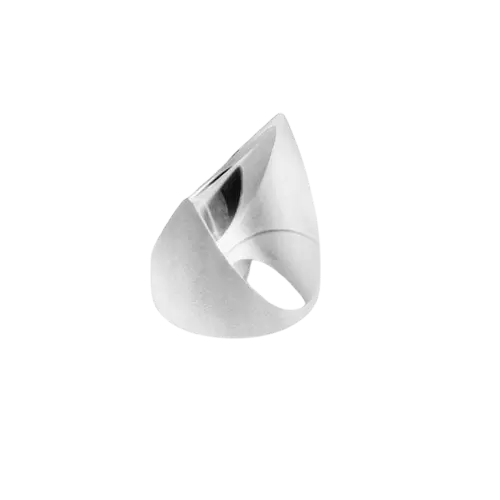
The effectiveness of a Powell prism originates from its highly specialized geometric structure.
Although often referred to as a prism, the component differs significantly from traditional deflection prisms used for beam steering.
At the core of every Powell prism lies a carefully engineered aspherical optical surface.
Redistribution of Gaussian energy distribution
A laser beam naturally contains higher energy density near its center axis. The aspherical geometry of a Powell prism modifies the refraction angle across different portions of the beam. Regions containing greater energy experience different refractive behavior than lower-energy regions, effectively redistributing optical power toward the outer portions of the projected line. This process compensates for the inherent Gaussian distribution and generates a near flat-top intensity profile.
Controlled angular output across the laser line
The prism geometry is calculated so that individual rays exiting different portions of the optical surface contribute to a uniform line pattern. Achieving this result requires extremely accurate surface generation and tight control of geometric tolerances. Small deviations in the aspherical profile can significantly affect final line uniformity.
Stable beam shaping across varying operating conditions
Because beam redistribution is based on geometric optical principles rather than active correction methods, Powell prisms provide highly repeatable performance over extended operating periods. This characteristic makes them particularly suitable for industrial environments where reliability and consistency are critical.
The result is a laser line that exhibits substantially improved illumination uniformity compared with conventional beam-shaping methods.
Many purchasing teams initially focus on optical transmission values or material specifications. However, for many industrial applications, beam uniformity often has a greater influence on overall system performance.
Machine vision systems require consistent illumination
Inspection algorithms depend heavily on predictable optical contrast. When a laser line contains bright hotspots and dim regions, image processing software may struggle to maintain stable threshold values. This often leads to increased false rejection rates or inconsistent defect identification. Uniform laser illumination reduces these variables and improves inspection reliability.
Laser scanning systems benefit from balanced signal acquisition
In profile scanning applications, sensors capture reflected light across the entire scan width. Non-uniform illumination can create signal imbalance, causing measurement uncertainty at specific locations. A Powell prism helps equalize illumination energy, enabling more consistent data acquisition.
Precision measurement systems demand repeatability
Industrial metrology frequently prioritizes repeatability over absolute brightness. Uniform optical energy distribution contributes to stable signal generation, reducing measurement variability and simplifying calibration procedures.
This explains why Powell prism lenses have become a standard optical solution in many advanced industrial systems.
One of the most common engineering questions is:
How should a Powell prism angle be selected?
The answer depends on both optical requirements and system architecture.
Different prism configurations are commonly available with projection angles such as 10°, 20°, and 30°.
Higher energy density over shorter projection widths
A 10° Powell prism concentrates available laser energy into a relatively narrow line. Because the optical power is distributed over a shorter distance, line brightness remains higher. This configuration is often selected for high-resolution inspection systems requiring strong optical signals.
Suitable for compact optical assemblies
Smaller projection angles generally require less installation space and can simplify optical alignment procedures within compact equipment designs.
Balanced compromise between coverage and intensity
Many industrial systems adopt 20° designs because they provide a practical balance between illumination width and signal strength. This angle frequently supports general-purpose machine vision and dimensional inspection applications.
Reduced optical integration complexity
Engineers often find that 20° systems fit comfortably within common industrial layouts without requiring excessive working distances or specialized mounting structures.
Larger field coverage
Wider projection angles increase inspection area coverage without requiring significant increases in working distance. This characteristic benefits applications involving large components or wide scanning fields.
Increased design sensitivity
As projection angles become larger, optical alignment requirements become more critical. Engineers must carefully consider installation tolerances, beam divergence characteristics, and detector positioning to achieve optimal results.
Selecting the appropriate angle therefore involves balancing coverage requirements, signal strength, available installation space, and measurement objectives.
The material used in a Powell prism influences more than transmission efficiency.
It directly affects refractive stability, environmental durability, and manufacturing consistency.
Refractive index consistency supports angular accuracy
The prism's ability to maintain a predictable output angle depends heavily on material refractive index stability. Variations in refractive index can introduce deviations in beam shaping performance and affect line uniformity.
Thermal behavior influences long-term stability
Industrial systems often operate in environments where temperature fluctuations occur. Materials with predictable thermal characteristics help maintain optical alignment and beam-shaping consistency under changing conditions.
Surface quality retention affects operational lifespan
High-quality optical materials are generally more resistant to environmental degradation, helping maintain stable optical performance over extended service periods.
At ECOPTIK, material options include Schott glass, CDGM optical glass, Corning materials, Sapphire, CaF₂, MgF₂, Fused Silica, Silicon, ZnSe, and ZnS, allowing engineers to select materials that best match application-specific requirements.
Surface quality is one of the most influential factors affecting both performance and price.
Because Powell prisms rely on highly precise beam redistribution, even minor surface imperfections can introduce measurable performance degradation.
Surface roughness directly affects scattering behavior
Excessive surface roughness increases stray light generation, reducing optical efficiency and potentially affecting line uniformity. Precision polishing processes help minimize scattering and improve overall optical performance.
Geometric accuracy influences beam shaping consistency
Since the prism's aspherical geometry determines how optical energy is redistributed, maintaining tight surface form tolerances is critical. Deviations can alter the intended intensity distribution and compromise system performance.
Manufacturing complexity increases rapidly with tolerance requirements
Achieving extremely low surface roughness and tight form accuracy often requires advanced fabrication equipment, longer processing times, and more rigorous inspection procedures. These factors contribute significantly to overall product cost.
For high-end industrial systems, surface quality often represents a larger performance driver than material selection alone.
Another major contributor to optical performance is anti-reflection coating technology.
Many buyers underestimate the importance of coatings when evaluating Powell prism solutions.
Higher transmission efficiency
AR coatings reduce Fresnel reflection losses at optical interfaces, allowing a greater percentage of incident laser energy to pass through the component. This improves overall optical efficiency without requiring increased laser power.
Reduced ghost reflections
Internal reflections can generate unwanted optical artifacts that interfere with imaging and measurement processes. Proper coating design minimizes these effects and enhances signal quality.
Enhanced system stability
Consistent transmission characteristics support more predictable optical performance throughout the operating life of the system.
Advanced coating processes require specialized deposition equipment and extensive quality control procedures, making coating selection a major factor influencing Powell prism price.
Many buyers searching for Powell prism price expect a simple answer. In reality, pricing depends on multiple engineering variables.
Projection angle complexity
Wider projection angles often require more sophisticated surface geometries and tighter manufacturing controls. These additional requirements increase production complexity and cost.
Surface accuracy requirements
Components designed for precision metrology applications generally require stricter form tolerances than those used in standard illumination systems. Higher accuracy translates directly into higher manufacturing costs.
Material selection
Standard optical glass may be sufficient for many applications, while specialized materials such as Sapphire or Fused Silica may be necessary for demanding environments. Material choice significantly influences pricing.
Coating specifications
Broadband AR coatings, wavelength-specific coatings, and high-durability coatings involve different manufacturing processes and cost structures.
Batch consistency requirements
Large-volume industrial deployments often require extremely tight unit-to-unit consistency. Achieving such repeatability demands enhanced process control and inspection procedures, increasing production costs.
Understanding these factors helps purchasing teams evaluate total system value rather than focusing solely on unit price.
In industrial environments, optical performance must remain consistent across hundreds or even thousands of installed systems.
Simplified system calibration
When prism-to-prism variation remains low, calibration procedures become faster and more predictable. This reduces integration costs and improves deployment efficiency.
Reduced maintenance requirements
Consistent optical behavior helps maintain stable system performance throughout the equipment lifecycle, reducing troubleshooting and recalibration efforts.
Better manufacturing scalability
High-volume production environments depend on repeatable optical performance to maintain process consistency and quality standards.
Batch consistency therefore represents a significant but often overlooked contributor to long-term operational value.
The benefits of a Powell prism extend far beyond the optical component itself.
Reduced calibration time
Uniform illumination simplifies system tuning and shortens installation procedures, reducing engineering labor costs.
Improved measurement reliability
Consistent optical output supports more stable data acquisition and fewer measurement anomalies.
Enhanced production throughput
Reliable optical performance minimizes interruptions caused by false detections, recalibration requirements, or illumination-related errors.
Lower total ownership costs
Although premium optical components may carry higher initial costs, improved system stability and reduced maintenance requirements frequently generate lower lifetime operating expenses.
This broader system-level perspective often explains why experienced engineers prioritize optical quality over minimum purchase price.
The performance of a Powell prism ultimately depends on manufacturing quality.
For over 15 years, ECOPTIK has specialized in precision optical component fabrication, supporting industries that demand high-performance optical solutions.
Its manufacturing portfolio includes:
Precision prisms, lenses, filters, and optical windows
These components are produced using advanced fabrication technologies designed to achieve strict dimensional and optical performance requirements for industrial and scientific applications.
Custom optical materials and assemblies
Engineers can select from a broad range of optical substrates and integrated assembly solutions to meet application-specific design objectives.
Advanced metrology and verification systems
ECOPTIK utilizes ZYGO laser interferometers, ZEISS CMM Spectrum systems, and Agilent Cary 7000 UMS testing equipment to verify critical optical parameters and provide comprehensive product reports.
This combination of precision manufacturing, rigorous inspection, and application-focused engineering support enables customers to achieve reliable performance in demanding optical systems.
When evaluating Powell prism lenses, the most important consideration is not simply optical refraction, but the component's ability to transform a Gaussian laser beam into a highly uniform line capable of supporting reliable industrial measurement and imaging performance.
Factors such as projection angle design, material selection, surface roughness control, AR coating technology, and batch consistency directly influence optical stability, calibration efficiency, and long-term system reliability.
Likewise, understanding Powell prism price requires examining the engineering requirements behind the component. Precision surface generation, advanced coatings, material quality, and manufacturing consistency all contribute to both cost and performance.
For machine vision, laser scanning, dimensional metrology, and optical inspection systems, a well-designed Powell prism is not merely an optical component—it is a critical element that improves measurement repeatability, simplifies system integration, and enhances overall operational efficiency.

In modern optical engineering systems, especially in laser instrumentation, medical imaging, and industrial vision inspection, the role of a prism is no longer limited to simple beam deviation. For optical system designers and integrators working with precision optical prism lenses, the real challenge lies in maintaining sub-micron optical path stability, angular deviation accuracy, and multi-wavelength transmission consistency under complex system conditions.

In professional optical imaging systems, the question of Is 1.55 or 1.33 anamorphic better is not a subjective aesthetic debate but a deterministic optical engineering trade-off governed by squeeze factor design, field coverage efficiency, sensor compatibility, and distortion control behavior across the image plane.
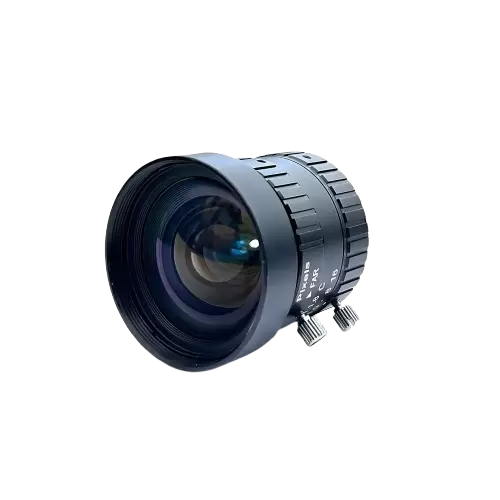
For industrial imaging, a lens designed for visible light cannot automatically deliver the same performance in the ultraviolet range. As wavelength decreases, optical materials that work well in the visible spectrum can introduce stronger absorption, reduced transmission, chromatic errors, and image degradation.