

 en
en
 English
 繁体中文
繁体中文 Japanese
 Korean
 Russian
 German
News
Deepen Optoelectronic Resources, Lead Technological Breakthroughs

Deepen Optoelectronic Resources, Lead Technological Breakthroughs
In complex optical environments, selecting useful light from unwanted wavelengths is a critical challenge. Traditional optical filters may fail to provide sufficient blocking outside the target band, accurate cut-on wavelength control, or stable transmission performance over long-term operation. These limitations can reduce detection accuracy in fluorescence imaging, Raman spectroscopy, machine vision, and high-precision optical measurement systems.
When unwanted wavelengths enter an optical system, they can increase background noise, reduce image contrast, and interfere with weak signal detection. For applications that depend on accurate spectral information, simply allowing more light into the system does not improve performance. The key is controlling which wavelengths reach the detector.
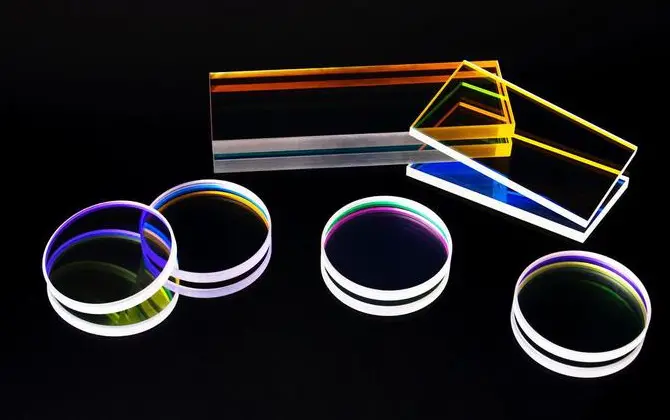
A professional Longpass Filter provides this control by transmitting wavelengths above a specific cut-on point while blocking shorter wavelengths. Through advanced dielectric coating technology, longpass filters help optical systems remove unwanted spectral interference, improve signal-to-noise ratio, and maintain stable imaging performance.
ECOPTIK has been researching optical component fabrication technology for 15 years and serves as an Innovative and Enterprising Optical Customization Partner for global optical applications. The company manufactures precision optical components including dome optics, spherical lenses, micro-optical components, cylindrical mirrors, filters, prisms, and windows. ECOPTIK works with various optical materials from Schott, CDGM, and Corning, as well as Sapphire, CaF₂, MgF₂, Fused Silica, Si, ZnSe, and ZnS. With advanced testing equipment including ZYGO laser interferometers, ZEISS CMM Spectrum, and Agilent Cary 7000 UMS, ECOPTIK provides reliable optical evaluation and product reports for demanding applications.
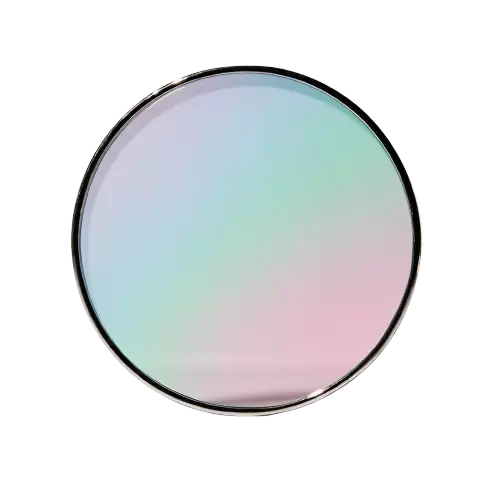
Replacing an existing optical filter is not only a matter of matching dimensions. In many imaging and measurement systems, aging filters may experience coating degradation, reduced transmission efficiency, wavelength shifting, or increased unwanted light leakage. These changes can directly affect system performance.
A high-quality Longpass Filter Replacement restores accurate spectral control by providing:
Precise cut-on wavelength performance.
Strong blocking of unwanted short wavelengths.
Stable transmission in the target wavelength range.
Reliable optical performance during long-term operation.
For example, in fluorescence imaging systems, the excitation light is often much stronger than the emitted fluorescence signal. Without effective filtering, residual excitation light can overwhelm the detector and reduce image contrast. A longpass filter separates these signals by blocking shorter excitation wavelengths while allowing longer fluorescence emission wavelengths to pass.
In Raman spectroscopy, where weak spectral signals must be detected alongside strong laser sources, deep blocking performance is essential. A suitable longpass filter helps reduce unwanted laser-related interference and improves measurement sensitivity.
A professional Longpass Filter uses dielectric hard coating technology to achieve precise wavelength separation. One side of the filter is coated with a hard dielectric longpass optical filter film, while the opposite side is coated with an anti-reflection film.
This structure provides two important advantages:
The dielectric longpass coating creates accurate spectral transition characteristics, blocking wavelengths below the designed cut-on point.
The anti-reflection coating improves transmission efficiency and reduces unwanted surface reflection losses.
ECOPTIK longpass filters are designed with several key performance advantages:
A wide blocking range allows the filter to effectively remove unwanted short wavelength components. This is especially valuable in systems exposed to complex illumination environments, where background radiation may interfere with target signal detection.
Blocking depth determines how effectively unwanted wavelengths are suppressed. ECOPTIK Longpass Filter solutions provide OD2-OD4 blocking depth, helping reduce background signals and improve detection reliability.
For weak optical signals, deeper blocking capability can significantly improve the signal-to-noise ratio by preventing unwanted energy from reaching the detector.
The transition region between blocked wavelengths and transmitted wavelengths is an important factor in spectral separation. High conversion steepness allows the filter to switch more precisely between blocking and transmission regions, improving wavelength selection accuracy.
Maintaining high transmission is essential because excessive optical loss can weaken the useful signal. With transmittance above 90%, ECOPTIK Longpass Filters help maximize available optical energy while maintaining effective spectral filtering.
A common question from optical engineers is: What is the difference between bandpass and long pass filter?
Although both filters control wavelength transmission, their purposes are different.
A Longpass Filter allows wavelengths above a specific cut-on wavelength to pass while blocking shorter wavelengths. It is mainly used when the system needs to collect a broad range of longer wavelengths.
Typical applications include:
Fluorescence emission detection.
Infrared imaging.
Raman spectroscopy.
Astronomical observation.
For example, if an imaging system needs to collect signals above 600nm while removing visible excitation light below this range, a longpass filter is usually the appropriate solution.
A Bandpass Filter, however, only allows a specific wavelength range to pass while blocking wavelengths on both sides of the selected band. It is more suitable when the system needs to isolate one specific optical signal.
Typical applications include:
Laser wavelength detection.
Narrow spectral analysis.
Specific wavelength imaging.
The selection depends on the purpose of the optical system. If the goal is to keep a broad long-wavelength region, a Longpass Filter is suitable. If the goal is to isolate a narrow wavelength signal, a bandpass filter may be a better choice.
For industrial and scientific applications, filter performance depends on both optical characteristics and manufacturing precision.
ECOPTIK Longpass Filter specifications include:
Material: BK7
Transmittance: T>90%
Blocking Depth: OD2-OD4
AOI: 0° or 45°
Surface Quality: 60/40
Clear Aperture: >90%
BK7 optical glass provides stable optical performance and is widely used in precision imaging and measurement systems.
The choice of incident angle is also important. Different systems may require filters designed for AOI 0° or 45° installation conditions. Proper angle matching helps maintain wavelength accuracy and prevents unexpected spectral shifts.
A clear aperture greater than 90% ensures efficient light transmission through the usable optical area, while surface quality of 60/40 supports reliable imaging performance.
For optical system manufacturers, selecting a Longpass Filter supplier requires evaluating more than product availability and price. A reliable supplier should have strong capabilities in optical material selection, precision coating, wavelength customization, and production consistency.
Important factors include:
Accurate cut-on wavelength customization.
Stable dielectric coating processes.
Consistent optical performance between production batches.
Compatibility with existing optical systems.
Reliable testing and quality verification.
ECOPTIK combines optical manufacturing experience with advanced testing capabilities to provide customized filter solutions for imaging systems, machine vision equipment, spectroscopy instruments, and scientific applications.
When replacing or upgrading optical filters, engineers should consider transmission performance, blocking depth, angle compatibility, surface quality, and long-term stability rather than focusing only on mechanical dimensions.
A Longpass Filter is an essential optical component for systems that require accurate wavelength selection and reliable signal control. By combining hard dielectric coating technology, high transmission, deep blocking capability, and precise spectral performance, professional longpass filters help reduce unwanted interference and improve optical system sensitivity.
From fluorescence measurement and Raman spectroscopy to machine vision and astronomical observation, the right longpass filter solution enables cleaner signals, better imaging quality, and more reliable analysis results. With advanced optical fabrication technology and customization capabilities, ECOPTIK supports engineers and manufacturers in developing high-performance optical systems.
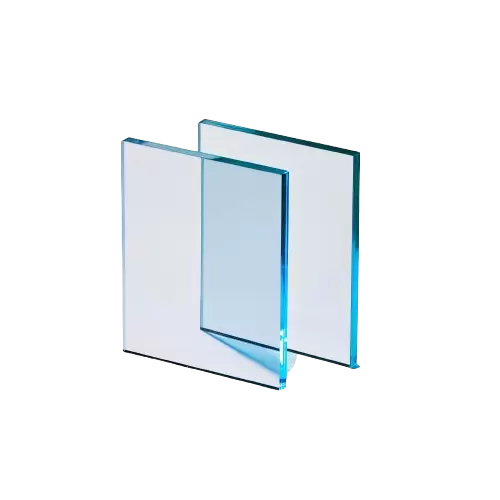
In laser equipment, imaging systems, optical instruments and precision detection equipment, an optical window is not simply a transparent protective plate. It sits directly in the optical path, so its surfaces can influence reflection, beam deviation, wavefront quality and the amount of light reaching the next optical element.
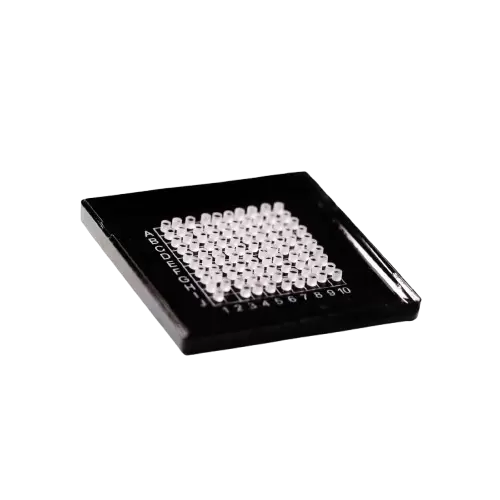
A compact optical system often has to solve a problem that a conventional spherical lens does not handle efficiently: controlling light in one direction while keeping the optical package small. In endoscopes, medical imaging modules, machine vision assemblies, and other precision instruments, a spherical lens may provide general imaging performance but cannot always deliver the required line-focusing behavior within a restricted optical path.
In the world of precision optics, thin-film coatings are what transform a simple piece of glass into a functional optical component—whether it's an anti-reflection coating that maximizes light transmission, a dielectric mirror that reflects specific wavelengths, or a filter that precisely separates spectral bands . The performance of these coatings directly determines whether an optical system succeeds or fails. But how do manufacturers verify coating quality without risking damage to expensive