

 en
en
 English
 繁体中文
繁体中文 Japanese
 Korean
 Russian
 German
News
Deepen Optoelectronic Resources, Lead Technological Breakthroughs

Deepen Optoelectronic Resources, Lead Technological Breakthroughs
A compact optical system often has to solve a problem that a conventional spherical lens does not handle efficiently: controlling light in one direction while keeping the optical package small. In endoscopes, medical imaging modules, machine vision assemblies, and other precision instruments, a spherical lens may provide general imaging performance but cannot always deliver the required line-focusing behavior within a restricted optical path.
Rod Lenses offer a different approach. Their circumference is polished while both ends are ground, giving them optical behavior similar to a cylindrical lens. When collimated light enters through the diameter direction, the rod lens can focus the light into a line rather than a point. This characteristic makes rod optics useful where directional focusing, compact geometry, and controlled light transmission are more important than conventional point imaging.
For buyers searching for Rod lenses price or Rod lens endoscope, however, the critical question is not simply how much a component costs. Material, diameter tolerance, surface quality, surface figure, clear aperture, coating, and inspection requirements can all change both the quotation and the optical result.
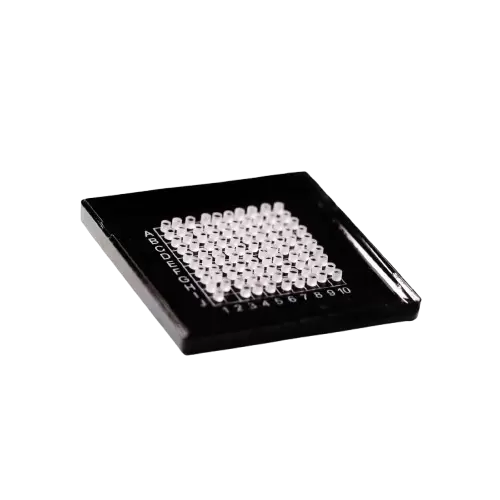
A Rod Lens can be considered a cylindrical optical element in terms of its focusing behavior. Instead of producing the same focusing action in two perpendicular axes as a spherical lens, its curved circumference primarily changes the optical path in one direction.
This geometry is particularly useful when the optical design requires a line focus.
For example, a Rod Lens with a 4.75 mm ±0.1 mm diameter and 12 mm ±0.2 mm length provides a relatively compact optical form factor. The diameter defines the primary curved optical surface, while the length provides the physical dimension needed for mounting and optical integration.
The manufacturing process matters as much as the nominal dimensions. The circumference must be polished to provide the required optical surface, while the two ends are ground to control the component's length and geometry. If the cylindrical surface has excessive irregularity, the focused line can become distorted or broadened. If the end faces are not sufficiently controlled, mechanical alignment and optical positioning can become less predictable.
A specification of 20/10 scratch-dig indicates a controlled surface quality suitable for precision optical applications. Surface quality is not the same as surface figure. Scratch-dig describes localized surface defects, while a 1 wavelength surface irregularity specification addresses the deviation of the optical surface from its intended figure.
Both affect performance differently. A poor surface finish can increase scattering, while poor surface figure can introduce wavefront errors and reduce the consistency of the focused light distribution.
For an optical engineer, this distinction is important when comparing two Rod Lens quotations. A lower price may result from looser surface or dimensional specifications, but that saving may not be meaningful if the component subsequently creates alignment or imaging problems in the assembled system.
The relationship between Rod Lenses and endoscopic imaging is closely connected to their cylindrical optical behavior.
In an optical path where collimated light enters through the diameter of the Rod Lens, the curved surface changes the direction of the rays and produces a line focus. This can be useful in compact optical architectures where the designer needs controlled focusing along one axis without introducing the same optical power in the perpendicular axis.
For an endoscope, this can help address packaging limitations. Medical imaging assemblies often have strict constraints on optical diameter, available working space, illumination paths, and component positioning. A Rod Lens can therefore be considered when the optical design requires directional focusing or optical transmission within a narrow mechanical envelope.
Material selection becomes particularly important when the endoscope or imaging system operates outside the visible spectrum.
ECOPTIK offers Rod Lens substrates based on optical glass and UV Fused Silica, allowing the component to be matched to different wavelength ranges. For UV applications, Fused Silica is often considered because of its ultraviolet transmission characteristics. Visible-light systems can use appropriate optical glass or fused silica depending on the optical design, while NIR applications require attention to the substrate's transmission range and absorption characteristics.
The supplied specification illustrates how these factors interact. The Rod Lens uses IR-transmissive Fused Silica with OH <10 ppm, a material specification relevant when low absorption and transmission performance in applicable infrared/NIR bands are important.
The clear aperture is specified as 4.75 mm across a 10 mm length, corresponding to the usable optical area through the component. For an endoscope or compact imaging system, clear aperture should be considered alongside the diameter rather than treated as a separate purchasing detail. A nominal diameter does not automatically mean that the entire surface is available as an effective optical aperture.
Coating is another major consideration. This particular Rod Lens uses an MgF₂ hard coating centered at 780 nm with an AOI of 22°. The coating wavelength and angle of incidence should be evaluated against the actual optical path. A coating designed around 780 nm is more meaningful for a system whose operating spectrum and incidence conditions are compatible with that design than for a system operating at a substantially different wavelength.
This is why coating specifications should never be selected independently from the endoscope's illumination source, detector response, working wavelength, and ray angles.
There is no useful single price for a Rod Lens without defining its optical and mechanical specifications. In B2B procurement, the quotation normally reflects the manufacturing difficulty and inspection requirements behind the component.
1. Substrate material
Fused Silica, optical glass, and other optical materials have different raw material costs, transmission characteristics, thermal properties, and processing requirements. A material selected for UV or specialized NIR transmission may therefore have a different cost structure from a standard visible-light optical glass.
2. Diameter and length tolerances
A specification of 4.75 mm ±0.1 mm diameter and 12 mm ±0.2 mm length requires controlled dimensional processing. Tighter tolerances generally require additional machining control, measurement, and yield management.
If an endoscope assembly requires a tighter fit or a precisely controlled optical position, the purchaser should compare tolerance requirements with the mechanical design rather than automatically choosing the tightest available specification.
3. Surface quality
A 20/10 scratch-dig requirement demands better control of the polished optical surface than a less stringent commercial specification. Surface defects can contribute to scattering and unwanted stray light, which can become particularly noticeable in sensitive imaging systems.
4. Surface figure
The 1 wavelength surface irregularity specification controls the shape accuracy of the optical surface. For a Rod Lens, this matters because the cylindrical surface is responsible for the directional focusing behavior. A deviation in surface figure can change the shape and uniformity of the focused line.
5. Coating
Coating cost depends on the material system, wavelength range, incidence angle, durability requirements, coating area, and performance specifications. The MgF₂ hard coating centered at 780 nm is therefore not simply an added layer; it is part of the optical design.
6. Clear aperture and custom geometry
Larger usable apertures, tighter edge requirements, custom bevels, special lengths, or non-standard dimensional tolerances can increase manufacturing and inspection complexity.
7. Inspection and documentation
Precision optical buyers may require interferometric measurement, dimensional reports, transmission data, or batch inspection. These requirements add value to the procurement process because they allow the buyer to verify that the delivered optics meet the system's design assumptions.
How much does a rod lens cost?
Rod Lens pricing depends on material, dimensions, tolerances, surface quality, surface figure, coating, quantity, and inspection requirements. A meaningful quotation should therefore be based on a complete optical specification rather than diameter alone.
How does a rod lens work in an endoscope?
Its polished cylindrical circumference gives it optical behavior similar to a cylindrical lens. When collimated light passes through the diameter direction, the Rod Lens can focus the light into a line, making it useful in compact optical paths that require directional focusing.
What is the difference between a rod lens and a cylinder lens?
Their optical behavior can be similar, but the mechanical form and intended integration can differ. A Rod Lens uses a rod-shaped geometry with a polished circumference and ground ends, while cylindrical lenses are commonly specified and mounted according to their own optical and mechanical configurations. The correct choice depends on the optical layout, aperture, packaging, and mounting method.
What material is suitable for UV, visible, and NIR applications?
The operating wavelength should be established first. UV systems commonly require materials with suitable ultraviolet transmission, while visible and NIR designs can use different optical glasses or Fused Silica depending on transmission, absorption, thermal behavior, and system requirements.
How do I choose a Rod Lens for an endoscope?
Start with wavelength, required optical function, available diameter and length, clear aperture, working geometry, surface quality, surface figure, coating wavelength, and angle of incidence. The Rod Lens should then be evaluated as part of the complete optical path rather than as an isolated component.
ECOPTIK has researched optical component fabrication technology for 15 years, serving applications that require controlled optical performance and customized component specifications. Its product range includes domes, spherical lenses, micro-optical components, cylindrical mirrors, filters, prisms, windows, and other precision optics.
For Rod Lens production, material selection can include glass from Schott, CDGM, and Corning, as well as Sapphire, CaF₂, MgF₂, Fused Silica, Si, ZnSe, and ZnS where the application requires specific optical characteristics. ECOPTIK also provides lens assembly services for customers integrating individual optical elements into complete modules.
Measurement capability is an important part of precision optics manufacturing. ECOPTIK uses ZYGO laser interferometers, ZEISS CMM Spectrum, and Agilent Cary 7000 UMS for optical and dimensional testing and can provide corresponding product reports.
For buyers comparing Rod lenses price, the practical approach is to compare the complete specification rather than the unit price alone. For an endoscope or precision imaging system, a Rod Lens that meets the required material, aperture, dimensional tolerance, surface figure, surface quality, and coating conditions can reduce the risk of optical rework and alignment problems later in the assembly process. The right specification is therefore the one that satisfies the actual optical path without paying for tolerances or performance that the system does not need.
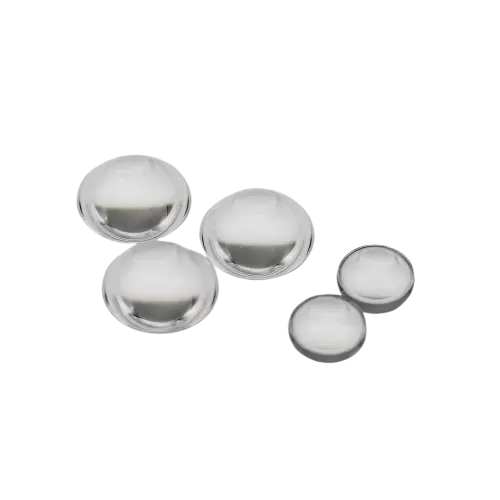
In many optical systems, the limitation is no longer the optical design itself but the ability to manufacture the lens surface with enough accuracy. Laser systems, semiconductor inspection equipment, aerospace optics, and high-resolution imaging platforms increasingly require aspherical lenses with tighter tolerances, lower scattering, and better wavefront control.
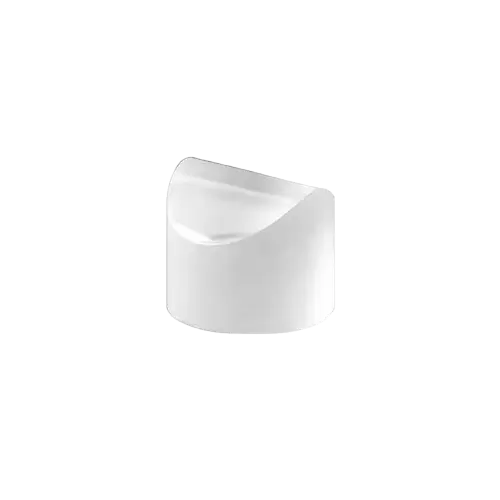
In industrial laser metrology systems, laser line generation is not a visual aid but a geometric measurement reference that directly defines system-level accuracy boundaries.
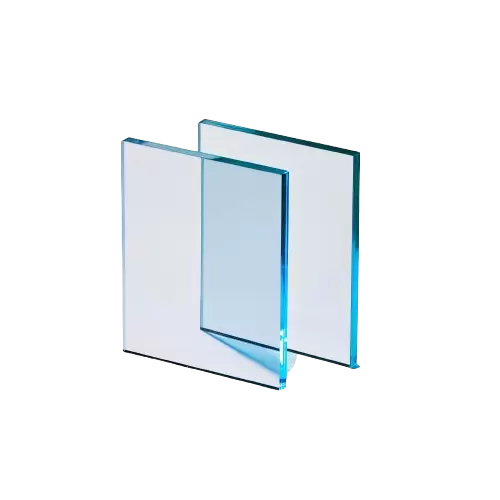
In laser equipment, imaging systems, optical instruments and precision detection equipment, an optical window is not simply a transparent protective plate. It sits directly in the optical path, so its surfaces can influence reflection, beam deviation, wavefront quality and the amount of light reaching the next optical element.