

 en
en
 English
 繁体中文
繁体中文 Japanese
 Korean
 Russian
 German
News
Deepen Optoelectronic Resources, Lead Technological Breakthroughs


Deepen Optoelectronic Resources, Lead Technological Breakthroughs
Traditional single lenses remain effective for many optical systems, but their physical size and limited integration become constraints when an optical module needs multiple focusing, imaging, or beam-control functions within a small area. A Micro Lens Array addresses this limitation by replacing one relatively large optical element with a precisely arranged surface containing numerous micrometer-scale lens units.
For optical component buyers, however, choosing a Micro Lens Array Sheet is not simply a matter of selecting the smallest lens or comparing unit prices. Lens aperture, embossed depth, pitch, array density, substrate material, refractive index, surface accuracy, and manufacturing consistency all influence the optical result and the final quotation. The right specification depends on how the array will interact with the rest of the optical system.
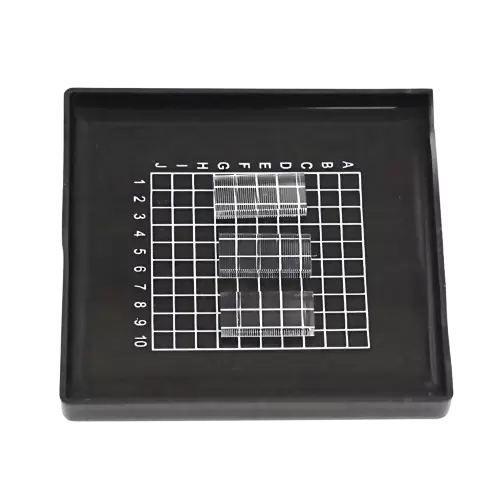
A Micro Lens Array is composed of many lens units, each with a micrometer-scale aperture and embossed depth. Although each individual lenslet is small, thousands or even more optical units can operate across the same sheet. This gives the component a high level of optical integration that is difficult to achieve with conventional individual lenses.
The basic geometry of each lenslet determines how incoming light is redirected. Aperture or lens diameter affects the effective optical area of each unit, while embossed depth and surface profile influence the lens curvature and therefore its focusing behavior. Lens pitch determines the distance between neighboring lenslets and directly affects array density.
These parameters cannot be considered independently. For example, reducing lens pitch increases the number of optical units within a fixed area, which can improve spatial sampling or light redistribution in some systems. At the same time, smaller structures and tighter dimensional tolerances generally increase fabrication and inspection difficulty.
Fill factor is another important parameter. A high fill factor means that a larger proportion of the available surface contributes to the intended optical function. In illumination and display applications, this can influence how uniformly light is distributed. In imaging systems, variations in lens profile or spacing can instead introduce differences in focal behavior from one lenslet to another.
The distinction between refractive Micro Lens Arrays and diffractive Micro Lens Arrays is also fundamental.
A refractive MLA changes the direction of light through the geometry of the lens surface and the refractive index of the material. Its behavior is therefore closely related to lens curvature, material selection, wavelength, and focal length. Refractive arrays are suitable for applications such as focusing, imaging, illumination homogenization, and beam shaping.
A diffractive MLA uses microstructured features to control the phase of light through diffraction. Its optical response can be strongly wavelength-dependent, making the design particularly relevant where phase manipulation or compact wavelength-specific optical functions are required.
For procurement, the difference is important because the manufacturing process, dimensional requirements, wavelength behavior, and performance verification can be different between the two structures.
The sheet format becomes particularly useful when an optical system requires multiple optical functions over a relatively compact area.
In display systems, a Micro Lens Array can be designed to redirect or redistribute light and improve optical utilization. The pitch, focal characteristics, and fill factor need to correspond to the pixel structure or illumination architecture. Poor array uniformity can result in visible variations in brightness or light distribution.
In imaging systems, individual lenslets can collect or focus light onto defined regions. Here, consistency in aperture, lens profile, focal length, and positioning is critical. A small deviation repeated across a large array can become an optical-system-level problem rather than an isolated manufacturing defect.
For laser optics, the array can perform beam shaping, homogenization, or spatial redistribution. Laser applications often impose additional requirements on substrate material, wavelength transmission, surface quality, and damage resistance. A specification that is adequate for ordinary illumination may not be sufficient for a high-power laser path.
In AR/VR systems, the compact size and high optical integration of an MLA can help designers implement optical functions within constrained module dimensions. Depending on the architecture, the array may participate in light coupling, beam management, imaging, or other near-eye optical functions.
The same principle applies to optical coupling and precision illumination. Instead of positioning many separate lenses mechanically, an array can provide a large number of optical units in a controlled geometric relationship.
This is one of the key differences between a Micro Lens Array Sheet and conventional individual optics: the value is not only in the size of each lenslet, but in the relationship between thousands of lenslets across the complete optical surface.
A Micro Lens Array can meet the nominal lens diameter and still perform poorly if the structures are inconsistent across the sheet.
Suppose the target lenslets have the same aperture and focal characteristics. If the embossed depth varies from one region to another, the effective curvature and focal behavior can also change. In an imaging system, this may appear as inconsistent focus. In illumination, it can produce non-uniform intensity. In beam shaping, local variations can alter the output distribution.
For this reason, buyers should examine not only nominal dimensions but also array uniformity, surface form accuracy, dimensional tolerances, surface quality, and inspection methodology.
Material selection is equally important. Refractive index influences the relationship between lens geometry and optical power. Transmission requirements depend on the operating wavelength. Thermal stability can become important in laser or high-power illumination systems.
ECOPTIK has 15 years of experience in optical component fabrication and manufactures precision optics including micro-optical components, spherical lenses, domes, cylindrical mirrors, filters, prisms, and windows. Its material options include optical glass from Schott, CDGM, and Corning, together with sapphire, CaF₂, MgF₂, fused silica, Si, ZnSe, and ZnS.
The available material should be selected according to the wavelength, optical design, environmental conditions, and manufacturing requirements rather than material cost alone.
For precision projects, ECOPTIK also uses ZYGO laser interferometers, ZEISS CMM Spectrum, and Agilent Cary 7000 UMS for measurement and product reporting. Such inspection capability becomes important when a Micro Lens Array requires documented dimensional, surface, or spectral performance.
There is no meaningful single price for a Micro Lens Array without defining its technical specification.
The first major factor is micro-lens geometry. Smaller apertures, tighter pitch, greater array density, and more complex embossed profiles can increase fabrication difficulty. If the design requires extremely consistent structures over a large area, process control becomes more demanding.
Substrate material is another cost factor. Standard optical glass and specialized materials can have significantly different raw-material and processing costs. Material availability, optical transmission range, refractive index, thermal properties, and machinability all influence the quotation.
Manufacturing precision also affects Micro Lens Array Price. A prototype requiring relatively broad tolerances is fundamentally different from a production component requiring tightly controlled lens dimensions, surface form, array positioning, and optical uniformity.
Array size and customization matter as well. A small prototype may require engineering and setup work that is relatively expensive per piece. Once the design enters stable production, higher quantities can distribute tooling, process setup, and inspection costs across more units.
Coating requirements, packaging, inspection documentation, and lens assembly can further affect the total project cost.
This is why two Micro Lens Array Sheets with similar external dimensions may have very different prices. The real comparison should be made against the complete optical specification and manufacturing tolerance.
How much does a Micro Lens Array cost?
There is no fixed price. Cost depends on lens geometry, pitch, aperture, embossed depth, material, array size, tolerance, manufacturing process, quantity, coating, and inspection requirements.
What is a Micro Lens Array used for?
Typical applications include display systems, imaging, laser beam shaping, illumination, optical coupling, AR/VR modules, sensing, and other compact optical systems requiring multiple coordinated lens functions.
What is the difference between a refractive and diffractive Micro Lens Array?
A refractive MLA primarily redirects light through lens geometry and material refractive index, while a diffractive MLA controls light through engineered microstructures and diffraction. The appropriate choice depends on wavelength, optical function, and system architecture.
How does a Micro Lens Array Sheet work?
Each micro-lens redirects or focuses incident light, while the complete array creates a coordinated optical effect across the sheet. Pitch, aperture, lens profile, focal length, and arrangement determine the resulting light distribution or imaging behavior.
What factors affect Micro Lens Array Price?
The main factors are lens dimensions, array density, embossed depth, substrate material, refractive index, surface accuracy, dimensional tolerance, array size, manufacturing process, customization level, production volume, and inspection requirements.
How do I choose a Micro Lens Array for an optical system?
Start with wavelength, input beam or illumination conditions, required focal behavior, working distance, target array size, lens pitch, aperture, material, and required optical uniformity. Then determine acceptable manufacturing tolerances and production volume. This approach provides a more useful basis for supplier comparison than comparing prices alone.
For OEMs and optical engineers, the most important point is that a Micro Lens Array is a tightly coupled optical structure rather than simply a miniature version of a conventional lens. The geometry of each lenslet, the consistency of the complete array, the substrate material, and the manufacturing process jointly determine system performance. When evaluating Micro Lens Array Sheet suppliers, a technically defined specification and transparent inspection standard provide a much more reliable basis for controlling both optical performance and Micro Lens Array Price.
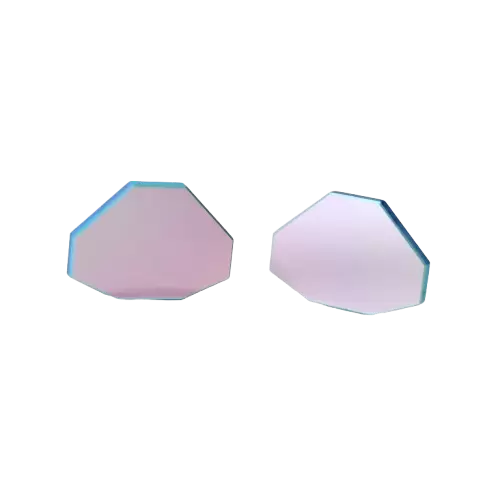
Modern laser processing systems are expected to achieve higher throughput while maintaining consistent positioning accuracy. However, many traditional laser scanning solutions face limitations when operating at high speeds.

In the vast and demanding underwater world, where light is scarce, pressure is immense, and conditions are unpredictable, the performance of imaging and defense systems depends heavily on the materials used.
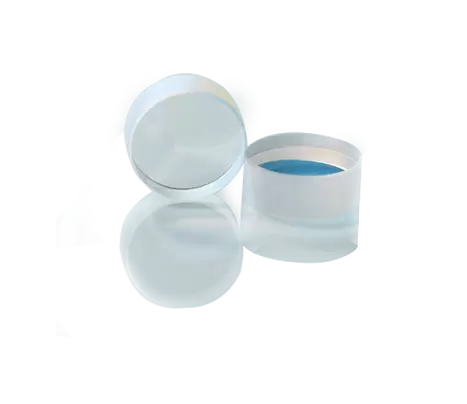
For optical engineers and procurement teams, choosing a plano convex lens is rarely just a matter of selecting a diameter and focal length. A lens that appears simple can produce very different results depending on its material, curvature, surface accuracy, center deviation, coating, and installation direction.