

 en
 English
 繁体中文
 Japanese
 Korean
 Russian
 German
News
Deepen Optoelectronic Resources, Lead Technological Breakthroughs


Deepen Optoelectronic Resources, Lead Technological Breakthroughs
In precision optical systems, a single lens may not provide sufficient control over chromatic aberration, image quality, and optical path requirements. Using multiple independent lenses can improve optical performance, but it also increases assembly complexity and introduces additional alignment errors and air-glass interfaces. These factors can affect image consistency, transmission efficiency, and overall system reliability.
A Cemented Optical Lens addresses these challenges by bonding two or more optical elements into an integrated assembly using optical adhesive. With appropriate material combinations and optical design, this structure can support chromatic aberration correction, reduce reflections at interfaces compared with separated air-spaced elements, and simplify optical integration. For equipment manufacturers with specific optical requirements, working with an experienced Cemented Optical Lens Manufacturer is essential to achieving the required performance and mechanical compatibility.
A cemented lens typically consists of two or more individually manufactured optical elements joined through a controlled adhesive layer.
A cemented doublet combines two lens elements, commonly using glasses with different refractive indices and dispersion characteristics. In an achromatic design, a positive element with relatively low dispersion is paired with a negative element with relatively high dispersion. Their combined optical powers help reduce longitudinal chromatic aberration across selected wavelengths.
Cemented triplets use three optical elements to provide additional design freedom. They can address more demanding combinations of focal length, chromatic correction, and aberration control, depending on the optical prescription.
However, cementing alone does not automatically produce an achromatic lens. Chromatic correction depends on the refractive index, Abbe number, optical power, curvature, and arrangement of the selected elements.
Several design variables determine the final performance:
Glass materials and refractive index: Different optical glasses bend light differently. Selecting suitable glass combinations allows designers to balance optical power and dispersion. Material compatibility and thermal characteristics must also be considered.
Curvature radius and center thickness: Surface curvature determines how strongly each element refracts light. Combined with refractive index and element spacing, it influences effective focal length and aberration distribution. Center thickness also affects the optical prescription and mechanical integration.
Cement layer thickness: The adhesive layer forms an optical interface between the elements. Its thickness, uniformity, refractive index, and curing behavior can influence wavefront quality, transmission, and long-term stability.
Optical alignment and bonding stress: Decentering or tilt between elements can introduce unwanted aberrations. Uneven adhesive distribution and curing shrinkage may also create internal stress, affecting transmitted wavefront quality.
One important advantage of cemented construction is the replacement of an air gap with an adhesive interface whose refractive index can be selected to better match the adjoining optical materials. This can reduce interface reflection losses compared with separate air-spaced elements, although residual reflections remain and depend on the materials, adhesive, and interface conditions.
A Custom Cemented Optical Lens must be designed around the operating conditions and optical architecture of its target equipment.
Cemented lenses are widely relevant to industrial imaging systems, machine vision cameras, microscope objectives, photographic lenses, and telescopic optics.
In these applications, chromatic aberration can cause different wavelengths to focus at different positions, reducing image sharpness and color accuracy. Carefully selected glass combinations help bring different wavelengths closer to a common focal position.
The curvature and arrangement of individual elements also influence spherical aberration and other imaging errors. For microscope and machine vision applications, controlling these effects is particularly important when consistent image quality and accurate detail recognition are required.
Cemented optical components can be incorporated into laser focusing, collimation, and beam-conditioning assemblies. However, laser applications require additional evaluation beyond conventional imaging performance.
The substrate materials must be suitable for the operating wavelength, while the adhesive must offer appropriate transmission, thermal stability, and resistance to the intended laser exposure.
Laser-induced damage threshold is another critical consideration. Damage may originate from optical surfaces, material absorption, contamination, or the bonding interface. Therefore, buyers should request application-specific evidence of laser compatibility rather than assume that a conventional cemented lens is suitable for high-power laser systems.
Medical imaging equipment, spectrometers, analytical instruments, and scientific optical systems often require consistent optical performance within compact mechanical assemblies.
A precision cemented assembly can reduce the number of independently mounted elements and simplify integration. Controlled bonding, optical alignment, and inspection help maintain repeatable performance across production batches.
For these applications, manufacturers should evaluate the complete optical assembly, including transmission characteristics, surface quality, dimensional tolerances, and environmental stability.
A reliable custom manufacturing workflow generally includes several stages:
Optical material selection: Identify suitable glass materials based on refractive index, Abbe number, transmission range, and application requirements.
Lens fabrication: Grind and polish individual elements according to the optical prescription.
Surface inspection: Check relevant surface quality, curvature, and dimensional characteristics before assembly.
Cleaning and preparation: Remove contaminants that could affect bonding quality or optical transmission.
Optical cementing: Apply adhesive under controlled conditions and position the elements according to the required optical alignment.
Curing and stabilization: Follow the adhesive manufacturer's specified curing process while controlling potential shrinkage and stress.
Final inspection: Evaluate the completed assembly against the agreed optical and mechanical specifications.
When selecting a Cemented Optical Lens Manufacturer, buyers should examine the supplier's material selection expertise, precision polishing capabilities, bonding process controls, alignment methods, inspection equipment, and batch consistency.
The price of a custom cemented lens depends on more than its diameter or number of elements. The optical prescription and manufacturing difficulty are often equally important.
Key cost factors include:
Lens configuration: Doublets, triplets, and more complex assemblies require different fabrication and alignment procedures.
Glass selection: Specialized optical materials and demanding dispersion requirements can affect material availability and processing costs.
Optical geometry: Diameter, center thickness, curvature radius, and focal length influence machining complexity.
Precision requirements: Tight dimensional tolerances, centering requirements, and surface specifications generally require more demanding process control and inspection.
Adhesive requirements: Adhesive type, refractive index, curing conditions, and environmental resistance influence material selection and production procedures.
Coating specifications: Wavelength-specific antireflection coatings or other surface treatments add design and manufacturing considerations.
Operating environment: Temperature variation, humidity, vibration, and mechanical loading may require additional material compatibility assessments and validation.
Standard cemented lenses may offer shorter procurement cycles when their optical specifications match the application. Custom assemblies provide greater flexibility in focal length, glass combinations, dimensions, and optical performance, but typically require additional design evaluation and manufacturing coordination.
Long-term stability deserves particular attention. Temperature changes can create differential expansion between bonded optical elements. Humidity may affect certain adhesives, while mechanical stress and curing shrinkage can introduce internal strain or bonding defects.
A qualified manufacturer should consider glass-to-adhesive compatibility, thermal expansion differences, adhesive curing behavior, and actual operating conditions during the design stage. For demanding applications, environmental testing and application-specific validation should be agreed upon before production.
To obtain an accurate quotation, buyers should provide an optical drawing or prescription, required glass specifications, operating wavelength, focal length, dimensional tolerances, coating requirements, expected quantities, and environmental conditions.
Selecting the right manufacturing partner requires evaluating both optical fabrication capabilities and the ability to translate technical requirements into consistent products.
ECOPTIK has 15 years of experience researching optical component fabrication technology. The company manufactures precision optical components, including domes, spherical lenses, micro-optical components, cylindrical mirrors, filters, prisms, and optical windows.
For custom optical projects, ECOPTIK offers materials sourced from Schott, CDGM, and Corning, alongside Sapphire, CaF2, MgF2, Fused Silica, Si, ZnSe, and ZnS. Material selection can be coordinated with the optical requirements of individual projects.
ECOPTIK also provides lens assembly services, supporting customers who require more than standalone optical elements. Its inspection resources include ZYGO laser interferometers, ZEISS CMM Spectrum, and Agilent Cary 7000 UMS. These instruments support optical measurement and product reporting according to applicable inspection requirements.
For procurement teams, evaluating these capabilities alongside bonding process control, alignment requirements, and production consistency provides a more meaningful basis for supplier selection than comparing unit prices alone.
Choosing a Custom Cemented Optical Lens requires consideration of the complete optical system rather than simply the number of bonded elements or initial purchase cost. Glass compatibility, dispersion characteristics, curvature design, adhesive selection, bonding precision, and environmental stability all influence the final result.
An experienced Cemented Optical Lens Manufacturer should be able to understand the application, evaluate the optical prescription, select appropriate materials, control the bonding process, and verify the finished assembly against agreed specifications.
ECOPTIK works with customers on customized optical component fabrication and lens assembly requirements. By providing your optical drawings, material preferences, working wavelengths, and operating conditions, you can begin evaluating a cemented lens solution suited to your equipment and performance objectives.
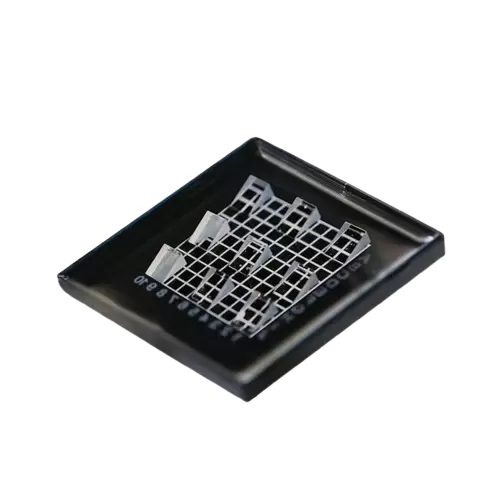
In compact optical instruments, the challenge is often not generating or transmitting light, but finding enough space to route it accurately. Conventional-size prisms can become difficult to integrate into endoscopes, laser diode (LD) to fiber coupling assemblies, and other precision instruments where every millimeter of mechanical space matters.
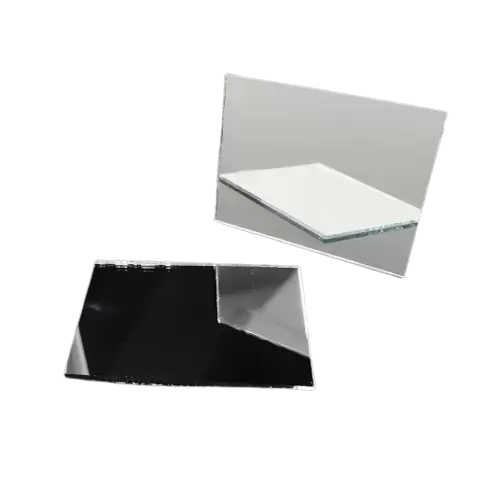
In precision optical systems, a mirror is more than a component that redirects light. Its surface geometry, coating performance, substrate stability, and compatibility with the operating wavelength can directly affect beam alignment, wavefront quality, and measurement repeatability.
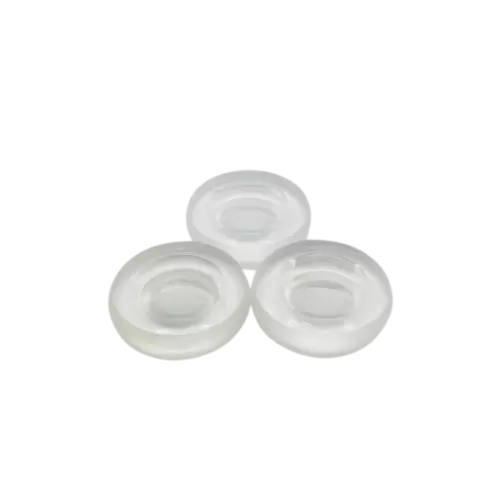
A positive lens is often the natural choice when an optical system needs to focus or converge light, but it cannot solve every beam-control problem. Laser and imaging systems may instead require a controlled increase in beam divergence, a larger beam diameter, or an adjustment that effectively increases the focal length of an existing optical arrangement.