

 en
 English
 繁体中文
 Japanese
 Korean
 Russian
 German
News
Deepen Optoelectronic Resources, Lead Technological Breakthroughs


Deepen Optoelectronic Resources, Lead Technological Breakthroughs
In precision optical systems, conventional lenses do not always provide the beam geometry or mechanical dimensions required by a specific application. Some optical designs need one-dimensional focusing, while others require compact components that fit within narrow mechanical assemblies. In these situations, a Precision Rod Lens offers a practical solution for line focusing, beam shaping, and optical integration.
However, selecting a suitable rod lens involves more than choosing a diameter and length. Substrate material, cylindrical surface quality, dimensional tolerances, and optical requirements all influence its performance. For equipment manufacturers, understanding these factors is also essential when comparing quotations from a Precision Rod Lens Manufacturer and evaluating whether the proposed specifications justify the purchase cost.
A conventional Precision Rod Lens has a cylindrical structure with its outer circumference optically polished and both ends ground. Unlike a spherical lens, which generally focuses light in two dimensions, a rod lens provides optical power primarily in one direction.
When collimated light passes through the rod lens across its diameter, the curved cylindrical surface refracts the light and brings it toward a line focus. The resulting focal line extends parallel to the lens axis. This makes the component functionally similar to a cylindrical lens in terms of one-dimensional focusing.
It is important to distinguish this conventional refractive design from a Gradient-Index (GRIN) Rod Lens. A GRIN lens focuses light through a refractive index gradient within its material, whereas a conventional rod lens relies on refraction at its curved external surface. Their optical designs and application requirements should not be treated as interchangeable.
Several parameters determine whether a rod lens can meet the requirements of an optical assembly.
Diameter and length: Diameter influences the optical aperture, beam interaction, and mechanical fit. An unsuitable diameter may introduce alignment difficulties or restrict the usable beam path. Length determines the physical integration space and can affect the positioning of the component within a relay or coupling assembly. Dimensional accuracy is therefore important for both optical alignment and repeatable installation.
Refractive index and substrate material: The refractive index determines how strongly light bends at the cylindrical surface. Material selection must account for the operating wavelength and the intended optical design. Different substrates may produce different focusing behavior, so material substitution should be evaluated rather than assumed to be optically equivalent.
Cylindrical surface quality and form accuracy: The polished circumference is the primary refracting surface. Scratches, surface irregularities, and deviations from the intended cylindrical profile can introduce scattering, aberrations, or unwanted changes in the focused line. Surface roughness and surface figure are separate considerations: roughness concerns fine-scale surface texture, while figure describes larger-scale deviations from the designed optical geometry.
End-face condition: Although the cylindrical circumference provides the principal focusing function, the ground end faces remain important for mechanical positioning, assembly, and integration. Their condition should match the mounting and alignment requirements of the optical system.
ECOPTIK offers Precision Rod Lens products using Optical Glass and UV Fused Silica substrates for different spectral applications.
Optical Glass is a practical option for many visible and near-infrared optical systems. Its specific refractive index, transmission characteristics, and optical homogeneity depend on the selected glass composition.
UV Fused Silica is particularly relevant when ultraviolet transmission is a major design requirement. It also provides an alternative substrate for optical systems operating across different spectral regions, subject to the selected material grade and application requirements.
The appropriate choice should be based on operating wavelength, refractive index, transmission, thermal conditions, and the optical design. A material that works well in a visible-light assembly should not automatically be selected for a UV application.
Precision Rod Lenses serve several industries where controlled one-dimensional focusing and compact optical configurations are required. Their actual value depends on how well the component matches the optical path and mechanical structure of the equipment.
In medical endoscopy, including laparoscopes and arthroscopes, rod lenses can function as imaging objectives or relay optical elements within the imaging assembly.
The quality of each optical component contributes to image transmission through the endoscope. Surface defects or inappropriate optical specifications can increase scattering and reduce image contrast. Dimensional deviations may also affect spacing between optical elements, making assembly and alignment more difficult.
For these applications, manufacturers should evaluate the lens diameter, length, substrate, surface quality, and compatibility with the complete optical design. Compact mechanical dimensions are particularly important because endoscopic instruments have limited internal space.
The purchasing priority should be consistent optical performance and reliable dimensional control rather than simply selecting the lowest-cost component.
In optical communication systems, rod lenses can support fiber-optic coupling and laser diode beam shaping.
For fiber coupling, the focusing behavior influences how light is directed toward the receiving fiber. The relationship between the focused beam, fiber core, numerical aperture, and alignment position is important to coupling performance. Incorrect lens dimensions or optical characteristics may introduce additional alignment losses.
In laser diode assemblies, a rod lens can help reshape a beam in one dimension. This is useful when the output geometry needs to be adapted to a subsequent optical component or compact optoelectronic assembly.
Procurement teams should therefore provide the operating wavelength, beam characteristics, required focusing geometry, and available installation space when requesting a customized solution.
Laser marking, welding, and cutting systems may use rod lenses for line-beam shaping.
Instead of concentrating energy into a conventional point focus, a cylindrical optical element can produce a line-shaped focal region. This can support applications requiring controlled energy distribution across a processing line.
The actual processing result depends on the complete optical system, including laser output, beam quality, working distance, optical alignment, and surface characteristics of the lens. A rod lens alone does not guarantee uniform energy distribution or a particular machining accuracy.
For industrial laser applications, buyers should confirm the operating wavelength, effective aperture, required line geometry, coating specifications, and environmental conditions before finalizing the lens design.
A capable Precision Rod Lens Manufacturer should demonstrate more than general optical component production experience. Buyers should evaluate the following manufacturing and quality capabilities:
Optical material control: Access to appropriate glass and fused silica substrates, with material traceability and specification verification.
Precision grinding and polishing: Consistent control of cylindrical geometry, surface finish, and end-face processing.
Dimensional inspection: The ability to verify diameter, length, and other drawing-defined tolerances.
Optical quality control: Inspection methods appropriate to the required surface quality and optical performance.
Custom manufacturing: Flexibility to work with customer drawings, material requirements, dimensions, and coating specifications.
Batch consistency: Repeatable manufacturing and inspection procedures that support stable performance across production batches.
ECOPTIK has 15 years of experience in optical component fabrication technology. Its manufacturing portfolio includes dome lenses, spherical lenses, micro-optical components, cylindrical mirrors, filters, prisms, and optical windows. The company works with materials from Schott, CDGM, and Corning, as well as sapphire, CaF₂, MgF₂, fused silica, silicon, ZnSe, and ZnS.
Its equipment includes ZYGO laser interferometers, ZEISS CMM Spectrum, and Agilent Cary 7000 UMS. These instruments support optical inspection, dimensional measurement, and material or transmission-related evaluation, depending on the project requirements. ECOPTIK also provides lens assembly services and product inspection reports.
For buyers seeking customized rod lenses, the key is to confirm which measurements and acceptance criteria will be applied to the specific product before production begins.
Precision Rod Lens Price varies according to the material, dimensions, manufacturing tolerances, optical surface requirements, and order quantity. Two lenses with similar external dimensions may have significantly different production costs if their optical specifications are not the same.
Optical Glass and UV Fused Silica may involve different material costs and processing considerations. The final quotation depends on the selected substrate and its availability.
Diameter and length also influence material consumption, machining time, and production yield. Larger dimensions do not necessarily mean proportionally higher prices, since processing difficulty and required precision must also be considered.
Tighter dimensional tolerances generally require more careful processing and inspection. If a project specifies demanding diameter accuracy, length control, cylindrical surface quality, or surface roughness, additional manufacturing and quality-control work may be necessary.
The effective clear aperture and required surface figure also affect production complexity. Buyers should distinguish between mechanically acceptable dimensions and the optical specifications required within the actual working aperture.
Coating requirements depend on operating wavelength, transmission targets, and system design. A customized coating may involve additional process development, production steps, and verification.
Non-standard dimensions, special optical geometries, and customer-specific inspection requirements can also increase manufacturing complexity compared with established specifications.
Standard specifications may offer advantages in production planning, material sourcing, and repeatability. Customized rod lenses, however, provide better opportunities to match specific optical paths and mechanical assemblies.
Larger orders may improve production efficiency and distribute setup costs across more units, although the actual price advantage depends on the manufacturing process and order requirements.
To obtain an accurate quotation, procurement teams should provide:
Optical material and substrate requirements.
Lens diameter and overall length.
Dimensional tolerances and surface quality specifications.
Operating wavelength and coating requirements.
Optical drawings and intended application.
Required quantity and expected order frequency.
A detailed specification allows manufacturers to evaluate production feasibility and quote against the actual requirements rather than relying on incomplete product descriptions.
From a manufacturing perspective, the lowest unit price is not always the most economical option. If insufficient surface quality or inconsistent dimensions lead to alignment difficulties, assembly rejection, or repeated adjustments, the resulting system cost may exceed the initial component savings.
Selecting a Precision Rod Lens requires a balance between optical function, material characteristics, dimensional accuracy, and mechanical integration. Medical imaging, optical communication, and laser processing systems each impose different requirements, so specifications should be established according to the intended optical path rather than copied from a general product catalogue.
When comparing a Precision Rod Lens Manufacturer, buyers should consider material control, cylindrical polishing, dimensional inspection, customization experience, and production consistency alongside the quoted price.
ECOPTIK combines optical component manufacturing experience, a broad material selection, precision inspection equipment, and lens assembly services to support customized optical requirements.
If your project requires a standard or customized Precision Rod Lens, provide your optical drawing, substrate preference, working wavelength, dimensional tolerances, and order quantity. ECOPTIK can use these requirements to evaluate the manufacturing specifications and prepare a product proposal and quotation suited to your optical application.
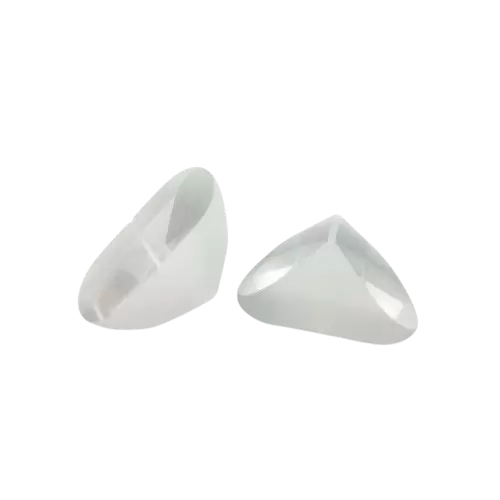
In precision optical measurement systems, the stability of the reflected light path directly affects the accuracy and reliability of measurement results. Traditional flat mirrors are widely used because of their simple structure and high reflection efficiency, but their performance depends heavily on precise installation and alignment.
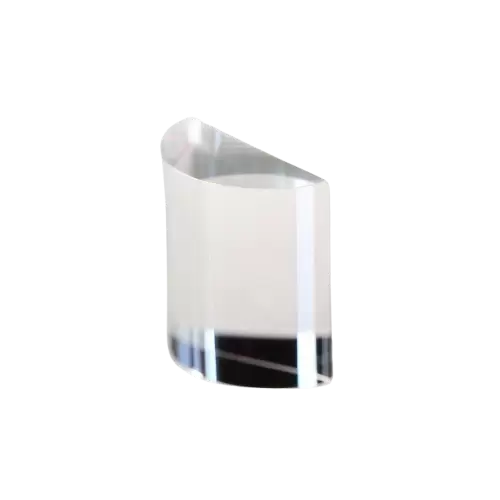
Optical systems do not always need a lens that focuses light in two axes. When the objective is to generate a laser line, illuminate a linear detector, modify beam aspect ratio, or focus a collimated beam in only one direction, a spherical lens can introduce an unwanted optical effect.
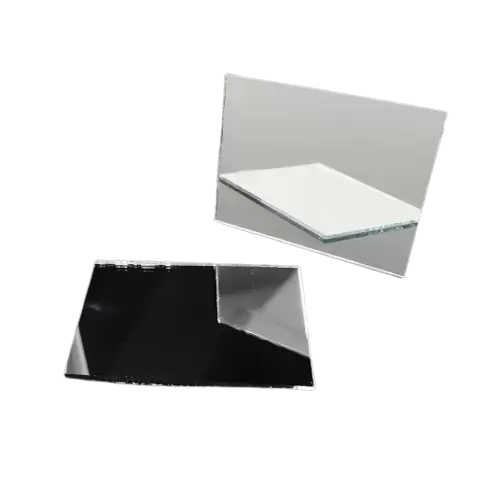
In precision optical systems, a mirror is more than a component that redirects light. Its surface geometry, coating performance, substrate stability, and compatibility with the operating wavelength can directly affect beam alignment, wavefront quality, and measurement repeatability.