

 en
 English
 繁体中文
 Japanese
 Korean
 Russian
 German
News
Deepen Optoelectronic Resources, Lead Technological Breakthroughs


Deepen Optoelectronic Resources, Lead Technological Breakthroughs
A precision optical system can lose image quality even when individual lens elements meet their nominal specifications. Spherical aberration can reduce focusing accuracy, while off-axis aberrations such as coma may affect image definition across the field of view. In many applications, these problems are related not only to the optical materials used but also to the curvature, orientation, and positioning of individual elements within the complete optical assembly.
A Precision Meniscus Lens offers a practical way to manage these optical effects. With one convex surface and one concave surface, both bending in the same direction, this crescent-shaped lens can help control spherical aberration when properly integrated into an optical design. Available in positive and negative focal lengths, it serves different functions in imaging, laser optics, and precision optical instruments.
For engineers and procurement teams evaluating Precision Meniscus Lens Price or looking for Precision Meniscus Lens for Sale, understanding optical specifications and manufacturing requirements is essential. The right purchasing decision should consider how the lens performs within the intended optical system, rather than focusing on individual specifications alone.
A meniscus lens has two curved optical surfaces: one convex and one concave. Unlike a plano-convex or plano-concave lens, its two surfaces curve in the same general direction. The relationship between their radii of curvature determines the lens's optical power and influence on aberrations.
Meniscus lenses are available in two main configurations.
Positive meniscus lens: The convex surface has a greater optical contribution than the concave surface, producing positive optical power. It converges light while potentially providing better spherical aberration control than a comparable conventional lens configuration.
Negative meniscus lens: The concave surface has the greater optical contribution, producing negative optical power. It diverges light and can be used to modify beam divergence or compensate for optical aberrations in a larger assembly.
The choice depends on the required focal length, beam characteristics, and position within the optical system. Neither configuration is universally better; the correct selection follows the system's optical prescription.
Several parameters determine the optical behavior of a Precision Meniscus Lens.
Radius of curvature: The two surface radii determine the difference in refractive power between the surfaces. Their relationship influences focal length, spherical aberration, and the lens's suitability for a particular optical arrangement.
Center thickness: Thickness affects optical path length, mechanical dimensions, and the relationship between the two refracting surfaces. It must be considered alongside curvature and refractive index.
Refractive index: Different optical materials bend light differently. Material selection therefore influences focal length, chromatic behavior, and wavelength compatibility.
Lens orientation: Reversing a meniscus lens can change its aberration contribution within a converging or diverging beam. Engineers should evaluate orientation using the complete optical prescription rather than assume that either direction will provide the same result.
One important reason to use a meniscus element is its ability to redistribute refraction between two curved surfaces. With appropriate curvature selection and positioning, it can reduce the difference in focusing behavior between marginal and paraxial rays, helping control spherical aberration.
Coma requires a broader optical assessment. Its behavior depends on factors such as aperture-stop position, field angle, lens spacing, and the design of surrounding optical elements. A meniscus lens can contribute to coma correction, but it cannot independently guarantee the elimination of this aberration.
For camera lenses, microscope objectives, and precision imaging systems, the practical objective is to optimize the complete lens assembly for image sharpness, contrast, and optical fidelity.
Precision Meniscus Lenses are used in optical assemblies where focal power and aberration management must be considered together.
Application | Main optical considerations |
|---|---|
Camera lenses | Spherical aberration, field performance, visible wavelength transmission |
Microscope objectives | Numerical aperture, image resolution, optical alignment |
Telescopes | Wavefront quality, focal length, aperture |
Projection systems | Image uniformity, focusing performance, transmission |
Laser beam expanders | Wavelength compatibility, wavefront quality, surface quality |
Laser collimators | Beam divergence, focal length, optical alignment |
Optical communication modules | Operating wavelength, transmission, coating compatibility |
Infrared thermal imaging | Infrared material transmission, wavelength range, coating |
Precision measuring instruments | Surface figure, centration, repeatability |
In camera lenses and microscope objectives, meniscus elements can help manage spherical aberration and improve the performance of multi-element optical assemblies.
Microscope applications may require particular attention to numerical aperture, centration, and wavefront quality. Camera systems, especially wide-angle and telephoto designs, also require careful evaluation of off-axis performance.
Laser beam expanders, collimators, and focusing assemblies use optical elements selected according to beam diameter, wavelength, and required focal characteristics.
For these applications, material transmission at the operating wavelength is critical. Surface figure, surface quality, and coating specifications also affect optical losses and beam quality.
Optical communication modules require particular attention to wavelength compatibility and transmission efficiency. A lens designed for visible light should not automatically be considered suitable for an infrared communication system.
Infrared thermal imaging equipment and infrared laser systems require materials with suitable transmission characteristics in their operating spectral regions.
Precision optical measuring instruments place additional emphasis on dimensional consistency, optical surface quality, and alignment. The appropriate lens specification depends on the instrument's measurement principle and optical configuration.
When evaluating Precision Meniscus Lens for Sale, procurement teams should request and compare the following information:
Focal length: Confirm positive or negative optical power and the required effective focal length.
Surface radii: Verify both curvature specifications against the optical design.
Material: Confirm refractive index, transmission range, and material compatibility.
Diameter and thickness: Check clear aperture, overall dimensions, and mechanical tolerances.
Surface quality: Specify acceptable surface defects according to the application's requirements.
Surface figure: Confirm the required optical surface accuracy.
Centration: Evaluate optical axis alignment and allowable center deviation.
Coating: Specify the operating wavelength and required antireflection coating performance.
Transmission: Check whether the material and coating provide suitable transmission across the intended wavelength range.
A supplier's product listing is only a starting point. For custom optical assemblies, buyers should verify that the actual manufacturing specifications match their optical drawings.
The Precision Meniscus Lens Price is influenced by several interconnected manufacturing and optical design factors. Two lenses with the same diameter may have significantly different production requirements because their materials, curvatures, tolerances, and coatings differ.
Material is one of the first factors affecting cost.
ECOPTIK offers optical materials from SCHOTT, CDGM, and Corning, alongside sapphire, CaF₂, MgF₂, fused silica, silicon (Si), ZnSe, and ZnS.
These materials serve different wavelength and application requirements. For example, fused silica is widely used in precision optical applications, while CaF₂ and ZnSe are relevant to particular ultraviolet and infrared designs.
The material should be selected according to spectral transmission, refractive index, thermal properties, and the intended operating environment. Choosing a material without considering wavelength compatibility may result in unnecessary costs or unsuitable optical performance.
Lens diameter, center thickness, surface radii, and focal length directly influence manufacturing complexity.
A customized curvature combination may require more demanding grinding and polishing operations than a standard configuration. Likewise, unusual dimensions or thickness requirements can increase production difficulty.
Buyers should provide the complete optical prescription instead of requesting a lens based only on its nominal focal length.
Surface quality, surface figure, centration, and dimensional tolerances are important cost considerations.
Tighter requirements generally demand more controlled manufacturing processes and additional inspection. However, specifying unnecessarily strict tolerances can increase procurement costs without providing meaningful improvements to the optical system.
The most economical approach is to establish tolerances based on actual optical performance requirements.
Antireflection coatings can reduce surface reflection and improve transmission within specified wavelength bands.
Coating costs depend on factors such as wavelength range, coating design, substrate material, and performance requirements.
Custom optical drawings, non-standard dimensions, special curvature combinations, and additional inspection requirements can also affect the final quotation.
Standard lenses may offer shorter procurement cycles and lower costs when their specifications already match the optical design.
Custom lenses provide greater control over material, curvature, dimensions, surface specifications, and coatings. They are particularly useful when standard catalog products cannot meet the requirements of a camera, laser, infrared, or precision measurement system.
For accurate quotations, buyers should provide:
Optical drawings or complete lens specifications.
Material and wavelength requirements.
Focal length and both surface radii.
Diameter, center thickness, and dimensional tolerances.
Surface quality, surface figure, and centration requirements.
Coating specifications.
Required quantity and inspection documentation.
Providing these details helps manufacturers evaluate production feasibility and calculate costs based on actual requirements.
ECOPTIK has 15 years of experience researching optical component fabrication technology. As an optical manufacturing partner, the company produces precision optical components including spherical lenses, domes, micro-optical components, cylindrical mirrors, filters, prisms, and windows.
For customers sourcing Precision Meniscus Lenses, material selection and inspection capabilities are important considerations when evaluating a manufacturing partner.
ECOPTIK offers materials from SCHOTT, CDGM, and Corning, as well as sapphire, CaF₂, MgF₂, fused silica, Si, ZnSe, and ZnS. This material selection supports different optical design and wavelength requirements.
The company's inspection equipment includes:
ZYGO laser interferometers: Used for optical surface and wavefront-related inspection.
ZEISS CMM Spectrum: Used for dimensional measurement.
Agilent Cary 7000 UMS: Used for optical measurement and material or component characterization.
These instruments support inspection and the preparation of product reports according to applicable project requirements.
ECOPTIK also provides lens assembly services. This is relevant to customers who need optical components considered within a larger assembly rather than purchasing individual elements without regard to system integration.
For customized meniscus lenses, buyers can communicate their optical drawings, material requirements, focal length, curvature, surface specifications, and coating needs to establish a suitable manufacturing solution.
Q1: What factors have the greatest influence on Precision Meniscus Lens Price?
Material, lens dimensions, surface curvature, focal length, surface quality, figure accuracy, centration, coatings, customization requirements, and order quantity are the main considerations.
Q2: What is the difference between positive and negative meniscus lenses?
A positive meniscus lens has positive optical power and converges light, while a negative meniscus lens has negative optical power and diverges light. Their selection depends on the required optical function.
Q3: Can a meniscus lens reduce spherical aberration and coma?
It can help reduce spherical aberration through appropriate curvature and positioning. It can also contribute to coma correction, but coma control depends on the complete optical design, including aperture-stop location and field angle.
Q4: What information is needed to obtain an accurate quotation?
Provide the optical drawing, material, focal length, surface radii, diameter, center thickness, tolerances, surface quality, coating requirements, and order quantity.
Q5: Can ECOPTIK provide customized meniscus lenses?
ECOPTIK offers optical component manufacturing and lens assembly services. Buyers can submit their drawings and technical requirements for project evaluation and quotation.
Selecting a Precision Meniscus Lens requires more than comparing focal lengths, diameters, or individual product prices. Curvature, material, surface quality, orientation, and coating specifications all influence how effectively the lens performs within an optical assembly.
For buyers comparing Precision Meniscus Lens Price or searching for Precision Meniscus Lens for Sale, the most reliable approach is to begin with the complete optical system requirements and establish manufacturing specifications accordingly.
With 15 years of optical fabrication technology research, a broad material offering, professional inspection equipment, and lens assembly services, ECOPTIK provides customized optical manufacturing support for different industrial and precision imaging applications.
Contact ECOPTIK with your optical drawings or technical specifications to discuss a suitable Precision Meniscus Lens solution and request a project-based quotation.
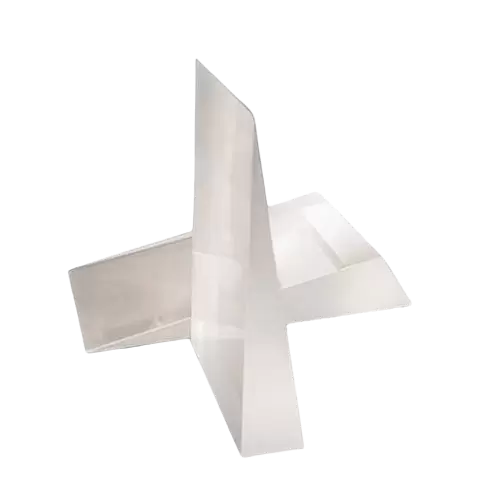
In professional optical imaging systems, the question of Is 1.55 or 1.33 anamorphic better is not a subjective aesthetic debate but a deterministic optical engineering trade-off governed by squeeze factor design, field coverage efficiency, sensor compatibility, and distortion control behavior across the image plane.
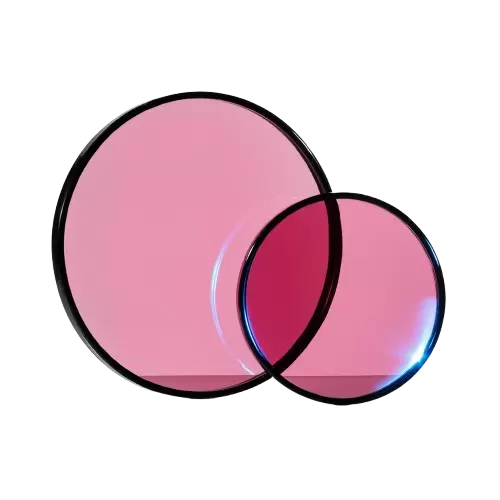
In precision optical systems, selecting the correct wavelength is often more important than simply collecting more light. Conventional optical filters may struggle with limited spectral selectivity, unstable center wavelength control, insufficient out-of-band blocking, and unwanted stray light interference.
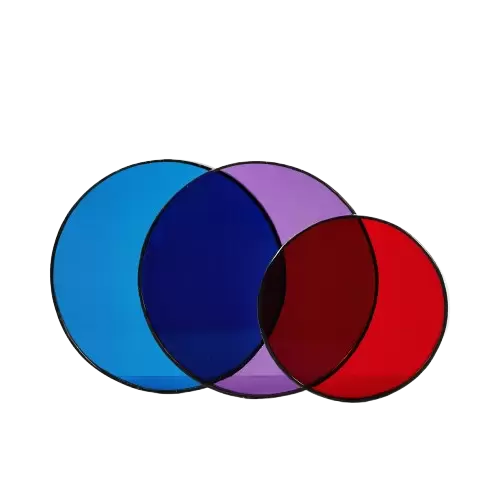
Selecting the right bandpass filter is not simply a matter of choosing a component that allows certain signals to pass. In optical systems, wireless communication equipment, and precision measurement devices, filter performance directly affects signal quality, detection accuracy, and system reliability.