

 en
 English
 繁体中文
 Japanese
 Korean
 Russian
 German
News
Deepen Optoelectronic Resources, Lead Technological Breakthroughs


Deepen Optoelectronic Resources, Lead Technological Breakthroughs
In precision optical systems, image quality depends not only on the quality of individual lenses but also on how each optical element interacts with the rest of the assembly. Conventional spherical lens combinations may introduce spherical aberration and coma, particularly in demanding imaging applications. Adding more lens elements can help address these issues, but it may also increase system size, alignment complexity, and manufacturing costs. Standard lenses may also fail to meet specific focal length, curvature, or dimensional requirements.
A custom meniscus lens offers another approach. With carefully selected surface curvatures, material properties, and focal length, it can serve as an aberration-correction element within a larger optical design. Rather than simply providing independent imaging capability, its primary value is to help optimize the optical system, improve image clarity, and maintain image fidelity.
For optical equipment manufacturers and design engineers evaluating custom meniscus lens price or looking for a reliable custom meniscus lens for sale, understanding the relationship between lens geometry, optical performance, and manufacturing requirements is essential.
A meniscus lens has one convex surface and one concave surface, forming a crescent-shaped profile. Both optical surfaces curve in the same general direction, distinguishing its geometry from a conventional biconvex or plano-concave lens.
Depending on the relative curvature of its two surfaces, a meniscus lens can have either a positive or negative focal length. These two configurations serve different optical functions and should be selected according to the requirements of the complete system.
A positive meniscus lens is a converging optical element. It has a net positive optical power and can help control ray convergence while contributing to spherical aberration correction in an appropriately designed lens assembly.
A negative meniscus lens is a diverging element with a net negative optical power. It can be incorporated into optical systems where negative power distribution, beam divergence, or aberration balancing is required.
Neither configuration is universally better. Their effectiveness depends on the surrounding optical elements, lens orientation, aperture, field angle, and the position of the meniscus lens within the optical path.
For example, a positive meniscus element may be used to refine the convergence of light in an imaging assembly, while a negative meniscus element may help redistribute optical power in a system requiring controlled divergence. The final selection should follow optical design calculations rather than focal length alone.
Several parameters must be evaluated together when specifying a custom meniscus lens.
Radius of curvature: The curvature radius of each optical surface determines how strongly that surface refracts incoming light. Different combinations of front and rear radii can produce different optical powers and aberration characteristics, even when the resulting focal lengths are similar.
Center thickness: Center thickness affects the lens geometry, optical path, mechanical stability, and available design space. It must be considered alongside surface curvature and clear aperture.
Refractive index and Abbe number: The refractive index influences refraction and optical power, while the Abbe number describes the material's relative dispersion. These properties are important when controlling chromatic aberration and selecting materials for specific wavelength ranges.
Focal length: Focal length describes the overall converging or diverging power of the lens. It is not interchangeable with the radius of curvature, because it depends on both optical surfaces, material properties, and lens thickness.
Surface figure and surface roughness: Surface figure describes deviations from the intended optical surface shape, whereas surface roughness concerns finer surface irregularities. Both can influence wavefront quality, scattering, and system performance, but they represent different manufacturing and inspection requirements.
Spherical aberration occurs when rays passing through different zones of a spherical optical surface do not converge at the same focal position. This can reduce image sharpness and contrast.
Coma causes off-axis point sources to appear asymmetric or comet-shaped, making it particularly relevant in systems with wider fields of view.
A meniscus lens can help manage these aberrations by changing how rays are refracted at its two curved surfaces. Its contribution depends on the curvature combination, orientation, material, aperture, and location within the optical assembly.
For instance, a meniscus element positioned appropriately within a camera lens group may help balance spherical aberration without requiring an entirely new optical architecture. In other designs, it may contribute to off-axis aberration management.
However, a single meniscus lens does not automatically eliminate spherical aberration or coma. Its actual correction effect must be evaluated through the optical prescription and system-level performance analysis.
Custom manufacturing is particularly important when standard optical components cannot satisfy the required focal length, surface geometry, material properties, or installation dimensions.
A practical customization process begins with understanding the complete optical system rather than selecting a lens based on its external dimensions.
Camera Lenses and Photography Systems
Camera lenses require controlled aberrations across the image field. A custom meniscus lens can be incorporated into lens groups to help balance spherical aberration and coma, particularly in wide-angle and telephoto optical designs.
For wide-angle systems, off-axis performance and field-dependent aberrations deserve particular attention. Telephoto designs may place greater emphasis on optical power distribution, focal length, and available mechanical space.
Microscope Objectives and Telescope Eyepieces
Microscope objectives require precise image formation, particularly when high magnification and image fidelity are important. A meniscus element may contribute to aberration balancing within a multi-element objective.
In telescope eyepieces, the selection depends on field angle, eye relief, focal length, and the correction requirements of the complete optical assembly.
Projection and Condenser Systems
Projection optics must maintain image quality across the intended projection field. Meniscus lenses can be considered when designers need to adjust optical power distribution or manage aberrations within projection and illumination assemblies.
Laser Beam Expanders and Collimation Systems
Laser applications have different requirements from conventional imaging systems. Engineers must consider the operating wavelength, beam diameter, divergence, wavefront quality, and laser power conditions.
A custom meniscus lens may be used in beam expansion, collimation, or focusing arrangements when its optical power and surface geometry match the intended beam path.
Optical Communication and Precision Measurement Equipment
Optical transceiver modules and precision measuring instruments often have restricted installation spaces and specific alignment requirements. Custom lens dimensions, focal length, and material selection must therefore be coordinated with the existing optical architecture.
Infrared Thermal Imaging and Space Optical Systems
Infrared thermal imaging equipment and infrared laser systems require materials suitable for their operating wavelength ranges. Astronomical telescopes and space cameras also demand careful consideration of optical performance, environmental conditions, and system integration.
Material selection must be based on actual spectral transmission requirements rather than assuming that one optical glass is suitable for every application.
Before requesting a quotation for a custom meniscus lens, buyers should prepare the available optical prescription or technical drawing.
Important information includes:
Front and rear surface radii of curvature
Required positive or negative focal length
Center thickness and outside diameter
Clear aperture and mechanical dimensions
Optical material or required refractive index and Abbe number
Operating wavelength or wavelength range
Surface figure and surface quality requirements
Coating specifications, if required and available
Mounting and integration requirements
If the complete optical prescription is not available, engineers should provide the application, existing lens configuration, incident beam characteristics, and desired optical performance.
This information allows the manufacturer to assess whether the requested geometry and material are suitable for the intended system.
A typical custom optical manufacturing workflow involves several stages.
First, the optical design requirements are reviewed to establish the required focal length, surface curvatures, material, and dimensional specifications. Material selection follows the intended wavelength range and optical design requirements.
The lens is then manufactured through the required precision processing and polishing operations. Where specified and supported by the manufacturing arrangement, coating requirements are also addressed.
Finally, dimensional and optical inspections are performed against the agreed specifications. Depending on the project, measurements may include surface figure, dimensions, and other relevant optical characteristics.
At ECOPTIK, optical component manufacturing is supported by 15 years of experience in optical fabrication technology. The company produces precision optical components including spherical lenses, domes, micro-optical components, cylindrical mirrors, filters, prisms, and windows.
Available material sources include Schott, CDGM, and Corning optical glass, as well as sapphire, CaF2, MgF2, fused silica, silicon, ZnSe, and ZnS. ECOPTIK also offers lens assembly services.
Its inspection equipment includes ZYGO laser interferometers, ZEISS CMM Spectrum, and Agilent Cary 7000 UMS. These instruments support optical and dimensional evaluation, with product reports available according to project requirements.
The price of a custom meniscus lens depends on more than its diameter or focal length. It reflects the material, optical prescription, manufacturing difficulty, inspection requirements, and production quantity.
Understanding these factors helps procurement teams compare quotations based on technical value rather than unit price alone.
Different optical materials have different purchasing costs, processing characteristics, refractive indices, and dispersion properties.
For example, selecting fused silica, sapphire, or a particular optical glass should be based on the application's wavelength, environmental conditions, and optical performance requirements.
Lens diameter and center thickness also influence material consumption and processing effort. Larger or thicker components may require more raw material and additional manufacturing work.
The two surface curvature radii determine the lens geometry and contribute to its overall optical power. Complex curvature combinations, unusual dimensions, and demanding focal length requirements may increase production difficulty.
Positive and negative meniscus lenses may also involve different design and manufacturing considerations depending on their geometry.
Importantly, focal length alone does not determine manufacturing cost. Two lenses with similar focal lengths may require different curvature combinations, thicknesses, and processing procedures.
Tighter surface figure requirements generally require more demanding manufacturing and inspection procedures. Surface quality requirements can also affect polishing time and acceptance criteria.
Coating requirements, where applicable, introduce additional considerations such as wavelength range, coating design, and process availability.
Buyers should distinguish between surface figure accuracy and surface roughness when requesting quotations. Combining these requirements into a vague description such as high precision can lead to inconsistent quotations and acceptance standards.
Prototype quantities, small batches, and repeat production orders may have different unit costs because setup, tooling, inspection, and process preparation are distributed across different quantities.
Additional requirements, such as special dimensional tolerances, individual inspection reports, or lens assembly, may also affect the final quotation.
When requesting a custom meniscus lens price, procurement teams should provide the same technical specifications to each supplier. This makes it easier to compare manufacturing scope, inspection coverage, and quoted costs accurately.
A competitive quotation should be supported by the manufacturer's actual technical capabilities.
Buyers should consider:
Optical design understanding: Can the manufacturer interpret the optical prescription and understand the intended aberration-correction function?
Material availability: Can it provide materials appropriate for the required wavelength and optical properties?
Precision fabrication: Does its manufacturing process support the specified curvature, thickness, and dimensional requirements?
Inspection capability: Can it evaluate relevant optical surfaces and dimensions using suitable measurement equipment?
Documentation: Can it provide inspection reports corresponding to the agreed specifications?
Customization and assembly: Can it support the required component configuration and lens assembly needs?
For buyers searching for custom meniscus lens for sale, these factors are important when selecting a supplier for prototypes, product development, or repeat manufacturing.
Q1: What determines the price of a custom meniscus lens?
The main factors include optical material, diameter, center thickness, surface curvature, focal length, surface figure, surface quality, coating requirements, manufacturing complexity, and order quantity. A reliable quotation requires a technical drawing or sufficiently detailed optical specifications.
Q2: Should I choose a positive or negative meniscus lens?
A positive meniscus lens provides converging optical power, while a negative meniscus lens provides diverging optical power. The appropriate choice depends on the optical prescription, required beam behavior, and aberration-correction objectives of the complete system.
Q3: Can a meniscus lens reduce spherical aberration and coma?
It can contribute to controlling both aberrations when its curvature, orientation, material, and position are optimized within the optical assembly. The actual improvement must be confirmed through system-level optical analysis and testing.
Q4: What information should I provide when requesting a quotation?
Provide the optical drawing, surface curvature radii, focal length, diameter, center thickness, material, wavelength range, surface requirements, and any coating or mounting specifications. If some parameters are not yet finalized, share the application and available system information for technical evaluation.
Q5: How can I verify the quality of a custom meniscus lens?
Quality should be evaluated against agreed specifications through appropriate dimensional and optical inspections. Depending on the design, relevant checks may include surface figure, surface quality, dimensions, and spectral performance where specified.
Selecting a custom meniscus lens requires more than matching a focal length or choosing between positive and negative optical power. Its real value lies in how effectively its surface geometry and material properties contribute to the performance of the complete optical system.
For imaging equipment, laser systems, infrared devices, and precision optical instruments, the correct customization strategy should begin with the system's aberration requirements, operating wavelength, optical prescription, and mechanical constraints.
ECOPTIK combines optical fabrication experience, a range of optical material options, lens assembly services, and inspection equipment to support customized optical component projects.
When evaluating custom meniscus lens price or sourcing a custom meniscus lens for sale, provide clear technical requirements and assess the manufacturer's ability to meet them. This approach helps ensure that the selected optical component is suited to the actual design objectives rather than simply meeting a nominal dimensional specification.
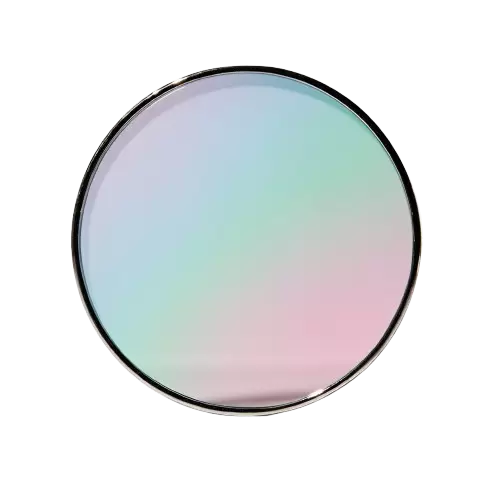
In complex optical environments, selecting useful light from unwanted wavelengths is a critical challenge. Traditional optical filters may fail to provide sufficient blocking outside the target band, accurate cut-on wavelength control, or stable transmission performance over long-term operation.
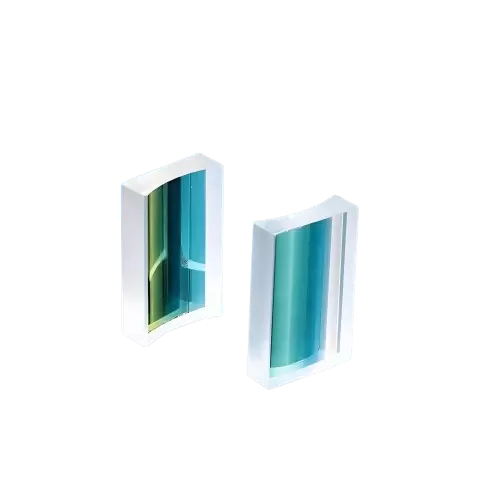
In modern optical engineering, a plano concave lens is not simply a “diverging element,” but a controlled wavefront expansion component that defines how light is redistributed spatially before entering subsequent imaging or laser shaping stages.
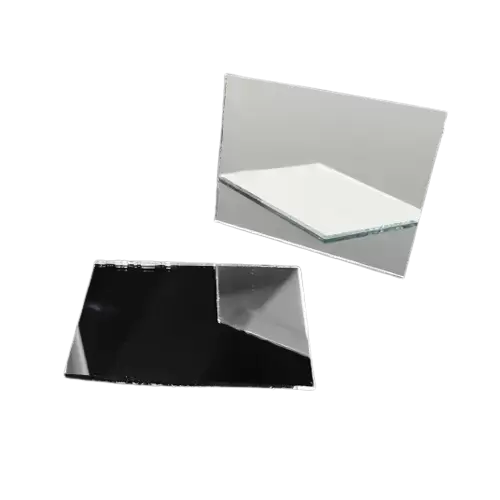
In precision optical systems, mirror selection is often determined by factors that are invisible during normal operation but directly affect system accuracy. A mirror may appear perfectly reflective to the eye, yet its internal structure can introduce optical errors when used in laser alignment, imaging equipment, or scientific instruments.