

 en
en
 English
 繁体中文
繁体中文 Japanese
 Korean
 Russian
 German
News
Deepen Optoelectronic Resources, Lead Technological Breakthroughs


Deepen Optoelectronic Resources, Lead Technological Breakthroughs
A positive lens is often the natural choice when an optical system needs to focus or converge light, but it cannot solve every beam-control problem. Laser and imaging systems may instead require a controlled increase in beam divergence, a larger beam diameter, or an adjustment that effectively increases the focal length of an existing optical arrangement. In these situations, a Double Concave Lens provides a fundamentally different optical function.
Its negative optical power causes collimated incident light to diverge after transmission. The result is not simply a change in light direction: the lens can alter beam geometry and influence the performance of downstream optical components. For engineers and optical component buyers, understanding Double Concave Lens properties is therefore essential before selecting focal length, diameter, material, surface quality, or coating.
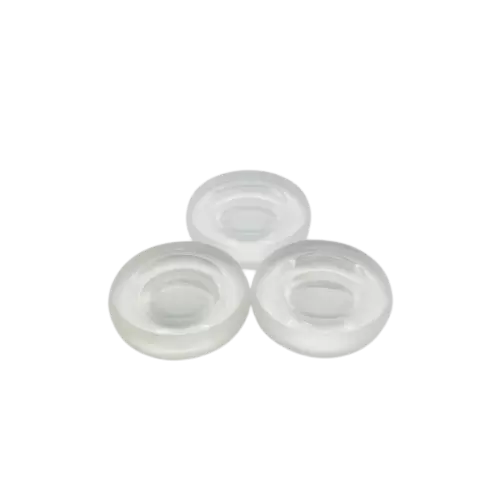
The defining feature of a double concave lens is its inward-curved optical surfaces. In a symmetrical configuration, both sides have the same radius of curvature, creating a balanced biconcave geometry. Because the lens has negative optical power, rays entering as a parallel or collimated beam leave the lens with an increasing separation angle, as though they originated from a virtual focal point on the incident side.
This explains the meaning of its negative focal length. A focal length of -50 mm, for example, does not mean that the lens cannot focus light. Rather, it indicates that the lens has negative optical power and causes an incident collimated beam to diverge. A longer negative focal length, such as -1000 mm or -2000 mm, generally produces weaker divergence than a -50 mm lens under comparable conditions.
For optical designers, this relationship makes focal length one of the most important parameters when controlling beam expansion. The appropriate value depends on the input beam diameter, desired output beam diameter, available optical path, and the properties of other elements in the system.
Material selection also directly affects optical performance. ECOPTIK can manufacture double concave lenses from optical glass, fused silica, sapphire, and other specified materials. Optical glass can be suitable for a broad range of general optical systems, while fused silica is often considered when transmission characteristics, laser applications, thermal behavior, or ultraviolet performance are important. Sapphire can be selected when high hardness, durability, or demanding environmental conditions are part of the design requirement. The final material should always be evaluated against the operating wavelength and system environment rather than selected solely by nominal refractive index.
ECOPTIK supports diameters from 2 mm to 300 mm and focal lengths from -50 mm to -2000 mm, providing options for both compact optical assemblies and larger beam-control systems.
Dimensional accuracy also matters. The available diameter tolerance is ±0.05 mm for diameters up to 50 mm and ±0.1 mm for diameters above 50 mm. Center thickness can range from 2 mm to 20 mm. These specifications become particularly relevant when the lens must fit a defined mechanical mount, maintain a controlled optical path, or integrate into a multi-element assembly.
Surface quality and surface accuracy should not be treated as interchangeable specifications. ECOPTIK offers surface quality levels of 60/40, 40/20, and 20/10, while surface accuracy can reach λ/2 to λ/10 at 632.8 nm or 532 nm, depending on the required specification.
For laser systems, a better surface specification can help reduce unwanted scattering and wavefront errors. Surface accuracy is especially important when the double concave lens forms part of a precision beam path where wavefront quality must be preserved.
The clear aperture is greater than 85%, while center deviation can be specified from <3 arc min to 30 arc sec. These parameters become increasingly important as beam diameter, alignment sensitivity, and system numerical requirements increase. A lens may have the correct nominal focal length yet still underperform if the usable aperture or centration is unsuitable for the optical architecture.
One of the most practical double concave lens uses is beam expansion. A concave lens alone does not automatically create a complete beam expander; instead, it can work with a positive lens to establish the required beam-expansion geometry. In a typical arrangement, the negative lens causes the incoming beam to diverge, while a positive lens placed at an appropriate distance can convert that diverging beam into a larger collimated beam.
This configuration is valuable in laser systems where a larger beam diameter is required before the beam reaches a focusing optic, scanner, spatial filter, or other downstream component. Increasing the beam diameter can allow the system designer to use a larger portion of an optical element's aperture and, depending on the complete optical design, achieve a smaller focused spot.
The negative focal length determines how rapidly the beam expands. A shorter negative focal length produces stronger divergence over a given propagation distance, while a longer negative focal length provides gentler divergence. Therefore, choosing a double concave lens for beam expansion requires more than matching the desired final beam diameter; the available optical path and the positive element must also be considered.
Double concave lenses are also useful in laser systems for modifying beam propagation before subsequent focusing or collimation stages. In projection systems, their negative optical power can help adjust the overall optical power of a multi-element system and support the required image-space or object-space geometry.
In imaging optics, a double concave lens can be incorporated when the designer needs to modify the convergence or divergence behavior of an optical group. Its role is normally determined by the complete lens prescription rather than by the individual component in isolation. The same principle applies to telescopes and other beam-control systems: the concave element can compensate or redistribute optical power within the system.
A common selection question is whether to use a double concave or plano concave lens. The main difference is the surface geometry. A double concave lens has two concave surfaces, whereas a plano concave lens combines one concave surface with one flat surface.
Both have negative optical power, but their optical behavior, aberration characteristics, mechanical geometry, and suitability for a particular optical prescription are not identical. A double concave lens is often attractive when a symmetrical negative-power element is preferred, while a plano concave design may be advantageous when the flat surface simplifies mechanical integration or fits a specific optical layout.
The correct choice should therefore be based on the complete system prescription rather than assuming that one negative lens type is universally better.
For procurement and optical design, the most effective approach is to begin with the required optical function and then determine the specification.
Focal length should be selected according to the required divergence and available propagation distance. If the goal is strong beam expansion within a short optical path, a relatively short negative focal length may be appropriate. If the system requires more gradual divergence, a longer negative focal length may be preferable.
Diameter should be selected according to the beam size and mechanical constraints. The clear aperture must provide sufficient usable area for the actual beam, particularly where Gaussian beam profiles or off-axis propagation are involved. ECOPTIK's 2–300 mm diameter range allows the lens size to be matched to both compact and large-aperture systems.
Material should be matched to wavelength and operating conditions. For a laser application, the transmission range and material behavior at the actual operating wavelength should be checked before finalizing the specification. Fused silica may be considered for demanding laser and broadband applications, while optical glass and sapphire can serve different performance and environmental requirements.
Surface quality and surface accuracy become increasingly important as optical precision increases. A 20/10 surface quality specification and λ/10-class surface accuracy represent a substantially different requirement from a general-purpose optical component. The appropriate grade should be determined by the system's wavefront, scattering, and imaging requirements rather than simply selecting the highest specification available.
Center deviation is another important consideration for precision assemblies. Excessive wedge or centration error can introduce alignment problems and alter the actual behavior of the lens relative to the nominal optical axis. For systems with tight alignment tolerances, a specification as low as 30 arc sec may be relevant.
Finally, AR coating should be selected according to the operating wavelength, angle of incidence, polarization requirements, and expected optical power. A coating designed for one wavelength should not automatically be assumed to provide optimum performance at another. ECOPTIK can provide coating configurations according to customer requirements, allowing the double concave lens to be specified for the intended optical band and system conditions.
ECOPTIK has been researching optical component fabrication technology for 15 years and manufactures precision optics including lenses, prisms, windows, filters, cylindrical mirrors, dome optics, and micro-optical components. Its material options include glass from Schott, CDGM, and Corning, as well as sapphire, CaF₂, MgF₂, fused silica, silicon, ZnSe, and ZnS. The company also provides lens assembly services.
For quality control and optical characterization, ECOPTIK uses ZYGO laser interferometers, ZEISS CMM Spectrum, and Agilent Cary 7000 UMS to support dimensional and optical testing and provide product reports.
For engineers, the key point is that selecting a Double Concave Lens should start with the required beam behavior rather than the lens name alone. Negative focal length determines the optical power, curvature defines how that power is produced, and diameter, aperture, surface accuracy, centration, material, and coating determine whether the component can perform reliably within the intended system. By connecting these Double Concave Lens properties directly to specific double concave lens uses, engineers and procurement teams can select a specification that fits the actual optical design instead of simply choosing a nominal negative lens.
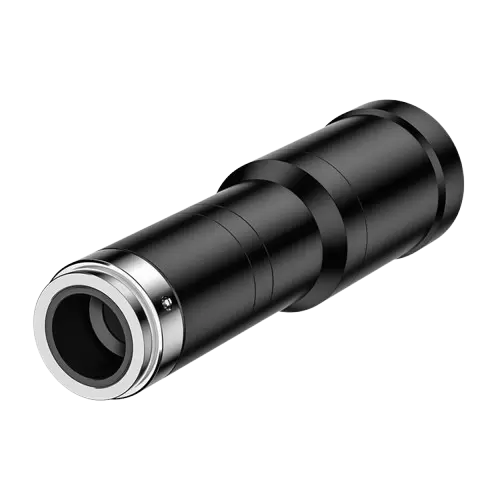
In precision machine vision, the lens can become a limiting factor even when the camera sensor and image-processing software are capable of resolving small dimensional differences. A conventional lens changes its apparent magnification as the object moves closer to or farther from the lens.
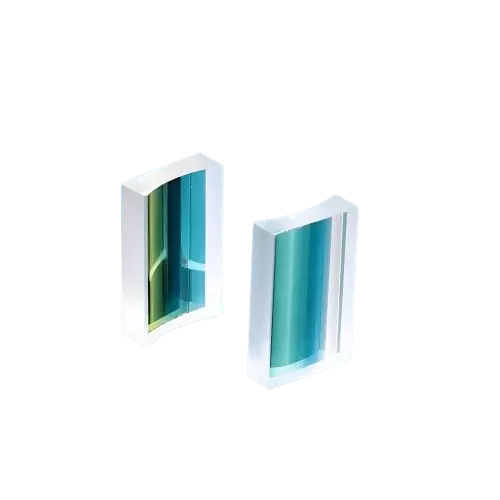
In many optical systems, beam control is required in only one direction. A laser may need to expand horizontally while retaining its original vertical dimension, or an imaging system may need to modify the width of an image without applying the same optical power to its height.
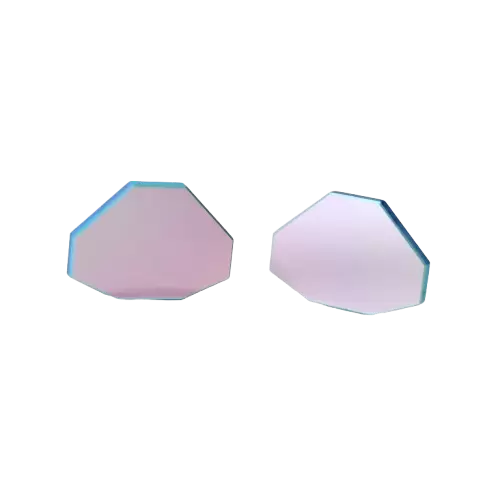
Modern laser processing systems are expected to achieve higher throughput while maintaining consistent positioning accuracy. However, many traditional laser scanning solutions face limitations when operating at high speeds.