

 en
en
 English
 繁体中文
繁体中文 Japanese
 Korean
 Russian
 German
News
Deepen Optoelectronic Resources, Lead Technological Breakthroughs

Deepen Optoelectronic Resources, Lead Technological Breakthroughs
Modern laser processing systems are expected to achieve higher throughput while maintaining consistent positioning accuracy. However, many traditional laser scanning solutions face limitations when operating at high speeds. Slow mechanical movement, insufficient beam positioning accuracy, and delayed response during frequent direction changes can directly affect processing quality, especially in applications requiring fine structures or continuous scanning.
A standard optical mirror can reflect a laser beam, but it cannot actively control beam direction with the speed and precision required by advanced laser systems. This is where a Galvanometer Mirror Scanner becomes essential. By rapidly adjusting the mirror angle through a high-performance galvanometer motor, the system can dynamically control laser propagation direction and achieve fast, accurate beam positioning.
For laser equipment manufacturers, optical engineers, and system integrators, selecting the right galvanometer mirror is not only about reflection capability. Factors such as scanning angle, optical coating performance, substrate material, wavelength compatibility, and long-term stability determine whether the scanner can meet demanding industrial requirements.
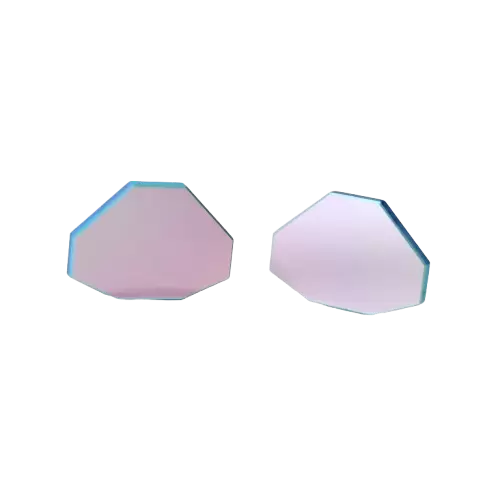
A Galvanometer Mirror (Galvo Mirror) is a precision optical component designed to control laser beam movement through rapid angular adjustment. Instead of physically moving the laser source or mechanical positioning stage, the galvanometer system rotates the mirror surface by a controlled angle, changing the direction of the reflected beam almost instantly.
This operating principle provides several advantages in laser scanning applications. The smaller moving mass of the mirror assembly allows faster response compared with traditional mechanical positioning methods. As a result, laser systems can achieve higher scanning speeds while maintaining accurate beam placement.
The scanning angle is one of the key parameters affecting the working area and flexibility of a laser system. ECOPTIK’s galvanometer mirrors support scanning angles from ±5° to ±50°, allowing engineers to select suitable configurations according to different optical layouts and application requirements.
For example, in laser marking systems, a wider scanning angle enables larger marking areas without increasing mechanical movement. In laser engraving and micro-machining applications, accurate angular control ensures that the laser spot remains precisely positioned during rapid movement, reducing processing errors and improving consistency.
The optical performance of the mirror surface also directly affects system efficiency. ECOPTIK galvanometer mirrors feature reflectivity above 99.0%, helping reduce laser energy loss during beam reflection. Higher reflection efficiency is particularly important for high-power laser applications, where even small optical losses can generate additional thermal load and influence system stability.
In applications such as laser cutting, 3D printing, photolithography, and optical inspection, stable beam control determines the final processing accuracy. A galvanometer mirror scanner with optimized optical performance allows the laser system to maintain reliable operation during continuous high-frequency scanning.
A common question among engineers searching for laser scanning solutions is: “What is the use of mirror galvanometer?”
A mirror galvanometer is mainly used to control the position and direction of a laser beam. By converting electrical control signals into precise mechanical rotation, it enables fast laser beam steering without requiring large moving components.
In a typical laser scanning system, the galvanometer mirror receives positioning commands from the controller. The mirror rotates to a specific angle, and the reflected laser beam moves to the required position on the working surface. Through continuous adjustment, the system can create patterns, scan areas, or perform precise measurements.
Compared with traditional laser positioning systems that rely on linear stages or mechanical movement, galvanometer scanners offer faster response and lower mechanical complexity. This makes them suitable for applications where speed and accuracy must be balanced.
For example:
Laser marking and engraving:
Galvanometer scanners allow laser beams to move rapidly across metal, plastic, glass, and other materials. Accurate beam positioning improves character clarity, pattern consistency, and production efficiency.
3D scanning systems:
The scanner controls laser projection and measurement paths, helping capture surface information with high repeatability.
Medical laser equipment:
Stable beam positioning is important for systems requiring controlled energy delivery and precise treatment areas.
Optical inspection and research equipment:
Galvo mirrors enable fast scanning of measurement areas while maintaining accurate optical alignment.
Another important consideration is wavelength compatibility. Different laser sources require different coating solutions because optical materials respond differently across wavelength ranges. Choosing an unsuitable coating can reduce reflection efficiency and increase thermal stress.
Selecting a galvanometer mirror requires evaluating several optical and mechanical factors rather than focusing on a single specification.
The substrate material determines mechanical stability, thermal performance, and optical suitability.
ECOPTIK provides galvanometer mirrors using precision optical substrates including:
Silicon (Si)
Fused Silica (JGS1)
H-K9L
Silicon substrates are commonly selected for infrared laser applications due to their optical characteristics and mechanical properties. Fused Silica offers excellent thermal stability and low expansion characteristics, making it suitable for applications requiring consistent performance under temperature changes. H-K9L optical glass provides balanced optical performance for many visible wavelength applications.
For high-speed scanning systems, substrate selection is also related to mirror inertia. A lighter and well-designed mirror structure helps improve dynamic response, allowing faster angular movement without sacrificing stability.
The coating layer determines how efficiently the mirror reflects different laser wavelengths.
ECOPTIK offers multiple coating options:
Aluminum Coating:
450nm–20μm wavelength range, suitable for broad-spectrum applications where balanced reflection performance is required.
Silver Coating:
450nm–20μm coverage with strong visible and infrared reflection capability.
Gold Coating:
800nm–20μm wavelength range, commonly used for infrared laser systems due to its excellent infrared reflectivity.
UV-Enhanced Aluminum Coating:
250–450nm range, designed for ultraviolet laser applications where standard coatings cannot provide sufficient performance.
The correct coating choice helps maximize laser transmission efficiency, reduce optical energy loss, and improve long-term reliability.
As an optical customization partner, ECOPTIK has been researching optical component fabrication technology for 15 years. The company specializes in precision optical components including dome optics, spherical lenses, micro-optical components, cylindrical mirrors, filters, prisms, and optical windows.
With experience in advanced optical manufacturing, ECOPTIK provides galvanometer mirror solutions using materials sourced from leading optical suppliers such as Schott, CDGM, and Corning, along with optical materials including Sapphire, CaF₂, MgF₂, Fused Silica, Silicon, ZnSe, and ZnS.
Beyond individual optical components, ECOPTIK also provides lens assembly services and optical testing support. The company utilizes advanced measurement equipment including ZYGO laser interferometers, ZEISS CMM Spectrum, and Agilent Cary 7000 UMS to evaluate optical performance and provide detailed product reports.
This manufacturing capability allows ECOPTIK to support customized galvanometer mirror requirements involving different wavelengths, coatings, substrate materials, and application environments.
A galvanometer mirror scanner is not simply a reflective component; it is a critical beam control element that influences the speed, accuracy, and stability of an entire laser system. Parameters such as reflectivity above 99.0%, scanning angles from ±5° to ±50°, substrate selection, and wavelength-specific coatings directly affect system performance.
For laser equipment manufacturers and optical engineers, the right Galvo Mirror configuration depends on the relationship between laser wavelength, scanning requirements, thermal conditions, and operational reliability. By selecting suitable materials and coatings, advanced laser systems can achieve faster scanning, more stable beam positioning, and consistent performance throughout long-term operation.
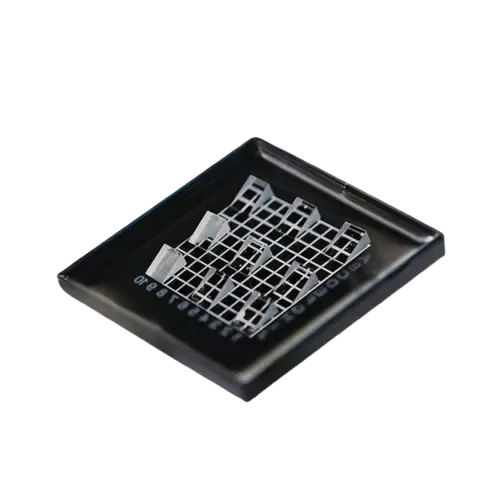
In compact optical instruments, the challenge is often not generating or transmitting light, but finding enough space to route it accurately. Conventional-size prisms can become difficult to integrate into endoscopes, laser diode (LD) to fiber coupling assemblies, and other precision instruments where every millimeter of mechanical space matters.
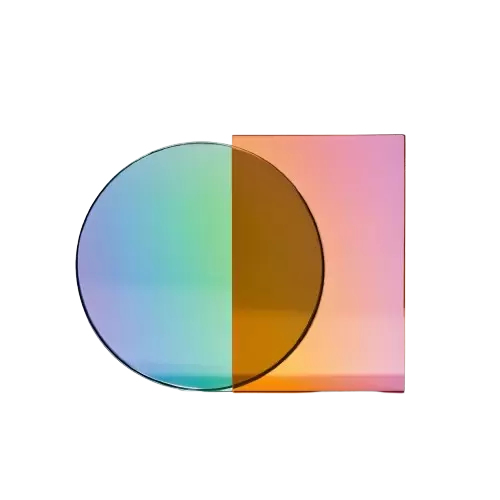
In high-performance optical systems, controlling color is not simply about blocking unwanted light. Engineers working on LED lighting, laser equipment, projection systems, and imaging platforms need precise wavelength management, high transmission efficiency, and stable spectral performance over long operating periods.
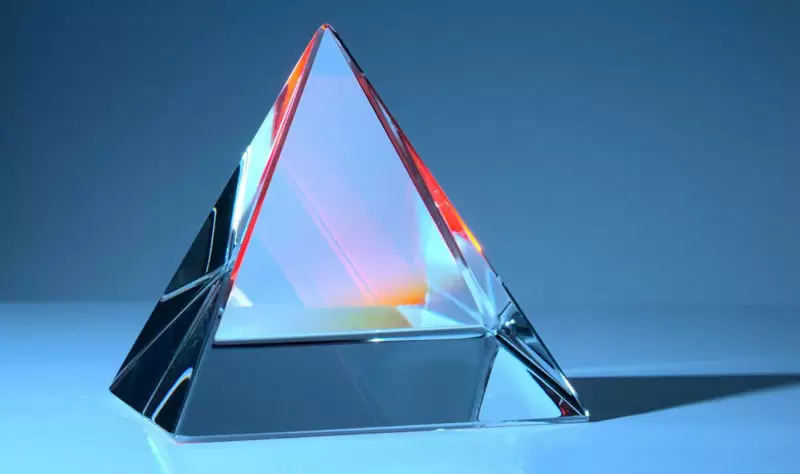
Calcium fluoride (CaF2) crystals play an irreplaceable role in the high-end optical field due to their unique optical properties. Its core advantages lie in its deep ultraviolet transmission capability and optical isotropy (without birefringence), making it the preferred material in multiple key fields.