

 en
en
 English
 繁体中文
繁体中文 Japanese
 Korean
 Russian
 German
News
Deepen Optoelectronic Resources, Lead Technological Breakthroughs


Deepen Optoelectronic Resources, Lead Technological Breakthroughs
In many optical systems, the limitation is no longer the optical design itself but the ability to manufacture the lens surface with enough accuracy. Laser systems, semiconductor inspection equipment, aerospace optics, and high-resolution imaging platforms increasingly require aspherical lenses with tighter tolerances, lower scattering, and better wavefront control.
Traditional manufacturing approaches such as molding and conventional grinding can be effective for standard optical components, but they become challenging when the application requires complex aspheric profiles, high surface accuracy, or special optical materials. Mold-based production requires expensive tooling, making it less flexible for customized designs or low-volume development. In addition, high-index glass and hard brittle materials can be difficult to process without introducing surface defects or limiting achievable precision.
A Precision Polishing Aspherical Lens provides a different manufacturing approach. Instead of relying on fixed molds, ultra-precision machining technologies directly shape and refine the optical surface from a glass blank. Through advanced processes including CNC ultra-precision machining, Magnetorheological Finishing (MRF), and Ion Beam Polishing (IBP), manufacturers can achieve extremely accurate aspheric surfaces with better than λ/40 RMS surface accuracy.
For optical engineers, this level of control is critical. A small improvement in surface quality can significantly reduce scattering loss, improve wavefront performance, and enhance the reliability of optical systems operating under demanding conditions.
ECOPTIK is an optical customization partner specializing in precision optical manufacturing with 15 years of experience in optical component fabrication. The company produces precision optics including aspherical lenses, dome optics, spherical lenses, micro-optical components, cylindrical mirrors, filters, prisms, and windows. With access to optical materials from Schott, CDGM, Corning, Sapphire, CaF2, MgF2, Fused Silica, Si, ZnSe, and ZnS, ECOPTIK provides customized solutions for advanced optical applications. The company also offers lens assembly services and uses ZYGO laser interferometers, ZEISS CMM Spectrum, and Agilent Cary 7000 UMS for optical measurement and product verification.
The primary advantage of a precision-polished aspherical lens is not simply its aspheric shape, but the manufacturing accuracy behind that surface.
An aspherical surface contains complex curvature changes designed to control optical aberrations more effectively than conventional spherical surfaces. However, these benefits can only be achieved when the actual manufactured surface closely matches the designed optical profile.
Precision polishing technologies allow manufacturers to achieve:
Surface accuracy better than λ/40 RMS (approximately 15 nm)
Extremely low surface roughness
Reduced wavefront error
Lower optical scattering
Improved laser transmission efficiency
CNC ultra-precision machining provides accurate control during the initial shaping process. Unlike traditional grinding methods, advanced CNC systems can create complex aspheric geometries with high repeatability.
This capability is especially valuable for:
Compact imaging systems requiring lightweight optical designs
Laser focusing modules requiring precise beam control
Semiconductor equipment requiring stable optical alignment
By controlling surface geometry at a high level, CNC machining establishes the foundation for subsequent polishing processes.
After precision machining, advanced polishing technologies further improve optical performance.
Magnetorheological Finishing (MRF) uses a controlled polishing medium to remove extremely small amounts of material from specific areas. This enables localized correction of surface errors and improves overall figure accuracy.
Ion Beam Polishing (IBP) provides another level of refinement by using ion beams to remove microscopic surface irregularities. This process creates ultra-smooth optical surfaces while minimizing subsurface damage.
These technologies are especially important for laser applications because microscopic surface defects can increase scattering, reduce beam quality, and affect laser damage resistance.
For high-end imaging systems, improved surface smoothness contributes to:
Higher image contrast
Better resolution
Reduced stray light
More accurate optical measurement
The demand for precision polishing aspheric lens high index solutions continues to grow as optical systems become smaller, lighter, and more powerful.
High-index materials provide optical designers with greater flexibility because they can achieve stronger optical performance within a smaller physical footprint. Compared with conventional optical glass, high-index materials allow designers to reduce lens thickness, improve optical power, and optimize compact systems.
However, processing high-index and specialty materials introduces additional manufacturing challenges.
Materials such as:
High-index optical glass
Silicon carbide (SiC)
Sapphire
Fused silica
Infrared optical materials
often have higher hardness or brittleness, making them difficult to process through conventional methods.
Precision polishing technology helps overcome these limitations by providing controlled material removal and ultra-fine surface finishing without relying on expensive molding tools.
This capability enables manufacturers to support:
Large-diameter aspherical lenses
Complex surface geometries
Prototype optical development
Small-batch customized production
For example, semiconductor inspection systems often require high-resolution optics with excellent surface quality to detect microscopic defects. Laser processing equipment requires lenses that maintain beam quality under high-energy conditions. Aerospace optical systems demand lightweight, stable, and highly reliable components that can operate in demanding environments.
In these applications, high-index precision-polished aspherical lenses provide both optical performance advantages and greater design freedom.
When selecting the Best precision polishing aspherical lens, engineers need to evaluate more than basic optical specifications. Manufacturing capability, material flexibility, inspection methods, and customization experience directly affect final system performance.
Key performance indicators include:
Achieving λ/40 RMS or better surface accuracy requires advanced machining capability and precise measurement control. This specification is important for applications where wavefront quality directly affects system output.
A smoother surface reduces unwanted scattering and improves optical efficiency. This is particularly important for:
High-power laser systems
Precision imaging modules
Optical measurement instruments
Precision polishing is one of the few practical methods for manufacturing large aspherical optics or components made from difficult materials such as SiC.
Unlike molding processes, it does not require dedicated tooling, making it suitable for:
Research prototypes
Low-volume production
Custom optical designs
For emerging technologies, optical designs often change during development. Precision polishing allows engineers to modify optical parameters without the high cost and long lead times associated with mold fabrication.
ECOPTIK combines advanced processing technology, material expertise, and optical testing capabilities to support customized aspherical lens projects. Through precision machining, advanced polishing processes, and comprehensive measurement systems, ECOPTIK helps optical equipment manufacturers and research teams achieve reliable performance for demanding applications.
Precision Polishing Aspherical Lenses provide a manufacturing solution for optical systems where conventional methods cannot achieve the required accuracy, material flexibility, or customization capability. With λ/40 RMS-level surface accuracy, ultra-low roughness, and advanced processing options such as CNC machining, MRF, and IBP polishing, these lenses deliver improved wavefront control and reduced optical losses.
For applications involving lasers, semiconductor inspection, aerospace systems, and high-resolution imaging, selecting the right precision polishing partner is essential. A manufacturer with advanced equipment, material expertise, and flexible production capability can provide aspherical lenses that meet both current performance requirements and future optical design challenges.
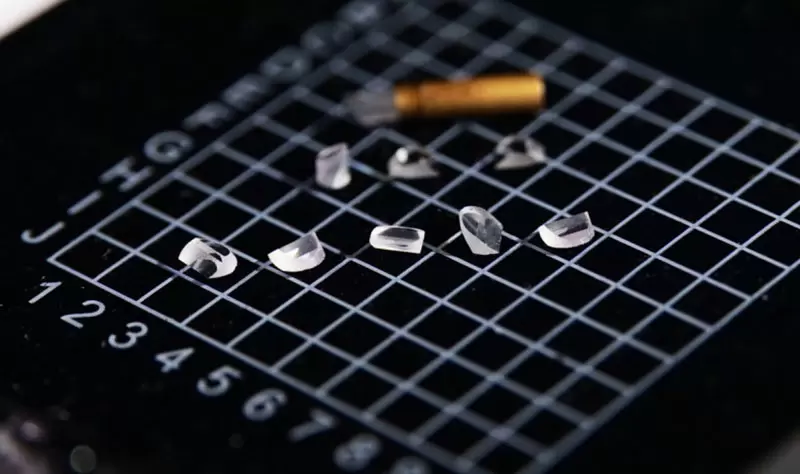
Endoscope is a medical tool used to examine organs and tissues inside the human body. It consists of a soft long tube with a small light source and camera at one end, which can transmit images to a display for doctors to observe.
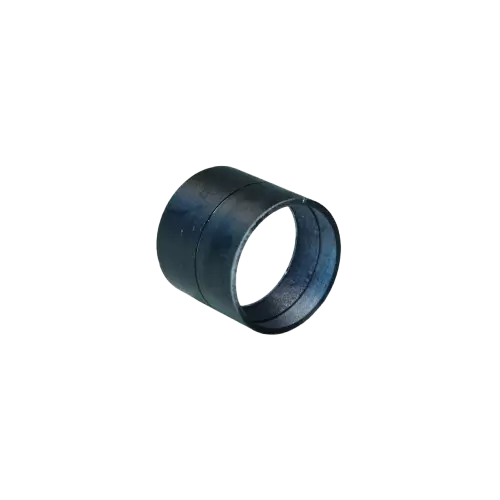
High-performance optical systems are no longer evaluated solely by focal length or magnification. As industrial inspection, machine vision, microscopy, spectroscopy, and scientific imaging continue to demand higher spatial resolution and greater measurement accuracy, optical designers are placing increasing emphasis on chromatic correction, wavefront quality, imaging consistency, and long-term optical stability.
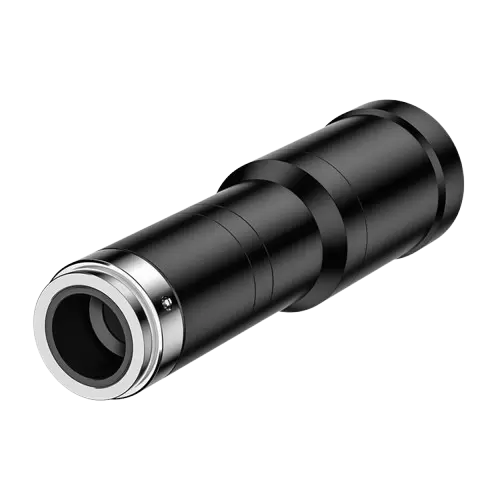
In precision machine vision, the lens can become a limiting factor even when the camera sensor and image-processing software are capable of resolving small dimensional differences. A conventional lens changes its apparent magnification as the object moves closer to or farther from the lens.