

 en
en
 English
 繁体中文
繁体中文 Japanese
 Korean
 Russian
 German
News
Deepen Optoelectronic Resources, Lead Technological Breakthroughs

Deepen Optoelectronic Resources, Lead Technological Breakthroughs
In high-performance optical systems, controlling color is not simply about blocking unwanted light. Engineers working on LED lighting, laser equipment, projection systems, and imaging platforms need precise wavelength management, high transmission efficiency, and stable spectral performance over long operating periods.
Traditional absorption-based color filters often create limitations when optical accuracy becomes critical. Because these filters remove unwanted wavelengths by absorbing light energy, they can generate heat, reduce optical efficiency, and limit system performance in high-power applications. Absorbed energy may lead to temperature increases, spectral drift, and reduced long-term stability, especially in LED modules, laser systems, and compact imaging devices where thermal management is already challenging.
Another limitation is spectral flexibility. Conventional filters usually provide a fixed color selection range, making them less suitable for applications requiring precise separation or combination of multiple wavelength bands. For optical engineers designing advanced systems, controlling exactly which wavelengths pass through and which wavelengths are reflected is essential.
A Dichroic Filter provides a different approach. Instead of absorbing unwanted wavelengths, it uses multi-layer optical thin film coatings to selectively transmit target wavelengths while reflecting others. This thin film interference technology enables high color purity, low energy loss, and precise spectral customization, making Dichroic Filters an important component in LED lighting, laser systems, projection equipment, and optical imaging applications.
ECOPTIK is an optical customization partner with 15 years of experience in precision optical component fabrication. The company manufactures optical components including filters, prisms, windows, lenses, dome optics, spherical lenses, micro-optical components, and cylindrical mirrors. With optical materials from Schott, CDGM, Corning, Sapphire, CaF2, MgF2, Fused Silica, Si, ZnSe, and ZnS, ECOPTIK supports customized optical solutions for demanding industrial and research applications. Its testing capabilities include ZYGO laser interferometers, ZEISS CMM Spectrum, and Agilent Cary 7000 UMS for optical performance verification and detailed product reports.
The core advantage of a Dichroic Filter comes from its multi-layer optical coating structure. Unlike absorption filters that remove unwanted wavelengths through material absorption, Dichroic Filters control light through interference effects created by alternating layers of materials with different refractive indexes.
During manufacturing, multiple thin film layers are deposited onto a glass substrate through vacuum deposition technology. Each coating layer is carefully designed with specific thickness and optical properties. When light enters the coating structure, reflections occur at every interface between materials with different refractive indexes.
These reflected waves interact with each other. Certain wavelengths experience constructive interference and are enhanced, while other wavelengths experience destructive interference and are suppressed. By precisely controlling coating thickness, layer quantity, and material combinations, manufacturers can design filters with specific spectral characteristics.
The performance of a Dichroic Filter is typically evaluated through parameters such as:
Spectral Curve: Defines the relationship between wavelength and transmission or reflection performance.
Transmission Band: Indicates the wavelength range that passes through the filter.
Reflection Band: Shows wavelengths reflected away from the optical path.
Cut-on and Cut-off Wavelength: Determines the transition point between transmitted and rejected wavelengths.
Transmittance and Reflectance: Measures optical efficiency within designed wavelength ranges.
This level of control allows Dichroic Filters to deliver highly selective transmission while maintaining low absorption characteristics. Since unwanted wavelengths are reflected instead of converted into heat, less optical energy is lost inside the filter material.
For LED lighting manufacturers, this means improved color saturation and more accurate color mixing. In projection systems, Dichroic Filters enable efficient separation of RGB light paths while maintaining brightness. In laser applications, precise wavelength control helps improve beam management and system reliability. For imaging systems, customized spectral filtering supports better contrast, color accuracy, and optical signal quality.
The ability to design a specific spectral response is one of the key reasons Dichroic Filters are preferred in applications where standard color filtering solutions cannot provide sufficient control.
When engineers search for Dichroic filter vs bandpass filter, the main question is not which filter technology is better, but which one matches the optical system requirements.
Both technologies provide wavelength selection, but their operating principles and application purposes are different.
A Dichroic Filter is designed primarily for wavelength separation, reflection, and color management. It selectively transmits specific wavelengths while reflecting unwanted wavelengths. Because reflected light is not absorbed, the filter can maintain higher efficiency in applications involving strong light sources.
Typical applications include:
LED color mixing systems
Stage and architectural lighting
Projection displays
Laser beam combining and separation
Optical imaging modules
For example, in a three-color projection system, white light must be separated into red, green, and blue components with minimal energy loss. Dichroic optical components can divide these wavelength ranges efficiently because each color channel is controlled through selective transmission and reflection.
A Bandpass Filter works differently. It is mainly designed to allow a narrow wavelength range to pass while blocking wavelengths outside that range. It is commonly used when detecting or isolating specific optical signals.
Typical applications include:
Fluorescence detection
Optical sensors
Spectroscopy systems
Communication equipment
Scientific measurement instruments
The key difference can be summarized as:
Dichroic Filter:
Uses thin film interference for wavelength management
Suitable for transmitting and reflecting different color bands
Focuses on optical efficiency and color control
Ideal for light manipulation systems
Bandpass Filter:
Focuses on isolating a specific wavelength range
Primarily used for signal detection and measurement
Often optimized for narrow spectral selection
For optical engineers, the selection depends on the system objective. If the application requires efficient color separation, beam combination, or high-intensity light management, a Dichroic Filter is usually the better choice. If the system needs to detect a specific wavelength signal while rejecting background light, a Bandpass Filter may be more appropriate.
The price of a Dichroic Filter depends on much more than physical size. Because these components are manufactured through precision optical coating processes, cost is closely related to spectral requirements, coating complexity, and performance specifications.
Several factors influence Dichroic filter price:
The optical substrate affects transmission performance, durability, and environmental stability. Different applications may require optical glass, fused silica, sapphire, or specialty materials depending on wavelength range and operating conditions.
For example, laser systems may require substrates with excellent thermal stability, while imaging applications may prioritize optical clarity and dimensional accuracy.
Customized wavelength specifications significantly influence manufacturing complexity.
Important parameters include:
Center wavelength
Transmission range
Bandwidth
Cut-off accuracy
Reflection efficiency
Angle of incidence requirements
A filter designed for a narrow and highly precise wavelength range usually requires more complex coating calculations and tighter process control.
The number of coating layers directly affects manufacturing difficulty. More demanding spectral curves require more complex multi-layer designs, precise thickness control, and advanced vacuum deposition processes.
Small variations in coating thickness can influence wavelength accuracy, making process stability essential.
High-end applications often require strict quality verification, including:
Surface quality inspection
Spectral curve measurement
Transmission and reflection testing
Dimensional tolerance verification
ECOPTIK integrates advanced testing equipment, including Agilent Cary 7000 UMS for optical measurement and ZYGO laser interferometers for precision analysis, ensuring customized Dichroic Filters meet required performance specifications.
Choosing the right Dichroic Filter requires evaluating both optical performance and project requirements. Compared with traditional absorption filters, Dichroic Filters provide higher wavelength selectivity, lower absorption losses, and greater flexibility through customized thin film coating designs.
Understanding the difference between Dichroic filter vs bandpass filter helps engineers select the correct technology for applications ranging from LED lighting and projection systems to lasers, imaging platforms, and scientific instruments. At the same time, evaluating Dichroic filter price requires looking beyond initial cost and considering coating complexity, spectral accuracy, material selection, and long-term system performance.
With advanced thin film coating capabilities, precision optical manufacturing experience, and comprehensive testing systems, ECOPTIK provides customized Dichroic Filter solutions designed for demanding optical applications where color accuracy, efficiency, and stability are critical.
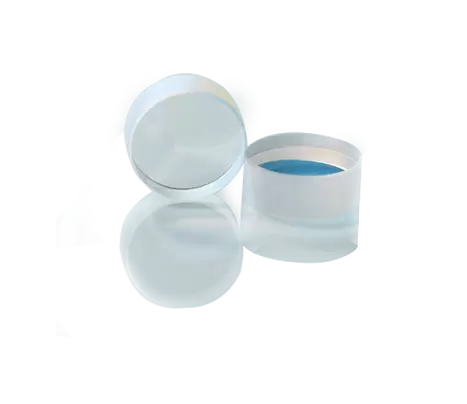
For optical engineers and procurement teams, choosing a plano convex lens is rarely just a matter of selecting a diameter and focal length. A lens that appears simple can produce very different results depending on its material, curvature, surface accuracy, center deviation, coating, and installation direction.

The objective lens is the most important optical component of a microscope, which uses light to image the object for the first time. Therefore, it directly affects the quality of imaging and various optical technical parameters, and is the primary standard for measuring the quality of a microscope.
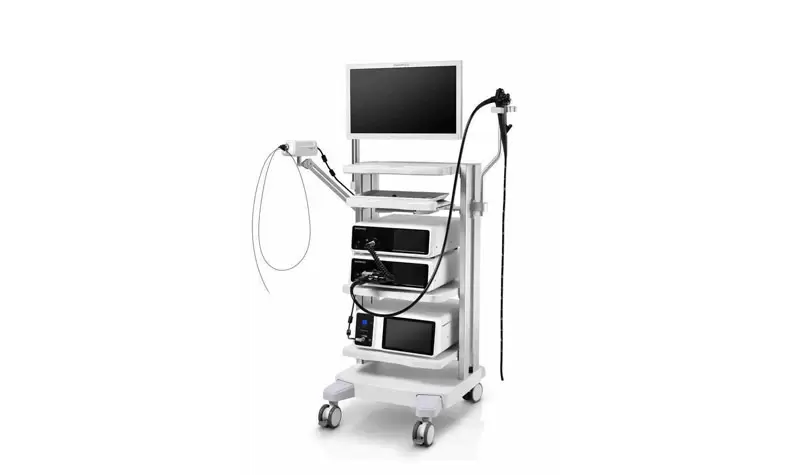
Endoscope is a medical device that can enter the body through natural channels or incisions for examination, treatment, and other procedures. According to different purposes and structures, endoscopes can be classified into various types.