

 en
en
 English
 繁体中文
繁体中文 Japanese
 Korean
 Russian
 German
News
Deepen Optoelectronic Resources, Lead Technological Breakthroughs


Deepen Optoelectronic Resources, Lead Technological Breakthroughs
In many advanced optical systems, traditional mirrors and lenses begin to show limitations when designers need higher energy efficiency, broader wavelength compatibility, and more stable beam control. Spherical mirrors can introduce spherical aberration, while transmission lenses may suffer from chromatic effects, absorption losses, and thermal problems when exposed to high-power laser beams.
For optical engineers working on laser processing equipment, infrared systems, spectroscopy platforms, and scientific instruments, the challenge is not simply focusing light. The real requirement is maintaining beam quality while minimizing energy loss and ensuring long-term system stability.
A Large Off-Axis Parabolic Mirror provides a practical solution by using a special off-axis parabolic structure. By moving the focal point outside the incident beam path, this design eliminates the central obstruction found in conventional optical configurations. The result is unobstructed beam transmission, efficient light collection, and precise focusing without spherical aberration.
For engineers evaluating Off Axis Parabolic OAP Mirror Price, understanding the relationship between optical design, material selection, coating performance, and manufacturing requirements is essential. The cost of an OAP mirror is not only determined by size but also by how effectively it meets the performance demands of the entire optical system.
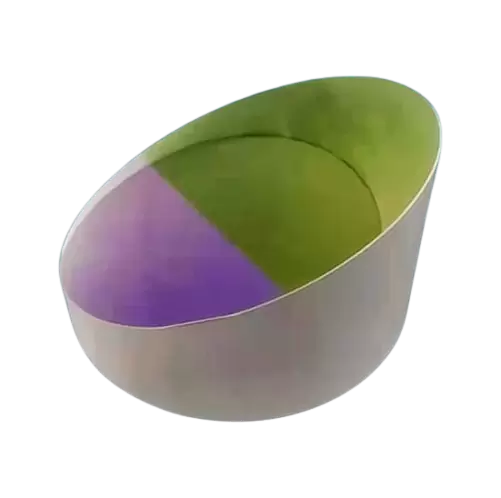
An off-axis parabolic mirror is a specialized reflective optic designed to focus or collimate light without introducing spherical aberration. Unlike traditional centered parabolic mirrors, the off-axis structure uses a section of a larger parent parabola and shifts the focal point away from the incoming beam direction.
This geometric design creates one of the most important advantages of an OAP mirror: unobstructed optical transmission.
In conventional optical layouts, components placed near the optical axis can block part of the incoming or reflected beam. This central obstruction reduces effective aperture utilization and may create unwanted diffraction effects. The off-axis configuration avoids this problem by allowing the reflected beam to exit at an angle, keeping the incoming and outgoing optical paths separated.
For large-aperture applications, this advantage becomes even more significant. A Large Off-Axis Parabolic Mirror can handle larger beam diameters while maintaining efficient energy transmission, making it suitable for systems where every percentage of optical efficiency matters.
Typical applications include:
High-power laser processing systems
Infrared optical instruments
Terahertz imaging systems
Spectroscopy equipment
Aerospace optical systems
Research laboratory setups
In high-power laser environments, reducing optical loss is especially important. Unlike transmissive optics, an OAP mirror does not require light to pass through a material volume, reducing absorption-related heating. This helps improve thermal stability during continuous operation.
A common question from engineers is:
“What is an off-axis parabolic mirror used for?”
The main purpose of an OAP mirror is to precisely focus or collimate light while maintaining excellent beam quality. Its reflective design allows it to work across a wide wavelength range without the chromatic limitations commonly found in lenses.
The parabolic surface shape allows parallel incoming light rays to converge at a single focal point. This eliminates spherical aberration, which occurs when different areas of a spherical surface focus light at different positions.
For applications requiring precise energy concentration, such as laser machining or optical measurement, this characteristic improves:
Focus consistency
Beam profile stability
Processing accuracy
Measurement reliability
Additionally, because OAP mirrors use reflection rather than transmission, they do not produce chromatic aberration. This makes them suitable for broadband and multi-wavelength systems.
For example, spectroscopy systems often require accurate control across multiple wavelengths. A lens-based system may require complex optical correction, while an OAP mirror can provide stable focusing performance across a broader spectral range.
When comparing optical components, different designs provide different benefits.
Traditional lenses:
May introduce chromatic aberration
Can experience absorption at specific wavelengths
Require careful material selection for broadband applications
Spherical mirrors:
More affordable for simple systems
Limited by spherical aberration
May not achieve the same focusing performance
Off-axis parabolic mirrors:
Provide aberration-free focusing
Support broadband operation
Avoid transmission losses
Offer flexible optical path arrangement
For high-power laser systems, these advantages explain why OAP mirrors are often selected over conventional optical components.
Choosing an Off-Axis Parabolic Mirror requires consideration of several technical parameters rather than focusing only on purchase price.
Mirror size directly affects the amount of light that can be collected or transmitted. Large aperture mirrors are often required in systems using expanded laser beams, infrared detection, or high-energy optical paths.
However, increasing mirror diameter also increases manufacturing complexity. Larger mirrors require tighter control of:
Surface accuracy
Mechanical stability
Thermal deformation
Coating uniformity
These factors contribute significantly to the final Off Axis Parabolic OAP Mirror Price.
Focal length determines how the mirror interacts with the beam.
A shorter focal length can provide stronger focusing capability, while a longer focal length offers a larger working distance and different beam arrangement possibilities.
Engineers need to balance:
Required spot size
Working distance
Beam diameter
System installation space
The reflective coating is another important factor affecting OAP mirror performance.
Different applications may require different coating solutions:
Aluminum coating for broad wavelength applications
Silver coating for high visible and infrared reflection performance
Gold coating for infrared systems
The correct coating improves reflectivity, reduces energy loss, and enhances long-term stability under demanding operating conditions.
As an optical customization partner, ECOPTIK has been researching optical component fabrication technology for 15 years. The company specializes in precision optical manufacturing, including dome optics, spherical lenses, micro-optical components, cylindrical mirrors, filters, prisms, and optical windows.
ECOPTIK provides optical components using materials from trusted suppliers such as Schott, CDGM, and Corning, along with advanced optical materials including Sapphire, CaF₂, MgF₂, Fused Silica, Silicon, ZnSe, and ZnS. This material capability allows the company to support different wavelength requirements and application environments.
For customized optical projects, ECOPTIK also provides lens assembly services and professional optical testing. The company utilizes advanced equipment including ZYGO laser interferometers, ZEISS CMM Spectrum, and Agilent Cary 7000 UMS to evaluate optical performance and provide detailed product reports.
This manufacturing capability enables ECOPTIK to support OAP mirror customization involving different sizes, focal lengths, substrate requirements, and coating specifications.
The price of an Off-Axis Parabolic Mirror depends on multiple engineering factors, including aperture size, focal length, substrate material, surface quality, coating type, and wavelength requirements.
A lower-cost optical component may appear attractive initially, but insufficient reflectivity, poor thermal stability, or unsuitable surface performance can increase maintenance requirements and reduce system reliability.
A properly selected Large Off-Axis Parabolic Mirror provides long-term value through:
Higher optical energy utilization
Reduced absorption losses
Stable beam focusing
Better wavelength compatibility
Reliable operation in demanding environments
For laser manufacturers, optical engineers, and precision instrument developers, selecting the right OAP mirror is ultimately about matching optical performance with system requirements. By considering structure design, coating performance, aperture size, and application conditions together, engineers can build more efficient and stable optical systems for advanced industrial and research applications.
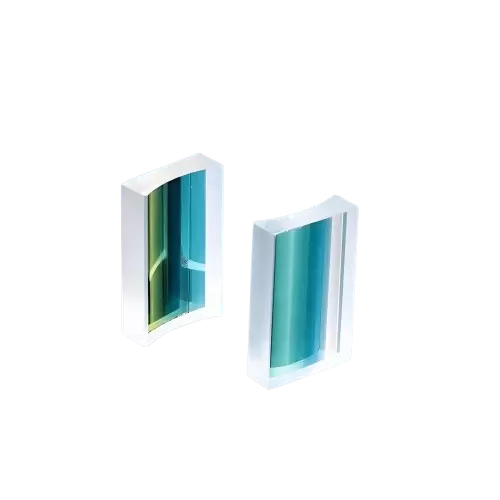
In modern optical engineering, a plano concave lens is not simply a “diverging element,” but a controlled wavefront expansion component that defines how light is redistributed spatially before entering subsequent imaging or laser shaping stages.
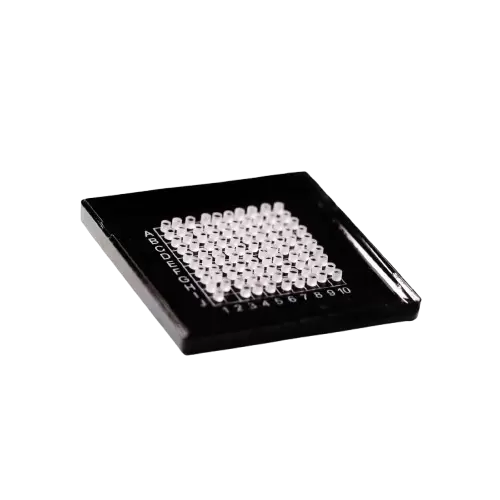
A compact optical system often has to solve a problem that a conventional spherical lens does not handle efficiently: controlling light in one direction while keeping the optical package small. In endoscopes, medical imaging modules, machine vision assemblies, and other precision instruments, a spherical lens may provide general imaging performance but cannot always deliver the required line-focusing behavior within a restricted optical path.
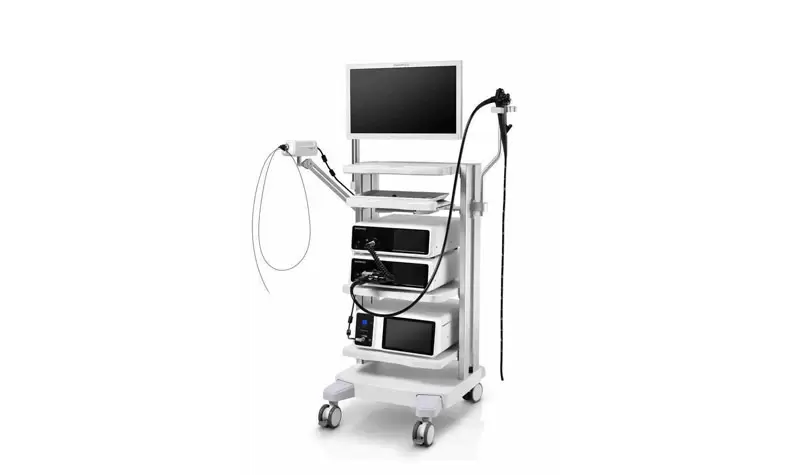
Endoscope is a medical device that can enter the body through natural channels or incisions for examination, treatment, and other procedures. According to different purposes and structures, endoscopes can be classified into various types.