

 en
en
 English
 繁体中文
繁体中文 Japanese
 Korean
 Russian
 German
News
Deepen Optoelectronic Resources, Lead Technological Breakthroughs


Deepen Optoelectronic Resources, Lead Technological Breakthroughs
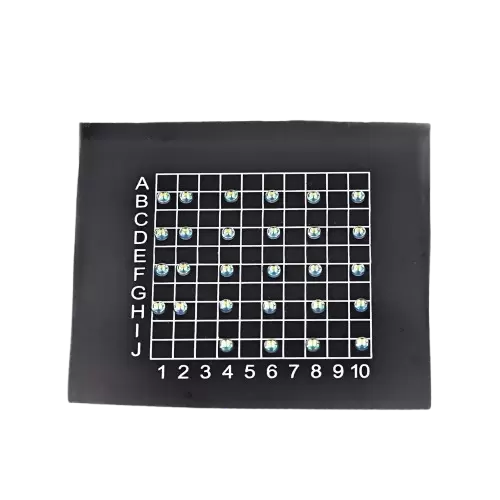
In modern optical engineering, system performance is increasingly defined at the micro-scale interface where light is coupled, shaped, and propagated through extremely small optical structures. As device architectures continue to shrink in consumer electronics, medical imaging, AR/VR displays, and industrial sensing systems, the role of Custom optics and custom micro lens manufacturer capabilities has shifted from component supply to full optical system co-design responsibility.
Unlike traditional bulk optics, micro-scale lens systems operate under strict geometric, material, and wavefront constraints where even sub-micron deviations in curvature or alignment can significantly impact coupling efficiency, imaging resolution, and system-level optical stability. This makes micro lens engineering not just a manufacturing discipline, but a tightly controlled optical physics optimization process involving wavefront shaping, aberration suppression, and energy distribution control.
ECOPTIK has been researching optical component fabrication technology for over 15 years, specializing in precision optical elements including micro lenses, spherical lenses, domes, prisms, cylindrical mirrors, filters, and optical windows. ECOPTIK provides end-to-end optical engineering capabilities supported by Schott, CDGM, Corning glass materials, as well as sapphire, CaF₂, MgF₂, fused silica, silicon, ZnSe, and ZnS substrates. The company operates high-precision metrology systems including ZYGO laser interferometers, ZEISS CMM Spectrum systems, and Agilent Cary 7000 UMS for optical performance validation and system-level characterization.
ECOPTIK’s custom micro lens manufacturing capability supports diameter ranges from 0.5 mm to 10 mm with ultra-tight dimensional tolerances and wavefront accuracy control, enabling integration into high-density optical systems where spatial constraints and optical performance must be simultaneously optimized.
The increasing demand for compact optical systems has fundamentally changed how optical engineers approach system design. Instead of relying on multiple discrete optical elements to correct aberrations and shape light propagation, modern systems increasingly depend on Custom optics that integrate optical function directly into micro-scale structures.
At this scale, optical performance is determined not only by lens geometry but also by:
Local curvature distribution across micro lens surfaces, which defines how incident wavefronts are refracted and redistributed within tightly confined optical paths, directly influencing focal spot formation and imaging uniformity in high-density optical arrays.
Sub-wavelength surface accuracy, which controls wavefront distortion accumulation and ensures phase coherence in optical coupling systems used in fiber optics, imaging sensors, and AR waveguide interfaces.
Material refractive stability across UV, visible, and infrared wavelengths, which determines how consistently optical systems perform under broadband or multi-spectral illumination conditions.
Micro-scale alignment precision within lens arrays, which directly impacts system-level optical efficiency in multi-channel imaging and sensing architectures.
These parameters define the performance boundary of modern optical systems far more than traditional macro-optical design considerations.
One of the most critical advancements in modern custom micro lens manufacturer engineering is the development of micro structure optical field reconstruction systems, which enable deterministic control over light propagation paths at the micro-scale.
ECOPTIK’s approach integrates micro-scale curvature engineering with wavefront phase optimization to precisely control how light is distributed, focused, and coupled within complex optical systems.
Each micro lens is designed with precisely calculated curvature gradients that define localized refractive behavior across the aperture. This enables controlled phase delay adjustment of incoming wavefronts, ensuring that light is converged or redistributed according to system-level optical requirements rather than simple geometric focusing.
Instead of treating each micro lens as an isolated focusing element, the system is designed to operate as part of a collective optical field structure where energy distribution across lens arrays is optimized to minimize crosstalk, reduce scattering losses, and improve coupling uniformity in high-density optical modules.
In densely packed optical systems such as camera sensor arrays or AR waveguide interfaces, aberration accumulation between adjacent optical channels can significantly degrade system performance. Micro structure optimization reduces spherical aberration, coma, and field curvature effects at the source level, rather than compensating them downstream.
This engineering system is particularly critical in applications requiring stable optical performance under extreme miniaturization constraints.
ECOPTIK’s manufacturing platform for Custom micro lens manufacturer solutions is built on high-precision micro-fabrication and deterministic polishing technologies capable of maintaining sub-micron structural accuracy across batch production.
Key manufacturing parameters include:
Diameter control ranging from 0.5 mm to 10 mm with ±0.001 mm tolerance, enabling integration into high-density optical assemblies where spatial positioning directly influences optical alignment and system performance stability across large-scale production batches.
Focal length control from -50 mm to 200 mm with ±1% tolerance, ensuring consistent optical convergence behavior across multiple production batches used in imaging, sensing, and optical coupling systems.
Centration accuracy below 3 arc minutes, which minimizes optical axis misalignment and ensures consistent wavefront propagation in multi-element optical systems such as camera modules and fiber coupling arrays.
Surface accuracy better than λ/10 at 633 nm, enabling high-performance wavefront preservation and reducing phase distortion in precision imaging and laser coupling applications.
Surface quality ranging from 60/40 to 20/10 scratch-dig standards, ensuring low scattering loss and improved optical transmission efficiency in high-sensitivity optical systems.
Clear aperture exceeding 85% of lens diameter, maximizing effective optical utilization area while minimizing edge-related diffraction effects.
These parameters are essential for ensuring repeatable performance in mass-customized optical systems where consistency is as critical as individual component precision.
The range of Custom optics design and fabrication for imaging and sensing applications continues to expand across multiple advanced industries where miniaturization and optical efficiency are simultaneously required.
In smartphone and compact imaging systems, micro lenses are used to improve light collection efficiency and reduce aberration effects in extremely compact optical stacks.
Micro lens arrays enhance photon collection efficiency at the sensor interface, improving low-light imaging performance without increasing system thickness.
Precise curvature control reduces edge distortion and improves uniformity across wide-angle imaging systems where optical path length variation is inherently constrained by device miniaturization.
Consistent focal alignment across large-scale production ensures uniform imaging performance across millions of devices in mass manufacturing environments.
In augmented and virtual reality systems, micro lenses are critical components in waveguide coupling and image projection systems.
Custom micro lenses enable precise light injection into waveguide structures by controlling incident angle distribution and phase alignment, improving overall optical coupling efficiency.
Micro-scale wavefront shaping reduces light leakage and improves uniformity in near-eye display systems where visual consistency is essential for immersive experience stability.
Array-based micro lens architectures support multi-channel light distribution required for high-resolution AR display systems.
In minimally invasive medical imaging systems, micro lenses enable compact optical assemblies used in endoscopic and diagnostic equipment.
High-precision optical coupling ensures consistent image transmission through narrow and flexible optical pathways used in internal biological environments.
Reduced aberration accumulation improves diagnostic accuracy by maintaining stable image formation across varying tissue densities and illumination conditions.
Miniaturized optical assemblies allow integration into portable or catheter-based diagnostic devices where space constraints are critical.
In industrial sensing and machine vision applications, micro lenses are used for structured light projection, fiber coupling, and precision detection systems.
Micro lens arrays improve light uniformity in structured illumination systems used for surface inspection and dimensional measurement.
Stable optical coupling improves signal-to-noise ratio in fiber-based sensing systems used in harsh industrial environments.
High repeatability in focal characteristics ensures consistent measurement accuracy across large-scale automated production lines.
One of the most critical performance indicators in micro optical systems is optical coupling efficiency, which directly determines how much optical energy is successfully transmitted between system components.
Poor coupling efficiency results in energy loss, signal degradation, and reduced system sensitivity, particularly in fiber-optic communication, imaging sensors, and AR waveguide systems.
ECOPTIK’s micro lens design approach improves coupling efficiency through:
Optimized micro curvature distribution that aligns incident wavefronts with receiving optical apertures, minimizing reflection losses and improving transmission efficiency across optical interfaces.
Phase-matched optical design strategies that reduce mismatch between optical source emission profiles and receiving optical geometries in high-density optical assemblies.
Reduced scattering loss through ultra-smooth surface finishing processes that eliminate subsurface damage and minimize optical diffusion effects.
These improvements directly translate into higher system efficiency and improved signal integrity in advanced optical applications.
Modern optical engineering increasingly recognizes that Custom optics is not merely a component manufacturing process, but a system-level co-design discipline involving optical physics simulation, micro-structure engineering, and precision fabrication integration.
ECOPTIK’s engineering approach integrates:
Optical simulation-driven design optimization for wavefront shaping and aberration control
Micro-scale fabrication control for deterministic geometry reproduction
High-precision metrology feedback using interferometric and coordinate measurement systems
Material-level optimization for broadband optical stability
This integrated workflow ensures that optical components are not isolated elements but fully optimized contributors to system-level optical performance.
The evolution of Custom micro lens manufacturer technologies reflects a broader transformation in optical engineering, where system performance is increasingly determined by micro-scale optical control rather than macro-scale lens assembly design.
By combining ultra-precision manufacturing, micro structure optical field reconstruction systems, and high-level optical design integration, modern custom optics solutions enable significant improvements in imaging resolution, optical coupling efficiency, and system compactness across consumer electronics, AR/VR systems, medical imaging, and industrial sensing applications.
ECOPTIK’s custom micro lens manufacturing platform provides a fully integrated optical engineering ecosystem capable of delivering high-precision, application-specific optical components with deterministic performance control across complex and demanding optical systems.
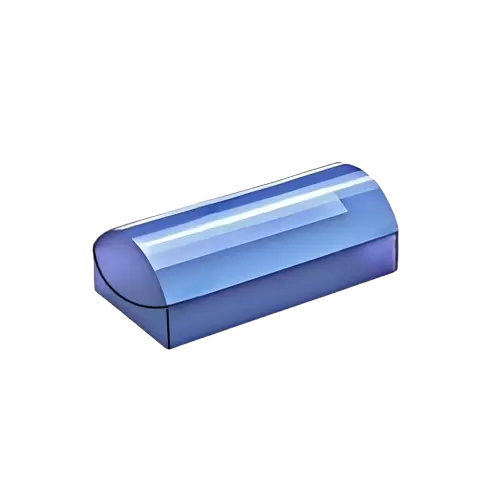
In precision optical systems, controlling light in one direction is often only part of the design challenge. When different wavelengths pass through a conventional cylindrical lens, variations in refractive index can cause each wavelength to focus at a slightly different position.
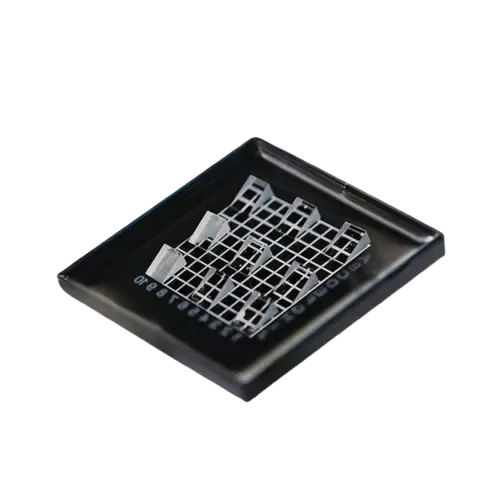
In compact optical instruments, the challenge is often not generating or transmitting light, but finding enough space to route it accurately. Conventional-size prisms can become difficult to integrate into endoscopes, laser diode (LD) to fiber coupling assemblies, and other precision instruments where every millimeter of mechanical space matters.
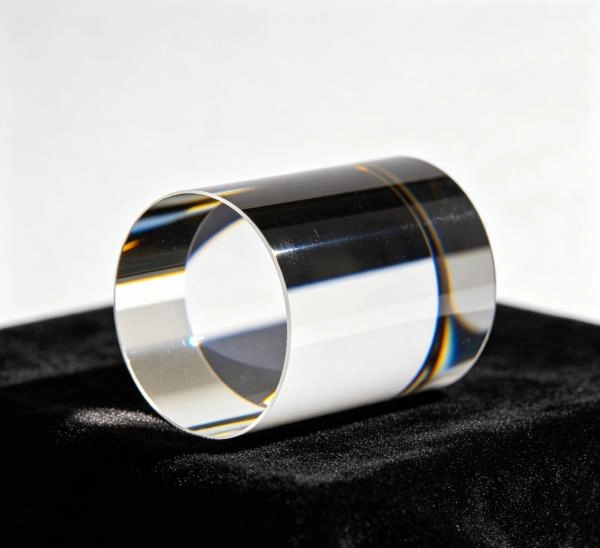
Cylindrical lenses stand as indispensable components in modern optical systems, powering critical applications ranging from laser beam shaping and anamorphic imaging to light-sheet microscopy and laser radar systems.