

 en
en
 English
 繁体中文
繁体中文 Japanese
 Korean
 Russian
 German
News
Deepen Optoelectronic Resources, Lead Technological Breakthroughs


Deepen Optoelectronic Resources, Lead Technological Breakthroughs
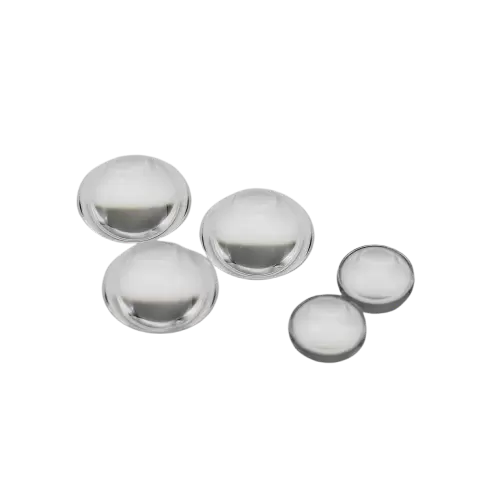
In modern optical engineering systems, performance bottlenecks are no longer defined by sensor resolution or digital processing capability alone, but increasingly by the physical limitations of optical front-end components. In high-precision imaging, laser delivery, machine vision inspection, medical endoscopy, and advanced optical metrology systems, aberration control, wavefront accuracy, and optical transfer efficiency directly determine system-level performance ceilings.
Within this context, the demand for precision aspheric lens price optimization is not simply a procurement concern, but a reflection of deeper engineering trade-offs between surface form accuracy, manufacturing method, material selection, and application-specific optical performance requirements. At the same time, understanding Aspheric lens uses has become critical for optical system designers who need to replace multi-element spherical lens assemblies with compact, high-efficiency aberration-correcting optical components.
Unlike conventional spherical lenses that rely on multi-element compensation to correct optical aberrations, precision aspheric lenses directly modify the surface curvature profile to control ray propagation paths, significantly reducing spherical aberration, coma, and field curvature while improving modulation transfer function (MTF) performance across the full imaging field.
ECOPTIK has been dedicated to optical component fabrication technology research for over 15 years, specializing in high-precision optical components including aspheric lenses, spherical lenses, prisms, filters, cylindrical mirrors, domes, and micro-optical structures. ECOPTIK utilizes advanced materials such as Schott, CDGM, Corning glass, sapphire, CaF₂, MgF₂, fused silica, silicon, ZnSe, and ZnS, and operates high-end metrology systems including ZYGO laser interferometers, ZEISS CMM Spectrum systems, and Agilent Cary 7000 UMS for precision optical characterization and performance validation.
The company’s precision-polished aspheric lens manufacturing capability is based on ultra-precision CNC machining, magnetorheological finishing (MRF), and ion beam polishing (IBP) technologies, achieving surface accuracy levels better than λ/40 RMS, enabling high-performance optical systems where wavefront distortion tolerance is extremely limited.
The core optical value of a precision aspheric lens lies in its ability to eliminate spherical aberration at the surface geometry level rather than compensating for it through multi-element optical assemblies. This fundamental design shift significantly improves optical system efficiency, reduces component count, and increases system compactness while maintaining or improving imaging performance.
Unlike spherical surfaces where all incident rays converge at different focal points depending on their radial distance from the optical axis, aspheric surfaces are mathematically optimized to ensure uniform focal convergence, reducing wavefront error accumulation across the aperture.
Key optical engineering characteristics include:
The surface profile is defined by high-order polynomial equations that precisely control local curvature variation across the aperture, enabling deterministic correction of spherical aberration and minimizing optical path difference (OPD) variations that typically degrade image sharpness in high-aperture systems.
Wavefront error control is maintained at sub-wavelength levels, with precision manufacturing processes achieving λ/40 RMS surface accuracy, which directly improves system-level MTF performance and reduces high-frequency spatial distortion in imaging and laser propagation systems.
Surface roughness control at nanometer scale significantly reduces scattering losses and improves optical throughput efficiency, which is particularly important in high-power laser systems where subsurface damage can reduce laser-induced damage threshold (LIDT) performance.
Material flexibility allows integration with high-performance optical substrates such as fused silica, sapphire, and infrared-grade crystals, enabling deployment across UV, visible, and IR spectral regions without compromising transmission stability.
These characteristics make precision aspheric lenses a foundational element in next-generation optical system design, particularly in systems requiring compact architecture and high optical efficiency.
One of the most critical innovations in modern optical engineering is the implementation of high-order aspheric wavefront error compensation, which extends beyond simple spherical aberration correction to address complex multi-order optical distortions.
This design methodology enables precision control of wavefront propagation in real optical systems where multiple aberration sources interact simultaneously, including coma, astigmatism, field curvature, and distortion errors that become increasingly significant in high numerical aperture (NA) systems.
The compensation system operates through:
The aspheric surface is engineered using high-order polynomial coefficients that allow localized curvature adjustment across the lens aperture, enabling precise control of ray deviation angles and minimizing cumulative wavefront deviation across the imaging field.
In wide-field imaging systems such as machine vision and surveillance optics, off-axis aberrations significantly degrade edge resolution. High-order compensation structures maintain uniform MTF performance across both central and peripheral imaging zones by dynamically balancing field curvature and coma correction.
While aspheric design primarily addresses geometric aberrations, system-level integration with material dispersion control allows improved chromatic performance when combined with multi-material optical design strategies, reducing wavelength-dependent focus shift in broadband imaging systems.
This engineering approach is particularly critical in systems requiring consistent imaging accuracy under varying optical load conditions.
The manufacturing process of precision aspheric lenses requires deterministic material removal techniques capable of achieving nanometer-level surface accuracy without introducing subsurface damage or structural stress.
ECOPTIK employs multiple advanced fabrication technologies:
CNC ultra-precision polishing enables controlled removal of material from optical substrates with micron-level spatial resolution, allowing deterministic shaping of complex aspheric profiles without relying on molding processes that are limited in geometric flexibility.
Magnetorheological finishing (MRF) provides localized surface correction capability, enabling sub-nanometer surface refinement and elimination of mid-spatial frequency errors that typically degrade imaging contrast in high-performance optical systems.
Ion beam polishing (IBP) ensures ultra-smooth surface finishing by removing atomic-scale surface irregularities, significantly improving surface roughness characteristics and increasing laser damage threshold in high-energy optical applications.
Interferometric metrology using ZYGO systems ensures real-time feedback control of surface figure accuracy, enabling closed-loop correction of optical surface deviations during manufacturing.
This combination of technologies ensures that precision aspheric lenses meet stringent optical performance requirements across demanding industrial and scientific applications.
When evaluating Precision aspheric lens price comparison for optical systems, cost cannot be understood as a single manufacturing metric. Instead, pricing is directly influenced by multiple interdependent engineering factors that define both fabrication complexity and optical performance requirements.
Key cost-driving factors include:
Surface accuracy tolerance requirements significantly influence production complexity because tighter wavefront error specifications such as λ/40 RMS require multiple iterative polishing and metrology correction cycles, increasing manufacturing time and process control requirements.
Aperture size and curvature complexity directly impact CNC machining time and polishing tool path density, especially for large-diameter or steep-gradient aspheric surfaces where material removal precision must be maintained across extended surface areas.
Material selection plays a critical role in pricing structure because hard crystalline materials such as sapphire or infrared-grade crystals require specialized machining processes and slower material removal rates compared to standard optical glass substrates.
Batch size and customization level significantly influence cost efficiency, since precision polishing technology is highly suitable for low-volume, high-precision customization scenarios rather than mass-production molding processes.
Surface roughness and subsurface damage requirements also affect pricing due to the need for additional MRF and IBP finishing stages to achieve ultra-low scattering optical performance.
Understanding these parameters is essential for optical engineers and procurement teams evaluating system-level cost-performance trade-offs in advanced optical design projects.
The range of Aspheric lens uses extends far beyond simple imaging applications, serving as a core enabling technology in modern optical engineering systems that require compact design, high numerical aperture, and minimal aberration distortion.
In machine vision inspection systems, precision aspheric lenses are used to maintain high-resolution imaging accuracy across fast-moving production lines where consistent edge detection, dimensional measurement, and defect recognition depend on stable optical transfer function performance.
Aspheric optical correction enables uniform imaging contrast across the full field of view, reducing measurement deviation caused by off-axis aberrations in high-speed inspection environments.
Improved MTF performance enhances edge detection precision in semiconductor inspection, PCB defect detection, and precision manufacturing quality control systems.
In laser applications, aspheric lenses play a critical role in beam collimation, focusing, and energy distribution control.
High-precision surface control ensures minimal wavefront distortion during laser beam propagation, improving focusing efficiency and reducing energy dispersion in material processing applications.
Reduced spherical aberration enables tighter focal spot formation, increasing energy density in laser cutting, welding, and micro-machining systems.
In medical endoscopy and diagnostic imaging systems, optical clarity and distortion control are essential for accurate visualization of biological structures.
Aspheric lenses reduce image distortion in compact optical assemblies, enabling higher diagnostic accuracy in minimally invasive imaging systems.
Improved light transmission efficiency enhances low-light imaging performance in internal biological environments.
In advanced imaging systems such as aerial cameras, surveillance optics, and scientific imaging instruments, aspheric lenses provide compact optical architectures with reduced element count and improved system stability.
Reduced optical element complexity improves alignment stability and long-term mechanical reliability in vibration-prone environments.
Enhanced wavefront control improves image sharpness consistency across varying focal distances.
One of the most important advantages of precision aspheric lenses is their adaptability in complex optical system integration, where multiple optical elements must be combined to achieve system-level performance targets.
By reducing the number of required corrective optical elements, aspheric lenses simplify optical system architecture while improving overall transmission efficiency and mechanical stability.
This is particularly valuable in compact optical modules where space constraints and alignment sensitivity limit traditional multi-lens configurations.
The development and application of precision aspheric lens price structures and advanced optical design systems are fundamentally driven by the increasing demand for high-performance imaging, laser processing, and precision optical measurement systems.
The value of modern aspheric optics lies not only in surface geometry optimization but in system-level optical performance enhancement, including wavefront correction, MTF improvement, aberration control, and optical efficiency optimization.
ECOPTIK’s precision-polished aspheric lens technology provides a deterministic manufacturing platform capable of achieving ultra-high surface accuracy, nanometer-level surface roughness control, and high-order wavefront compensation, enabling next-generation optical systems across industrial, medical, scientific, and imaging applications.
As optical systems continue to evolve toward higher resolution, greater compactness, and increased functional integration, precision aspheric lenses will remain a foundational component in advanced optical engineering design.

In precision optical systems, selecting the correct wavelength is often more important than simply collecting more light. Conventional optical filters may struggle with limited spectral selectivity, unstable center wavelength control, insufficient out-of-band blocking, and unwanted stray light interference.
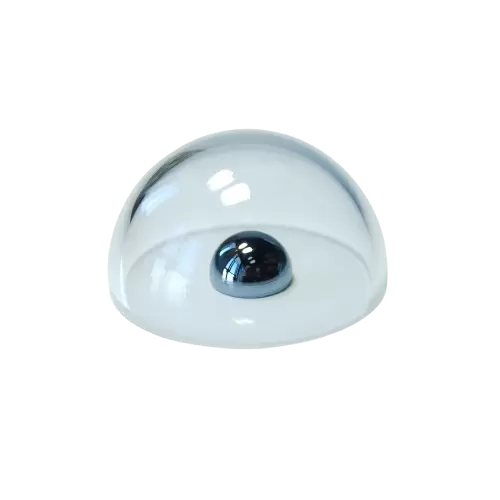
In precision optical engineering, the concept behind Hemisphere dome for sale is not simply a protective enclosure, but a wavefront-preserving optical interface designed to maintain controlled light propagation through curved geometry.
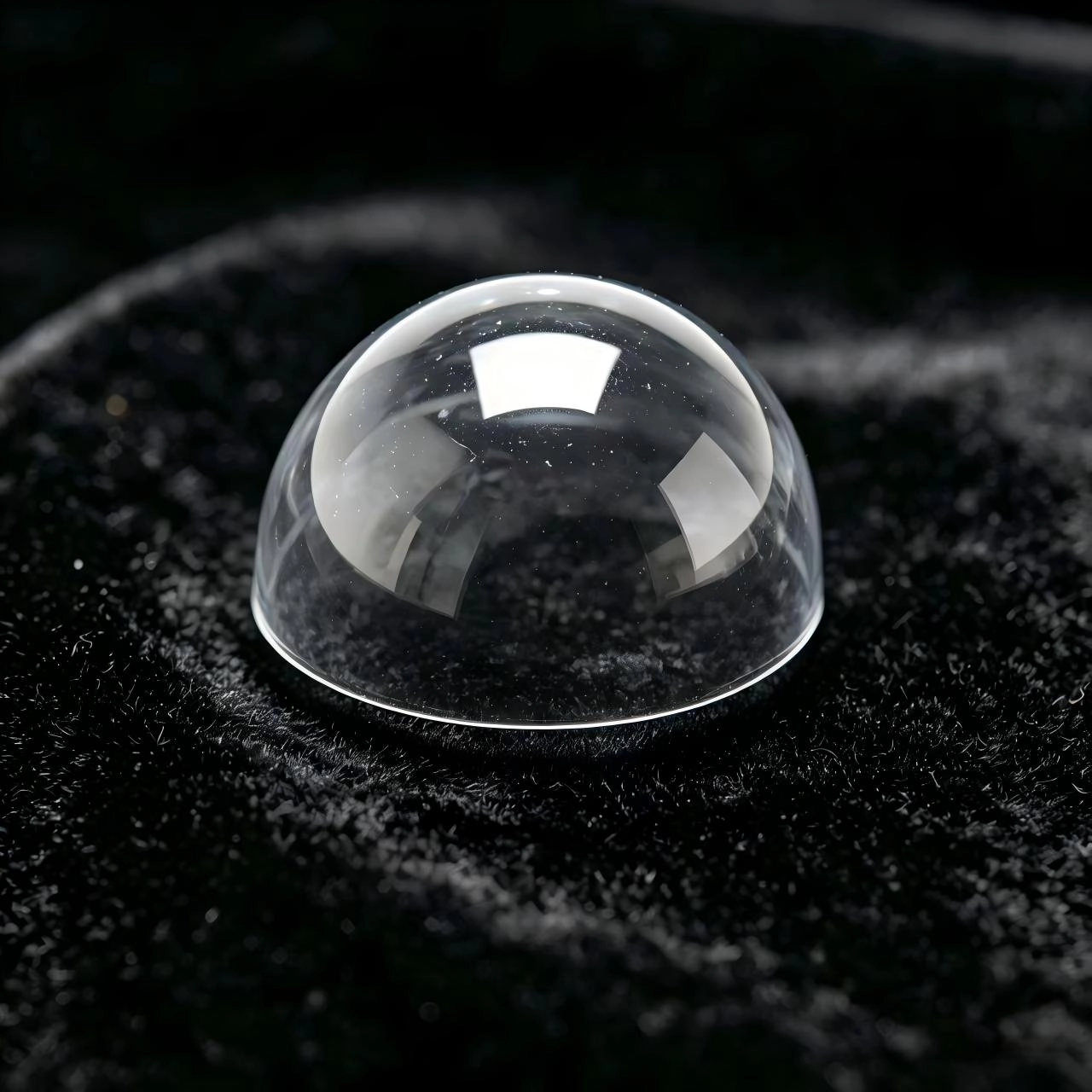
In the vast and demanding underwater world, where light is scarce, pressure is immense, and conditions are unpredictable, the performance of imaging and defense systems depends heavily on the materials used.