

 en
en
 English
 繁体中文
繁体中文 Japanese
 Korean
 Russian
 German
News
Deepen Optoelectronic Resources, Lead Technological Breakthroughs


Deepen Optoelectronic Resources, Lead Technological Breakthroughs
In modern precision optics and targeting systems, the Micro prism scope has become a critical component in compact sighting architectures where rapid target acquisition, low-light imaging stability, and optical alignment precision directly determine system performance. Unlike conventional optical sighting systems, micro prism-based designs rely on highly controlled internal reflection paths and micro-scale prism geometry to achieve compact optical folding while maintaining a wide field of view and stable visual alignment.
For procurement engineers and system integrators evaluating Micro prism price, the real decision is rarely about unit cost alone. Instead, it is about understanding how differences in optical material quality, surface precision, coating technology, and structural geometry directly influence sighting accuracy, durability, and performance consistency under dynamic operating conditions.
At the same time, in applications such as tactical shooting systems, sports optics, and training simulation platforms, users of Micro prism scope systems prioritize fast target acquisition speed, edge clarity under motion, and stable reticle alignment under vibration and recoil stress. These requirements push micro prism design far beyond basic optical refraction principles into precision optical engineering territory.
ECOPTIK, with 15 years of experience in precision optical component manufacturing, specializes in micro-optical systems including prisms, lenses, cylindrical optics, and optical assemblies. The company utilizes high-end metrology systems such as ZYGO laser interferometers, ZEISS CMM systems, and Agilent Cary 7000 testing platforms to ensure optical accuracy and consistency in micro-scale prism production used in medical, industrial, and optical instrumentation applications.
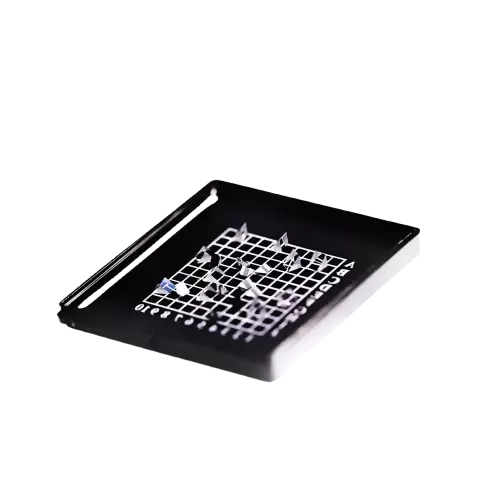
A Micro prism scope is fundamentally a folded optical system designed to reduce physical size while maintaining a controlled optical path. Instead of relying on long linear lens assemblies, micro prisms redirect light through internal reflection surfaces, allowing compact integration without sacrificing optical performance.
The performance of such systems depends on three key engineering domains:
Optical path design, which determines how incoming light is refracted, reflected, and redirected through micro-scale prism geometry without introducing phase distortion or alignment drift.
Field-of-view control, which ensures that the visual field remains wide enough for rapid target acquisition while maintaining edge sharpness and minimizing optical aberrations.
Structural stability, which ensures that optical alignment remains consistent under vibration, recoil force, or mechanical stress in dynamic operating environments.
Unlike traditional optical scopes, micro prism systems must maintain optical integrity within extremely small geometric tolerances, often measured in arc seconds and micrometer-level surface deviations.
Micro prism systems typically utilize multiple geometric configurations such as right-angle prisms, wedge prisms, dove prisms, and penta prisms. Each structure serves a different optical function in controlling light direction, image orientation, and field stabilization.
In Micro prism scope design, the optical folding process is optimized to achieve:
Controlled 90-degree or angular light deviation that enables compact optical housing without increasing overall system length
Image orientation correction in systems requiring upright and non-inverted visual output for targeting accuracy
Minimization of internal reflection loss through precision-polished reflective surfaces that maintain high transmission efficiency
The precision of these internal reflection surfaces directly determines how stable the visual field remains during rapid motion or target tracking scenarios.
One of the key performance indicators in micro prism optical systems is the ability to maintain a wide field of view without introducing edge distortion.
Engineering control methods include:
Precision curvature control of optical surfaces to prevent angular deviation errors at field edges
Micro-scale surface polishing to reduce scattering effects that can blur peripheral image clarity
Coating optimization to maintain consistent reflectivity across different incidence angles
In real-world use cases such as rapid target acquisition, edge clarity is critical because peripheral distortion can delay visual recognition and reduce response accuracy.
Micro prism systems must maintain optical axis stability even under mechanical shock or vibration. This is particularly important in applications involving recoil or continuous motion tracking.
Key design factors include:
Mechanical bonding precision between prism elements and housing structures to prevent micro-shift during impact
Material selection with low thermal expansion coefficients to reduce optical drift under temperature variation
Structural reinforcement of prism mounting interfaces to maintain alignment integrity under repeated stress cycles
Without these controls, even microscopic alignment shifts can significantly degrade sighting accuracy.
In high-speed targeting environments, the ability to acquire and maintain visual lock is determined by optical latency, field stability, and contrast retention.
A high-performance Micro prism scope enables:
Rapid target identification due to minimized optical path delay and high transmission efficiency
Stable reticle alignment that prevents visual drift during movement or recoil
Consistent image contrast across varying lighting conditions, improving recognition speed in complex environments
These factors directly influence reaction time and operational accuracy in dynamic scenarios.
Low-light environments introduce additional challenges for micro prism systems because light transmission efficiency and coating performance become critical.
Performance factors include:
Anti-reflective coating efficiency that reduces photon loss during multi-surface reflection
Material purity that ensures minimal absorption loss in low illumination conditions
Internal scattering control that prevents image haze and maintains contrast stability
In practical applications, low-light clarity is not only about brightness but about preserving edge definition and contrast separation.
Mechanical stability is a key requirement in Micro prism scope systems used in dynamic environments.
Engineering solutions include:
High-strength optical mounting structures designed to absorb mechanical shock without affecting optical alignment
Multi-point stress distribution frameworks that prevent localized deformation during impact
Adhesive and bonding systems optimized for long-term vibration resistance
These design elements ensure that optical performance remains consistent even under repeated mechanical stress.
When evaluating Micro prism price, industrial buyers must understand that cost differences are not arbitrary but directly linked to optical precision, manufacturing complexity, and material selection.
One of the most significant cost drivers is surface accuracy and polishing grade.
Higher-grade micro prisms typically feature:
Surface quality levels such as 20/10 or 10/5 that reduce scattering and improve optical clarity
Flatness control down to λ/10 that ensures minimal wavefront distortion during light transmission
Angular tolerance control up to ±10 arc seconds that guarantees precise optical alignment in compact systems
These tolerances require advanced polishing and metrology systems, significantly increasing manufacturing cost.
ECOPTIK uses a range of optical materials including BK7 glass, fused silica, and specialized infrared or high-transmission substrates such as CaF2, ZnSe, and sapphire.
Material selection influences:
Transmission efficiency across different wavelength ranges
Thermal stability under environmental variation
Mechanical durability under stress or vibration
Cost structure due to raw material complexity and machining difficulty
Higher-performance materials significantly increase Micro prism price but provide superior long-term stability and optical reliability.
Optical coatings play a critical role in micro prism performance.
Coating levels affect:
Transmission efficiency by reducing reflection loss at optical interfaces
Environmental durability against humidity, temperature fluctuation, and abrasion
Spectral performance tuning for specific wavelength applications
Advanced multi-layer coatings significantly increase production complexity but improve overall system efficiency.
Micro-scale optics require extremely strict manufacturing control, where even minor defects can result in rejection.
Cost drivers include:
Ultra-precision polishing processes for micro-scale surfaces
High rejection rates due to tight tolerance requirements
Multi-stage inspection using interferometry and CMM measurement systems
Assembly alignment processes requiring micron-level precision
ECOPTIK’s use of ZYGO and ZEISS metrology systems ensures high-precision validation but also reflects the complexity behind Micro prism price structures.
These systems prioritize cost efficiency and are typically used in general optical applications where extreme precision is not required. They offer acceptable performance but limited tolerance stability.
These systems feature tight angular tolerances, high-grade polishing, and optimized coatings. They are widely used in professional Micro prism scope applications requiring fast target acquisition and stable imaging.
These represent the highest engineering tier, used in medical endoscopy, LD-to-fiber coupling, and high-end optical instrumentation. They require extreme surface accuracy, material purity, and alignment control.
ECOPTIK is an established optical component manufacturer specializing in precision optics including micro prisms, spherical lenses, filters, and optical assemblies.
The company’s engineering strength includes:
Manufacturing capability for micro-scale optical components ranging from 0.2mm to 5mm
High-precision angular control up to ±10 arc seconds for micro prism structures
Surface quality control reaching 10/5 standards for advanced optical applications
Material integration using Schott, Corning, and specialized infrared optical substrates
Full optical testing capability using interferometry and advanced metrology systems
These capabilities allow ECOPTIK to support both industrial Micro prism scope systems and high-end optical instrumentation requiring extreme precision.
Micro prism optics are widely used in fast-acquisition targeting systems where speed and stability are critical performance factors.
Used in precision alignment instruments where compact optical folding is required without sacrificing measurement accuracy.
Micro prisms enable compact optical routing in minimally invasive imaging devices.
Used in LD-to-fiber coupling applications where precise light direction control is essential.
The performance of a Micro prism scope is determined not by simple optical magnification, but by precision engineering across prism geometry, optical surface quality, alignment stability, and environmental resistance. Similarly, Micro prism price reflects not only material cost but the level of manufacturing precision, coating technology, and metrology validation required to achieve stable optical performance.
In high-performance optical systems, cost and performance are inseparable. Higher precision directly translates into improved target acquisition speed, better low-light performance, and greater mechanical stability.
ECOPTIK, with its advanced manufacturing capabilities and precision optical engineering systems, represents a production-level foundation for micro prism technologies used in demanding medical, industrial, and optical instrumentation environments.

In precision optical systems, controlling light in one direction is often only part of the design challenge. When different wavelengths pass through a conventional cylindrical lens, variations in refractive index can cause each wavelength to focus at a slightly different position.
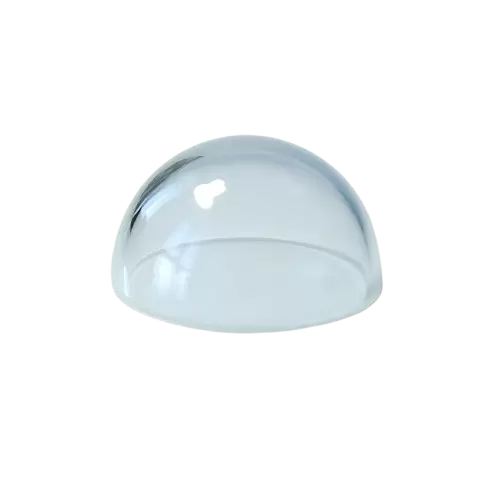
Learn what a super hemisphere dome is in precision optics, how it protects sensitive systems, and why custom optical dome manufacturing matters.
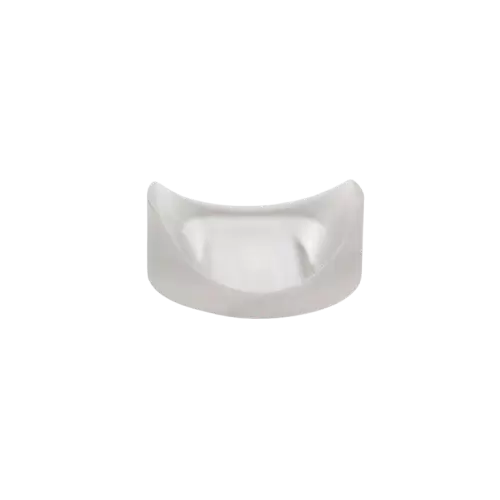
In many laser and imaging systems, controlling light in only one direction is a critical requirement. However, conventional cylindrical lenses can create challenges during integration, especially when optical alignment, positioning accuracy, and long-term stability are important.