

 en
en
 English
 繁体中文
繁体中文 Japanese
 Korean
 Russian
 German
News
Deepen Optoelectronic Resources, Lead Technological Breakthroughs


Deepen Optoelectronic Resources, Lead Technological Breakthroughs
In compact optical instruments, the challenge is often not generating or transmitting light, but finding enough space to route it accurately. Conventional-size prisms can become difficult to integrate into endoscopes, laser diode (LD) to fiber coupling assemblies, and other precision instruments where every millimeter of mechanical space matters. At the same time, simply reducing the size of a conventional optical component does not guarantee the angular accuracy, surface quality, or usable aperture required by the system.
This is why engineers evaluating micro prism lenses or a micro prism optic need to look beyond physical dimensions. Prism geometry, substrate material, angular tolerance, surface quality, surface flatness, clear aperture, and coating all influence how effectively the component can redirect light within a restricted optical path.
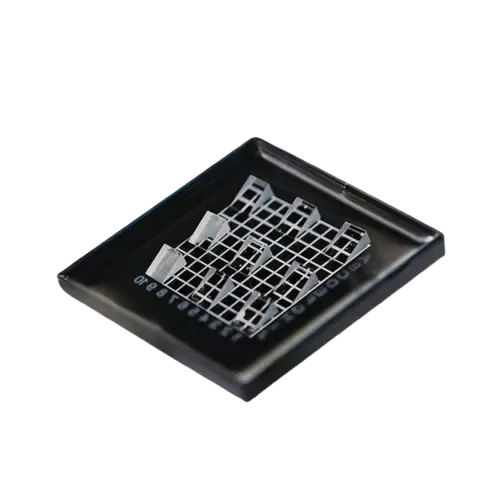
A Micro Prism is primarily a beam-routing component. Its geometry determines how incoming light is redirected and how the optical path can be folded inside a compact assembly. The appropriate structure depends on whether the system requires a defined right-angle turn, fine angular adjustment, image orientation control, or a stable beam deviation.
A Micro Right-Angle Prism is suitable when the optical design requires a defined 90-degree-type path turn. Its compact geometry can help fold an optical path without requiring the space that a larger conventional prism would occupy. This is particularly useful when an imaging or illumination path needs to change direction inside a confined instrument.
A Micro Wedge Prism works differently. Its small wedge angle introduces a controlled angular deviation, making it useful when the objective is not a large path turn but a relatively fine adjustment of beam direction. In alignment-sensitive optical assemblies, the wedge angle can therefore become an important design parameter.
A Micro Dove Prism is selected for optical arrangements involving image orientation and specific path-folding requirements. Its geometry can be useful when the prism must perform more than a simple directional change within a compact imaging system.
A Micro Penta Prism is useful when a stable beam deviation is required from the prism geometry. This characteristic makes it attractive in optical arrangements where the desired beam direction needs to remain less dependent on small changes in the prism's orientation.
These structures should not be treated as interchangeable versions of the same component. The first selection question should be: what optical function must the prism perform? Only after that should dimensions and tolerances be defined.
Endoscopic optical systems illustrate the practical reason for using miniature prisms. The available internal space can be extremely restricted, while the optical path still needs to provide a defined viewing direction and sufficient usable aperture. A prism that is physically small but has inadequate clear aperture may create vignetting or limit the amount of usable light reaching the imaging system.
For this reason, ECOPTIK's micro prism products are primarily used in endoscopic and LD-to-fiber coupling applications, and the products have been adopted by medical and industrial instrument manufacturers.
In an LD-to-fiber coupling assembly, the prism can be positioned between the laser diode and subsequent coupling optics to redirect the beam within a constrained mechanical layout. Here, angular tolerance becomes particularly important. A prism angle error changes the direction of the outgoing beam, which can shift the beam position or incidence angle at the next optical element.
For a coupling system, this means the prism should be evaluated as part of the complete alignment budget rather than as an isolated optical component. The prism angle, mounting position, beam diameter, coupling lens, and fiber axis all contribute to the final coupling geometry.
Miniaturization does not eliminate the need for dimensional and optical control. In fact, at a scale of only a few millimeters or less, relatively small manufacturing deviations can become significant compared with the overall component dimensions.
ECOPTIK provides Micro Prism structures with dimensions from 0.2 mm to 5 mm. This range supports compact optical assemblies, but the selected size should be based on the actual beam footprint and mechanical installation requirements rather than the smallest available package.
Angle tolerance is one of the most important specifications. ECOPTIK can provide angle tolerances of up to ±10 arc sec. In an LD-to-fiber coupling system, this level of angular control can be relevant because even a small deviation in beam direction may affect the position of the beam at the coupling optics or fiber interface.
The required tolerance depends on the optical system. A general beam-routing application may not require the same angular specification as a coupling system with a tight alignment budget. Selecting an unnecessarily tight tolerance can increase manufacturing requirements without providing a measurable system benefit, while an insufficient tolerance can make optical alignment more difficult.
Surface quality is specified as 20/10 or 10/5, depending on application requirements. Surface quality describes microscopic defects such as scratches and digs. In laser and imaging systems, these defects can contribute to scattered light and unwanted background signals. A 10/5 specification may therefore be more appropriate when stray light is particularly sensitive.
Surface flatness can reach λ/10. This parameter relates to the geometric accuracy of the optical surface and its influence on transmitted wavefront quality. For precision imaging and laser applications, surface flatness can become more important when the prism is placed in a sensitive portion of the optical path.
The clear aperture exceeds 90% of the component dimension. This is especially relevant for miniature prisms because the physical size of the component does not necessarily represent the usable optical area. The available aperture should be checked against the actual beam diameter and expected incidence conditions to avoid unwanted clipping.
The substrate should be selected according to wavelength and system requirements rather than simply by mechanical availability.
BK7 glass is suitable for many visible and near-infrared optical systems where its transmission characteristics and established optical performance meet the application requirements. It is often a practical starting point for general-purpose micro-optical assemblies.
Fused silica becomes more attractive when the system requires strong ultraviolet transmission or greater thermal stability. For laser-based instruments, the operating wavelength should be identified before selecting the substrate because material transmission and optical behavior are directly connected to wavelength.
ECOPTIK works with a broad range of optical materials, including glass supplied by Schott, CDGM, and Corning, as well as sapphire, CaF₂, MgF₂, fused silica, Si, ZnSe, and ZnS. This material capability allows the Micro Prism specification to be considered as part of the complete optical design rather than limited to one standard glass option.
A coating specification should be based on the actual operating wavelength, incidence angle, and transmission target. For Micro Prism applications, the available optical area is already limited by the miniature dimensions, so unnecessary transmission losses at the prism surfaces can become more significant.
ECOPTIK provides coatings according to customer requirements. For an LD-to-fiber coupling system, the coating should therefore be defined together with the laser wavelength and incidence geometry. For endoscopic systems, the requirements may instead prioritize broadband transmission across the imaging wavelength range.
The coating decision should also be considered alongside clear aperture. A prism may meet its nominal dimensional specification while still failing to provide the required usable beam area if the optical path is poorly matched to its aperture.
ECOPTIK has 15 years of experience in optical component fabrication and manufactures precision optics including prisms, spherical lenses, cylindrical mirrors, micro-optical components, filters, windows, and other customized optical elements.
For Micro Prism applications, ECOPTIK combines miniature prism fabrication with material selection and optical inspection. Its testing equipment includes ZYGO laser interferometers, ZEISS CMM Spectrum, and Agilent Cary 7000 UMS, supporting dimensional, surface, interferometric, and spectral measurements and product reporting.
ECOPTIK also provides lens assembly services, which can be relevant when a Micro Prism must be integrated into a compact optical module rather than supplied as a standalone component.
The right Micro Prism is not necessarily the smallest component or the one with the tightest available tolerance. Selection should begin with the required optical function and then move through the system constraints.
For a fixed path turn, a Micro Right-Angle Prism may be appropriate. When a small beam-direction correction is required, a Micro Wedge provides a different solution. A Micro Dove Prism can address specific image-orientation requirements, while a Micro Penta Prism can provide a stable beam deviation within a compact layout.
The next stage is to match the substrate to the wavelength, confirm that the 0.2–5 mm dimensions provide sufficient mechanical and optical clearance, and establish the required angular tolerance. Surface quality, λ/10 flatness, and clear aperture should then be evaluated according to the sensitivity of the imaging or laser system.
For endoscopy, the priority may be fitting the prism into a restricted optical channel while preserving usable aperture. For LD-to-fiber coupling, angular tolerance and positioning can dominate the specification. For industrial instruments, the balance between optical performance, package size, coating, and assembly tolerances may determine the final configuration.
A Micro Prism is therefore not simply a conventional prism manufactured at a smaller scale. Its value lies in combining compact geometry with controlled optical deviation, usable aperture, and specifications that fit the alignment requirements of a miniature optical system. By evaluating micro prism lenses and micro prism optic products according to structure, material, angle tolerance, surface quality, flatness, aperture, and coating, engineers can build a more predictable optical path for endoscopy, LD-to-fiber coupling, and other space-constrained precision instruments.
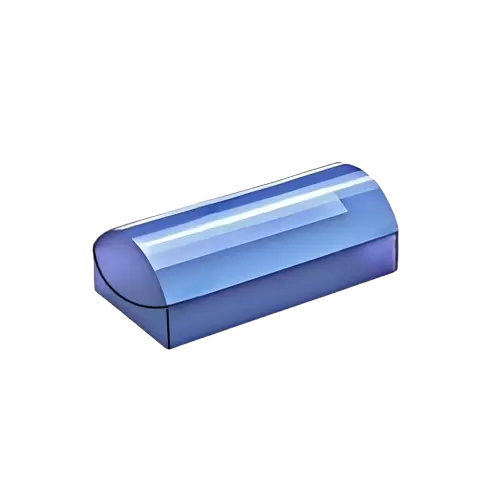
In precision optical systems, controlling light in one direction is often only part of the design challenge. When different wavelengths pass through a conventional cylindrical lens, variations in refractive index can cause each wavelength to focus at a slightly different position.

In modern optical engineering systems, especially in laser instrumentation, medical imaging, and industrial vision inspection, the role of a prism is no longer limited to simple beam deviation. For optical system designers and integrators working with precision optical prism lenses, the real challenge lies in maintaining sub-micron optical path stability, angular deviation accuracy, and multi-wavelength transmission consistency under complex system conditions.
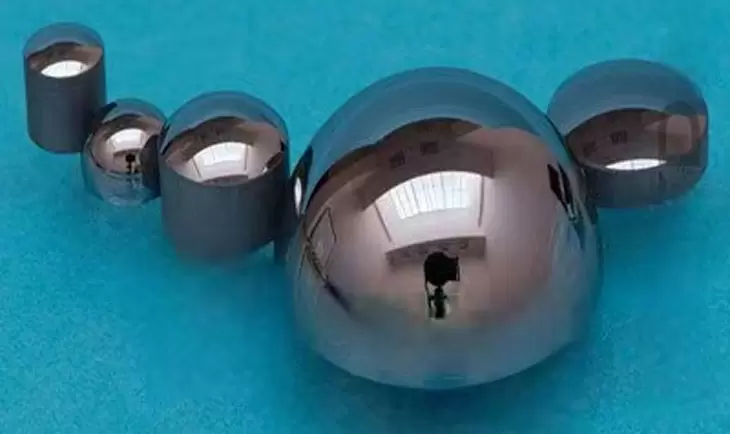
Terahertz waves refer to electromagnetic waves with frequencies ranging from 0.1 to 10 THz (wavelength 30 μ m-3 mm), between microwave and infrared, and were once known as the "THz Gap" due to technological limitations.