

 en
en
 English
 繁体中文
繁体中文 Japanese
 Korean
 Russian
 German
News
Deepen Optoelectronic Resources, Lead Technological Breakthroughs


Deepen Optoelectronic Resources, Lead Technological Breakthroughs
For precision optical systems, choosing a convex lens based only on diameter and focal length is rarely enough. The term “convex lens” covers several optical geometries, including double convex and plano-convex designs, and their performance can differ significantly even when their nominal focal lengths are similar. For optical designers and procurement teams, understanding the double convex lens and convex lens difference is therefore important before comparing specifications or requesting a double convex lens price.
A double convex lens has two outward-curved surfaces and is typically symmetrical about its optical axis. Its positive focal length makes it a converging element, but its actual performance depends on more than its basic geometry. Material, radius of curvature, diameter, surface accuracy, surface quality, center deviation, coating, and manufacturing tolerances all influence the final optical result and cost.
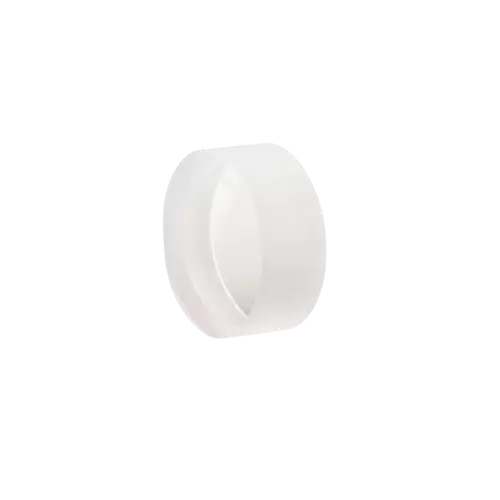
A double convex lens is thicker at the center and thinner toward the edge. Both optical surfaces can be regarded as portions of spheres, with the two surfaces forming a symmetrical positive lens geometry. When rays travel approximately parallel to the principal axis, refraction at the two curved surfaces changes their propagation direction so that they converge toward a focal region.
The positive focal length is one of the most important parameters for system design. A shorter focal length generally produces stronger optical power and a greater change in ray angle, while a longer focal length provides weaker convergence and is often useful when a longer working distance or lower optical power is required.
For a thin-lens approximation, focal length is related to object and image distances through the standard imaging relationship. In a real precision lens, however, thickness, refractive index, surface curvature, wavelength, and manufacturing tolerances mean that the effective optical behavior cannot always be predicted from focal length alone.
Diameter determines the available clear aperture and influences how much light the optical system can collect or transmit. ECOPTIK's double convex lenses can be manufactured with diameters from 2 mm to 300 mm, covering compact optical assemblies as well as larger imaging and laser systems. However, increasing diameter also increases material volume, polishing area, handling difficulty, and manufacturing requirements, which can affect both lead time and price.
Focal length is available from 50 mm to 2000 mm. Selecting the focal length should be based on the required optical power, object distance, image distance, beam geometry, and available mechanical space rather than simply choosing the shortest or longest available option.
Material directly affects refractive behavior, transmission range, thermal performance, and cost. Optical glass is suitable for a broad range of visible and near-infrared applications. Fused silica is often considered when low thermal expansion, high transmission over a broad spectral range, or demanding laser applications are involved. Sapphire provides high hardness and excellent environmental resistance, making it useful where durability and demanding operating conditions are priorities.
Surface specifications become increasingly important as system performance requirements rise. ECOPTIK offers 60/40, 40/20, and 20/10 surface quality grades. Surface quality describes visible surface imperfections such as scratches and digs, while surface accuracy describes how closely the manufactured surface conforms to its intended optical form.
For demanding applications, ECOPTIK can provide surface accuracy from λ/2 to λ/10 at 632.8 nm or 532 nm. A higher surface accuracy can reduce wavefront errors introduced by the lens, which is particularly relevant to imaging, interferometry, laser focusing, and other systems where optical aberrations and wavefront quality must be controlled.
Other specifications should not be overlooked. ECOPTIK specifies a clear aperture greater than 85% of the diameter, while center deviation can be controlled from less than 3 arc min to 30 arc sec, depending on requirements. Center deviation becomes particularly important in multi-element assemblies because angular misalignment can accumulate through the optical path.
Center thickness, specified from 2 mm to 20 mm, also affects mechanical integration and the actual optical geometry. A lens with the same diameter and focal length can require different center thickness specifications depending on edge thickness, curvature, material, and mechanical constraints.
One of the most common sources of confusion is treating “convex lens” and “double convex lens” as interchangeable terms.
Convex lens is a broad category describing a positive optical element whose geometry produces converging optical power under normal conditions. A double convex lens, often abbreviated DCX, is one specific geometry within this broader category. Its two surfaces are convex.
A plano-convex lens (PCX) has one convex surface and one plane surface. Both DCX and PCX can have positive focal lengths, but their surface geometries produce different distributions of optical power and different aberration behavior.
For systems with approximately equal object and image distances, the symmetry of a double convex lens can be advantageous. The optical power is distributed across two curved surfaces, making the geometry suitable for applications where the optical path is relatively symmetrical. It is commonly considered for imaging, beam focusing, optical instruments, projection systems, and other assemblies where balanced conjugates are important.
A plano-convex lens can be more appropriate when one side of the optical system is effectively at infinity, such as when a collimated beam is focused to a point. In many such configurations, the orientation of the plano-convex lens matters. Correctly positioning the curved surface toward the appropriate beam condition can help reduce spherical aberration compared with using the same lens in the opposite orientation.
This means there is no universal answer that a double convex lens is always better than a plano-convex lens. The correct choice depends on conjugate ratio, beam condition, aperture, required image quality, available space, and aberration tolerance.
The distinction becomes even more important in precision imaging. Two positive lenses with the same nominal focal length can produce different aberration profiles because their curvature distributions are different. When a design requires controlled imaging performance rather than simply positive optical power, the complete lens geometry should be considered.
A double convex lens price should be evaluated against the complete specification rather than a single parameter. Two lenses with the same diameter and focal length can have substantially different prices because their materials, tolerances, surface requirements, coatings, and production quantities may differ.
Material is one of the first cost drivers. Standard optical glass generally provides a practical balance between optical performance and manufacturing cost. Fused silica and sapphire may carry higher material and processing costs depending on grade, size, and required specifications.
Diameter also has a direct effect on manufacturing cost. Moving from a small 10 mm lens to a 100 mm or 200 mm lens is not simply a tenfold increase in diameter. The optical surface area, material volume, polishing requirements, inspection complexity, and handling risks increase considerably.
Focal length and curvature influence manufacturing difficulty. Very long or short focal lengths may require tighter control of surface geometry, while maintaining the specified focal length tolerance becomes more demanding as optical performance requirements increase.
Surface quality and surface accuracy are another major pricing factor. A 60/40 surface quality requirement and a 20/10 requirement do not represent the same manufacturing workload. Likewise, achieving λ/10 surface accuracy requires substantially tighter optical fabrication and metrology than a less demanding specification.
The same principle applies to center deviation. A lens intended for a high-performance multi-element optical assembly may require much tighter centration than a basic focusing component. Tight centration increases inspection and manufacturing requirements and therefore can influence unit cost.
Coating is also application-dependent. A customer may require an antireflection coating for a specific wavelength or wavelength range rather than an uncoated surface. Coating material, spectral band, incidence conditions, environmental requirements, and coating performance can all affect the final price.
Finally, customization and order quantity matter. Prototype quantities often carry higher unit costs because setup, tooling, inspection, coating preparation, and documentation are distributed across fewer pieces. Larger production volumes can make the manufacturing process more efficient, provided the specification remains stable.
For this reason, a low-cost lens is not necessarily the best purchasing decision. Parameters such as surface accuracy, centration, material, and coating should not be reduced simply to obtain a lower quotation if they directly affect system performance. Reducing a non-critical specification can lower cost; reducing a performance-critical specification can create alignment, imaging, or laser-beam problems later in the system.
ECOPTIK has been researching optical component fabrication technology for 15 years, providing precision optics for demanding industrial and optical applications. Its manufacturing range includes dome optics, spherical lenses, micro-optical components, cylindrical mirrors, filters, prisms, windows, and lens assemblies. Materials can be sourced from Schott, CDGM, and Corning, as well as fused silica, sapphire, CaF₂, MgF₂, silicon, ZnSe, and ZnS.
For quality verification, ECOPTIK uses equipment including ZYGO laser interferometers, ZEISS CMM Spectrum, and Agilent Cary 7000 UMS, supporting dimensional inspection, surface and wavefront verification, spectral testing, and product reporting according to project requirements.
For buyers comparing a double convex lens price, the most useful approach is therefore to compare quotations against the same technical baseline: material, diameter, focal length, center thickness, surface quality, surface accuracy, clear aperture, center deviation, coating, quantity, and inspection requirements.
The right double convex lens is not necessarily the one with the lowest quotation. It is the one whose optical geometry and manufacturing specifications provide the required convergence, imaging performance, alignment stability, and wavelength compatibility without adding unnecessary cost. Understanding the double convex lens and convex lens difference allows engineers to select the appropriate positive-lens geometry first, while evaluating double convex lens price according to the specifications that actually influence system performance.
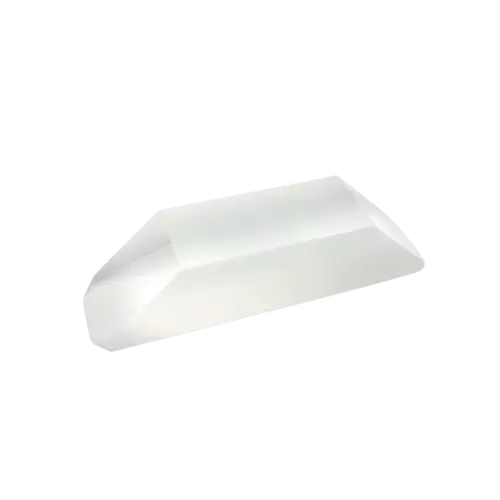
In precision optical engineering, Dove prism uses are defined by a unique capability: controlled image rotation at twice the physical rotation angle of the prism itself, enabling deterministic manipulation of optical orientation within imaging and beam propagation systems.
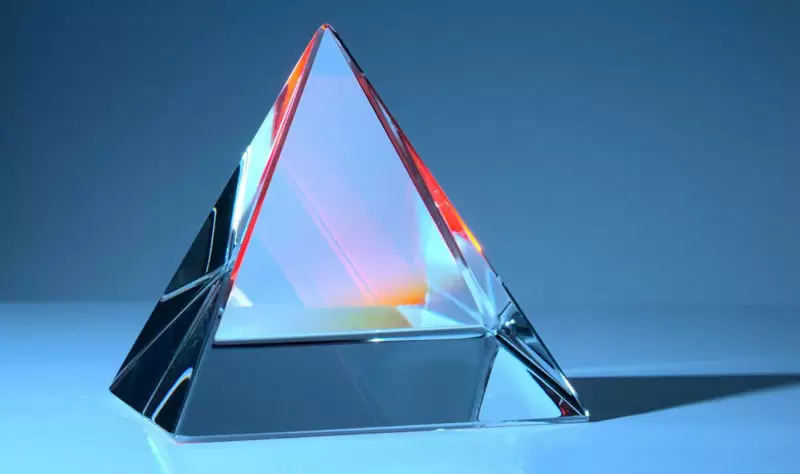
Calcium fluoride (CaF2) crystals play an irreplaceable role in the high-end optical field due to their unique optical properties. Its core advantages lie in its deep ultraviolet transmission capability and optical isotropy (without birefringence), making it the preferred material in multiple key fields.
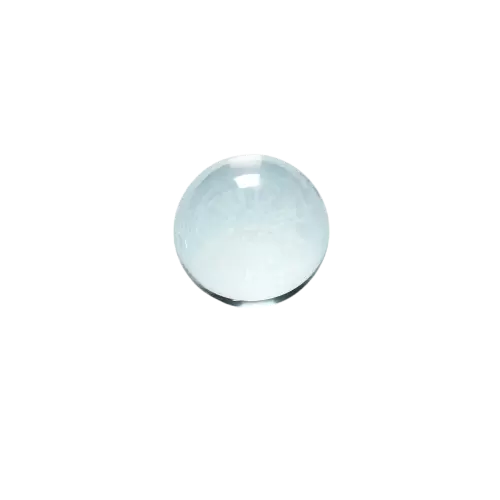
Traditional multi-element optical assemblies are not always the best solution when an optical system needs to become smaller. Multiple lenses introduce more components to align, defined optical-axis orientations, additional mechanical spacing, and greater assembly complexity.