

 en
en
 English
 繁体中文
繁体中文 Japanese
 Korean
 Russian
 German
News
Deepen Optoelectronic Resources, Lead Technological Breakthroughs


Deepen Optoelectronic Resources, Lead Technological Breakthroughs
Traditional multi-element optical assemblies are not always the best solution when an optical system needs to become smaller. Multiple lenses introduce more components to align, defined optical-axis orientations, additional mechanical spacing, and greater assembly complexity. In compact fiber-optic, laser, sensing, and imaging devices, these constraints can become significant when optical performance has to fit into a very limited package.
A Ball Lens takes a different approach. Its spherical geometry provides rotational symmetry, a short effective focal length, and the ability to collect and focus light over a relatively large angular range. These characteristics make Ball Lenses useful where space is limited and where the optical system benefits from a simple, compact focusing element.
For engineers evaluating Ball lenses for sale, however, geometry alone is not enough. Ball diameter, refractive index, focal length, numerical aperture (NA), working distance, material transmission, surface quality, and manufacturing tolerance all influence whether a particular Ball Lens will work in the intended system.
The imaging principle of a Ball Lens is based on refraction. When light passes from one medium into another with a different refractive index, its propagation direction changes. Because the Ball Lens has a continuous spherical surface, incoming light is refracted through the curved optical interface and can be concentrated toward a small focal region.
For an idealized Ball Lens, the approximate focal-length relationship can be expressed as:
f ≈ D / 4(n − 1)
where f is the approximate focal length, D is the ball diameter, and n is the refractive index of the optical material.
This relationship is particularly useful during preliminary optical selection. Increasing the ball diameter generally increases focal length, while increasing refractive index reduces the focal length for the same diameter.
For example, two Ball Lenses with identical diameters but different refractive indices will not produce the same focusing behavior. A higher-index material can provide stronger refraction within the same physical diameter, which is useful when a short optical path is required.
Diameter also has a direct influence on the physical scale of the optical system. A smaller Ball Lens can provide a very compact optical element, but its usable aperture, coupling geometry, mechanical handling requirements, and positioning tolerance must be evaluated together.
The short focal length is one reason Ball Lenses can achieve high numerical aperture. NA describes the angular range over which an optical element can accept or deliver light. In practical terms, a high-NA Ball Lens can collect a relatively large cone of light and concentrate it within a short distance. This is valuable for applications in which light must be coupled efficiently into a fiber, detector, or small active area.
Working distance must also be considered carefully. A Ball Lens does not necessarily behave like a conventional imaging lens with a long, convenient working distance. Its focal region can be located close to the spherical surface, making mechanical spacing and component positioning important during system design.
Ball Lenses are commonly considered when the optical system needs compact focusing, high light-collection capability, or rotationally symmetric performance.
Fiber coupling is one of the most important applications. In fiber-optic assemblies, a Ball Lens can be positioned between an optical source and a fiber to concentrate divergent light into a small coupling region. This can be useful for coupling light from laser diodes or other compact emitters into optical fibers.
For laser diode systems, the Ball Lens can provide strong focusing within a small package. A laser diode emits light with significant angular divergence, so the ability to collect and redirect a broad cone of light is important. The selected Ball Lens must match the emitter dimensions, wavelength, beam characteristics, and required coupling geometry rather than being chosen only by diameter.
In optical communication equipment, Ball Lenses can be used in compact coupling and collimation-related assemblies. The appropriate material and surface quality become particularly important because transmission loss and wavelength compatibility directly affect system efficiency.
Ball Lenses are also useful around optoelectronic detectors. When a detector has a relatively small active area, an appropriately selected Ball Lens can concentrate incoming optical energy onto the sensing region. This is relevant to optical sensors and other compact photonic devices where available optical space is limited.
In miniature imaging and sensing systems, the spherical element can provide a compact optical interface for collecting light from a nearby object or target. Similar principles can be applied in specialized endoscopic and micro-optical assemblies where the available diameter is highly constrained.
These applications explain why the answer to “What Are Ball Lenses Used For?” cannot be reduced to one industry. The common requirement is usually the same: compact geometry combined with short-focus, high-NA optical behavior.
A Ball Lens and a conventional spherical lens are both based on curved refracting surfaces, but their mechanical and optical configurations are different.
A conventional spherical lens normally has two defined optical surfaces and a designated optical axis. Its orientation, center thickness, edge thickness, and mounting direction can therefore become part of the optical design.
A Ball Lens is essentially a complete sphere of optical material. Its rotational symmetry means that there is no preferred rotational orientation around the optical axis. This can simplify installation because rotating the sphere around its center does not change its fundamental spherical geometry.
That does not mean alignment is irrelevant. The Ball Lens still needs accurate positioning relative to the emitter, fiber, detector, or target. Diameter tolerance and centering errors can affect the actual optical position. The advantage is that the component itself does not impose the same rotational orientation requirements as an asymmetric or multi-surface optical assembly.
This distinction can be valuable in compact automated assembly processes, where reducing orientation-dependent operations can simplify handling and integration.
Material selection should begin with the operating wavelength, not simply the refractive index.
K9-type optical glass can be suitable for many visible and near-infrared applications where its transmission range and optical properties meet the system requirements. Fused silica is often considered when broad transmission, ultraviolet performance, thermal stability, or low absorption is important.
Sapphire offers high hardness and strong mechanical durability and can be useful in demanding environments where surface durability is important. MgF₂ can be considered for wavelength ranges and applications requiring its specific transmission characteristics and refractive properties.
Silicon becomes relevant for infrared optical systems, but its transmission range and optical behavior make it unsuitable for applications outside its useful spectral region.
The key selection criteria should therefore include wavelength, transmission, refractive index, absorption, environmental conditions, thermal requirements, and coating compatibility.
A higher refractive index can be attractive because it supports stronger refraction and a shorter focal length at a given diameter. However, refractive index alone does not determine whether a material is suitable. A material with excellent refractive characteristics at one wavelength may have unacceptable transmission at another.
When buyers search for Ball lenses price, the diameter is often the first specification they notice, but it is only one part of the cost structure.
Material is a major factor. Standard optical glass and specialized materials such as fused silica, sapphire, MgF₂, or silicon involve different raw-material costs and manufacturing requirements.
Diameter tolerance also matters. Producing a spherical element to a nominal diameter is different from maintaining a tight dimensional tolerance across a production batch. Tighter tolerance increases process-control requirements and inspection workload.
Surface quality and surface accuracy directly affect optical performance. Scratches, digs, surface irregularity, and deviation from the intended spherical geometry can increase scattering or alter the designed focusing behavior. For high-NA applications, these factors deserve particular attention because the lens is handling a relatively broad angular range of light.
Coating requirements can further change the price. If the Ball Lens must operate at a specific wavelength, an anti-reflection coating may be required to reduce Fresnel reflection and improve transmission. Coating material, wavelength band, performance specification, and environmental requirements all influence cost.
Custom processing is another important variable. A standard Ball Lens with conventional dimensions is generally easier to manufacture than a component requiring specialized material, tight radius accuracy, customized coating, specific wavelength performance, or controlled batch consistency.
For this reason, comparing suppliers purely on unit price can produce misleading results. A lower-priced Ball Lens may have a wider diameter tolerance, lower surface quality, less stringent inspection, or different transmission characteristics.
For procurement teams evaluating Ball lenses for sale, the more useful comparison is the complete optical specification: diameter, refractive index, focal performance, NA, transmission, surface quality, dimensional tolerance, coating, and application compatibility.
ECOPTIK has 15 years of experience researching optical component fabrication technology and manufactures precision optical components including spherical lenses, dome lenses, micro-optical components, cylindrical mirrors, filters, prisms, and optical windows.
For Ball Lens applications, material selection can include glass from Schott, CDGM, and Corning, as well as sapphire, CaF₂, MgF₂, fused silica, silicon, ZnSe, and ZnS. This range allows material selection to be matched to wavelength and transmission requirements rather than forcing every application into one standard optical glass.
ECOPTIK also provides lens assembly services for customers who need more than individual optical components. Its inspection capabilities include ZYGO laser interferometers, ZEISS CMM Spectrum, and an Agilent Cary 7000 UMS for optical and dimensional evaluation and product reporting.
For engineers, this type of manufacturing capability is important when a Ball Lens becomes part of a tightly specified optical assembly. The objective is not simply to purchase a spherical piece of glass, but to obtain a component whose material, geometry, surface condition, and dimensional consistency correspond to the optical design.
Ultimately, Ball Lenses are most valuable when their specific optical characteristics solve a specific system constraint. Their rotational symmetry can simplify orientation and integration, while short focal length and high NA make them attractive for fiber coupling, laser focusing, sensing, optoelectronics, and compact imaging. When evaluating Ball lenses price, engineers and procurement teams should therefore compare the complete optical specification and manufacturing tolerance rather than treating price per piece as the primary selection criterion.
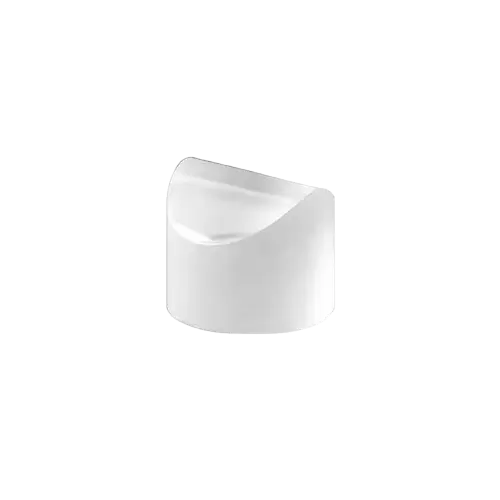
In industrial laser metrology systems, laser line generation is not a visual aid but a geometric measurement reference that directly defines system-level accuracy boundaries.
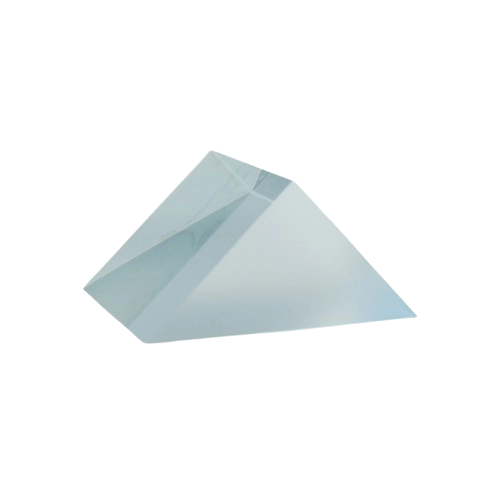
In modern optical engineering systems, especially in laser instrumentation, medical imaging, and industrial vision inspection, the role of a prism is no longer limited to simple beam deviation. For optical system designers and integrators working with precision optical prism lenses, the real challenge lies in maintaining sub-micron optical path stability, angular deviation accuracy, and multi-wavelength transmission consistency under complex system conditions.
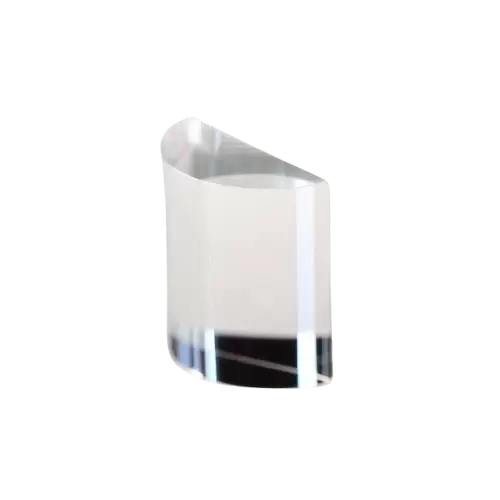
In modern optical engineering, plano convex lenses are no longer treated as simple focusing elements. Instead, they are engineered components that directly determine energy distribution accuracy, wavefront integrity, and system-level optical efficiency in applications ranging from high-power laser processing to precision metrology and scientific imaging systems.