

 en
en
 English
 繁体中文
繁体中文 Japanese
 Korean
 Russian
 German
News
Deepen Optoelectronic Resources, Lead Technological Breakthroughs


Deepen Optoelectronic Resources, Lead Technological Breakthroughs
For optical engineers and procurement teams, choosing a plano concave lens is rarely just a matter of selecting a diameter. A lens may need to produce a specific negative focal length, control beam divergence, compensate spherical aberration, or work reliably at a particular wavelength. At the same time, laser equipment and imaging systems can have very different requirements for optical material, surface accuracy, focal length tolerance, and coating.
A plano concave lens provides a practical solution when a positive lens cannot deliver the required optical behavior. Its concave surface causes parallel incident rays to diverge after transmission, giving the lens a negative focal length. This makes it useful for beam expansion, divergence control, optical system correction, and other applications where a controlled negative optical power is required.
For procurement teams, the challenge is connecting these optical requirements with manufacturing specifications and cost. The following guide explains the main plano concave lens uses, how negative focal length affects an optical system, and which specifications have the greatest influence on plano concave lens price.
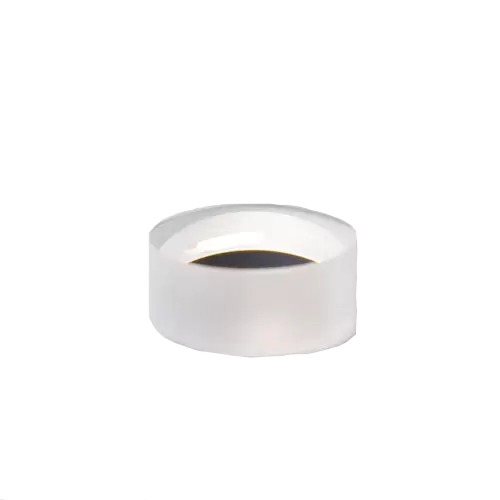
A plano concave lens has one plane surface and one concave spherical surface. When parallel rays enter the lens, the emerging rays diverge as though they originated from a virtual focal point on the incident side. Therefore, the focal length is negative.
The magnitude of the negative focal length determines the strength of the lens. A lens with a -50 mm focal length has considerably stronger negative optical power than one with a -1000 mm focal length. In practical beam-control applications, selecting the focal length should therefore be based on the required divergence change and the distance available within the optical system rather than simply choosing the shortest or longest value.
ECOPTIK can manufacture plano concave lenses with focal lengths from -50 mm to -2000 mm, providing options for both relatively strong beam divergence and more gradual optical power.
Optical precision becomes increasingly important when the lens is incorporated into a high-performance laser or imaging system. ECOPTIK offers surface accuracy from λ/2 to λ/10 at 632.8 nm, 532 nm, etc. A tighter surface figure helps reduce wavefront errors introduced by the lens, which can be important when the plano concave element is used in a precision optical path.
Surface quality also affects the practical performance of the component. Options include 60/40, 40/20, and 20/10, depending on the application. For a general optical system, 60/40 may provide an appropriate balance between performance and manufacturing cost. Higher-demand laser or imaging applications may justify 40/20 or 20/10 when surface defects need to be more tightly controlled.
Another important consideration is spherical aberration. Plano concave lenses have negative spherical aberration, which can be useful for balancing positive spherical aberration generated by other optical elements. Instead of treating the plano concave lens as an isolated component, optical designers can use its aberration characteristics as part of the overall system correction strategy.
The orientation of the lens also matters. In typical optical designs, the curved surface is generally positioned toward the larger object distance or the infinite conjugate side to reduce spherical aberration. This is not simply an installation preference; it follows the optical behavior of the curved surface and the way marginal rays are refracted.
One of the most important plano concave lens uses is controlling the divergence of an optical beam. Because the lens introduces negative optical power, it can cause an initially collimated beam to diverge at a controlled rate.
In a beam-expanding system, a plano concave lens is commonly paired with a positive lens. The negative lens first expands the beam, while the positive lens can subsequently recollimate it. The final beam diameter and divergence depend on the focal lengths and spacing of the optical elements.
This approach is useful in laser systems where beam diameter, numerical aperture, or downstream spot size must be controlled without changing the laser source itself.
Laser systems often require precise control of beam geometry before the beam reaches a scanner, focusing objective, spatial filter, or other optical component. A plano concave lens can provide the required negative optical power while maintaining a relatively simple optical configuration.
The appropriate material depends heavily on wavelength. Optical glass may be suitable for many visible and near-infrared systems, while fused silica is often considered when UV transmission, thermal stability, or high laser damage resistance is important. Sapphire, CaF₂, MgF₂, Si, ZnSe, and ZnS can also be selected for specific spectral and environmental requirements.
In imaging systems, a plano concave lens can be used to introduce negative optical power, modify the effective focal length, and help balance aberrations within a multi-element lens assembly.
For example, when a positive lens group produces unwanted positive spherical aberration, a properly selected negative lens can contribute compensating negative spherical aberration. The result depends on the complete optical design, so focal length alone should not be used to select the component.
Optical instruments often have limited space and strict requirements for optical alignment. A plano concave lens can be used where a compact negative-power element is required for beam conditioning, relay optics, aperture control, or optical correction.
For precision measurement equipment, specifications such as center deviation and clear aperture become particularly important. ECOPTIK provides center deviation from less than 3 arc min to 30 arc sec and a clear aperture greater than 85% of the diameter, depending on the specification.
The first parameter to determine is the required focal length. If the system needs strong divergence over a short optical path, a shorter negative focal length may be appropriate. If the system requires a more gradual change in beam angle, a longer negative focal length may provide better control.
The second consideration is the optical material. Material selection should be based on wavelength, transmission, thermal conditions, laser power, environmental exposure, and required optical performance. ECOPTIK works with materials including optical glass, fused silica, sapphire, CaF₂, MgF₂, Si, ZnSe, and ZnS, as well as glass materials from suppliers such as Schott, CDGM, and Corning.
Diameter is another practical parameter. ECOPTIK supports plano concave lens diameters from 2 mm to 300 mm. Diameter tolerance can be ±0.05 mm for lenses up to 50 mm and ±0.1 mm for lenses above 50 mm.
For precision applications, focal length tolerance must also be considered. ECOPTIK can provide focal length tolerances according to the required focal-length range, with tighter tolerances available for appropriate specifications.
Plano concave lens price is determined by the complete optical specification rather than diameter alone.
Material is one of the first cost factors. Standard optical glass generally has a different cost structure from fused silica, sapphire, CaF₂, or infrared-transmitting materials such as ZnSe and ZnS. Material availability, purity, wavelength range, and manufacturing difficulty can all influence the final quotation.
Diameter also affects price because larger optics require more material and tighter control during grinding, polishing, inspection, and handling. A 100 mm lens with the same focal length does not have the same manufacturing requirements as a 10 mm lens.
Focal length and focal length tolerance are also important. A standard negative focal length with relatively relaxed tolerance is generally easier to manufacture than a customized focal length requiring tighter control.
Surface accuracy and surface quality have a direct relationship with manufacturing effort. Moving from λ/2 toward λ/10 surface accuracy requires more demanding polishing and measurement. Likewise, 20/10 surface quality normally requires stricter surface-defect control than 60/40.
Center deviation and clear aperture can further affect cost. A lens intended for a precision optical assembly may require tighter angular alignment and more usable aperture than a general-purpose component.
Coating is another major variable. The coating should be selected according to operating wavelength, angle of incidence, transmission requirements, laser power, and environmental conditions. A customized multilayer coating will naturally have a different cost from an uncoated lens.
For this reason, procurement teams should compare plano concave lens quotations against the same technical specification rather than comparing unit prices alone.
A qualified manufacturer should be evaluated on more than its product catalog. Optical fabrication capability, material sourcing, metrology, customization, and quality documentation all affect whether the component will perform consistently in production.
ECOPTIK has 15 years of experience in optical component fabrication technology and manufactures precision optical components including domes, spherical lenses, micro-optical components, cylindrical mirrors, filters, prisms, and windows. The company supports materials ranging from conventional optical glass to fused silica, sapphire, CaF₂, MgF₂, Si, ZnSe, and ZnS.
For customers requiring more than individual optical elements, ECOPTIK also provides lens assembly services. Its measurement capabilities include ZYGO laser interferometers, ZEISS CMM Spectrum, and Agilent Cary 7000 UMS, supporting dimensional, wavefront, and spectral testing and the provision of product reports.
For optical engineers, this combination is valuable because lens performance cannot be separated from measurement capability. For procurement teams, it also provides a more practical basis for evaluating whether a supplier can consistently manufacture customized specifications rather than simply offering standard catalog optics.
A plano concave lens should ultimately be selected according to the optical function it must perform. Negative focal length determines its optical power and beam-diverging behavior, while material, surface accuracy, surface quality, center deviation, clear aperture, and coating determine whether that optical power can be delivered reliably within a specific system. By evaluating these parameters together, engineers can achieve the required beam control and aberration correction while procurement teams can better understand and manage plano concave lens price. For customized optical requirements, working directly with a manufacturer capable of both precision fabrication and metrology can also reduce the gap between optical design specifications and production results.
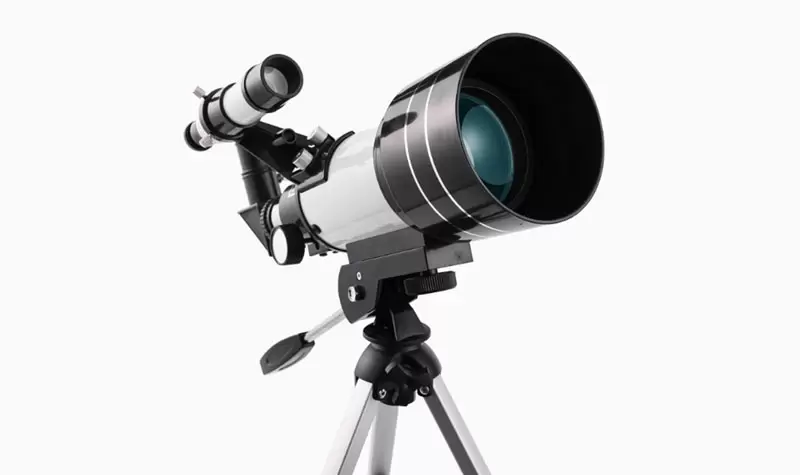
A reflective telescope is a telescope that uses the principle of reflection to image, and its imaging principle and optical path are different from those of a refracting telescope. Reflective telescopes use convex lens to reflect light, and then project an image through a small lens placed at the focal point, thereby achieving the function of magnifying distant objects.

A Micro Lens Array is a two-dimensional array composed of many tiny lenses. Each micro lens can focus the incident light onto a small area, and by controlling the focal length and position of each micro lens, control and adjustment of the light can be achieved.
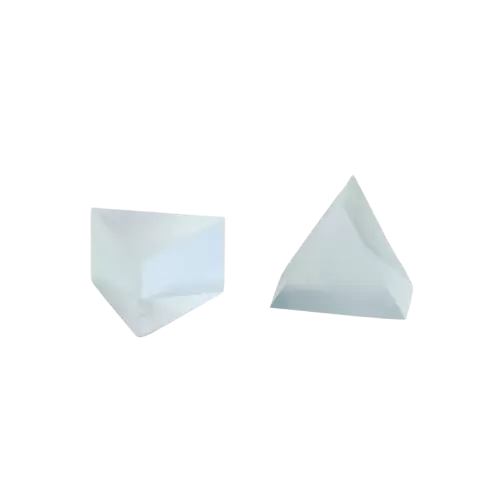
In modern optical engineering, every component inserted into a light path influences system performance, alignment tolerance, energy efficiency, and long-term stability.