

 en
en
 English
 繁体中文
繁体中文 Japanese
 Korean
 Russian
 German
News
Deepen Optoelectronic Resources, Lead Technological Breakthroughs


Deepen Optoelectronic Resources, Lead Technological Breakthroughs
In modern optical engineering, every component inserted into a light path influences system performance, alignment tolerance, energy efficiency, and long-term stability. While lenses often receive the most attention during optical design, experienced optical engineers understand that beam steering elements frequently determine whether an optical system achieves its intended performance targets.
Among these components, the right angle prism remains one of the most widely deployed and technically versatile optical elements. From laser processing equipment and interferometric measurement systems to imaging instruments and industrial inspection platforms, right angle prisms perform critical functions that extend far beyond simple light reflection.
However, many procurement teams and even some system integrators tend to view right angle prisms as standardized commodity components. In practice, the selection of appropriate Right angle prism types and the understanding of specific Right angle prism uses can significantly influence optical efficiency, wavefront quality, beam pointing accuracy, environmental durability, and overall system resolution.
The challenge is not simply selecting a prism dimension. Engineers must evaluate material properties, total internal reflection behavior, coating requirements, manufacturing tolerances, wavelength compatibility, environmental operating conditions, and integration requirements across the entire optical assembly.
For optical system developers, this transforms the question from “Which prism should I buy?” into “Which prism architecture minimizes system-level optical losses while maximizing long-term stability?”
This article examines the engineering logic behind Right angle prism types and Right angle prism uses, focusing on how prism selection impacts real-world optical system performance rather than merely describing the component itself.
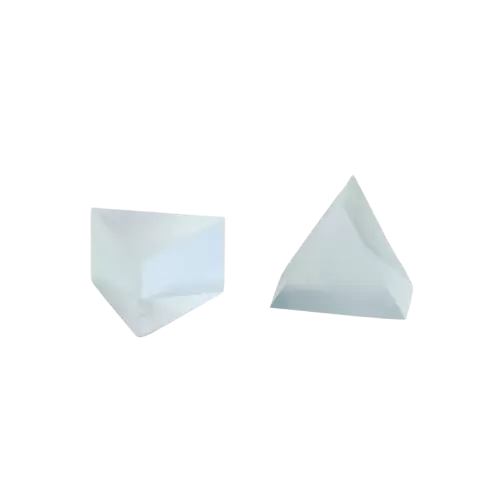
The popularity of right angle prisms is not accidental. Their geometry provides a highly efficient method for redirecting optical paths while maintaining mechanical simplicity and long-term stability.
Unlike conventional mirror assemblies, a right angle prism can perform beam steering through total internal reflection (TIR), eliminating many of the degradation mechanisms associated with reflective coatings.
The core geometry consists of two perpendicular legs and a hypotenuse surface. Depending on the incident beam orientation, the prism can perform:
A precise 90-degree beam deviation, allowing designers to redirect optical paths inside compact instruments while maintaining high positional repeatability and minimizing alignment drift that can occur with multi-mirror assemblies.
A 180-degree beam return configuration, enabling retroreflection-style optical layouts where the beam exits parallel to its original direction, a configuration frequently employed in interferometry, laser metrology, and precision alignment systems.
Image orientation correction within optical assemblies, helping maintain proper image geometry when optical paths require folding or spatial compression inside compact instruments.
These capabilities explain why right angle prisms remain common in industrial, scientific, medical, aerospace, and semiconductor optical systems.
One of the most important engineering advantages associated with many Right angle prism uses is the ability to utilize total internal reflection.
Unlike metallic or dielectric mirrors, TIR does not depend on a deposited reflective layer.
Instead, reflection occurs naturally when light encounters the internal prism-air boundary at an angle exceeding the critical angle.
The advantages of TIR become increasingly important as system precision requirements increase.
Key benefits include:
Reflection efficiency can approach theoretical optical limits because no metallic absorption occurs at the reflecting interface, helping preserve optical power throughout the system and reducing cumulative energy losses in multi-stage optical assemblies.
Long-term optical stability is improved because there is no reflective coating exposed to oxidation, contamination, humidity, or environmental degradation that could gradually reduce reflectivity over time.
Surface durability is enhanced since the reflective mechanism is generated by the material itself rather than an applied coating, making the prism more resistant to environmental stresses and handling risks.
Consistent optical performance is maintained throughout extended operational lifetimes, which is particularly valuable in industrial instruments designed for continuous operation over many years.
Despite its advantages, TIR is not automatically guaranteed.
Several factors determine whether total internal reflection will occur properly:
Prism refractive index directly affects the critical angle, meaning different materials create different TIR operating windows and influence allowable beam incidence conditions.
Incident beam angle must remain within acceptable limits to ensure the optical path reaches the hypotenuse at an angle sufficient for total reflection rather than partial transmission.
Environmental conditions surrounding the prism can alter boundary conditions. For example, optical bonding or immersion applications may eliminate TIR entirely if refractive index relationships change.
When TIR conditions are not achievable, engineers often specify reflective coatings on the hypotenuse surface to maintain desired performance.
One of the most common misconceptions is that all right angle prisms perform similarly.
In reality, different Right angle prism types are optimized for very different operating environments.
Material selection alone can dramatically alter system performance.
BK7 remains one of the most widely used optical glass materials.
Its popularity results from a balance between optical performance, manufacturing efficiency, and cost-effectiveness.
BK7 right angle prisms are typically preferred for:
Visible wavelength imaging systems where transmission efficiency, optical homogeneity, and manufacturing cost must be balanced without requiring specialized ultraviolet or infrared performance.
Industrial alignment systems that require stable beam steering performance while maintaining reasonable procurement budgets for large-scale deployment.
Laboratory instrumentation where environmental conditions remain relatively controlled and extreme thermal or radiation resistance is not required.
Advantages include:
Excellent optical uniformity.
Reliable polishing characteristics.
Strong dimensional stability.
Competitive manufacturing cost.
However, BK7 may not be ideal for deep ultraviolet applications or harsh environmental conditions.
For systems operating in ultraviolet regions or demanding environments, UV fused silica often becomes the preferred choice.
Compared with BK7, fused silica offers several important advantages.
These include:
Superior ultraviolet transmission characteristics, enabling efficient optical performance in laser systems and spectroscopy platforms operating below the visible spectrum.
Lower thermal expansion coefficients, reducing optical alignment drift when equipment experiences temperature fluctuations during operation.
Higher laser damage thresholds, making fused silica particularly attractive in high-energy pulsed laser systems where optical surfaces are subjected to significant power densities.
Improved resistance to thermal shock and environmental stress, supporting deployment in aerospace, defense, semiconductor, and industrial laser applications.
Although fused silica generally increases procurement cost, it often reduces long-term system risk in demanding environments.
Not every application can rely exclusively on total internal reflection.
Coated prism configurations are commonly selected when optical requirements demand specialized performance.
Examples include:
Aluminum-coated prisms used in broadband optical systems where cost efficiency and moderate reflectivity requirements must be balanced.
Silver-coated prisms selected when visible wavelength reflectivity becomes a primary design consideration and high reflection efficiency is required.
Dielectric-coated prisms optimized for specific wavelength ranges where reflection performance must exceed conventional metallic coating capabilities.
Engineers frequently select coated prisms when optical path geometry prevents consistent TIR conditions or when system performance requirements demand customized spectral behavior.
High-energy laser environments introduce unique design challenges.
Standard optical materials may suffer from:
Thermal lensing effects.
Surface heating.
Coating degradation.
Optical distortion.
For these applications, prism selection focuses on:
Laser damage threshold.
Absorption characteristics.
Thermal conductivity.
Surface figure stability.
In many cases, UV fused silica combined with precision dielectric coatings becomes the preferred solution.
The usefulness of a prism is ultimately determined by manufacturing quality.
Even when material selection is correct, inadequate fabrication precision can compromise system performance.
Prism angle tolerance directly affects beam deviation accuracy.
Consider a laser alignment system where the optical path extends several meters.
A small angular deviation can generate substantial positional error downstream.
Typical precision requirements include:
Standard industrial tolerances of approximately ±3 arc minutes for general optical systems.
High-precision tolerances approaching ±30 arc seconds for demanding metrology, interferometry, semiconductor inspection, and aerospace applications.
The tighter the angle tolerance, the lower the resulting beam steering error.
Optical surfaces must preserve wavefront integrity.
Surface flatness specifications such as:
λ/2
λ/4
λ/8
λ/10 at 633 nm
directly influence optical performance.
Higher flatness quality reduces:
Wavefront distortion.
Beam divergence.
Resolution degradation.
Interference measurement uncertainty.
For interferometric systems, wavefront quality often becomes one of the most critical selection criteria.
Surface quality specifications such as:
60/40
40/20
20/10
describe scratch and dig characteristics.
Improved surface quality contributes to:
Reduced stray light generation.
Lower scattering losses.
Enhanced imaging contrast.
Improved signal-to-noise ratio.
In machine vision and precision imaging systems, these benefits directly affect measurement accuracy.
Understanding Right angle prism uses requires examining their role within complete optical architectures.
Rather than functioning as isolated components, prisms typically solve specific system-level design challenges.
One of the most common Right angle prism uses is beam steering.
In laser systems, prisms provide:
Stable optical path redirection without requiring mechanically sensitive mirror assemblies that may drift over time due to vibration or thermal cycling.
Compact optical packaging solutions that allow designers to reduce instrument footprint while maintaining optical path length and alignment precision.
Improved environmental robustness because prism-based steering mechanisms typically contain fewer adjustable elements than mirror-based alternatives.
These advantages are particularly valuable in industrial laser processing equipment.
Interferometers rely heavily on optical path stability.
Right angle prisms contribute by:
Maintaining precise beam geometry throughout multiple optical paths where phase measurement accuracy depends on minimizing optical alignment variation.
Supporting repeatable beam return configurations necessary for high-resolution displacement, vibration, and dimensional metrology applications.
Preserving wavefront integrity when manufactured to high flatness and angular accuracy specifications.
In such systems, prism quality directly affects measurement uncertainty.
Modern imaging equipment frequently requires compact optical packaging.
Prisms help achieve this by:
Folding long optical paths into smaller instrument volumes without introducing excessive alignment complexity or mechanical instability.
Redirecting image paths while preserving optical quality and minimizing energy losses.
Supporting image orientation management when sensor placement constraints require unconventional optical geometries.
These capabilities are widely utilized in medical imaging, machine vision, and aerospace optics.
Many instruments face severe space limitations.
Right angle prisms enable designers to:
Compress optical paths into compact mechanical structures while maintaining required focal distances and imaging performance.
Improve packaging efficiency without sacrificing optical throughput.
Simplify mechanical integration by reducing the need for multiple mirror mounts and adjustment mechanisms.
As instruments continue to shrink while performance requirements increase, prism-based path compression becomes increasingly valuable.
Successful prism selection requires evaluating multiple interacting parameters.
Focusing on a single specification often creates unintended performance compromises.
Experienced engineers typically examine:
Visible imaging systems often favor BK7 due to cost efficiency and excellent transmission characteristics across the visible spectrum.
Ultraviolet applications frequently require UV fused silica to maintain transmission performance at shorter wavelengths.
Specialized laser systems may require custom material and coating combinations optimized for narrow wavelength ranges.
Laboratory environments may allow wider material selection flexibility because temperature and humidity remain controlled.
Industrial installations often require materials capable of withstanding vibration, contamination, thermal cycling, and long operational periods.
Aerospace and defense systems frequently prioritize environmental durability above manufacturing cost considerations.
General beam steering applications may tolerate moderate angle and surface specifications.
Metrology systems often require premium flatness, surface quality, and angular precision.
Semiconductor inspection equipment typically demands extremely tight optical tolerances to preserve imaging resolution.
Low-power optical systems prioritize cost and optical quality.
High-power laser systems require careful consideration of absorption characteristics, thermal behavior, and damage thresholds.
Ignoring laser power density can lead to catastrophic optical failure even when other specifications appear acceptable.
The performance of a prism ultimately reflects the quality of its manufacturing process.
ECOPTIK has spent more than 15 years developing precision optical fabrication capabilities focused on advanced optical components including prisms, dome optics, spherical lenses, cylindrical mirrors, filters, windows, and micro-optical assemblies.
As an optical customization partner, ECOPTIK supports demanding optical projects through:
Material options including BK7, UV fused silica, Sapphire, CaF2, MgF2, ZnSe, ZnS, Corning glass, CDGM glass, and Schott optical materials, allowing engineers to optimize optical performance according to wavelength, environmental, and laser power requirements.
Precision fabrication capabilities covering right angle prism dimensions from 3 mm to 200 mm, enabling deployment across compact imaging systems, industrial laser equipment, and large-scale optical assemblies.
Manufacturing tolerances reaching ±0.05 mm dimensional accuracy and angular tolerances as tight as ±30 arc seconds, supporting applications where beam pointing precision directly influences system performance.
Surface quality options from 60/40 to 20/10 and surface flatness specifications ranging from λ/2 to λ/10 at 633 nm, allowing customization according to imaging, metrology, and laser requirements.
Comprehensive testing capabilities utilizing ZYGO laser interferometers, ZEISS CMM Spectrum systems, and Agilent Cary 7000 UMS instrumentation to verify optical performance and provide traceable quality documentation.
Available product configurations include ECO-RAP-5, ECO-RAP-10, ECO-RAP-12.5, ECO-RAP-15, ECO-RAP-20, ECO-RAP-25, and ECO-RAP-50, with customized coating solutions available according to customer requirements.
Understanding Right angle prism types and Right angle prism uses requires much more than knowing how a prism redirects light. In modern optical engineering, prism selection directly influences beam steering accuracy, wavefront quality, energy efficiency, environmental stability, imaging performance, and overall system reliability.
Factors such as total internal reflection conditions, refractive index behavior, material selection, coating architecture, surface flatness, angle tolerance, and manufacturing quality all contribute to final system performance. The optimal solution is rarely determined by size alone; instead, it emerges from a careful evaluation of wavelength requirements, environmental conditions, optical accuracy targets, and laser power considerations.
For optical engineers, system integrators, and instrument developers, selecting the correct right angle prism type is fundamentally a system-level design decision. By combining precision manufacturing, advanced metrology, multiple optical material options, and extensive customization capabilities, ECOPTIK helps customers optimize optical architectures for demanding applications ranging from laser systems and interferometers to imaging platforms and industrial inspection equipment.
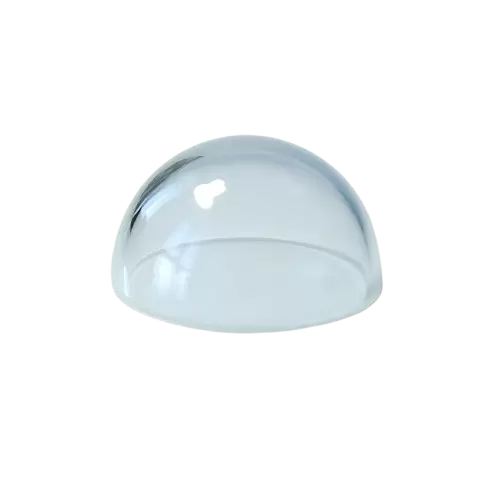
Learn what a super hemisphere dome is in precision optics, how it protects sensitive systems, and why custom optical dome manufacturing matters.

In industrial laser metrology systems, laser line generation is not a visual aid but a geometric measurement reference that directly defines system-level accuracy boundaries.
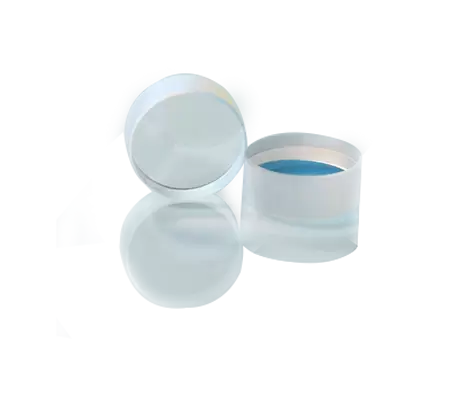
Spherical lens coating directly affects how efficiently an optical system transmits light, controls reflections, and maintains image quality over time. An uncoated lens can lose a meaningful portion of incident light through surface reflections, while an unsuitable or poorly controlled coating may introduce stray light, inconsistent transmission, surface defects, or premature coating failure.