

 en
en
 English
 繁体中文
繁体中文 Japanese
 Korean
 Russian
 German
News
Deepen Optoelectronic Resources, Lead Technological Breakthroughs


Deepen Optoelectronic Resources, Lead Technological Breakthroughs
In modern optical engineering, plano convex lenses are no longer treated as simple focusing elements. Instead, they are engineered components that directly determine energy distribution accuracy, wavefront integrity, and system-level optical efficiency in applications ranging from high-power laser processing to precision metrology and scientific imaging systems.
For optical designers, system integrators, and procurement engineers, understanding plano convex lens uses is not just about knowing where the lens is applied, but about understanding how curvature design, material selection, coating technology, and surface precision collectively define real system performance under operational stress conditions.
At ECOPTIK, with over 15 years of optical component manufacturing expertise, plano convex lenses are developed using precision optical glass such as Schott, CDGM, Corning materials, fused silica, CaF₂, ZnSe, and other engineered substrates, combined with ultra-precision polishing, interferometric inspection, and optional anti-reflective coating optimization. This engineering-driven approach ensures that every lens is not only optically correct in design, but also stable under real industrial load conditions such as continuous laser exposure, thermal variation, and long-cycle operation.
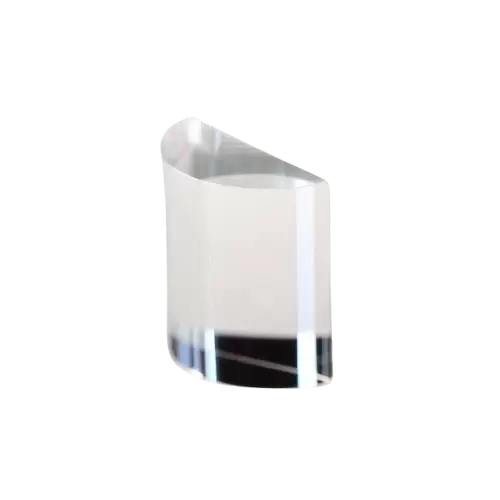
The fundamental reason plano convex lenses are widely used in optical systems is their ability to concentrate collimated or diverging light into a controlled focal region with predictable aberration behavior. However, in high-end optical engineering, the real value is not simply “focusing light,” but controlling how energy is distributed at the focal plane.
In laser systems, for example, even minor deviations in surface curvature or refractive index uniformity can lead to measurable beam distortion, resulting in uneven energy density on the target surface. This directly impacts cutting quality in industrial laser machining, signal accuracy in optical sensors, and resolution stability in imaging systems.
Plano convex lenses are therefore selected not only based on focal length, but also on:
Curvature radius optimization for spherical aberration reduction
Material dispersion control for wavelength stability
Surface quality (typically 40-20 or 60-40 scratch-dig standards)
Coating reflectance control for energy efficiency
These parameters collectively define whether a lens is suitable for basic optical focusing or for high-precision laser-grade optical systems.
One of the most critical engineering decisions in plano convex lens selection is the relationship between focal length and curvature radius. A shorter focal length increases convergence speed but also increases spherical aberration sensitivity, while longer focal lengths improve beam uniformity but require higher system spacing.
In industrial laser focusing systems, ECOPTIK designs plano convex lenses with focal lengths ranging from 4 mm to 1000 mm, allowing precise adaptation across micro-optical systems and large-scale beam delivery setups.
The curvature optimization process is not arbitrary. It is based on ray-tracing simulations that evaluate:
Marginal ray deviation under high NA conditions
Wavefront distortion across aperture zones
Energy distribution uniformity at focal plane
This is especially important in high-power laser systems, where thermal lensing effects can slightly modify refractive behavior during continuous operation. A poorly optimized curvature design will amplify these deviations, leading to unstable focus drift and reduced processing accuracy.
Material choice is one of the most decisive factors influencing plano convex lens uses in high-performance systems.
In ECOPTIK’s production systems, materials are selected based on wavelength compatibility, thermal stability, and absorption characteristics:
N-BK7 / H-K9L: Suitable for general visible optical systems with balanced cost-performance behavior
Fused Silica (UVFS): Preferred for UV laser systems and high thermal stability environments
CaF₂: Used in low dispersion systems requiring high transmission in infrared and UV bands
ZnSe / ZnS: Designed for infrared and CO₂ laser applications
Each material behaves differently under laser exposure. For instance, fused silica exhibits extremely low thermal expansion, making it ideal for continuous high-power laser systems where thermal distortion must be minimized. In contrast, ZnSe provides superior IR transmission but requires stricter handling due to its mechanical sensitivity.
These material differences directly influence system-level outcomes such as:
Beam focus stability under thermal load
Transmission efficiency across wavelength bands
Long-term optical degradation resistance
In precision optical systems, surface quality is not a cosmetic parameter—it is a functional performance determinant.
ECOPTIK employs ultra-precision polishing combined with interferometric inspection systems such as ZYGO laser interferometers and ZEISS coordinate measurement systems, enabling control of surface accuracy down to λ/4 at 632.8 nm in high-end configurations.
Surface roughness and micro-defects directly influence:
Scattering loss in high-power laser beams
Wavefront distortion in imaging systems
Signal-to-noise ratio in optical detection modules
Even minor surface irregularities can generate micro-scattering centers, which accumulate into measurable energy loss in long optical paths. In laser processing systems, this translates into reduced cutting efficiency and inconsistent material interaction depth.
For this reason, ECOPTIK integrates nanometer-level surface control processes, ensuring that each plano convex lens maintains consistent wavefront integrity across its entire aperture.
In industrial optical systems, uncoated lenses can suffer reflection losses exceeding 8% per surface, which becomes unacceptable in high-power or multi-element optical chains.
To address this, ECOPTIK applies customized anti-reflection (AR) coatings optimized for specific wavelength bands. These coatings are designed to:
Reduce Fresnel reflection losses
Improve energy transmission efficiency
Minimize ghost imaging in multi-lens assemblies
In laser systems, improved transmission efficiency directly translates into:
Higher processing speed in material cutting
Reduced energy consumption per operation cycle
Improved beam consistency at target surfaces
Plano convex lenses are widely deployed across multiple high-precision optical domains, but their engineering requirements differ significantly depending on application context.
In laser cutting, engraving, and welding systems, plano convex lenses focus high-energy beams onto extremely small spot sizes. The key requirement here is not only focus sharpness but also thermal stability under continuous energy input.
In imaging systems, these lenses are used to form controlled focal planes while maintaining minimal distortion across field angles. Aberration control is critical in maintaining image fidelity.
In optical sensor systems, plano convex lenses are used to shape incoming light onto photodiodes or CCD arrays, ensuring uniform illumination and accurate signal interpretation.
In laboratory systems, these lenses are used for beam conditioning, divergence control, and experimental optical setup calibration where reproducibility is essential.
Each of these applications requires a different balance of focal precision, transmission efficiency, and aberration control.
When procurement teams evaluate plano convex lens price, the most common misconception is that cost is primarily driven by material type alone. In reality, price variation is determined by a combination of engineering and manufacturing precision factors.
Key drivers include:
Surface accuracy tolerance (λ/2 vs λ/4 differences)
Material purity and homogeneity level
Coating complexity and wavelength customization
Aperture size and diameter tolerance control
Batch-to-batch optical consistency requirements
High-precision lenses require significantly more processing time, stricter environmental control during polishing, and advanced metrology validation. These factors directly influence cost structure but also determine whether a lens can operate reliably in high-power or precision-critical environments.
ECOPTIK integrates optical design simulation, precision manufacturing, and assembly services to deliver custom-engineered plano convex lenses optimized for system-level performance.
The engineering workflow includes:
Optical simulation for aberration prediction and correction
Material selection based on wavelength and thermal environment
Precision machining with controlled curvature profiling
Interferometric validation for wavefront accuracy
Optional lens assembly integration for system deployment
A key differentiator is the use of non-spherical optimization-assisted design methods, which allow further reduction of spherical aberration in high-NA systems without compromising transmission efficiency.
Additionally, nanometer-level surface roughness control ensures that optical scattering is minimized even in high-power laser environments, improving system reliability and long-term stability.
Plano convex lenses are no longer passive optical elements; they are active performance determinants in modern optical systems. Their engineering quality directly influences beam stability, energy efficiency, imaging resolution, and system reliability under operational stress.
Understanding plano convex lens uses requires moving beyond basic lens geometry into a deeper evaluation of material science, optical design engineering, and precision manufacturing capability.
Through high-precision fabrication, advanced coating technology, and rigorous interferometric inspection, ECOPTIK ensures that each plano convex lens delivers stable, repeatable, and high-performance optical behavior across industrial and scientific applications where failure or drift is not acceptable.
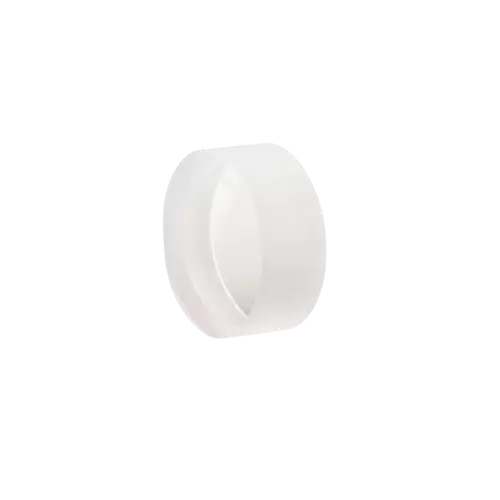
For precision optical systems, choosing a convex lens based only on diameter and focal length is rarely enough. The term “convex lens” covers several optical geometries, including double convex and plano-convex designs, and their performance can differ significantly even when their nominal focal lengths are similar.
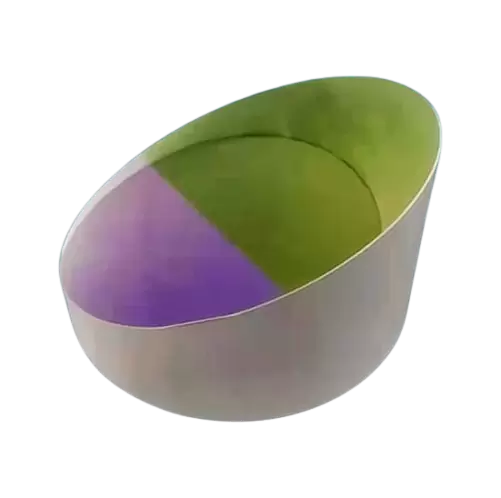
In many advanced optical systems, traditional mirrors and lenses begin to show limitations when designers need higher energy efficiency, broader wavelength compatibility, and more stable beam control. Spherical mirrors can introduce spherical aberration, while transmission lenses may suffer from chromatic effects, absorption losses, and thermal problems when exposed to high-power laser beams.
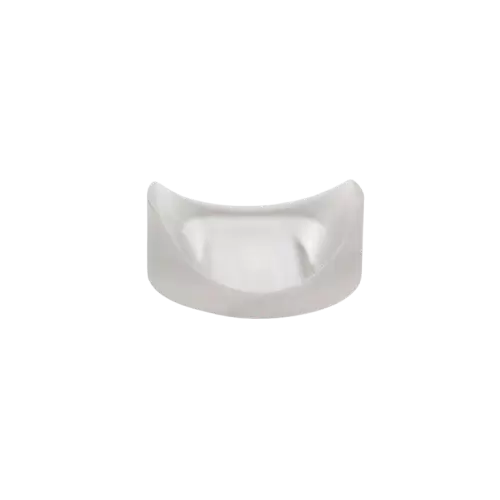
In many laser and imaging systems, controlling light in only one direction is a critical requirement. However, conventional cylindrical lenses can create challenges during integration, especially when optical alignment, positioning accuracy, and long-term stability are important.