

 en
en
 English
 繁体中文
繁体中文 Japanese
 Korean
 Russian
 German
News
Deepen Optoelectronic Resources, Lead Technological Breakthroughs


Deepen Optoelectronic Resources, Lead Technological Breakthroughs
In many optical systems, beam control is required in only one direction. A laser may need to expand horizontally while retaining its original vertical dimension, or an imaging system may need to modify the width of an image without applying the same optical power to its height. A conventional spherical lens cannot provide this type of selective control because its optical power acts on both axes.
This is why engineers evaluating plano concave lens uses often focus on cylindrical optics rather than simply looking for a lens that produces a larger beam. A plano-concave cylindrical lens introduces negative cylindrical optical power along one axis, causing a collimated beam to diverge in that direction while leaving the orthogonal axis substantially unaffected. The correct focal length, material, aperture, and surface specification then depend on the actual beam path and system requirements.
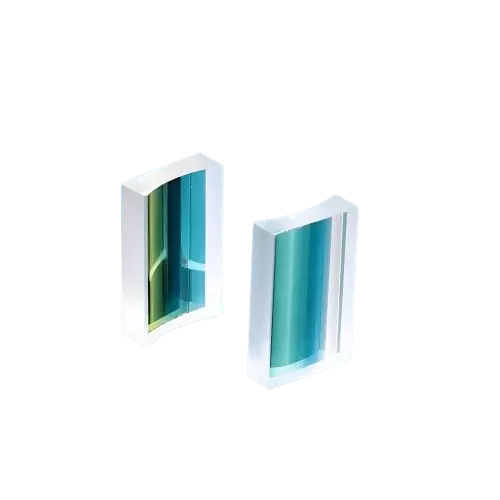
A plano-concave cylindrical lens has a flat surface and a concave cylindrical surface. Unlike a spherical negative lens, its optical power is concentrated in one meridional direction.
When collimated light enters the lens, the cylindrical surface changes the propagation angle of rays in one axis. The rays diverge as though they originated from a virtual line focus located on the incident side of the lens. The orthogonal axis receives little or no equivalent cylindrical power.
This distinction is important in beam-shaping systems. If a laser beam is wider in the vertical direction than in the horizontal direction, a cylindrical lens can be selected to modify only the required axis. The resulting beam can move closer to the desired aspect ratio without introducing unnecessary optical power into the other axis.
The amount of divergence is closely related to the lens's negative focal length. A shorter absolute focal length, such as -10 mm, produces stronger optical power than a lens with a focal length of -200 mm. However, focal length alone does not determine the final beam size. The initial beam diameter, propagation distance, lens position, and desired output dimension must also be considered.
For example, a beam that must expand gradually over a relatively long optical path may require a substantially different focal length from a compact optical assembly where expansion must occur over only a short distance.
One of the most useful plano concave lens uses is anamorphic beam shaping. Many laser sources produce elliptical or asymmetric beams rather than perfectly circular profiles. If only one axis requires correction, a cylindrical negative lens can selectively increase that dimension.
The same principle applies to one-dimensional image compression. In an imaging system, cylindrical optical power can modify image geometry along one direction without applying the same magnification change to the perpendicular direction. This can be useful where the image must be matched to a detector, slit, or downstream optical element with an asymmetric active area.
Plano-concave cylindrical lenses can also be incorporated into laser beam expansion systems. The negative optical power causes one axis of a collimated beam to diverge, allowing the beam width to increase during propagation. When combined with other cylindrical or spherical optics, this controlled divergence can become part of a more complex beam-conditioning system.
Laser line generation is another application, although the exact optical arrangement needs to be considered carefully. A negative cylindrical element does not create a converging line focus in the same way as a positive cylindrical lens. Instead, it can be used to expand or reshape one axis before subsequent focusing optics generate the required line. In such a system, the plano-concave lens is part of the beam-conditioning stage rather than necessarily being the final focusing element.
This distinction helps prevent a common selection error: choosing a cylindrical lens according to the desired final beam shape without considering whether the optical system needs positive or negative cylindrical power at that particular position.
For a plano-concave cylindrical lens, focal length is not simply a number printed on the specification sheet. It determines the strength of negative optical power and therefore affects how quickly the selected axis diverges.
ECOPTIK provides focal lengths from -3.9 mm to -700 mm. The appropriate value depends on the starting beam diameter, required expansion, available propagation distance, and the position of other optical components.
A relatively short negative focal length is useful when strong divergence is required within a compact optical path. A longer negative focal length provides weaker cylindrical power and can be more appropriate when the beam needs to expand gradually over a longer distance.
The design should therefore begin with the required output beam dimension rather than lens diameter alone. Engineers should determine:
Initial beam size in the controlled axis
Required output beam size
Distance available for beam expansion
Desired divergence
Position of downstream optics
Required beam aspect ratio
The lens can then be selected according to the negative focal length required by the optical geometry.
Focal length tolerance also deserves attention. ECOPTIK offers tolerances from ±1% for high-precision requirements to ±3%. A variation in focal length changes the effective negative optical power and therefore the expected divergence. In a beam-shaping system with significant propagation distance, this difference can affect the beam size at the next optical element and require additional alignment or adjustment.
Material selection should follow the operating wavelength rather than simply the desired mechanical dimensions.
ECOPTIK offers plano-concave cylindrical lenses in materials including N-BK7/H-K9L, fused silica (UVFS), and CaF₂.
N-BK7/H-K9L is commonly considered for visible and near-infrared optical systems where its transmission range and established optical properties fit the application. Fused silica is particularly relevant when ultraviolet transmission, thermal characteristics, or broader spectral performance is required. CaF₂ can be selected for optical systems requiring transmission characteristics extending into ultraviolet and infrared regions.
For a laser beam-shaping assembly, the wavelength should therefore be defined before the substrate is selected. Material choice affects transmission and can also influence the overall optical design when dispersion becomes relevant.
Optical surface specifications can have a direct impact on beam behavior, especially in laser systems.
The available surface quality options include 40-20 and 60-40. Surface quality describes defects such as scratches and digs. For systems sensitive to stray light, these defects can contribute to scattering and unwanted background intensity.
Surface accuracy is specified at λ/2 or λ/4 @ 632.8 nm. Unlike surface quality, this parameter concerns the accuracy of the optical surface shape and therefore its influence on the transmitted wavefront.
For a general beam expansion system, the tightest surface specification may not be necessary. In a precision laser system, however, wavefront distortion can become more significant because the beam must retain a controlled profile after passing through the cylindrical element.
The mechanical diameter range is 2 mm to 300 mm, with a common diameter tolerance of +0.0/-0.1 mm. The required diameter should be related to the incident beam aperture and mechanical mounting arrangement. Oversizing the lens adds unnecessary package dimensions, while an insufficient clear aperture can clip the beam.
The most useful way to distinguish the two lens types is by their optical function.
A plano-concave cylindrical lens provides negative cylindrical power. It causes divergence in one axis and is therefore useful for one-axis beam expansion, aspect-ratio correction, and controlled beam shaping.
A plano-convex cylindrical lens provides positive cylindrical power. It converges light in one axis and can form a line focus from collimated input light.
The selection can therefore begin with a simple optical question:
Does the system need one-axis divergence or one-axis convergence?
If the beam needs to expand in one direction, a plano-concave cylindrical lens is the appropriate starting point. If the objective is to focus one axis or generate a line focus, a plano-convex cylindrical lens is generally more appropriate.
In some optical assemblies, both types may be used together. A negative cylindrical element can first expand or reshape one axis, while a positive cylindrical element later controls convergence. The combination allows the designer to manipulate beam aspect ratio and focusing geometry more independently than a single spherical lens would allow.
ECOPTIK has been researching optical component fabrication technology for 15 years and manufactures precision optics including cylindrical mirrors, spherical lenses, micro-optical components, filters, prisms, windows, and other customized optical elements.
For cylindrical lens applications, ECOPTIK offers material options including glass from Schott, CDGM, and Corning, as well as sapphire, CaF₂, MgF₂, fused silica, Si, ZnSe, and ZnS. The company also provides lens assembly services for applications where the optical element needs to be integrated into a larger assembly.
Its inspection capabilities include ZYGO laser interferometers, ZEISS CMM Spectrum, and Agilent Cary 7000 UMS, supporting dimensional, interferometric, and spectral testing and the provision of product reports.
This combination of material selection, fabrication, inspection, and assembly capability is relevant when a plano-concave cylindrical lens must be matched to a defined wavelength, beam geometry, tolerance, or integrated optical assembly rather than purchased as a generic component.
The real purpose of a plano-concave cylindrical lens is not simply to make a beam larger. Its value comes from applying negative optical power to one axis while preserving control over the other.
When selecting the lens, engineers should first define whether the system requires divergence, beam expansion, aspect-ratio correction, or one-dimensional image modification. The next step is to determine the required negative focal length from the initial beam size, target beam size, propagation distance, and downstream optical configuration.
Material must then be matched to wavelength, while diameter, focal length tolerance, surface quality, and surface accuracy should be selected according to the sensitivity of the application.
Understanding these relationships makes the question “What is a plano-concave lens used for?” much more useful than a simple definition. In laser beam shaping, anamorphic systems, imaging, and optical conditioning, the right plano-concave cylindrical lens is the one whose negative cylindrical power and specifications match the exact axis that needs to be controlled.

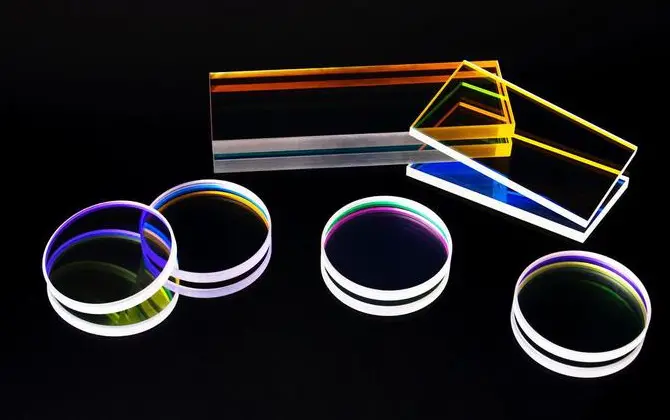
In the world of precision optics, thin-film coatings are what transform a simple piece of glass into a functional optical component—whether it's an anti-reflection coating that maximizes light transmission, a dielectric mirror that reflects specific wavelengths, or a filter that precisely separates spectral bands . The performance of these coatings directly determines whether an optical system succeeds or fails. But how do manufacturers verify coating quality without risking damage to expensive
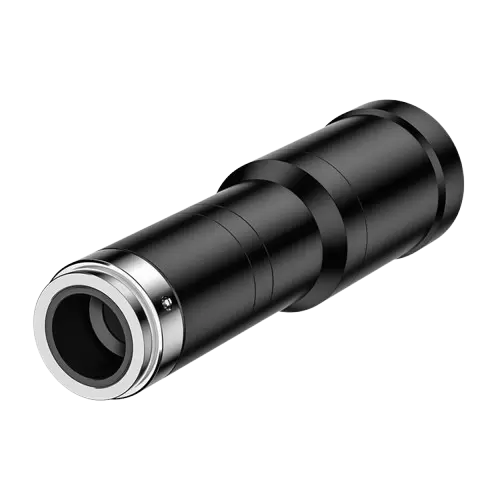
In precision machine vision, the lens can become a limiting factor even when the camera sensor and image-processing software are capable of resolving small dimensional differences. A conventional lens changes its apparent magnification as the object moves closer to or farther from the lens.