

 en
en
 English
 繁体中文
繁体中文 Japanese
 Korean
 Russian
 German
News
Deepen Optoelectronic Resources, Lead Technological Breakthroughs

Deepen Optoelectronic Resources, Lead Technological Breakthroughs
A standard visible-light lens is not automatically suitable for short-wave infrared imaging. As the operating wavelength moves beyond the visible range, optical transmission, dispersion, chromatic focus shift, aberration correction, coating performance, and detector matching all become design considerations. A lens optimized for visible wavelengths may transmit poorly at the target SWIR band or produce a different focal position and reduced image quality.
For industrial inspection, scientific imaging, and security monitoring, a SWIR lens therefore has to be designed around the required spectral range and detector rather than selected only by focal length. The choice of SWIR lens materials, optical configuration, AR coating, and mechanical interface can directly affect image contrast, resolution, system size, and cost. These factors also explain why SWIR lenses price can vary considerably between seemingly similar products.
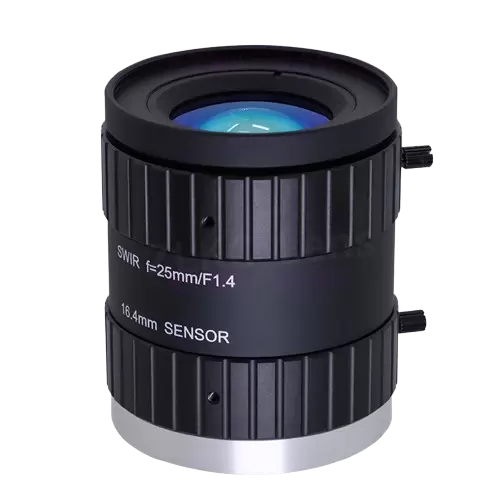
SWIR lens materials should be selected according to the actual operating band, optical prescription, environmental conditions, and manufacturing requirements. There is no single material that is optimal for every SWIR system.
For cameras using conventional InGaAs detectors around 900–1700 nm, fused silica, sapphire, selected optical glasses, and other near-infrared-compatible materials can be considered depending on the design. Fused silica is attractive when low thermal expansion and broad transmission are important. Its relatively low coefficient of thermal expansion can help maintain optical stability when temperature changes are a concern.
Sapphire provides high hardness and mechanical durability, making it useful where a protective optical element must tolerate demanding environments. However, sapphire is birefringent, so its optical behavior and crystal orientation need to be considered during system design.
CaF₂ becomes particularly useful when the required spectral range extends farther into the infrared. It offers broad transmission and low refractive index, but its relatively soft surface and sensitivity to thermal shock mean that mechanical handling, coating, and environmental protection require attention.
For longer SWIR ranges approaching 2.5 μm, materials such as ZnSe, ZnS, silicon, and specialized IR materials may enter the design discussion. Their higher refractive indices can provide strong optical power in compact designs, but this also changes surface reflections, aberration correction, coating requirements, and mechanical considerations.
Material selection should therefore begin with the wavelength requirement. A 900–1700 nm lens and a 1000–2500 nm lens should not simply use the same material set with a different coating. Extending the spectral range changes the transmission requirement, dispersion balance, coating design, detector compatibility, and often the number and type of optical elements required.
Material selection is only one part of SWIR lens design. The optical prescription must be matched to the detector and the imaging geometry.
Focal length determines the relationship between field of view and working distance. A longer focal length can provide a narrower field of view and greater angular magnification, while a shorter focal length is generally more appropriate when a wider scene needs to be covered.
F/# affects light collection, depth of field, diffraction, and system size. A lower F/# can provide more optical throughput, which can be valuable when SWIR illumination is limited. However, designing a fast lens also increases the difficulty of controlling aberrations and maintaining image quality across the field.
Sensor size and pixel pitch are equally important. An optical design intended for a small InGaAs sensor should not simply be transferred to a larger detector without checking image circle, field curvature, distortion, and resolution. If the lens does not properly cover the detector, the system may lose useful image area or show degraded performance toward the edges.
Working distance is another practical constraint. In industrial machine vision, the lens may need to maintain a defined field of view while leaving sufficient space for lighting, conveyors, robotics, or other equipment. Scientific instruments may instead prioritize spectral coverage and resolution, while security systems may require a longer working distance and narrower field of view.
Chromatic aberration also deserves attention in broadband SWIR systems. When a lens covers a relatively wide wavelength range, different wavelengths can focus at different positions. Optical designers therefore need to balance material dispersion and lens geometry to control chromatic focus shift.
AR coating is part of the optical design rather than an afterthought. Every air-glass interface can introduce reflection losses. A coating designed for 900–1700 nm should not automatically be assumed to provide equivalent performance across an extended 1000–2500 nm range. The coating specification should follow the actual operating band, angle of incidence, substrate materials, and performance requirements of the lens.
In industrial inspection, SWIR imaging can reveal differences in materials or surface conditions that are difficult to distinguish in visible wavelengths. Applications can include sorting, semiconductor inspection, solar-cell analysis, moisture-related inspection, and process monitoring. These systems often require a carefully controlled working distance, defined field of view, low distortion, and sufficient resolution across the complete detector area.
Scientific imaging can place greater emphasis on spectral bandwidth, optical throughput, focus stability, and compatibility with specialized instruments. If the lens is used for spectroscopy or research imaging, material transmission across the complete target wavelength range can be more important than simply maximizing visible-style resolution.
Security monitoring introduces another set of requirements. Long working distances, compact optical structures, environmental stability, and sufficient transmission at the detector's operating band can become key selection criteria. A lens for this application may require a different balance between F/#, focal length, spectral range, mechanical protection, and cost than a laboratory imaging lens.
This is why specifying only “SWIR lens” is insufficient when requesting a quotation. A manufacturer normally needs the detector format, pixel size, target wavelength range, focal length or required field of view, working distance, F/#, mechanical interface, environmental conditions, and image-quality requirements before an appropriate optical configuration can be determined.
SWIR lenses price is strongly influenced by the optical specification rather than by lens diameter alone.
The working wavelength range is one of the first factors. A lens covering a relatively narrow 900–1700 nm band can have different material and coating requirements from a broadband design extending toward 2500 nm.
Optical materials also affect cost. Material availability, substrate size, optical homogeneity, polishing requirements, hardness, handling difficulty, and transmission requirements all influence manufacturing expense. A material selected because of its refractive index or thermal behavior may require a more complex manufacturing process than a conventional optical glass.
The number of elements is another direct factor. More elements can provide additional degrees of freedom for controlling aberrations, distortion, chromatic effects, and field performance, but each additional surface adds material, polishing, coating, alignment, and inspection requirements.
The optical prescription itself can have a substantial effect on price. Fast F/# designs, large apertures, unusual focal lengths, non-spherical surfaces, tight centration tolerances, and demanding image-quality specifications generally require more sophisticated fabrication and testing.
AR coating should also be evaluated against the required spectral band rather than treated as a standard accessory. Broadband or specialized coatings may require more demanding coating processes and performance verification.
Mechanical requirements matter as well. Custom mounts, detector interfaces, flange dimensions, focus mechanisms, environmental sealing, and dimensional tolerances can all add engineering and manufacturing costs.
Finally, customization volume affects the quotation. A prototype or low-volume custom lens may carry substantial optical design, tooling, setup, and testing costs per unit. Higher production volumes can distribute these non-recurring engineering costs across more units.
For procurement teams, the meaningful question is therefore not simply whether one SWIR lens costs more than another. The better approach is to compare wavelength coverage, material selection, F/#, detector format, image quality, coating specification, mechanical configuration, inspection requirements, and customization scope alongside the quoted price.
A capable SWIR lens manufacturer should be able to connect the complete chain from optical requirements to verified performance. This includes selecting materials according to wavelength, developing an optical prescription around the detector, controlling fabrication tolerances, applying suitable AR coatings, completing precision assembly, and validating the finished lens.
ECOPTIK has been researching optical component fabrication technology for 15 years and provides customized optical components and lens assembly services. Its material capabilities include glass from Schott, CDGM, and Corning, together with Sapphire, CaF₂, MgF₂, Fused Silica, Si, ZnSe, and ZnS. This material range allows optical designers to evaluate substrate properties against the actual SWIR wavelength and system requirements rather than forcing every design into the same material platform.
For quality verification, ECOPTIK uses ZYGO laser interferometers, ZEISS CMM Spectrum, and Agilent Cary 7000 UMS for testing and product reporting. These capabilities support dimensional, optical, and spectral verification during customized optical manufacturing.
For SWIR camera manufacturers, machine vision companies, industrial inspection equipment builders, research institutions, and infrared imaging system integrators, the most useful supplier discussion should therefore start with the imaging requirement rather than a catalog model. By defining the target wavelength, detector, focal length, F/#, field of view, working distance, environmental conditions, and required image quality first, the manufacturer can determine the appropriate materials, optical structure, coating, manufacturing tolerances, and testing requirements—and provide a SWIR lenses price that can be evaluated against the actual engineering scope.
A compact optical system often has to solve a problem that a conventional spherical lens does not handle efficiently: controlling light in one direction while keeping the optical package small. In endoscopes, medical imaging modules, machine vision assemblies, and other precision instruments, a spherical lens may provide general imaging performance but cannot always deliver the required line-focusing behavior within a restricted optical path.
Terahertz waves refer to electromagnetic waves with frequencies ranging from 0.1 to 10 THz (wavelength 30 μ m-3 mm), between microwave and infrared, and were once known as the "THz Gap" due to technological limitations.
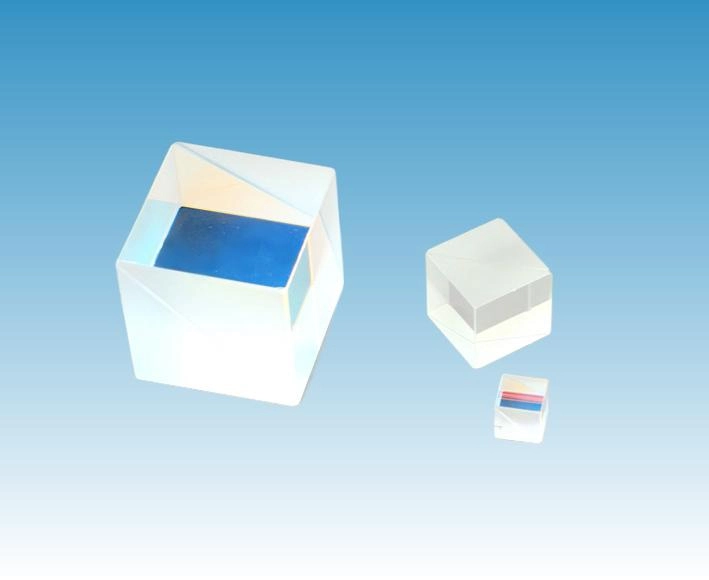
The cubic spectroscopic prism is an optical component with special geometric shape and optical properties, which is usually used for spectral analysis, refraction or changing the direction of light propagation.