

 en
en
 English
 繁体中文
繁体中文 Japanese
 Korean
 Russian
 German
News
Deepen Optoelectronic Resources, Lead Technological Breakthroughs

Deepen Optoelectronic Resources, Lead Technological Breakthroughs
For industrial imaging, a lens designed for visible light cannot automatically deliver the same performance in the ultraviolet range. As wavelength decreases, optical materials that work well in the visible spectrum can introduce stronger absorption, reduced transmission, chromatic errors, and image degradation. Surface reflection also becomes a larger concern when the UV signal reaching the sensor is already limited.
This is why selecting the Best UV Lens requires more than comparing focal length or lens price. The working wavelength, optical material, transmission, numerical aperture, field of view, sensor format, working distance, aberration correction, coating design, and mechanical stability all need to be considered together. For machine vision, precision measurement, scientific imaging, and UV inspection systems, the lens is part of the signal chain—not simply a mechanical interface between the camera and the object.
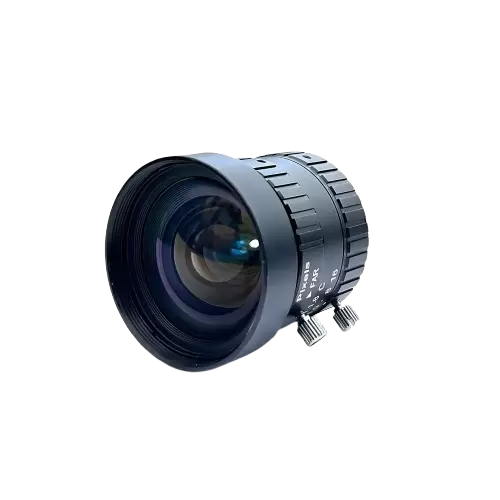
The basic function of a UV lens is to collect ultraviolet radiation from an object or UV illumination source, transmit it through the optical system, and focus the usable UV signal onto the camera sensor. However, achieving this efficiently is considerably more demanding than focusing visible light.
A UV lens must first use materials with adequate transmission in the intended wavelength range. UV Fused Silica, for example, is widely used for UV applications because it provides useful transmission into the near-UV and deeper UV regions, while CaF₂ is particularly valuable when the required wavelength extends further into the deep UV. Material selection therefore has a direct relationship with the wavelength of the application rather than being a generic specification.
The lens must also control chromatic and geometric aberrations. UV wavelengths have different refractive behavior from visible wavelengths, and the number of practical materials available for UV optical design is more limited. This makes it more difficult to obtain the same combination of correction, aperture, focal length, and spectral coverage that can be achieved with conventional visible-light optical glasses. Research on deep-UV objectives demonstrates that material dispersion and wavelength-dependent refractive index are critical when correcting chromatic aberration.
Surface treatment is another important factor. Even when the bulk material transmits the required wavelength, each air-to-glass interface can introduce reflection losses. An anti-reflection coating must therefore be designed around the actual operating band. A coating optimized for one UV range should not automatically be assumed to provide equivalent transmission across another range. For example, specialized UV optics may use multilayer coatings optimized for defined bands such as 220–450 nm.
This is one of the fundamental differences between a UV lens and a conventional visible-light lens: the optical system must be designed around the UV wavelength rather than simply extended into it.
Transmission should be evaluated across the complete operating wavelength range, not from a single peak-transmission value.
A system working around 365 nm has different material requirements from one operating at 266 nm, 248 nm, 193 nm, or below. UV Fused Silica is commonly used for many UV applications, while CaF₂ becomes increasingly important for deep-UV applications where conventional materials lose transmission. Published optical-material data, for example, show UV Fused Silica as a practical choice down to approximately 195 nm, while CaF₂ extends significantly further into the UV.
For procurement, the more useful question is therefore not simply “Does this lens transmit UV?” but:
At which wavelengths, with what transmission, through what optical path length, and with what coating?
A lens should not be selected solely according to the camera's megapixel count. The optical resolution must be sufficient to support the pixel pitch and spatial detail required by the application.
For example, a high-resolution UV camera paired with a lens containing excessive spherical aberration, chromatic aberration, or field curvature may fail to produce useful additional detail. Conversely, an optical design significantly exceeding the actual resolution requirement can increase cost and complexity without improving the final measurement.
Focal length, F/#, sensor size, working distance, and object size should therefore be considered as one optical system. A smaller F/# can increase collected light, which may be valuable when UV illumination is weak, but it can also make aberration control more demanding. The appropriate compromise depends on the required depth of field, resolution, illumination level, and measurement accuracy.
For machine vision and inspection equipment, field of view is often more important than nominal focal length.
A lens with an appropriate focal length must cover the required object area while maintaining sufficient resolution across the image field. Working distance also affects mechanical integration, illumination geometry, enclosure design, and accessibility to the inspected component.
For precision measurement, distortion and field-dependent resolution become particularly important. A lens may produce a visually sharp central image but still introduce unacceptable measurement errors near the edge of the field. This is why lens specifications should include the optical requirements of the entire field rather than relying on center-of-image performance alone.
UV Fused Silica is a common choice where strong UV transmission, good optical homogeneity, low thermal expansion, and practical manufacturability are required. It is widely used in UV imaging and optical systems extending into the deep-UV region.
CaF₂ offers broader deep-UV transmission and can become advantageous as the operating wavelength moves further downward. It is also used in multi-material optical designs to help manage chromatic aberration. However, CaF₂ is a crystalline material with manufacturing and handling considerations that differ from fused silica. Its optical behavior can also introduce wavelength- and application-dependent design considerations, particularly in demanding deep-UV systems.
Therefore, the material decision should be based on the actual wavelength, optical power, environmental conditions, required resolution, and design architecture. There is no single UV material that is automatically the correct choice for every UV imaging application.
Coating selection follows the same principle. A UV AR coating should be specified around the operating band, incidence angles, substrate material, and required transmission. For broadband applications, the coating architecture must balance transmission across the entire target range rather than optimizing only one wavelength.
The UV lens, camera sensor, and illumination source should be treated as a single imaging chain.
First, identify the emission or illumination wavelength. A 365 nm LED source, a 254 nm source, and a 193 nm UV system impose very different requirements on the lens material and coating.
Next, check the camera sensor's spectral response. If the sensor has limited sensitivity at the target wavelength, increasing lens transmission alone cannot solve the system-level signal problem.
The sensor format and pixel pitch then determine the required image circle and optical resolution. Focal length and working distance establish the field of view, while F/# influences light collection and depth of field. In low-signal UV inspection, efficient photon collection can be particularly important because every optical loss between the source, object, lens, and sensor reduces the available signal.
For equipment manufacturers, mechanical compatibility should also be checked early. Mount dimensions, lens barrel stability, thermal expansion, vibration resistance, focusing mechanism, and environmental sealing can all influence long-term calibration and image consistency.
In industrial vision, UV imaging can reveal surface characteristics or defects that are difficult to distinguish under visible illumination. The lens must preserve sufficient contrast and spatial detail while transmitting the selected UV band.
In precision measurement, geometric distortion, field uniformity, chromatic effects, and repeatability become critical. A lens selected for general UV observation may not be suitable for dimensional measurement simply because it can transmit UV light.
In defect inspection, the priority may shift toward signal efficiency and resolution. Small contamination, coating defects, surface irregularities, or material differences can require a combination of appropriate wavelength selection, illumination geometry, and optical resolution.
For scientific imaging and research systems, the wavelength range may be narrower and the optical design more specialized. Deep-UV applications can impose significantly tighter requirements on material transmission, surface quality, coating performance, and aberration correction. Optical research has demonstrated the use of combinations such as fused silica and CaF₂ to control chromatic aberration in deep-UV objectives.
A practical UV lens selection process should begin with the application rather than the product catalog.
Define the wavelength: Establish the minimum, maximum, and primary operating wavelengths.
Check material transmission: Confirm that the substrate provides adequate transmission throughout the actual band.
Specify the sensor: Consider sensor format, pixel size, spectral response, and required resolution.
Calculate FOV and working distance: Determine the focal length and image circle required by the inspection system.
Set the F/# requirement: Balance light collection, depth of field, aberration control, and available illumination.
Evaluate optical correction: Review distortion, chromatic aberration, field curvature, and resolution across the useful field.
Check AR coating: Confirm that the coating is designed for the intended UV wavelength range.
Review mechanical stability: Consider vibration, temperature variation, mounting, focusing, and long-term dimensional stability.
Consider customization: If standard lenses cannot simultaneously satisfy wavelength, FOV, resolution, working distance, and mechanical requirements, a custom optical design may be more appropriate.
ECOPTIK has been researching optical component fabrication technology for 15 years and provides customized optical solutions for industrial vision and precision measurement systems. Its optical manufacturing portfolio includes dome lenses, spherical lenses, micro-optical components, cylindrical mirrors, filters, prisms, windows, and lens assemblies.
For UV applications, ECOPTIK works with optical materials from suppliers including Schott, CDGM, and Corning, as well as specialized materials such as UV Fused Silica, CaF₂, MgF₂, Sapphire, Si, ZnSe, and ZnS. Material selection can therefore be coordinated with the required spectral range and optical architecture rather than treating the substrate as an isolated component.
ECOPTIK also provides lens assembly services and uses equipment including ZYGO laser interferometers, ZEISS CMM Spectrum, and Agilent Cary 7000 UMS for optical and dimensional evaluation and product reporting. This supports a more complete approach to UV lens development, where transmission, optical performance, dimensional accuracy, and mechanical integration need to be considered together.
For OEMs and system integrators, the Best UV Lens is ultimately the one whose optical design corresponds to the actual wavelength, sensor, field of view, working distance, resolution, illumination, and environmental requirements. A well-designed UV lens does more than transmit ultraviolet light: it preserves the usable optical signal and converts it into measurable image information with the consistency required by the complete imaging system.
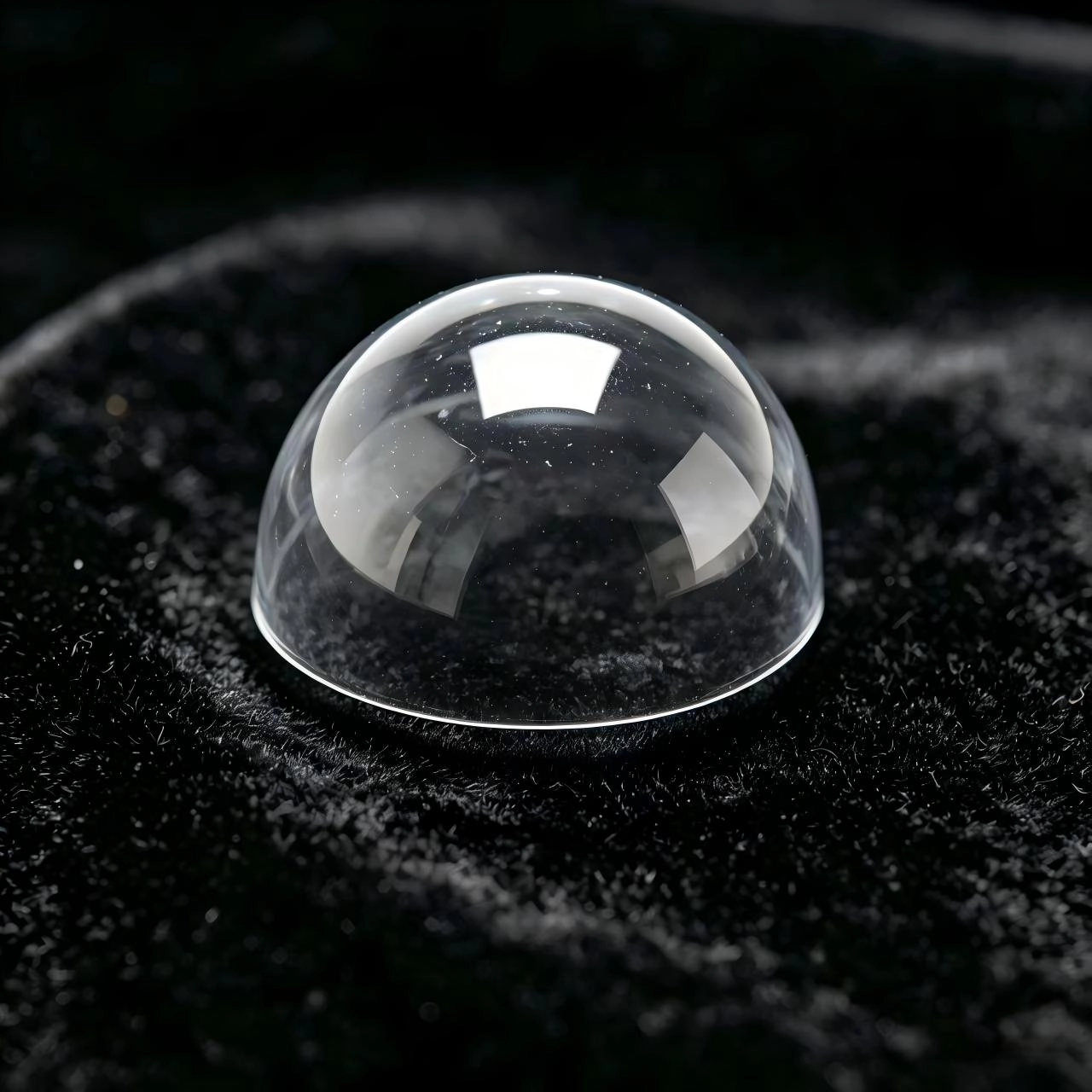
In the vast and demanding underwater world, where light is scarce, pressure is immense, and conditions are unpredictable, the performance of imaging and defense systems depends heavily on the materials used.
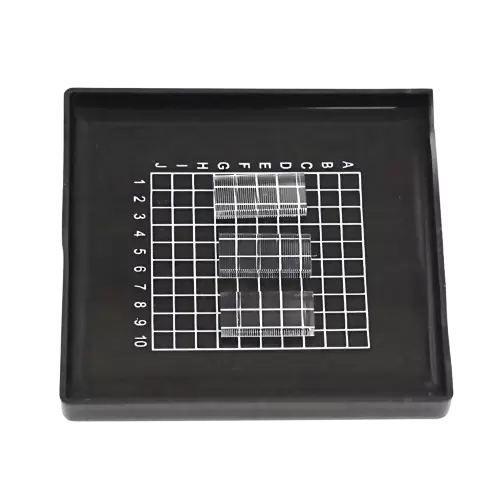
Traditional single lenses remain effective for many optical systems, but their physical size and limited integration become constraints when an optical module needs multiple focusing, imaging, or beam-control functions within a small area.
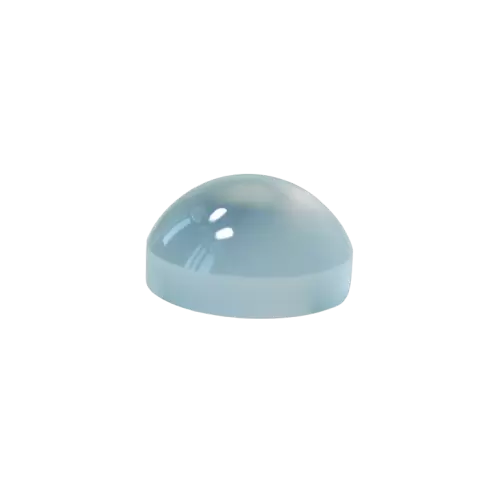
Standard hemispherical lenses are useful in many optical assemblies, but they are not always suitable when an optical system requires a specific geometry, material, wavelength response, or integration envelope.